Location
Mount Vernon, WA 98274

Location
Mount Vernon, WA 98274
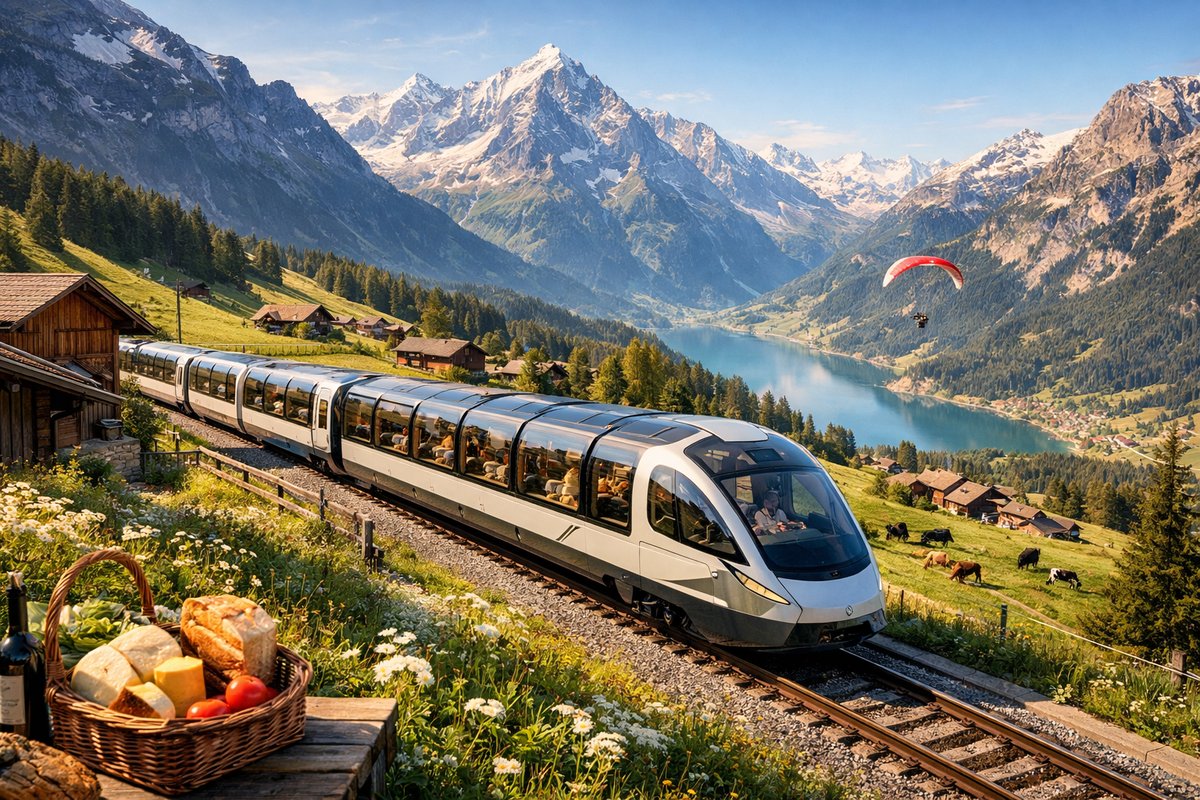
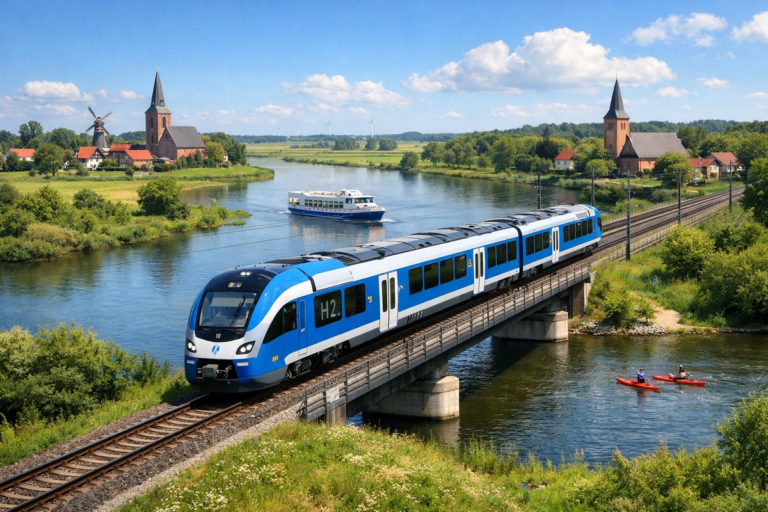
A groundbreaking zero-emission luxury train recently began service through the Alps, blending hydrogen fuel cells, battery power, and panoramic design to deliver slow-travel experiences. By partnering with local producers and community projects, the Carbon-Neutral Alpine Express is redefining how eco-tourism can both protect mountain landscapes and enrich regional economies.
On an early spring morning, the first Carbon-Neutral Alpine Express crept out of its station in the foothills, its observation dome catching the first rays of sunrise. Passengers-eager hikers, design-minded travelers, and environmental advocates-settled into sustainably crafted seats as the train traced a ribbon of track through snow-topped peaks and wildflower meadows. From the moment its wheels began to roll, it became clear that this was no ordinary rail service: it promised to deliver an immersive journey across Alpine terrain with zero direct carbon emissions.
Conceived by a consortium of rail operators, architects, and renewable-energy engineers, the Carbon-Neutral Alpine Express launched operations this season under the banner of a national green-mobility initiative. “We wanted to show that high-end travel and environmental responsibility can coexist on challenging mountain routes,” says the train’s operations director. “This line is a testbed for future expansion, and it proves that even narrow-gauge tracks winding through steep valleys can power a luxury experience without burning a single fossil fuel.”
Railways have threaded their way through the Alps since the 19th century, forging vital links between isolated communities and bustling cities. While steam-powered pioneers once toiled on steep inclines, modern trains have drawn electricity from overhead lines fed by hydropower and nuclear plants. Yet until now, doubts about the reliability of clean energy storage during harsh winters and concerns over network upgrades have kept zero-emission mountain rail largely theoretical. The Carbon-Neutral Alpine Express dissolves that barrier by combining multiple clean-energy systems in a seamless package.
The importance of sustainable rail has never been greater. Tourism contributes nearly a quarter of global transport emissions, and journeys to mountain retreats often rely on polluting buses, private cars, or short-haul flights. By offering a footprint-free alternative, the new Alpine service addresses both climate goals and traveler demands for meaningful experiences. Slow travel advocates say the shift from highways to quiet steel wheels helps passengers form deeper connections to each landscape they pass.
At the heart of the train’s green credentials lie hydrogen fuel cells, lithium-ion battery banks, and regenerative braking. On electrified sections of track, overhead lines deliver renewable power directly to the train’s motors and simultaneously charge onboard batteries. When tunnels and viaducts lack catenary wires, hydrogen cells kick in, converting stored fuel into electricity and emitting only water vapor. Whenever the train slows for curves or station stops, generators recover kinetic energy and funnel it back into the battery packs. Together, these systems guarantee continuous zero-carbon propulsion across even the most remote Alpine stretches.
Designers have given equal care to the train’s interiors. Panoramic glass domes rise above dining cars, while large windows curve into the ceiling of each compartment, inviting travelers to marvel at soaring cliffs and glacial valleys. Upholstered seats feature locally milled hardwood frames and recycled fabrics dyed with plant-based colors. Natural ventilation channels in each coach reduce the need for air-conditioning, and low-impact LED lighting mimics daylight cycles to ease the body’s rhythm at high altitudes.
Gastronomy on board embraces a regional farm-to-plate ethos. Menus shift daily to highlight produce from partner farms in the valleys below. Passengers can sample alpine cheeses aged in mountain cellars, wild herbs hand-foraged by local foragers, and heirloom vegetables grown in high-elevation greenhouses heated by geothermal energy. Chefs travel ahead on scout trains to select seasonal ingredients, while evening spreads include artisanal breads baked in solar ovens at a nearby cooperative.
As the train paused at the village of Grünwald, a historian-turned-guide described the local revitalization project that funded a pedestrian zone near the station plaza. “Our goal was to make station stops part of the journey, not just a brief interlude,” she explains. New walking trails fan out from the platform into spruce forests and past centuries-old chapels, offering passengers the chance to stretch their legs and meet community members. At a refurbished timber heritage center just steps away, villagers share stories of alpine life-transhumance cattle drives, high-pasture cheese festivals, and winter snowshoe rituals.
Early ridership numbers have exceeded projections, with occupancy rates averaging around 85 percent on weekend departures. The operating consortium reports that since opening day, the Alpine Express has carried more than 12,000 passengers while cutting roughly 1,200 metric tons of CO₂ that would have arisen from equivalent bus or car journeys. Additional investments in local reforestation projects and forest-management initiatives aim to secure another 500 metric tons of carbon offsets each year.
Economic spillovers are already visible in the high-mountain hamlets along the route. Guesthouses that once struggled outside peak ski season now welcome hikers drawn by the train’s schedule. Artisan cheese producers report a 30 percent uptick in direct orders, while local guides have formed cooperatives to lead small-group tours of glacial caves and botanical hot springs. Municipal planners say the sustainable rail link has become a catalyst for balanced economic growth-one that respects the fragile ecosystems of alpine landscapes.
Building and operating a carbon-neutral service at altitude was not without challenges. Tunnel electrification posed logistical hurdles, demanding precise scheduling to avoid disruptions to freight traffic. Cold-weather performance of hydrogen cells required specialized insulation and redundant heating circuits to maintain efficiency at sub-zero temperatures. Initial capital costs ran 25 percent higher than a conventional electrified line, but long-term operating savings and environmental grants are closing the gap in projected payback times.
Plans are already underway to expand the concept to other mountain ranges. A consortium proposal for a Zero-Emission Pyrenees Connector is under review, while partners in North America are exploring a counterpart route through the Rockies. Each extension will refine the hybrid energy architecture-testing new solid-oxide fuel cells, second-life EV batteries, and dynamic wireless charging pads built into station platforms.
Experts in sustainable transport view the Carbon-Neutral Alpine Express as more than a novelty. “This demonstrates that high-amenity, low-impact travel is economically viable and politically achievable,” says a mobility researcher. “Decarbonizing rail networks has been on the policy agenda for years, but this project shows how innovation, design, and community engagement can accelerate the shift.”
Travelers themselves speak of transformation. For many, voyaging through grand passes at a leisurely pace allows time for reflection-on both the external panorama and personal rhythms. The intimacy of small station stops, the deliberate pace of boarding and disembarking, and the communal meals under the glass dome evoke a sense of connection that fleeting sightseeing cannot replicate.
More than just a physical route, the Carbon-Neutral Alpine Express charts an emotional landscape. It invites passengers to consider how their journeys impact the world and themselves. With each silent glide through snowy forests and each respectful pause in a mountain village, the train underscores that travel can be a force for environmental stewardship, regional renewal, and profound personal discovery.
And as the train returns to its home station at dusk, passengers step off carrying more than memories of alpine vistas-they leave with a renewed sense of possibility for journeys yet to come, at once gentle on the planet and rich in human connection.