Location
Mount Vernon, WA 98274

Location
Mount Vernon, WA 98274
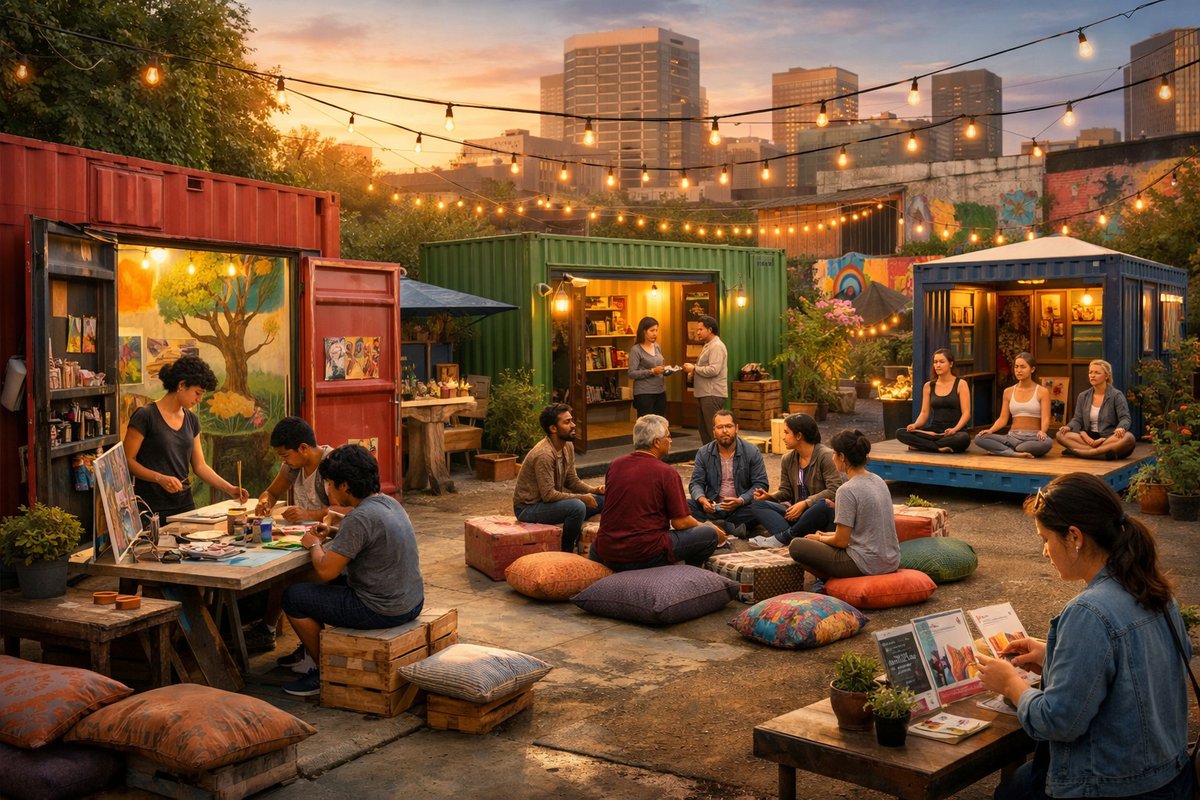
Across cities, volunteers and social workers are transforming cargo containers and street corners into pop-up Resilience Hubs-spaces offering peer support, art workshops, and mental health resources. These grassroots sanctuaries are bridging isolation gaps and sparking new models for collective healing.
At the corner of 5th Avenue and Jackson Street, a repurposed cargo container painted in soft pastels now serves as a Resilience Hub-an oasis of connection amid urban bustle. Inside, visitors find a hand-painted mural, a stack of journals, free herbal tea, and chairs pulled into a rough circle. A sign reading “Sit, Share, Heal” invites passersby to step off the sidewalk, pause, and engage in peer-led conversation. What began as a small pilot project during a particularly harsh winter has burgeoned into a network of 27 mobile sanctuaries in cities from Detroit to Portland, each one forging new paths between isolation and collective hope.
Loneliness and mental health challenges have surged in recent years. A 2022 survey by the Kaiser Family Foundation found that 36 percent of adults reported feelings of chronic loneliness or social isolation. Meanwhile, crisis hotline calls related to depression rose by 20 percent in 2023, according to nonprofit mental health coalitions. In this context, Resilience Hubs emerged as low-barrier drop-in spaces where therapy and formal counseling coexist alongside art therapy sessions, open-mic nights, and plant-based workshops. Their founders-community organizers, therapists, artists, and formerly unhoused neighbors-set out to prove that small, modular meeting points can yield outsized impact.
Each hub is designed to be hyper-flexible. The containers or kiosk structures roll into parks, vacant lots, or shared courtyards on cargo bikes or small flatbed trucks. Inside, the floors are insulated, the walls lined with corkboards displaying book recommendations and positive affirmations. A mobile shelving unit offers a rotating library of donated paperbacks and coloring books. On weekday mornings, a sign-up sheet for 15-minute peer check-ins fills up within an hour. Afternoon hours bring rotating pop-up services: free haircuts, basic medical screenings by volunteer nurses, and guided mindfulness circles led by local yoga instructors. At dusk, neighborhood storytellers step up to an impromptu mic for open-stage sessions, where laughter and applause echo under strings of solar-powered lanterns.
In Seattle, Maria Alvarez first encountered the Redwood Resilience Hub after months of struggling with job loss and a fraught search for stable housing. “I felt invisible,” she recalls. “I’d leave the apartment, talk to no one, and come back only to scroll social media until I fell asleep.” A friend nudged her to try a creative journaling workshop at the hub. With free notebooks and guided prompts, Maria penned memories she had tucked away for years. Invited to share aloud, she discovered a small community of listeners who nodded, cried, and celebrated alongside her. Today she volunteers as a peer facilitator, guiding others through writing exercises that helped her reclaim her sense of voice.
On Detroit’s East Side, the Green Corridor Resilience Hub hosts weekly “Urban Plant Therapy” sessions. Participants learn to repot succulents, cultivate microgreens, and share cuttings from home gardens. Ahmed Hassan, a former long-haul driver, found solace in the act of nurturing. “I spent hours on the road, alone with my thoughts,” he says. “Here, I’m rooted, connected. When my plant thrives, I thrive.” The hub’s greenhouse-style racks have been outfitted with affordable soil mixes and grow lights sponsored by local nurseries. The plants double as living art installations and tangible proof of growth-individual and communal.
The impact of these pop-up sanctuaries is measurable. A community health assessment in Portland found a 15 percent drop in mental health hotline calls within a three-mile radius of a newly installed hub. Surveys of hub visitors show a 40 percent increase in self-reported feelings of belonging and emotional well-being after attending at least three sessions. University researchers collaborating with the hubs are compiling data on peer-based interventions, hoping to influence urban policy debates around mental health funding and public space allocation.
Partnerships have been central to the hubs’ growth. Local libraries loan used books and host literacy workshops at their nearest container. University counseling centers supply supervised interns to lead group therapy, fulfilling practicum requirements while gaining real-world experience. Business improvement districts offer micro-grants for seasonal maintenance and lighting upgrades. A coalition of small architecture firms developed modular blueprints, making it easier for aspiring organizers to replicate the model without heavy engineering costs. This cross-sector collaboration has turned a grassroots concept into a replicable framework for 42 communities to date.
Challenges persist. Securing permanent locations remains an uphill battle in cities with limited public land. Volunteer burnout threatens continuity-facilitators juggling day jobs and hub shifts report fatigue. Temperature control in extreme weather strains heating and cooling budgets. Yet volunteers meet setbacks with creative solutions: solar arrays subsidized by crowd-funding, micro-stipend programs to compensate peer leaders, rotating “hub ambassadors” who share facilitation duties, and streamlined permit guides co-drafted with sympathetic city planners. These pragmatic fixes help ensure that no container falls silent for lack of resources.
Technology is playing an unexpected role in sustaining momentum. A smartphone app developed by a team of civic hackers allows users to locate the nearest resilience hub, view real-time occupancy, and reserve seats for popular workshops. Community members post resource reviews-“Best tea selection!” or “Loved the guided breathing circle.” An SMS hotline offers text-based check-ins for people who can’t make it in person. Data privacy features ensure anonymity, reflecting the project’s commitment to safeguarding personal information.
Back on South Jackson Street, organizers are drafting blueprints for the next phase: neighborhood cluster hubs connected by walking trails lined with public art and solar-powered benches. They envision weekend “Connection Festivals” where food trucks, musicians, and volunteer counselors mingle beneath a communal canopy. The goal is to create a web of support that transforms urban landscapes into living tapestries of shared resilience. Community-driven initiatives like these are redefining what it means to care for one another in an era of digital overload and stretched municipal budgets.
While the concept of pop-up Resilience Hubs may still feel experimental, its roots in collective generosity and inventive problem-solving suggest a powerful path forward. Across Detroit, Seattle, Portland, and beyond, these mobile sanctuaries have become symbols of hope-proof that when individuals come together around a simple premise of listening and co-creation, the ripple effects extend far beyond any single container. As more neighborhoods adopt this model, the story of urban care is being rewritten one circle of chairs at a time.
In a world often fixated on grand policy shifts or massive funding packages, Resilience Hubs remind us that small, local efforts can yield profound change. They honor the ache of failure, the courage to rise again, and the quiet power of connection. And they offer a blueprint for cities eager to nurture the resilience that makes us beautifully human.