Location
Mount Vernon, WA 98274

Location
Mount Vernon, WA 98274
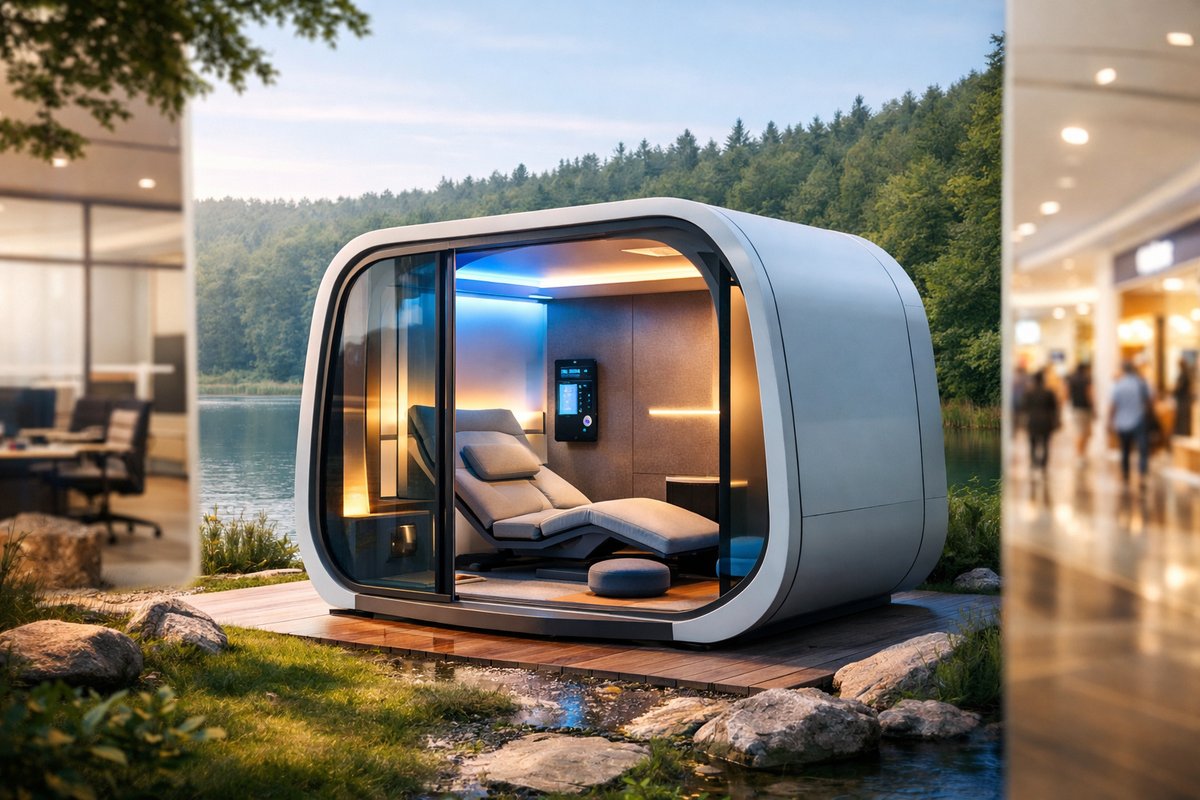
A new wave of micro-wellness pods is emerging beyond urban centers, offering on-demand retreats tailored to sleep, movement, and mental clarity. Powered by adaptive light, sound, and biometric sensors, these compact havens promise to bring customized restoration to workplaces, shopping malls, and residential complexes alike.
As people navigate busier schedules and growing wellness demands, a novel solution is gaining momentum: personalized micro-wellness pods. Originally spotted in major city hubs and airports, these compact stations-equipped with adjustable lighting, immersive soundscapes, and real-time biometric feedback-are now expanding into suburban office parks, university campuses, and retail complexes.
The trend builds on surveys from the National Sleep Foundation indicating that nearly one-third of adults don’t get restorative rest during typical nighttime hours. At the same time, data from global consumer insights firm GWI show that more than half of adults struggle to maintain a consistent movement routine. By combining sensory therapies and movement prompts in sealed, soundproof booths, micro-wellness pods aim to fill gaps between home, work, and gym environments.
Early adopters describe these pods as “oases in transit.” One pilot site in a Midwestern office park equipped ten pods near the main atrium. Occupants can book a 20-minute slot via a smartphone app and choose from guided breathing sessions, gentle stretching prompts, or a rapid power-nap mode. Biometric sensors embedded in the seat and headrest measure heart-rate variability and subtle shifts in posture, dynamically adjusting audio-visual cues to nudge users toward deeper calm or gentle engagement.
According to wellness consultant Rivera Chang, who advised several pilot programs, personalization is key. “One person’s reset looks different than another’s,” she says. “Some need low-frequency vibration alongside a voice-guided body scan. Others respond best to nature soundscapes timed with slow ambient color transitions.” Modern pods leverage machine learning models trained on thousands of user sessions to anticipate which combination of light, sound, and micro-movements will optimize focus or relaxation.
Beyond audio and visual therapies, scent integration is becoming a popular add-on. Discreet essential oil diffusers can release lavender blends to signal winding-down sequences or citrus notes for energizing bursts. In one recent suburban rollout, a wellness startup retrofitted underused kiosks in a shopping center with modular scent cartridges connected to CO₂ and humidity sensors. The system adapts diffusion intensity based on room occupancy and ambient air quality, ensuring a balanced experience even during peak foot traffic.
Micro-wellness pods also address accessibility and community equity. In partnership with local government, one Philadelphia university installed 24/7 access pods along major commuter routes, free of charge to students and staff. Sensors track usage anonymously, offering administrators aggregate insights into peak demand periods. The initiative hopes to ease campus stress during exam seasons without requiring long-distance travel to on-site health centers.
Wearable integration is central to the ecosystem. Users link wrist-worn activity trackers or sleep-monitoring rings to pod software. When a session begins, biometric data streams in to calibrate pod settings. For example, if a user’s morning heart-rate variability suggests elevated stress, the pod might default to a guided breathing practice rather than a dynamic stretching routine. These seamless handoffs between personal devices and communal stations make the experience feel intuitive and secure.
Privacy and data security remain critical concerns. Pods encrypt all on-site recordings and only retain anonymized metadata about session length, light and sound patterns used, and general usage trends. No personal audio recordings or biometric logs are stored long-term, and administrators routinely audit cloud storage to comply with regional data protection regulations.
Manufacturers are mindful of sustainability in both construction and operation. Modular panels are crafted from recycled plastics and certified low-emission composites. LED light arrays consume minimal power, and many pods include solar-charged backup batteries to reduce reliance on grid electricity during peak hours. A single pod’s annual energy footprint can be 80 percent lower than a traditional office kitchenette or break room refrigerator.
The commercial potential is drawing interest from corporate wellness budgets. A recent White Paper published by workplace consultancy WellSpace projects that companies can see a twofold return on investment within 12 months through reduced sick days, improved focus, and lower facility maintenance costs. Early adopters in the finance and tech industries report upticks in employee-reported job satisfaction scores after installing pods in lobbies and lounge areas.
Community advocates are also exploring mobile micro-wellness units. Retrofitting shipping containers into moveable pods allows populations in under-resourced neighborhoods to access restorative services at farmers markets, street fairs, and public parks. One non-profit in Chicago tested a mobile pod that traveled to senior centers, offering gentle chair yoga sessions and guided visualizations tailored to older adults.
Despite the excitement, challenges remain. Real estate managers must balance pod placement against high-rent storefronts. Some users worry pods could become too clinical or sterile without warm, human-centered design touches. To address this, designers are experimenting with natural wood veneers, tactile fabrics, and ambient scent selections sourced from local cooperatives.
Looking ahead, experts foresee tighter integration between microscale wellness and digital health ecosystems. Imagine reserving a session via a virtual assistant, automatically syncing pre- and post-session summaries to your telehealth portal, and sharing curated insights with a personal coach. As 5G connectivity and edge computing become ubiquitous, latency in real-time biofeedback loops will shrink further, enhancing the responsiveness of future pods.
For now, micro-wellness pods stand as an emblem of a shifting mindset: that well-being shouldn’t be sequestered to evenings or weekends. It can be woven into the fabric of daily life-in the corridors of work, the halls of learning, and the footpaths between errands. By making restorative practices as accessible as a coffee break, these pods are reshaping what it means to pause, recalibrate, and thrive.
Whether tucked in a subway passage or nestled in a suburban plaza, the next wave of personalized wellness stations underscores a simple premise: self-care is not a luxury, but an everyday necessity.