Location
Mount Vernon, WA 98274

Location
Mount Vernon, WA 98274
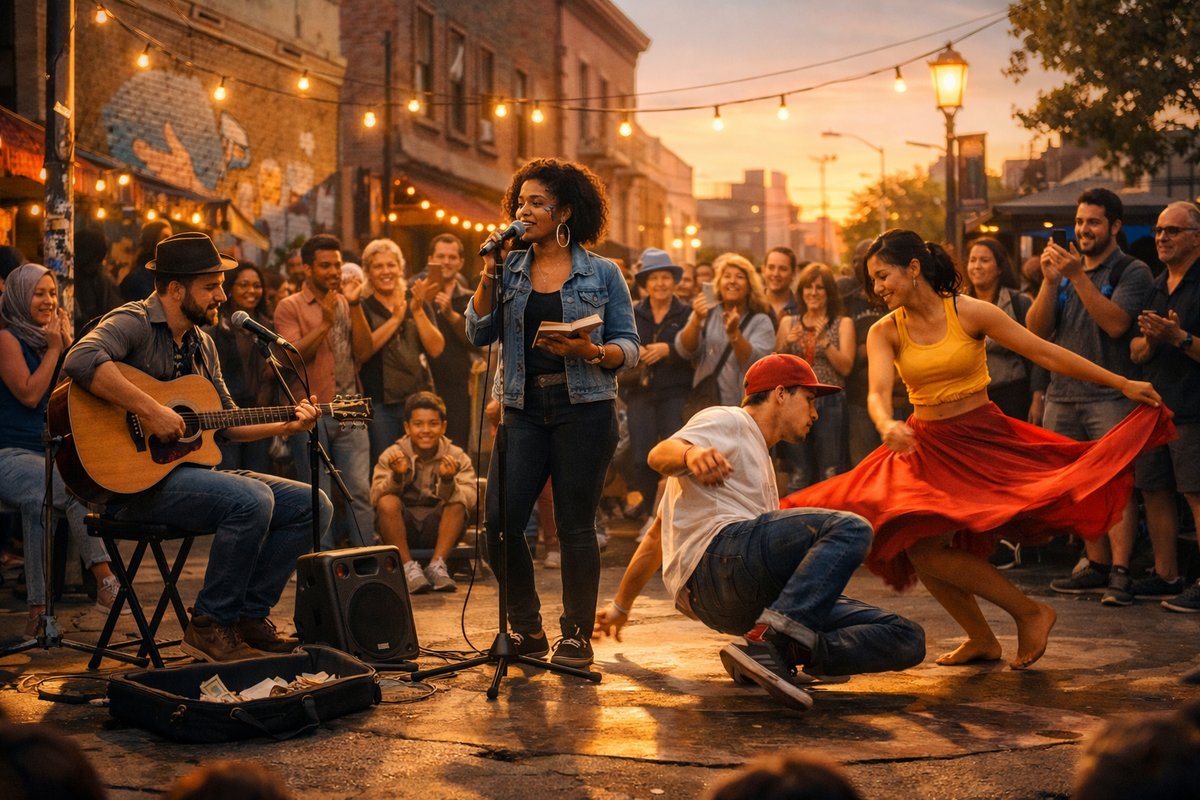
In neighborhoods around the globe, spontaneous street shows are transforming urban corners into gathering places of hope, laughter, and shared humanity. Musicians, poets, and dancers are armed with little more than a folding stool, a portable speaker, and unwavering courage, proving that creativity can mend social fractures and reignite collective purpose.
On a cool spring evening, a small cluster of folding chairs lines a quiet residential block. A makeshift stage-really just three wooden pallets pushed together-holds a single microphone stand, a compact speaker, and a hand-painted sign that reads “Tonight: Open Mic & Dance Jam.” Neighbors stroll by, drawn out by the low hum of conversation and the faint strum of an acoustic guitar. In less than an hour, this unassuming street corner will become the heartbeat of the block: a sidewalk stage where people from all walks of life converge to share their stories through song, verse, and movement.
These pop-up performances have sprouted in cities from Berlin to Buenos Aires, London to Lagos. What began as a few musicians testing new material on a vacant lot has evolved into a global movement of DIY street art that aims to repair the fraying threads of urban community. Without permission slips, permits, or corporate sponsors, these artists-often amateurs, sometimes storefront owners, always neighbors-show that the simplest acts of creativity can become powerful agents of social cohesion.
At the heart of each gathering is a shared sense of vulnerability. Performers step onto the pallets with no guarantee of applause; audience members settle into chairs or stand in doorways, unsure if they will hear a lullaby, a protest poem, or a comedic monologue. That uncertainty breeds a form of collective bravery: everyone is there to witness risk taken in public, to honor the courage it takes to open one’s heart on an improvised stage. In neighborhoods marked by gentrification, rising rents, or social isolation, these events remind people that connection can be found in the pauses between chords and the laughter after a flubbed line.
One organizer, a former mid-level corporate professional, recalls the moment she swapped her briefcase for a guitar case. Burnout drove her to host a small guerrilla jam session outside her apartment building last summer. Within days, that roadside concert had drawn local poets, break-dancers eager to test fresh routines, and even a retired jazz trumpeter who hadn’t performed in public for decades. “We were strangers at first,” she says, “but by midnight we were swapping stories about first loves and lost dreams. We realized that art doesn’t just entertain-it heals.”
Healing is a common refrain among participants. After a period of tight lockdowns and distancing, many confess that they struggled with isolation and dread. Smartphones and video calls bridged some gaps, but nothing replaced the warmth of shared laughter under open skies. When a dancer pirouettes beside a lamppost, her echoing footsteps across the pavement remind spectators that the world still pulses with possibility. When a teenage poet finds her voice and hears applause from neighbors, her confidence blooms in unexpected ways.
These sidewalk stages are as varied as the communities they serve. In one district, a traveling troupe of percussionists rolls in with cajón drums strapped to backpacks, laying down Afro-Caribbean rhythms that ripple through nearby cafés. In another, a collective of spoken-word artists chalks out concentric circles on the pavement, inviting passersby to step into the swirl and recite lines that pulse with local history. On a busy corner in a high-rise neighborhood, a retired pair of tap dancers has turned the sidewalk into a percussive dance floor, their taps sounding like signals in a citywide beacon of hope.
What unites these scenes is minimalism: a single extension cord, a battery-powered speaker, a handful of folding chairs, and the willingness to share. Without elaborate staging or expensive equipment, the barrier to entry is low-anyone with a song to share or a body to move can participate. This simplicity extends to sustainability: many organizers repurpose old pallets for stages, collect discarded wood for makeshift benches, and use rechargeable lighting to minimize waste. When the last guitar riff fades and the last dancer bows to claps and whistles, organizers pack up everything in recycled tote bags, leaving no trace behind except smiles and the echo of encouragement.
These ephemeral performances also spark broader conversations about who belongs in public spaces. In a society where side streets often feel under-patrolled or under-utilized, sidewalk stages assert communal ownership. They remind residents that sidewalks are not just conduits from home to bus stop-they are living rooms, galleries, and theaters open to all. Parents bring toddlers who stomp along to drumbeats, teenagers cluster around for open-mike confessions, and elders settle into folding chairs to tap rusty hips in time with the beat. In moments like these, diversity isn’t a bore-board statistic; it’s an electric, living mosaic.
The impact isn’t limited to fleeting joy. Some groups have parlayed their gatherings into advocacy campaigns-petition drives for safer crosswalks, fundraising for a community garden, or crowd-funding a little free library. Others have spurred grassroots mentorship: experienced performers offering free workshops in songwriting or beatboxing, empowering new voices to step onto the versatile stage. Each impromptu performance becomes a node in a broader network of collaboration, where creative expression and civic engagement intertwine.
Of course, spontaneity invites challenges: noise complaints, wary landlords, and the need to balance novelty with neighbors’ peace. Organizers handle these hurdles with curiosity and care, inviting feedback, adjusting schedules, and relocating when necessary. Some groups have begun handing out homemade flyers that read “Respect the Space, Honor the Music,” asking participants to leave respectfully. When tensions arise-over volume, location, or content-others have found that a simple circle of chairs for a discussion can defuse anger with empathy.
Through it all, participants report a growing sense of purpose. One young guitarist described how a few minutes of borrowed confidence at a pop-up show convinced her to audition for her school’s jazz band. A neighborhood barista, inspired by a late-night dance performance on his street corner, set up regular salsa nights at the café to keep the momentum alive. Across continents, from sunlit piazzas to rainy alleys, the recurring theme is resilience: in the act of creating together, people find the bravery to face personal setbacks, to heal from grief, and to discover new pathways of hope.
In a fractured world, the sight of a small stage in a silent street corner can seem inconsequential. Yet, in those moments when a guitar gently weeps or a poet’s words ring true against brick walls, we glimpse the stubborn magic of human connection. These street performances remind us that art doesn’t require marble halls or corporate underwriters; it needs only a willing heart and an open sidewalk. And in that openness, we find the quiet courage to rise again-one chord, one stanza, one dance step at a time.
As dusk turns to night, the last dancer takes her bow. Chairs fold up, speakers shut down, and pallets separate into stacks. But the glow lingers-in the smile of a passerby, in the lingering hum of a shared melody, in the promise that tomorrow, another block will find its own beat. And so the cycle continues: in the pockets of cityscapes everywhere, ordinary people reclaim public space, stitch together fractured neighborhoods, and remind us that resilience is most potent when it is shared.