Location
Mount Vernon, WA 98274

Location
Mount Vernon, WA 98274
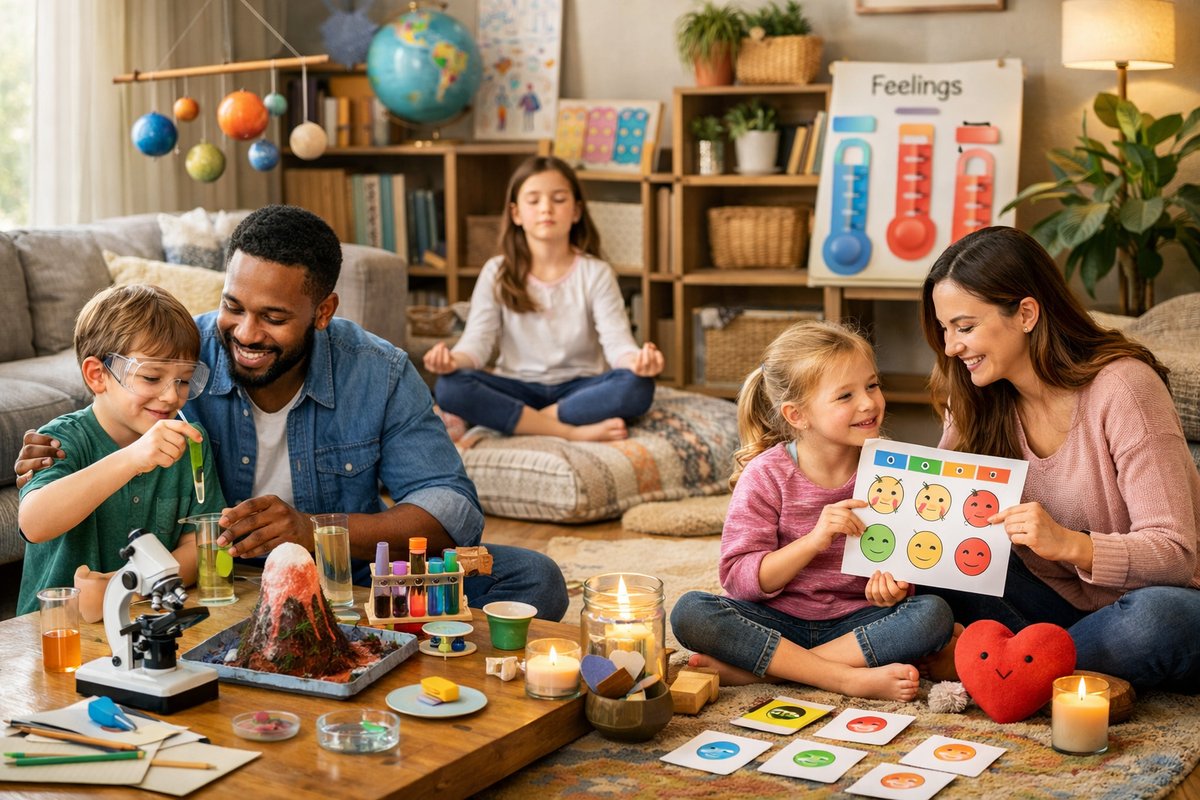
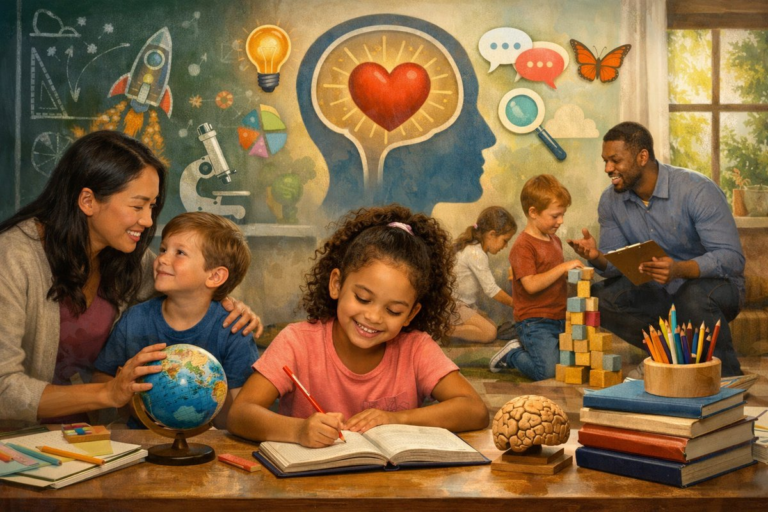
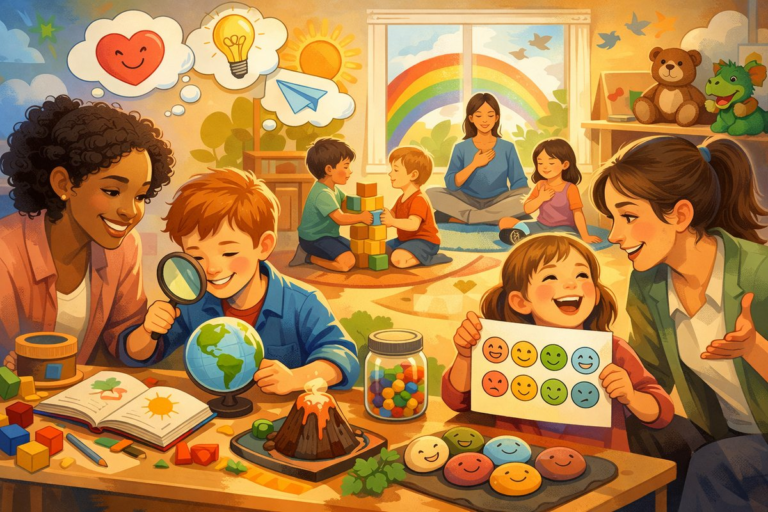
A new wave of parents and caregivers are weaving emotional intelligence into home curricula alongside STEM and creative play. Recent studies and family stories reveal how emotion-based tools, DIY science kits, and mindful rituals are reshaping living rooms into nurturing labs for both feelings and facts.
News outlets and educational researchers have noted a significant shift in how families approach at-home learning: emotional development now ranks alongside core academic skills. A 2023 study by the National Family Learning Initiative found that more than 60 percent of parents incorporated tools for emotional awareness into daily discovery time, up from 35 percent just two years ago. This trend is shaping a new home-based learning model where empathy, curiosity, and resilience grow hand in hand.
From emotion flashcards that prompt kids to name and explore moods, to programmable robot kits that spark creative problem-solving, households are merging technology, hands-on materials, and heart-centered activities. Early childhood expert Dr. Maya Chen, who led the recent study, explains: “When children learn to identify their feelings and express them in constructive ways, they approach challenges with greater confidence. Pairing that emotional foundation with practical STEM tasks nurtures resourceful, compassionate learners.”
In Seattle, siblings Ava, age 7, and Leo, age 9, start each morning with a brief family check-in. They gather around a small spinning wheel of emotion prompts and share one word that describes how they feel. Their mother, an elementary school administrator, says this ritual has made a tangible difference: “Before, Ava would shut down when an activity felt too hard. Now she’ll say ‘I feel worried’ and we talk about it. Then she dives into her coding robot experiment with renewed focus.”
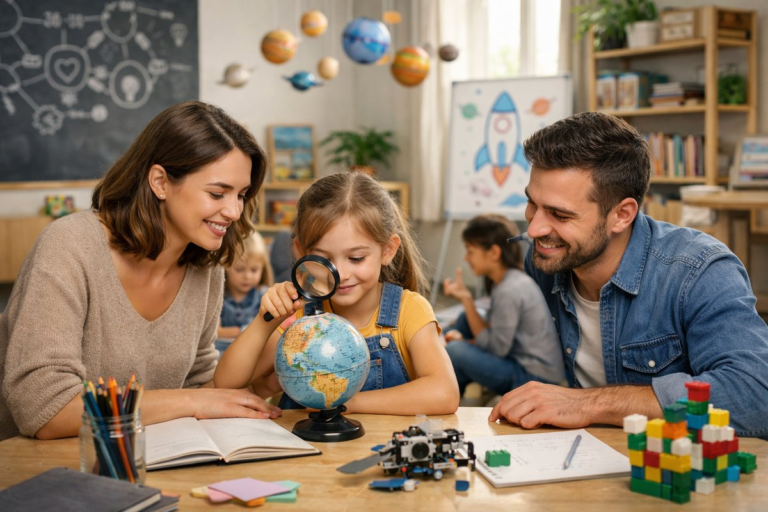
The coding robot kit on their table looks like a simple wheeled cylinder with programmable lights and sensors. Through a connected tablet app, the children drag-and-drop commands, learning basic loops, conditional logic, and debugging. But the most notable feature may be the shared problem-solving that follows moments of frustration. “When the robot doesn’t follow the line, they pause, name their frustration, then sketch a new plan on a whiteboard,” their father observes. “That combination of emotional check-in and technical iteration builds both empathy and persistence.”
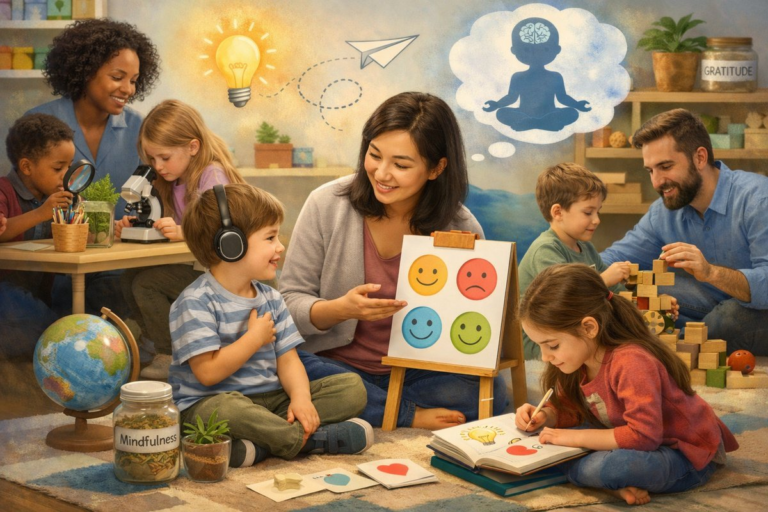
This integration of feelings and facts is catching on beyond tech toys. Families are adding reflective journals to their art supplies, encouraging children to sketch or write about triumphs and stumbles after each project. Educational publishers have responded with guided mindfulness journals packed with prompts like “What made me proud today?” or “Describe a time I felt brave.” These journals often include simple breathing exercises or short gratitude practices, anchoring academic discovery in self-awareness.
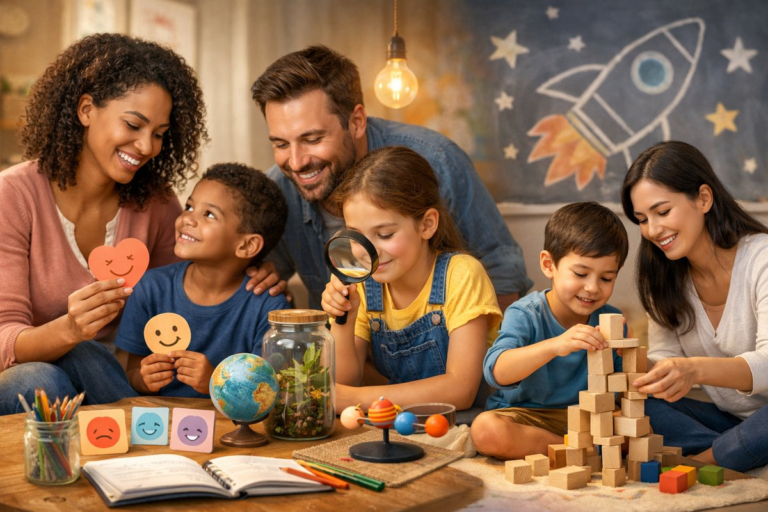
On the creative side, magnetic building tiles remain a best-seller among open-ended toys. Children construct geometric sculptures or cityscapes while parents introduce empathy games: each tile color represents an emotion, and every new creation comes with a story about how characters feel. This blend of spatial reasoning and narrative exploration gives kids a richer understanding of structure and sentiment.
Meanwhile, family-run play groups have sprouted up in parks and community centers, offering mixed-age sessions that feature emotion coaching stations. A recent meet-up in Brooklyn invited kids to design paper masks that depict a chosen feeling, then act out scenarios in small groups. Observers noted that children who resisted cooperative games became more willing to engage after they identified and shared their own emotions first.
Educators point to multiple benefits of these combined approaches. Emotion-infused routines boost attention spans, reduce behavior challenges, and strengthen parent-child communication. They also equip learners to tackle academic subjects more flexibly. In a pilot program at a suburban homeschool cooperative, participants using emotional STEM play kits scored 15 percent higher on resilience measures and showed deeper conceptual understanding in science quizzes compared to those using standard workbooks.
Challenges remain in balancing screen-based tools and tangible materials. Some families report fatigue when relying too heavily on tablets or apps. To counter digital overload, experts recommend alternating tech sessions with low-tech or no-tech activities-like outdoor exploration, journaling, or card-based emotion games. This rhythm helps sustain both engagement and emotional well-being.
Parent educator Karina Ruiz advises newcomers to start small: “Begin with a single emotion tool-a simple feelings chart or a small set of emotion cards-and pair it with a favorite hobby, such as building blocks or a DIY science kit. Notice how a quick check-in can transform a struggle into a teachable moment. Then build on that success.” Ruiz suggests having a consistent spot in the home where feelings tools live alongside art supplies and construction materials to reinforce their equal importance.
Schools and community centers are taking note as well. Some after-school programs now feature blended curricula that include both maker-space projects and social-emotional workshops. One pilot in Chicago offers weekly sessions where students build solar-powered models and participate in guided journaling about what they learned and how they felt. Feedback from parents has been overwhelmingly positive, with many reporting smoother homework routines at home.
Industry response has welcomed modular, multipurpose products that address academic and emotional goals simultaneously. Educational toy retailers are curating “heart-and-mind” bundles that combine a building set, a mindfulness journal, and a packet of emotion coaching cards. Subscription services are launching monthly boxes with rotating themes-like “Courage Labs” that include a simple coding challenge plus guided reflection prompts about facing fears.
In a world that often separates emotional well-being from intellectual growth, these integrative at-home strategies represent a significant cultural shift. Families are no longer treating self-regulation and empathy as afterthoughts; they recognize emotional tools as the foundation for curious, collaborative, and resilient learners. As Dr. Chen observes, “When children see their feelings acknowledged as part of learning, they internalize a powerful message: their inner lives matter just as much as the facts they master.”
Whether through a brief morning circle, a mindful break during a robotics challenge, or a nightly journaling ritual, parents are building bridges between the head and the heart. And in doing so, they’re equipping the next generation not just with academic skills, but with the emotional insight to navigate an increasingly complex world.
Growth with heart at home may begin with simple tools, but its effects ripple outward-fostering thoughtful, empathetic thinkers ready to explore, empathize, and innovate in equal measure.