Location
Mount Vernon, WA 98274

Location
Mount Vernon, WA 98274
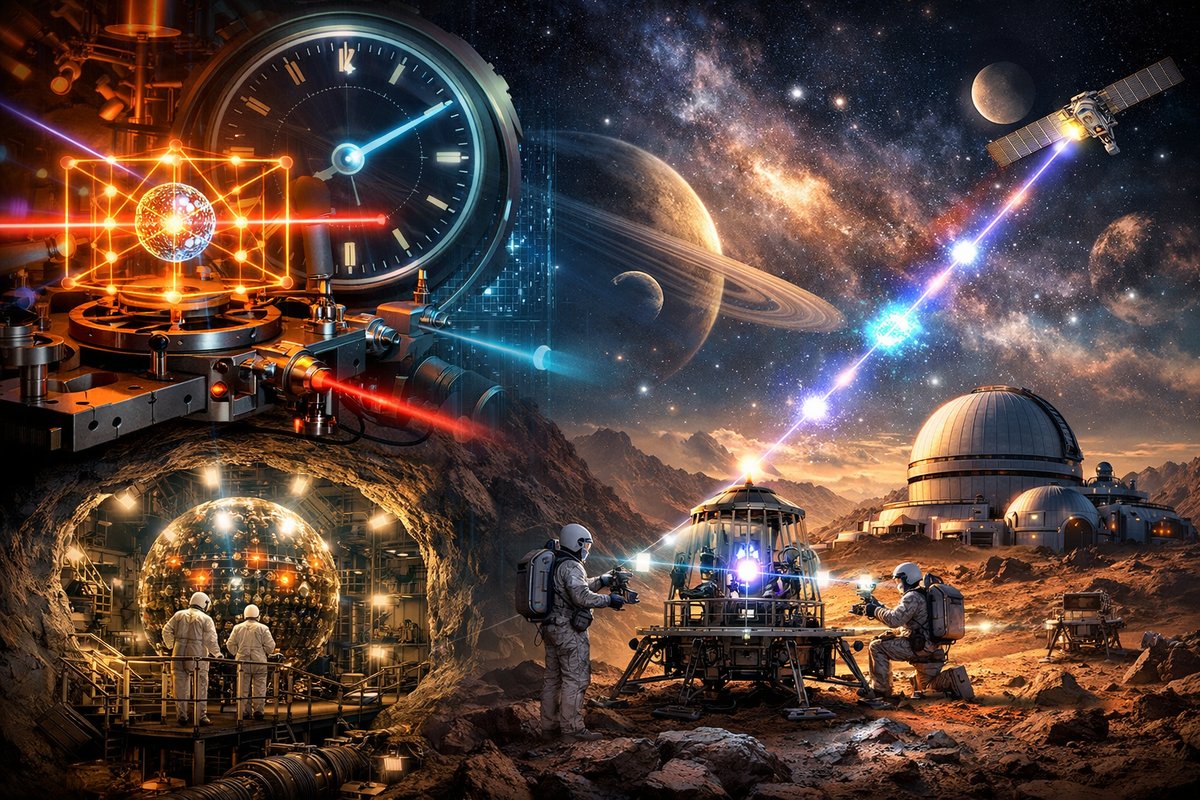
From record-breaking optical lattice clocks to subterranean dark matter detectors and interplanetary quantum labs, scientists are pushing boundaries to decipher the universe's deepest secrets. This article explores how precision instruments and cosmic observations are reshaping our understanding of time, mass, entropy-and our place in the grand narrative of existence.
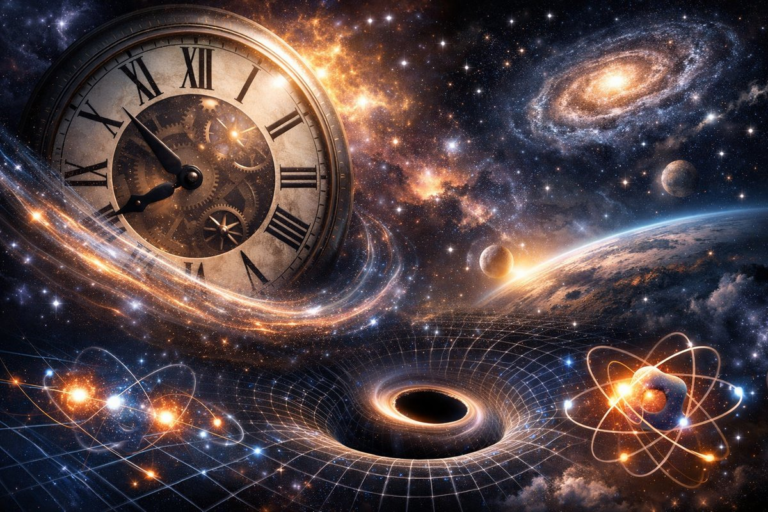
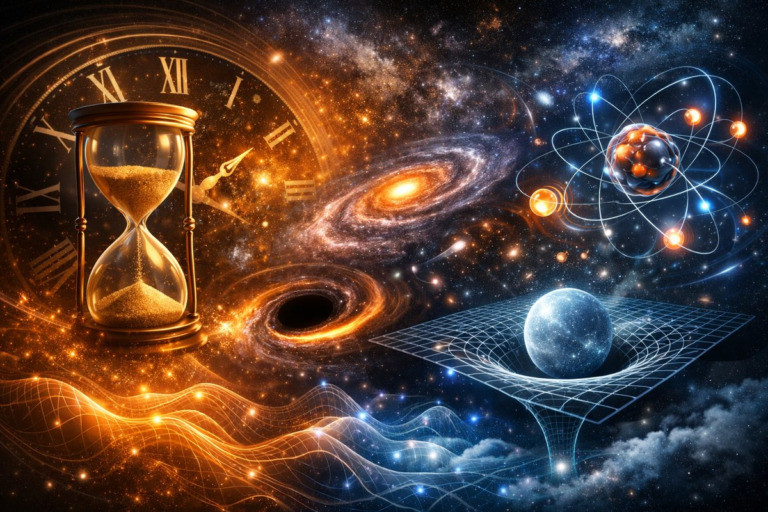
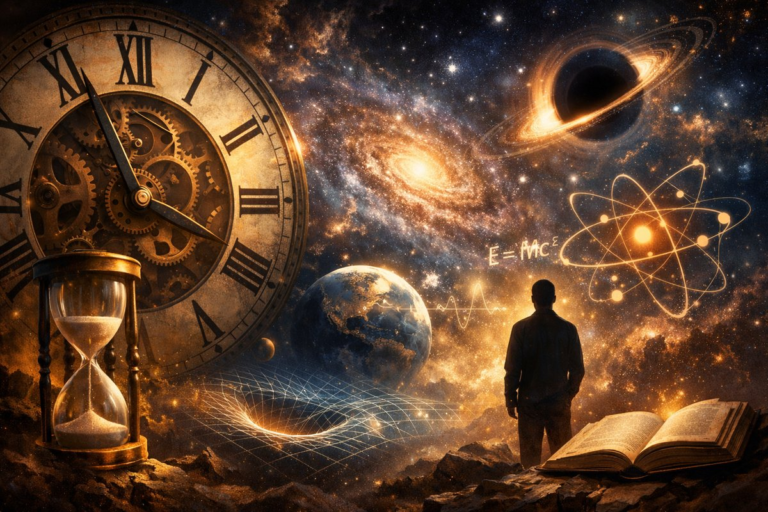
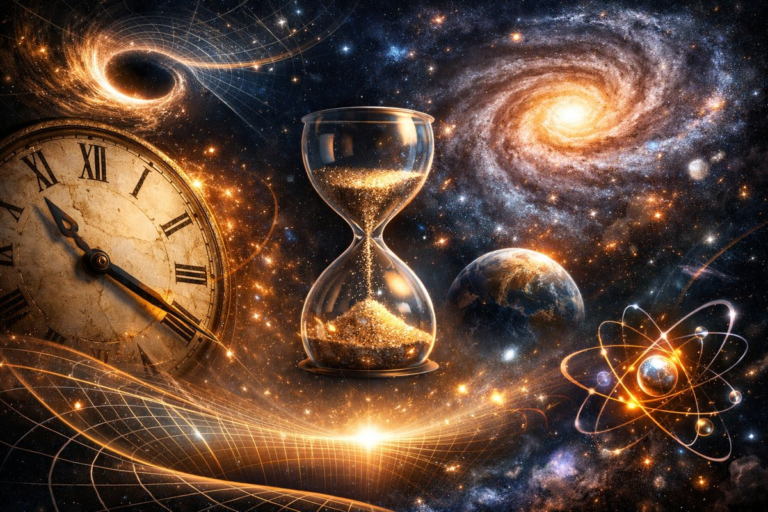
Humanity has entered an age where the lines between the cosmic and the quantum blur. In laboratories on Earth and satellites above our atmosphere, advances in timekeeping, matter detection, and quantum sensing are converging to illuminate the hidden architecture of reality. Researchers are synchronizing clocks with precision measured in quintillionths of a second, constructing mammoth detectors deep underground to hunt elusive dark particles, and deploying quantum experiments in orbit-all in pursuit of questions that have challenged thinkers since antiquity: What is time? What is matter made of? And how do these elements weave the tapestry of the universe?
At the heart of this transformation lie cutting-edge atomic clocks. Earlier this year, scientists at a national metrology institute announced a new optical lattice clock capable of ticking with a fractional uncertainty below 1 × 10^(-19). That means the clock would neither gain nor lose a second over the entire age of the universe. By trapping thousands of atoms in a laser-created lattice and probing electron transitions with ultra-stable lasers, researchers have refined the measurement of time to levels that open doors to testing gravitational redshifts predicted by general relativity across mere centimeters of altitude change. Beyond fundamental tests, these clocks promise breakthroughs in geodesy-mapping Earth’s gravitational field with unprecedented resolution, monitoring sea-level rise, and even forecasting volcanic unrest through tiny fluctuations in local gravity.
While atomic clocks establish the cadence of reality, quantum sensors act as its sentinels. In low Earth orbit, a spaceborne Cold Atom Laboratory has cooled clouds of rubidium atoms to near absolute zero, creating quantum condensates that respond exquisitely to inertial forces and gravity. Ground teams are exploring how these sensors might detect minute gravitational anomalies or refine inertial navigation for spacecraft in regions where GPS signals fade. Back on Earth, teams have developed magnetometers based on diamond nitrogen-vacancy centers; these devices detect magnetic fields at the nanoscale, revealing patterns in materials science and offering pathways to non-invasive neural imaging.
Perhaps the most mysterious component of our universe is dark matter, a substance that outweighs ordinary atoms by a factor of five yet evades direct detection. Deep beneath a mountain in northern Europe, a massive time projection chamber filled with ultra-pure xenon has begun its second run. Known as XENONnT, this 8-ton detector listens for the rare flashes of light that would signal a weakly interacting massive particle (WIMP) colliding with a xenon nucleus. After months of data, researchers have tightened exclusion limits on WIMP masses around 50 to 1000 GeV, narrowing the field of viable theories. In North America, a sister experiment has just started filling its cryostat with liquid xenon, while preparations continue on another continent for a multi-kiloton liquid argon detector aimed at probing lighter dark matter candidates.
On a grander scale, gravitational waves provide a new medium for exploring mass and motion. Since the first detection in 2015, the global network of interferometers has recorded dozens of events-colliding black holes and neutron star mergers that send ripples through spacetime. The most recent observing run captured a rare black hole-neutron star merger, yielding insights into how matter behaves at nuclear densities. Upgrades scheduled for the next cycle will boost sensitivity by up to 50 percent, raising expectations for detecting signals from supernova core collapses or even speculative phenomena like cosmic string oscillations.
Meanwhile, the Event Horizon Telescope collaboration continues to refine images of black hole shadows. Following the breakthrough silhouette of the giant black hole in galaxy M87, teams have synthesized data from new radio dishes, targeting the supermassive object at the center of our Milky Way. By analyzing how light warps around such extreme gravity wells, astronomers are putting Einstein’s theory of general relativity to the most stringent tests and probing the physics of accretion disks at scales smaller than our solar system.
Neutrino observatories add another piece to this cosmic puzzle. Deep beneath the Antarctic ice, the IceCube detector monitors a cubic kilometer of crystal-clear ice for flashes from high-energy neutrinos streaming in from distant galaxies. Recent analyses have correlated a subset of these detections with active galactic nuclei, suggesting that supermassive black holes could be cosmic particle accelerators. Plans for IceCube-Gen2 will expand the instrumented volume tenfold, aiming to capture enough events to map the neutrino sky and reveal the engine rooms of the most energetic phenomena in the universe.
Taken together, these endeavors weave a narrative of time and matter in perpetual dialogue. Atomic clocks link the flow of seconds to the fabric of spacetime itself. Quantum sensors translate subatomic interactions into readable signals. Detectors for dark matter and neutrinos probe the unseen scaffolding that shapes galaxies. Gravitational wave observatories listen for the universe’s most violent collisions. And black hole imaging tests gravity at the ultimate frontier.
Yet these high-tech achievements also resonate on a human scale. As our measurement tools become more precise, so too does our sense of place in the cosmos. Minute shifts in an atomic clock’s tick can forewarn of geological unrest beneath our feet. Observations of gravitational waves remind us that the same forces shaping distant stars also govern our own lives. The hunt for dark matter challenges us to rethink notions of substance, asking whether the universe is composed of familiar particles or something more exotic.
In laboratories and observatories around the globe, scientists collaborate across disciplines and borders to chart this territory. What emerges is an integrated view of reality-one in which time is not merely a backdrop but an active agent, and matter is more than just mass and volume, carrying clues to the universe’s ultimate fate. The boundary between experiment and story dissolves as each new discovery reshapes both our scientific framework and our collective imagination.
As we peer ever more deeply into the quantum weave and scan the heavens for subtle signals, we carry forward a tradition that stretches back to philosophers gazing at the stars. Now, armed with lasers, cryogenics, underground caverns, and spaceborne labs, we are poised to rewrite chapters of cosmic history. The threads of time, matter, and mystery are becoming visible, and with each new measurement we stitch a more detailed tapestry of existence-one that may yet reveal the answers to life’s oldest riddles.