Location
Mount Vernon, WA 98274

Location
Mount Vernon, WA 98274
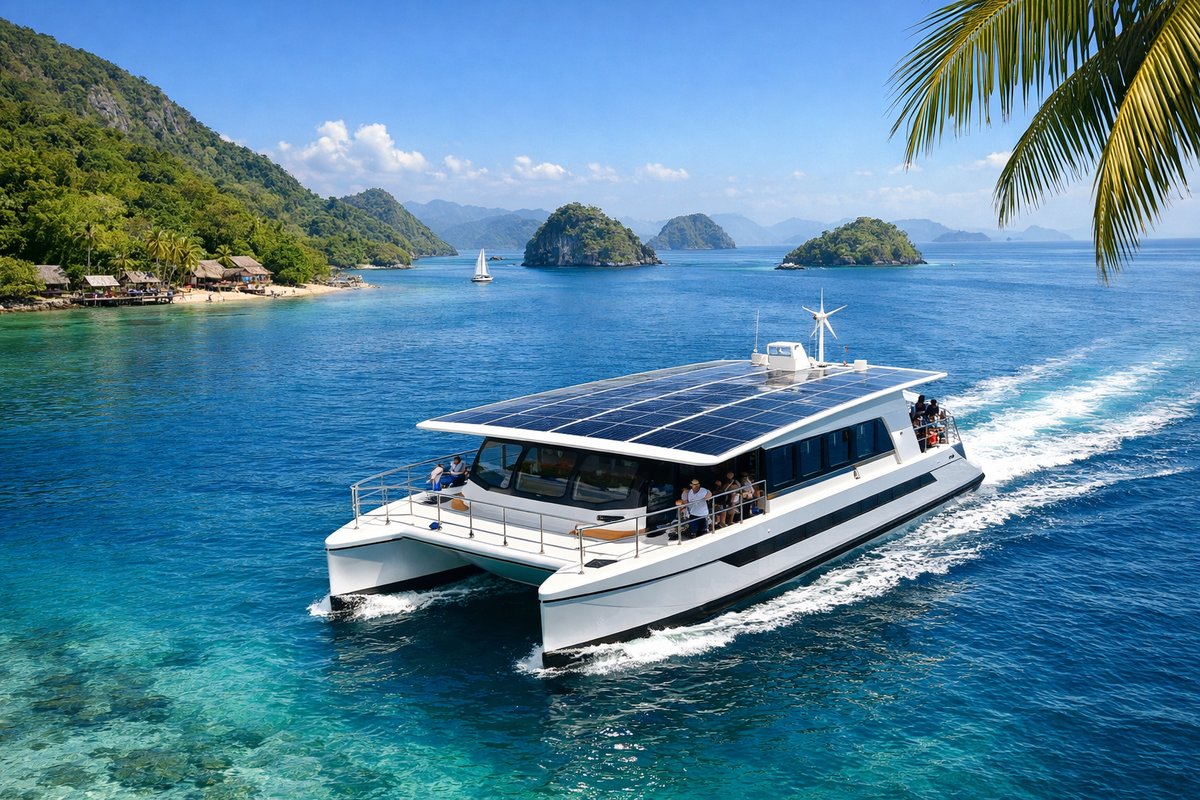
A pioneering solar-electric catamaran now links remote islands in an archipelago once reachable only by diesel ferries. This shift toward renewable-powered sea transport is reshaping community tourism, cutting emissions, and offering travelers a glimpse of a cleaner maritime future.
The turquoise waters of the archipelago have long been a lure for intrepid travelers seeking crystalline lagoons and thriving coral gardens. Until recently, diesel-run ferries were the only means of reaching these secluded shores-leaving a heavy carbon trail in their wake. This month marks a turning point: local authorities have unveiled the OceanLight, a solar-electric catamaran that sails entirely on renewable energy. Its maiden voyage between Port Celeste and Coral Haven Resort signals a new chapter in sustainable island-hopping.
Equipped with 120 square meters of photovoltaic panels integrated into a lightweight carbon-fiber roof, OceanLight generates enough energy to cruise at eight knots for up to six hours before recharging. Beneath its sleek deck lies a bank of high-density lithium-iron-phosphate batteries, chosen for their stability and longer cycle life compared to conventional options. When docking at sun-drenched piers, the vessel tops up its reserves via shore-based solar arrays. Operators estimate a zero-emission range exceeding 80 nautical miles, ample to connect the archipelago’s scattered terminals without burning a drop of diesel.
Local officials and tourism entrepreneurs have hailed this introduction as the first of its kind in Southeast Asia, where rough seas and sprawling distances have historically limited electric vessel adoption. According to industry data, fewer than thirty solar-electric passenger boats were operating in the region as of last year. The OceanLight project-funded through a consortium of regional development banks and clean-energy grants-aims to serve as a blueprint for greener maritime links across similar coastal communities worldwide.
Travelers boarding the catamaran on its inaugural run noticed more than just the hum of electric motors; they observed the serene absence of engine rumble and diesel exhaust. Children leaned against tempered-glass railings to watch tropical fish dart alongside the hull. Guides on board passed around tablets loaded with interactive maps showing real-time power output, projected range, and ecological benefits-metrics normally shielded from public view on commercial ferries. A press release from the vessel’s operator highlights an expected annual saving of 30,000 liters of fuel and a reduction of nearly 80 metric tons of CO₂ emissions compared to conventional crossings.
Beyond cutting greenhouse gases, the venture is generating fresh economic opportunities ashore. Small-family inns and eco-lodges have sprung up near new jetty points, leveraging the quieter, cleaner arrival of guests. Many of these retreats are built on stilts over mangrove nursery grounds, constructed from locally sourced timber and climbing vines woven into living walls. Guests can slide off their shoes at arrival, follow bamboo walkways through shaded groves, and settle into rooms with panoramic reef views and night skies unobscured by engine flares.
Local artisans have also seen a revival. Craft markets on each island bustle with hand-dyed textiles, coconut shell carvings, and seasonal fruit preserves. Guides offer walking tours through saline-wetland sanctuaries, where endangered shorebirds find refuge. Profits from vessel ticket sales are partly funneled into community conservation funds, supporting mangrove replanting and reef regeneration projects. By mid-decade, officials hope to establish a self-sustaining eco-island network, powered entirely by solar, wind, and tidal energy.
For visitors planning a voyage on the OceanLight route, a handful of practical tips can enhance the experience. Arrive at port early to witness pre-departure solar calibrations-engineers check each panel’s angle and wipe away salt spray to optimize output. Pack light, waterproof gear and biodegradable sunscreen, which helps protect sensitive reef ecosystems. Expect a gradual cruising speed; the catamaran’s design prioritizes efficiency over rush, encouraging passengers to soak in unhurried ocean vistas.
Some travelers combine the day trip with overnight stays at floating eco-pods recently installed in clear-water lagoons. These pods-manufactured off-site in modular sections-are towed into position, lowered onto submerged platforms, and then capped with domed glass ceilings. Inside, guests find minimalist cabins outfitted with solar-powered LED lighting, composting toilets, and desalination showers. Despite their small footprint, the pods offer 360-degree views thanks to low-reflective glazing, while solar water boilers ensure hot water on demand.
Critics caution that any surge in visitor numbers must be carefully managed to protect fragile marine habitats. A recent study by a university marine lab found signs of coral stress near popular snorkeling sites. In response, local authorities have introduced a permit system limiting daily swim sessions and instituted “quiet anchor zones” to safeguard seagrass beds. Tour operators now carry electric paddleboards and one-person kayaks for shore excursions, further minimizing underwater noise and preventing motor disturbances.
Still, the excitement among travelers remains palpable. Online forums buzz with photos of visitors sipping herbal teas on glass-bottom decks, scanning digital charts showing remaining battery life. Journalists who cover sustainable tourism herald the OceanLight model as proof that renewable-powered hospitality can be both practical and profitable. The vessel’s designers are already fielding inquiries from tropical regions in Central America and the Pacific, where similar island-hopping routes could benefit from solar-electric conversion.
Behind the scenes, engineers continue to refine the catamaran’s systems. Plans are underway to introduce retractable wing sails that capture lateral wind, offering a hybrid solar-wind drive system once technology and funding align. A prototype retrofit is scheduled for next season, promising to extend range and cut electrical demand during long crossings. Meanwhile, battery suppliers are testing next-generation cells with enhanced energy density, aiming for lighter, more compact power modules.
For the archipelago’s residents, the shift carries cultural resonance as well as environmental promise. Traditional fishermen remember when sail and oar were the only options for island links. Modern diesel engines brought speed but also noise and pollution. Now, many elders say they detect echoes of bygone quietude as the electric catamaran glides beneath coconut palms. Young entrepreneurs envision a future where travel itself becomes a form of stewardship rather than a footprint of harm.
The emergence of solar-electric island vessels like OceanLight signals a turning tide in maritime travel. Where once the only constant was the drone of engines, now passengers can voyage on sunbeams, reconnecting with sea and sky in near silence. As similar projects take shape in other coastal regions, the map of our wanderlust-driven journeys may soon trace pathways not of fossil-fueled haste, but of renewable-powered reverie. In that quiet revolution, every ripple on the water is a promise carried home.