Location
Mount Vernon, WA 98274

Location
Mount Vernon, WA 98274
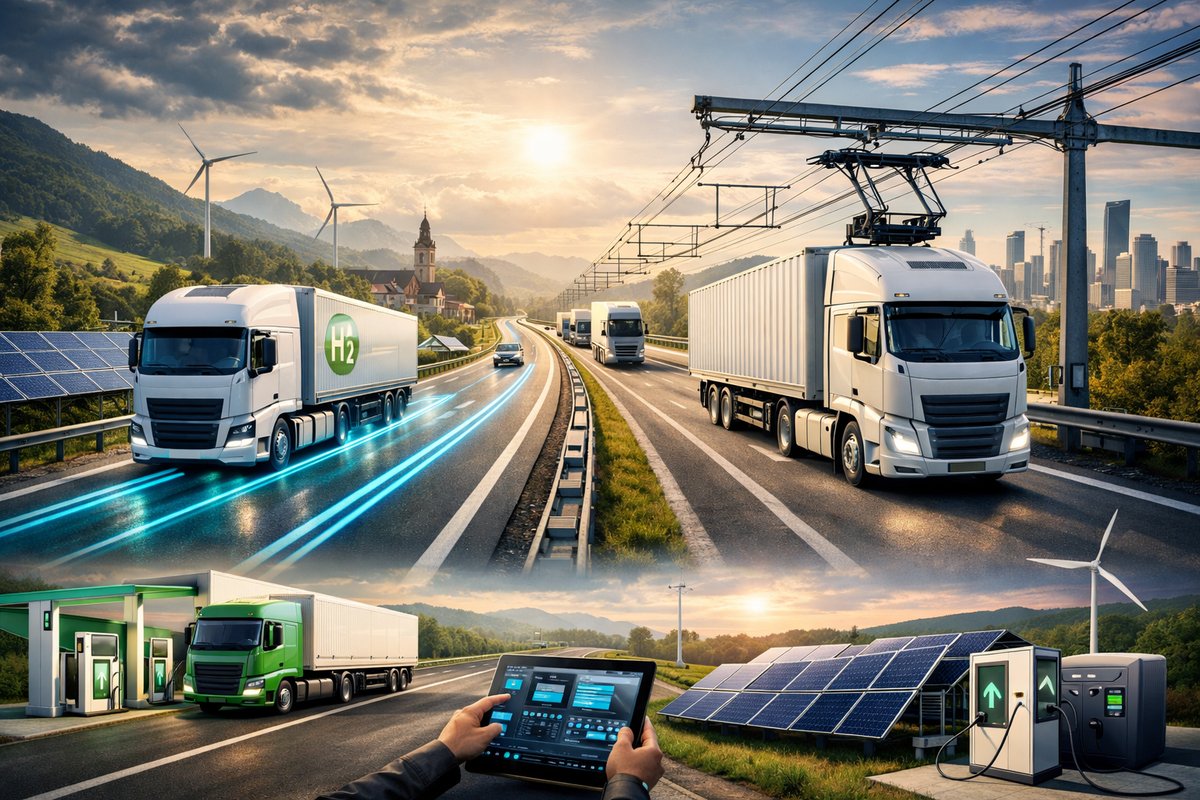
Highways in Europe and North America are being retrofitted with in-road and overhead charging systems that power electric and hybrid trucks as they drive. Combined with hydrogen fuel cells, vehicle-to-grid integration, and advanced fleet management, these pilots promise to reshape long-haul logistics and usher in a new era of sustainable motion.
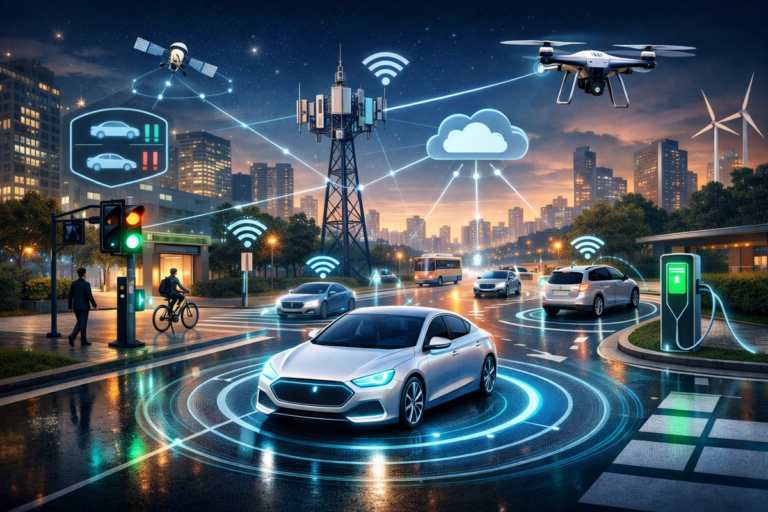
Across the rolling plains of southern Sweden, a fleet of electric buses glides silently along a stretch of highway embedded with inconspicuous charging rails. Solar panels line the adjacent service road, and sensors mounted on street lamps monitor weather, traffic and bus battery status. This is no futuristic movie set-welcome to the era of dynamic road charging, where power flows from pavement to tires and reshapes the very idea of mobility.
In recent years, governments and private operators from Sweden to California have launched pilot projects that embed conductive rails or overhead catenary lines into public roads. When an electric or hybrid vehicle passes over these sections, special pickup arms connect to the power source, replenishing the battery in real time. Gone are the range anxieties that have dogged the shift to heavy-duty electric transport: trucks can recharge on the go, slashing downtime and eliminating hundreds of miles of grid-dependent charging stops.
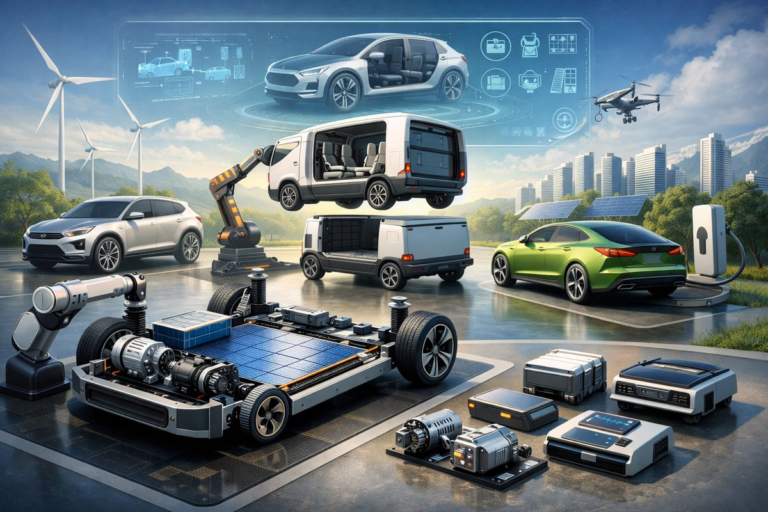
But dynamic charging is only one thread in a broader tapestry of electrification, connectivity, and hybrid powertrains. Automakers and infrastructure firms are pairing battery packs with hydrogen fuel cells to extend range even further-while advanced vehicle-to-grid (V2G) systems allow fleets to feed energy back to the grid at peak demand. All the while, telematics platforms orchestrate routes, charging sessions, and maintenance schedules, using AI algorithms to optimize cost, time, and carbon intensity.
The concept of electrified highways dates back decades, but only recently has the technology matured enough for large-scale pilots. In Germany, a partnership between a rail-equipment maker and a major truck manufacturer converted a two-mile stretch of autobahn into a live-wire corridor. Hybrid trucks equipped with pantograph arms raise and lower automatically, according to GPS-triggered commands. Real-world testing reduced diesel consumption by up to 90 percent, translating into dramatic cuts in greenhouse-gas emissions and fuel expenses.
Meanwhile, in California’s Central Valley, freight carriers are trialing a ground-level charging system developed by a renewable-energy startup. Embedded power rails lie flush with the road surface; a retractable pickup plate under the truck makes contact only when needed, avoiding wear and debris buildup. Solar canopies above rest areas feed surplus energy directly into these rails. According to state regulators, the pilot delivered a 40-percent improvement in overall fleet efficiency within months of launching.
What makes these programs possible is close collaboration among utilities, highway authorities, and equipment manufacturers. High-power substations are repurposed or built along key corridors; digital twins of the road network predict loads and send real-time commands to switchgear; and predictive maintenance tools alert technicians before cables degrade. It’s an orchestration of mechanical engineering, grid intelligence, and data science all working in harmony.
Despite the promise of pure battery electric systems, long-haul transport still presents challenges-chiefly, the weight and cost of battery packs large enough to cover 500 to 1,000 miles in a single leg. That’s where hydrogen fuel cells come in. By generating electricity through chemical reactions of stored hydrogen, these cells can double or triple vehicle range without the mass penalty of additional batteries.
In a recent field test, a European logistics carrier outfitted several 18-wheelers with both a 300-kWh battery pack and a 70-kW fuel cell stack. When driving on electrified segments of highway, the pantograph provided instantaneous power, bypassing the battery and preserving charge. On unelectrified roads, the battery served city and short-haul work, while the fuel cell kicked in on long stretches, topping up the battery through an onboard converter.
The result was remarkable: average fuel savings above 75 percent and carbon-intensity reductions exceeding 80 percent compared to a baseline diesel rig. Fleet managers could plan mixed-mode routes that tapped each power source where it performed best, while drivers noticed minimal change to their routines.
Beyond powering wheels, modern electric trucks and buses can return energy to the grid. Vehicle-to-grid (V2G) technology allows a parked vehicle to operate like a battery storage unit, feeding power back during times of high demand. For regional transit agencies, this opens a new revenue stream: idle buses at depots can sell stored capacity to utilities, helping balance renewables and deferring costly grid upgrades.
In one recent pilot, an American public transit authority equipped 50 buses with bidirectional chargers. During evening peak hours, the buses discharged energy to the local grid for up to two hours, reducing peak demand charges by nearly 20 percent. At night, they recharged at off-peak rates. The net result was a payback on charging infrastructure investment in under five years-a compelling business case for agencies and taxpayers alike.
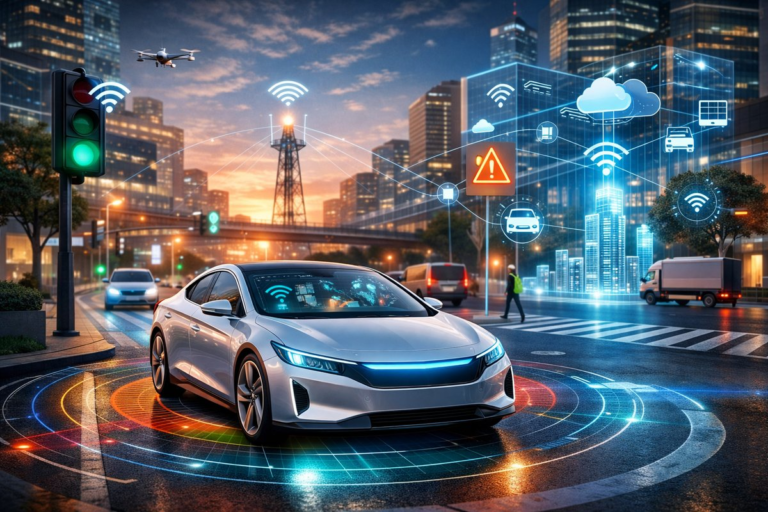
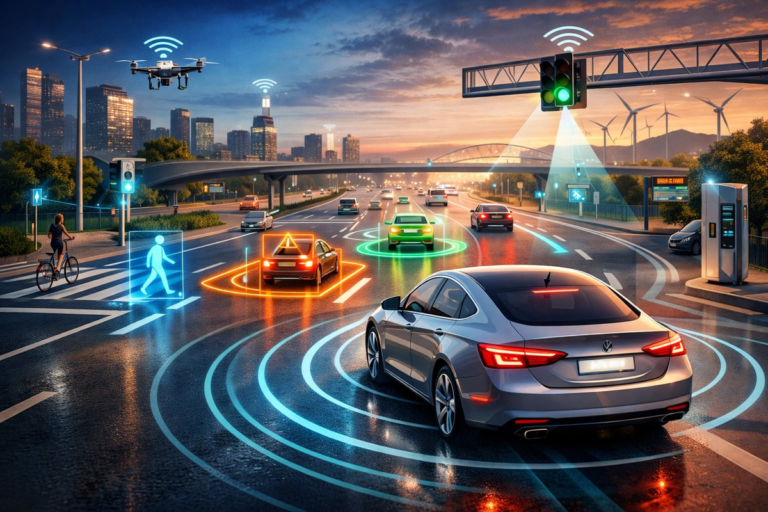
Orchestrating all these moving parts-electric rails, overhead wires, hydrogen tanks, battery reserves, and grid services-requires an intelligent backbone. Telematics platforms aggregate data from every truck: battery state of charge, hydrogen tank levels, pantograph connection status, GPS coordinates, predicted traffic delays, weather forecasts, and more. Machine-learning models process this data to recommend optimal charging strategies, route deviations, or maintenance actions, sometimes in real time.
In practice, a dispatcher’s dashboard might flag a truck whose battery is dropping faster than expected due to heavy winds. It can then suggest a detour along a dynamic-charging highway segment, where the truck can top up without stopping. Elsewhere, an alert may instruct a technician to replace a pantograph arm nearing its service limit, preventing a costly roadside breakdown.
The more fleets adopt these tools, the richer the data they generate-creating feedback loops that sharpen predictions and unlock new efficiencies. Some industry analysts foresee a future where freight marketplaces dynamically auction off charging slots on electrified highways, based on demand, price and carbon metrics. In such a world, even fleeting gaps in infrastructure utilization might be monetized.
Despite the breakthroughs, scaling electrified highways and hybrid powertrains faces hurdles. Construction costs for in-road rails or catenary lines run into the millions per mile, and retrofitting existing lanes can disrupt traffic. Standardizing connectors, communication protocols and billing systems across regions remains an unresolved challenge. Hydrogen infrastructure is nascent in many countries, and public policy-especially around subsidies, carbon pricing and road-use fees-will shape where and how quickly these solutions spread.
Yet demand is mounting. Large fleet operators are under pressure to meet corporate sustainability targets. Municipalities want cleaner air in urban corridors. Utilities seek new revenue streams to offset declines in traditional peak-power sales. Consumers are demanding greener supply chains. All these stakeholders stand to gain from a transportation network that charges as it carries, that blends batteries with fuel cells, and that treats every vehicle as a mobile energy asset.
In the coming years, we can expect more live testbeds in North America, Asia and beyond. Dynamic highways may become as familiar as rest stops; hydrogen fueling stations as common as diesel pumps. And as data connects every mile of road and every watt of power, transportation will stop being simply a matter of motion-it will become a symphony of energy, information, and design. The road ahead is being rewired, and the journey has only just begun.