Location
Mount Vernon, WA 98274

Location
Mount Vernon, WA 98274
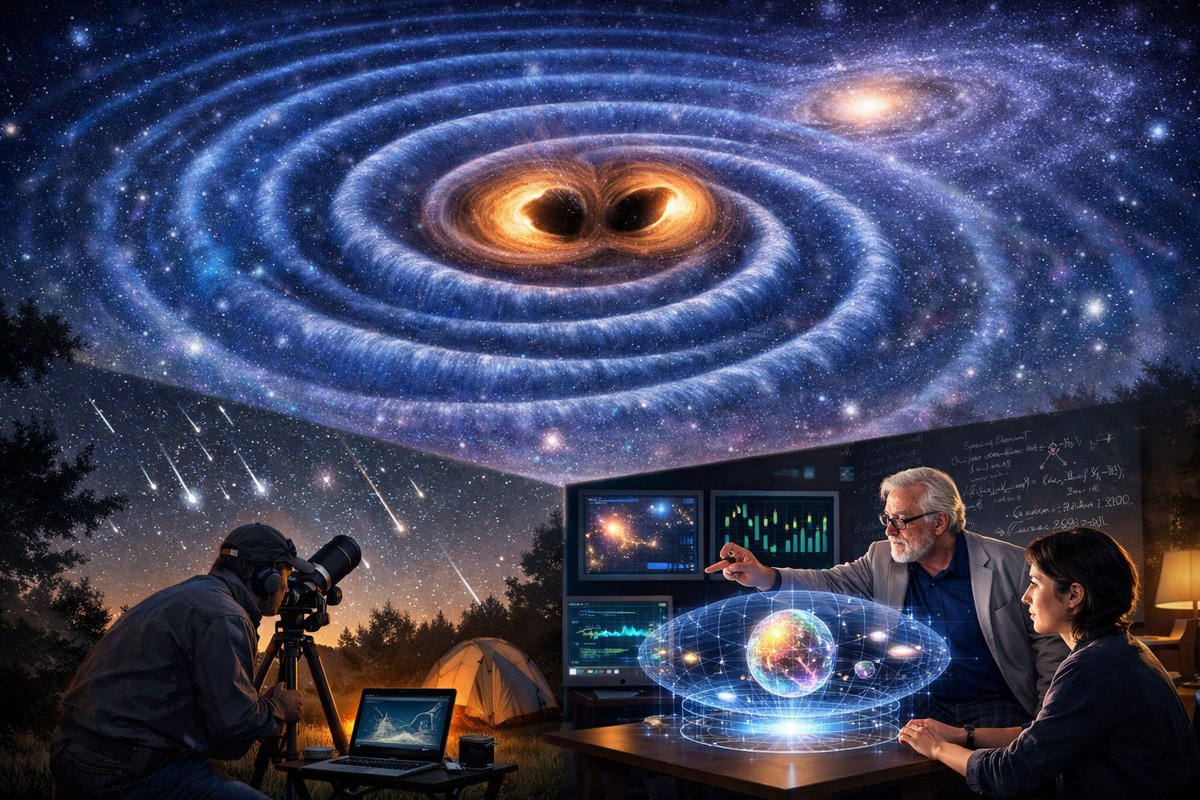
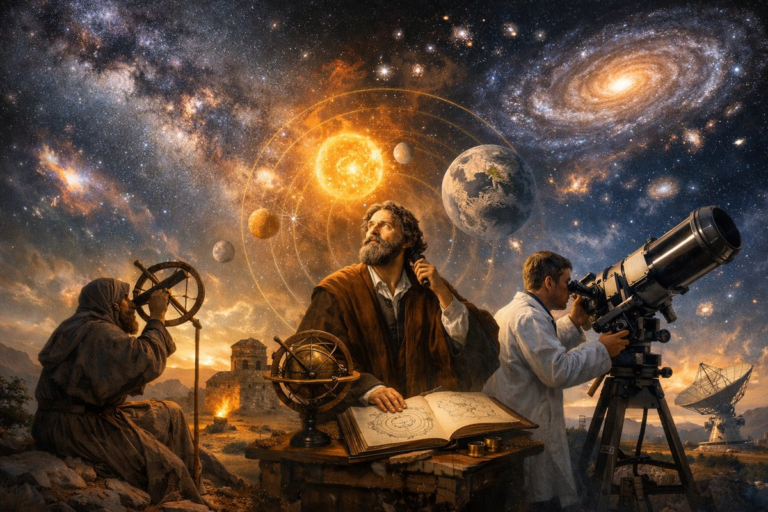
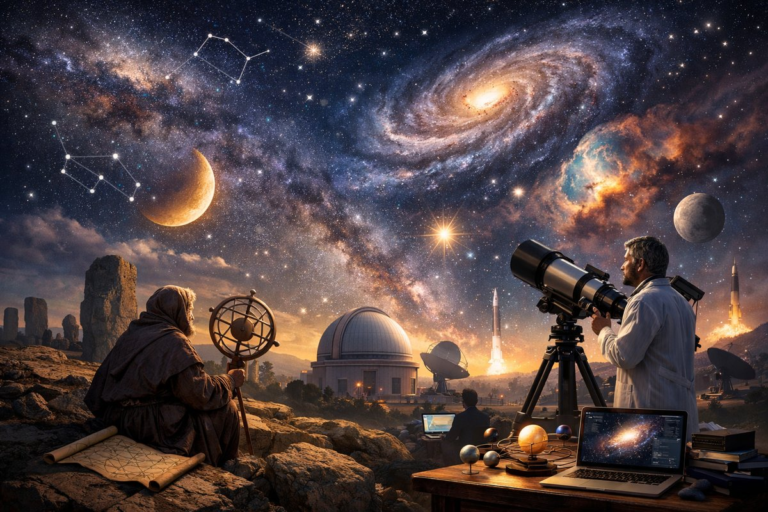
A recent detection of a low-frequency gravitational wave background by an international pulsar timing network has sent ripples through both professional and amateur astronomy circles. From backyard observers mapping meteor trails to theorists refining models of the early universe, this breakthrough underscores how cosmic curiosity bridges communities and expands our understanding of space and time.
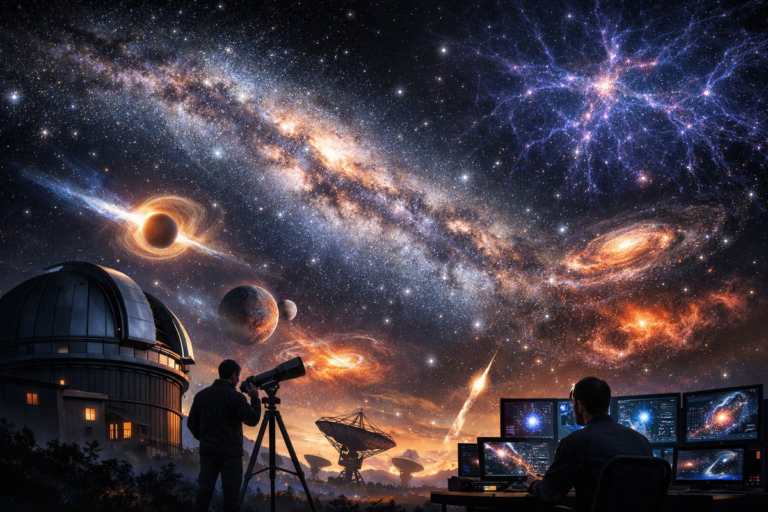
In a quiet observatory tucked away on a windswept plateau, antennas once designed to probe radio pulsars have recorded a faint but persistent tremor in spacetime. This signal, interpreted as the collective chorus of merging supermassive black holes across the cosmos, represents more than just a technical milestone. It has become a clarion call to scientists, educators, and hobbyists alike-a reminder that every leap in understanding begins with a spark of curiosity.
The announcement, spearheaded by an international collaboration of pulsar‐timing arrays, has been met with breathless excitement. Unlike the transient chirps captured by ground‐based detectors a few years ago, this nanohertz gravitational wave background hums continuously, painting a portrait of the universe’s most titanic mergers. It offers fresh data points on galaxy evolution, black‐hole demographics, and the large-scale structure of spacetime. But beyond the equations and models, it is the human story-the interplay of wonder, perseverance, and communal effort-that has captured imaginations.
In classrooms and online forums, students pose questions that cross disciplinary borders: How can we hear the echoes of black holes from billions of light-years away? What do these waves reveal about the cosmic web of galaxies? And perhaps most poignantly, what unknowns might still lie hidden in the universe’s dark corners? Educators are seizing the moment to illustrate fundamental concepts in physics and mathematics, transforming the latest findings into hands-on projects where learners simulate signal processing pipelines or build simple detectors out of everyday electronics.
At the same time, citizen scientists are contributing in ways that would have been hard to imagine just a decade ago. Amateur astronomers equipped with digital cameras and automated tracking mounts are submitting meteor trajectory data to open networks, refining models of debris streams and revealing how tiny dust particles can influence planetary atmospheres. Software platforms that once catered solely to professionals now offer user-friendly interfaces for data analysis, inviting anyone with an internet connection to help sift through terabytes of pulsar timing measurements.
One grassroots group even coordinated a global “radio eclipse” campaign, temporarily repurposing small observatories to monitor known pulsars during a predicted surge in gravitational wave activity. Their contributions filled gaps in the professional array’s sky coverage, demonstrating that collaboration across experience levels can accelerate discovery. The boundaries between amateur and expert are blurring, united by a shared sense of wonder at the physical laws that govern the cosmos.
Meanwhile, theorists are poring over the implications of the signal’s amplitude and spectrum. Some models suggest that interactions between primordial black holes-formed in the universe’s first fractions of a second-could contribute to the background. Others posit that cosmic strings, hypothetical filaments of energy stretching across spacetime, might imprint subtle signatures on the gravitational wave field. Each hypothesis demands rigorous testing, and each test demands more data, fueling the next generation of observational campaigns.
Back in urban centers, where light pollution often drowns out the starlight, virtual reality experiences are offering a different pathway to cosmic immersion. Users don headsets and navigate simulated environments based on real astrophysical data, soaring between colliding galaxies or listening to sonified versions of gravitational waves. These immersive tools serve not only as educational platforms but as gateways to emotional engagement, fostering a sense of stewardship for the fragile beauty of our planetary home.
Research institutions are also exploring ways to make the phenomena more tangible in public spaces. One museum unveiled a kinetic sculpture that oscillates in real time, driven by live feeds from gravitational wave detectors. Visitors feel the gentle motions of the installation, a mechanical metaphor for ripples coursing through spacetime itself. Such artistic interpretations underscore the universality of curiosity, transcending language and cultural boundaries.
Beyond the thrill of discovery, practical implications are emerging. Improved understanding of gravitational waves could refine inertial navigation systems, enhance precision timing for global positioning technologies, and even inform future deep-space communication methods. As satellites and spacecraft venture farther from Earth, accounting for spacetime distortions might become essential for maintaining reliable links. What began as an esoteric pursuit may soon underpin next-generation infrastructure.
Yet the journey is far from over. The current signal is a composite tapestry, and teasing apart the individual threads-isolating distinct black-hole pairs, cosmic string segments, or exotic early-universe events-will require more sensitive instruments. Plans for next-generation radio telescopes and dedicated space-based detectors are already in motion, promising to expand our listening range to new frequency bands. Each advancement will open fresh windows onto the cosmos, inviting yet another wave of questions.
For lifelong learners and fledgling astronomers alike, the message is clear: the universe still holds countless mysteries, and everyone with the curiosity to ask questions has a role to play. Whether you’re scanning the night sky through a backyard telescope or running simulations on a home computer, your participation feeds the cycle of inquiry and innovation. It’s a reminder that science is not a finished tapestry but an evolving tapestry, woven by inquisitive minds from every corner of the globe.
In the end, the hum of gravitational waves is more than a scientific milestone. It is a testament to humanity’s enduring desire to explore, to push past the limits of the known, and to find beauty in the patterns of reality. As data continues to pour in, as theories rise and fall, and as new generations of observers look up in wonder, one truth remains constant: our cosmic curiosity will always be the engine that drives us onward.