Location
Mount Vernon, WA 98274

Location
Mount Vernon, WA 98274
A new wave of ultra-compact gadgets is turning our routines inside out-delivering bigger impact in smaller packages. From solar-boosted power banks to AI-driven sleep aids, these innovations offer sustainable performance, seamless connectivity, and surprising versatility.
In an era when bigger screens and heavier hardware once dominated the tech conversation, a counter-movement is quietly gathering momentum. Sleeker, slimmer and surprisingly powerful, today’s micro gadgets are carving out a new niche in our daily lives. They insist that less doesn’t mean compromise-and that sometimes the smallest tools can catalyze the biggest changes in productivity, sustainability and personal well-being.
Battery breakthroughs have fueled this shift. Recent advances in high-density lithium polymer cells and graphene-composite electrodes are delivering drastically improved energy retention without adding bulk. A handful of startups rolled out power banks barely thicker than a credit card, yet capable of recharging smartphones three times over. Independent lab tests show these ultra-slim chargers can sustain 90 percent capacity after hundreds of cycles, challenging perceptions that slim always equals fragile.
“We wanted to tackle two pain points at once: excess weight in our backpacks and waste from throw-away chargers,” explains a designer behind one leading model. “By rethinking the internal cell structure, we squeezed more capacity into a form factor you barely notice.” The outcome: pocketable energy solutions that feel as natural in a minimalist tote as they do in an outdoor survival kit.
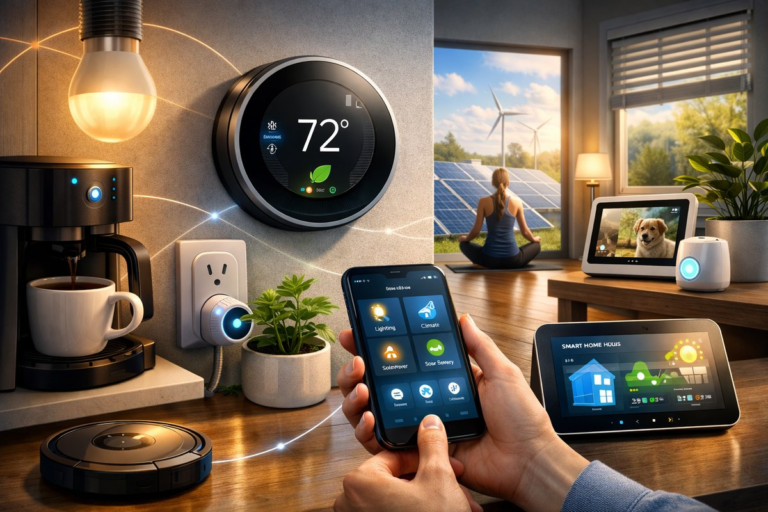
Connectivity has undergone its own miniaturization sprint. Bloated Wi-Fi dongles and chunky adapters of the past have given way to near-invisible USB-C sticks supporting dual-band throughput and mesh network integration. Even Bluetooth audio transmitters no longer require an external battery pack; embedded low-energy chips draw power directly from host devices. The result is plug-and-play simplicity with zero compromise on range or stability.
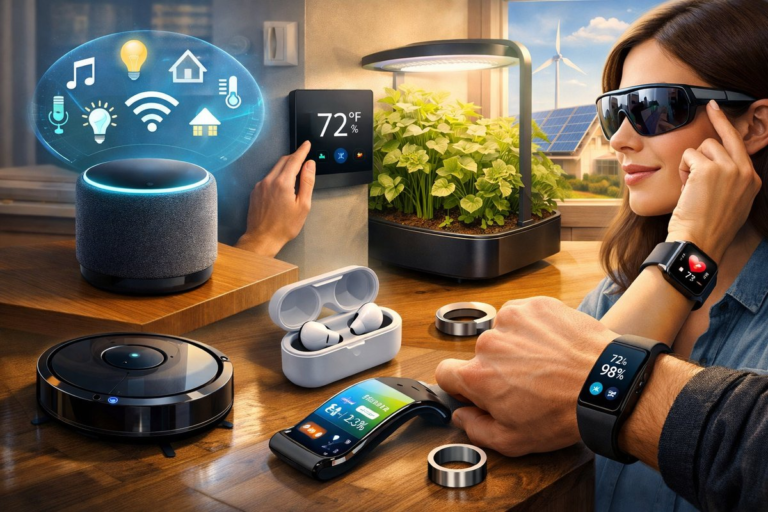
At the forefront of wearable gadgets, smart rings and clip-on modules are transforming health monitoring from wrist-bound videos of your heart rate into truly frictionless experiences. Tiny sensors now measure skin temperature, oxygen saturation and sleep phases while maintaining days-long battery life. Users slip them on like fashion jewelry, forgetting they’re even there-yet their companion apps quietly log vital metrics, detect irregularities and suggest tailored breathing exercises during hectic afternoons.
One surprising beneficiary of this trend is sustainable commuters. Urban cyclists and pedestrians can attach micro solar panels to backpacks or bike racks-thin, flexible sheets that flutter like decorative flags yet capture enough sunlight to power a navigation device or top up a smartphone. Field tests in metropolitan areas recorded daily yields exceeding 8 watt-hours under cloudy skies, enough for short bursts of GPS tracking or emergency calls.
For those who still crave paper’s tactile appeal, e-ink smart notebooks are stepping in. These slim pads combine erasable digital pages with cloud sync, scanning written notes in grayscale as you write. Engineers swapped traditional gel cartridges for refillable ink modules and integrated support for handwriting recognition. The result is a near-indestructible journal whose contents live both on your desk and in a searchable online folder-without draining battery more than once every few weeks.
Meanwhile, language barriers are getting an AI boost in pocket-sized tools. A new generation of voice translator pens employs on-device neural engines to convert spoken phrases in real time, offline. Users speak into a slim cylinder, and the tip vibrates with an audible translation in the listener’s tongue. This offline capability means travelers in remote areas or sensitive environments can communicate without risking data exposure or relentless roaming fees.
The race for more personalized rest has also embraced tiny hardware. Smart sleep masks now incorporate bone-conduction speakers and soft-touch sensors to monitor eye movement and brainwave patterns. When these masks detect the perfect stage for lucid-dream prompts, they emit gentle audio cues and calibrated light pulses-all without waking the wearer. Preliminary studies suggest improved dream recall and more restorative REM cycles, pointing to a future where sleep enhancement lives at the intersection of neuroscience and elegant design.
Tech insiders point to a broader shift: consumers no longer want gadgets that dominate their desk, pocket or psyche. Instead, they’re seeking tools that recede into the background until needed-tools that respect limited attention spans and physical space. This ethos has sparked a revolution in modular product design, where individual functions can be snapped together or removed to suit a specific use case. Imagine a clip-on health sensor that docks with your smart ring, unlocking new biometric insights without requiring an entirely new device.
Sustainability remains a guiding principle. Many micro gadgets embrace upcycled or bio-sourced materials-bamboo composites in input devices, recycled aluminum in enclosures and water-based plastics in battery housings. Manufacturers are making repair kits readily available, encouraging users to replace worn-out parts rather than toss the entire unit. This approach isn’t just good for the planet; it resonates emotionally with a generation wary of disposable culture.
Of course, shrinking hardware brings fresh challenges. Thermal management in confined spaces can limit peak performance, and designers must carefully balance antenna placement for reliable wireless signals. To address these issues, some innovators are turning to advanced Computational Fluid Dynamics simulations and 3D-printed heat sinks. These hidden engineering feats ensure that when a device slips into your pocket, it doesn’t overheat or lose connectivity.
Privacy advocates are also keeping a watchful eye. As sensors proliferate in ever-smaller form factors, questions about data ownership and transparency emerge. Pioneering brands are responding by open-sourcing firmware, enabling independent audits of data-collection practices. They’re also building local-first processing models that handle biometric and contextual information on the device itself, rather than routing sensitive data to remote servers.
Looking ahead, experts forecast even more radical miniaturization-think wearable smart badges that monitor posture, or subdermal microchips capable of secure keyless entry. On the display front, prototypes of roll-to-roll OLED screens promise smartphone-sized windows that unfurl to tablet dimensions. Meanwhile, scientists are exploring printable electronics that could embed basic connectivity into everyday fabrics.
For early adopters, the appeal is clear: convenience without compromise, sustainability by design and a subtle intelligence that enhances life rather than interrupts it. As this micro gadget movement gains steam, the lines between tool and wearable blur. The next time you reach for a device, you might find it’s already in your pocket-waiting patiently to amplify your day.
Ready to equip your everyday with micro marvels? Below are selected tools that capture the spirit of these innovations, blending portability with power and ethical design principles. Whether you’re chasing peak productivity or mindful living, these picks will help you travel lighter, think bigger and reduce your environmental footprint.