Location
Mount Vernon, WA 98274

Location
Mount Vernon, WA 98274
From note-taking and presentations to language bridges and power on the go, a new wave of pocket-friendly devices is quietly reshaping how we work, learn, and explore. These six compact innovations emphasize privacy, sustainability, and seamless integration into daily life.
A growing chorus of engineers, designers, and tinkerers has been on a mission to shrink powerful functions into palm-sized forms. Once confined to lab prototypes, features like e-ink note-taking, pico projection, and on-the-fly translation now live in devices small enough to slip into a backpack pocket. This stealth revolution aims not only at convenience but also at reducing resource use, enhancing privacy, and meeting the unspoken need for tools that adapt to changing routines without demanding full attention.
Advances in component miniaturization and energy efficiency have accelerated these innovations. Over the past five years, the cost of micro-LED displays has dropped by more than 40 percent, while battery energy density has climbed steadily. On the software side, machine learning models can now run basic voice recognition or text rendering on microcontrollers with just a few megabytes of memory. Together, hardware and firmware breakthroughs have paved the way for devices that blend into pockets, purses, or even shirt pockets without a bulky charger brick in sight.
Environmental impact has become a central consideration in this wave of gadgets. More startups are opting for recycled aluminum chassis, bioplastic enclosures, and modular designs that let users replace batteries or screens instead of discarding the entire device. Some companies have even paired new gadgets with trade-in programs for older models, offsetting the carbon footprint of manufacturing by remanufacturing returned units. These sustainable approaches aim to break a familiar cycle of single-use electronics and encourage a longer service life through repairable components.
Take the e-ink digital notebook, for example. Gone are the days of smudged pages and crumpled spiral pads. A lightweight slate with a high-contrast, paperlike display lets you jot ideas with a stylus that mimics the resistance of pen on paper. Notes sync wirelessly to cloud folders, convert to editable text via on-device handwriting recognition, and export as PDF or plain text. With battery life measured in weeks rather than hours, these digital notebooks carve out a quiet niche for those craving analog simplicity without sacrificing searchability or backup.
Presentations and impromptu movie nights also get a boost from portable pico projectors. No longer limited to clunky setups with heavy bulbs, these laser or LED-powered projectors weigh under half a pound and draw less than five watts of power. They fit in a coat pocket and throw images up to 80 inches diagonally on any flat surface. Recent models incorporate autofocus, keystone correction, and even Bluetooth audio output, giving creators and entertainers an easy way to share slideshows or stream videos on walls, ceilings, or campsite tents.
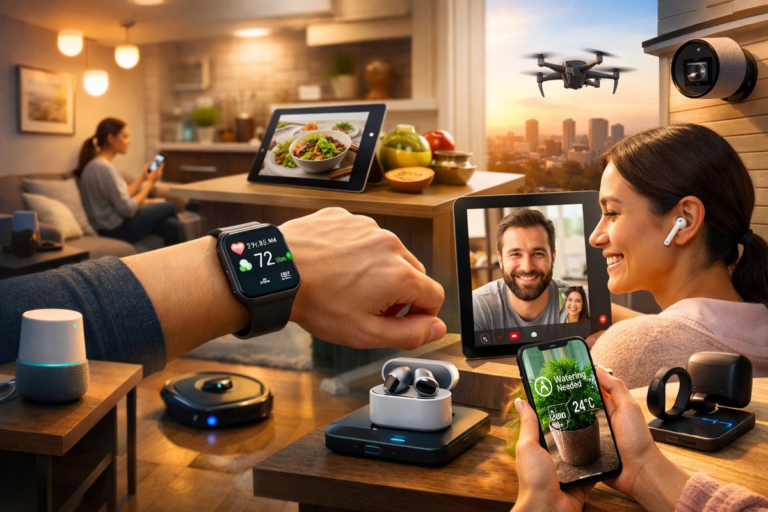
Language barriers fall away with AI translation earbuds that interpret speech in near real time. Slip a compact earbud into each ear and tap an app to select two or more languages. The buds pick up spoken words, translate them locally, and deliver the other person’s speech directly into your ears at natural cadence. For business travelers or language learners seeking immersion, these earbuds provide discreet assistance without the bulk of a phone or laptop. Privacy concerns are addressed by on-device translation processing, preventing sensitive conversations from traveling to external servers.
Wireless noise-canceling earbuds remain a go-to tool for focus and clarity amid bustling urban landscapes or open-plan offices. Beyond powerful active noise cancellation, newer models integrate LED indicators for status alerts, health tracking sensors for heart rate monitoring, and accelerometers that detect gestures for playback control. Engineers have also introduced micro-drivers capable of extending bass response, offering fuller audio experiences without compromising the compact form.
Long days in the field or on the road benefit from portable solar power banks that pack multiple charging ports and fold-out solar panels. These ruggedized packs often feature waterproof shells, built-in LED flashlights, and fast-charging protocols for smartphones and compact cameras. While direct solar charging remains slower than wall outlets, topping up battery reserves during daylight hours can extend off-grid trips or emergency kits without lugging heavy fuel cells or disposables.
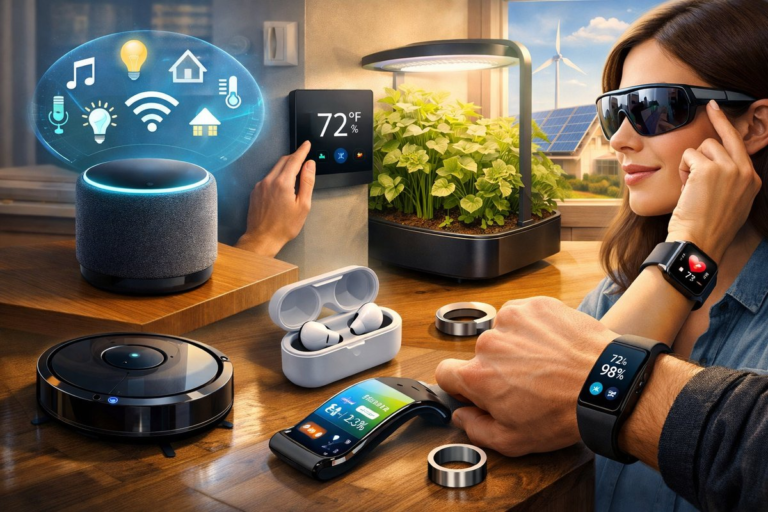
Finally, wrist-worn health trackers have moved beyond step counting to continuous monitoring of blood oxygen, stress markers, and sleep cycles. These smartwatches offer crisp color displays, customizable watch faces, and haptic coaching that encourages movement breaks or deep-breathing sessions. Thanks to low-power wireless radios, they maintain multi-day battery lives even with constant heart-rate sensing. Open APIs let curious users pull anonymized health data into personal dashboards, supporting long-term habit building and data-informed wellbeing routines.
Taken together, these six devices illustrate how micro gadgets are redefining the boundaries of everyday technology. Each brings a piece of specialty lab equipment into public hands, trading complexity for intuitive interactions. Whether you’re drafting ideas in a café, giving a backyard presentation, chatting with a visitor in another language, or simply escaping noise to focus on a task, these miniature tools flex to address emerging needs without demanding a learning curve.
For remote workers who hop between co-working hubs, the e-ink notebook and wireless earbuds streamline both creativity and concentration. Travelers can rely on solar power banks and translation earbuds to navigate unfamiliar landscapes. Content creators find that pocket-sized projectors and noise-cancellation earbuds free them from tethered setups. And health-focused individuals weave smartwatches into daily rituals, tracking well-being while avoiding bulky devices.
Designers and manufacturers are quick to iterate on these platforms. Modular accessories-such as clip-on lenses for projector units or swappable stylus tips for digital notebooks-promise further personalization. Open-source developer communities have already begun porting custom firmware that unlocks new features, from gesture-based controls to alternative data-visualization modes. This collaborative ethos echoes a broader shift toward devices that respect user agency and adaptability over one-size-fits-all solutions.
Concerns around data privacy and e-waste will continue to follow this trend. However, the small size and targeted functions of these gadgets often mean less onboard storage of personal information and fewer complex components that end up in landfills. For those who value transparency, choosing devices with locally processed data and repair-friendly designs reinforces a commitment to sustainability and digital self-determination.
The next wave of innovation will likely blur the lines between these separate tools, merging projection, translation, and note-taking into hybrid form factors. Already, prototypes exist that stack a mini projector atop an e-ink display slab for connected brainstorming sessions. Yet for now, six discreet devices meet distinct needs with surprising depth. In the hands of curious learners, road warriors, or mindful home-bodies, these tiny powerhouses are rewriting expectations for what everyday technology can accomplish without ever feeling oversized or obtrusive.
As we head deeper into an era of ubiquitous computing, these stealthy gadgets offer a glimpse of how function can shrink while impact grows. They invite us to reconsider our relationship with screens, sound, language, and energy-showing that innovation need not be loud or grand to leave a lasting impression.