Location
Mount Vernon, WA 98274

Location
Mount Vernon, WA 98274
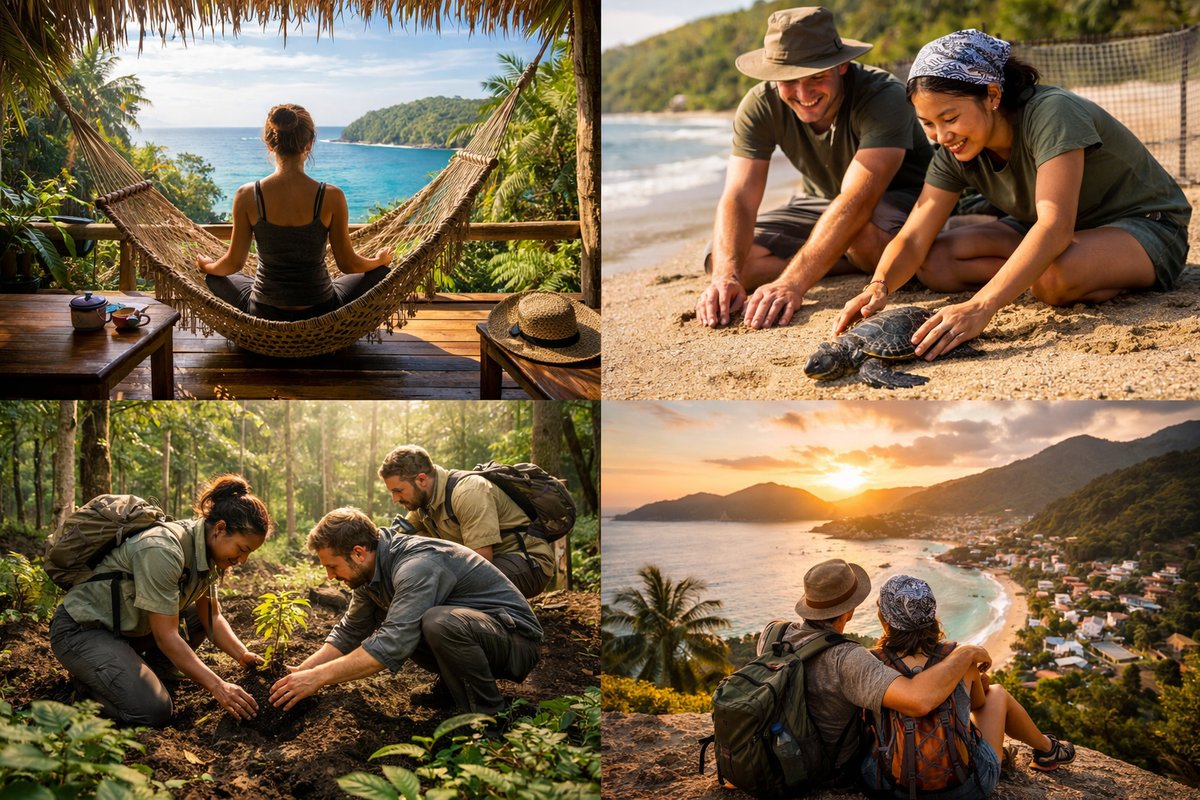
A surge in eco-conscious and community-focused travel is reshaping how wanderers approach their trips. From digital detox retreats in tropical hideaways to hands-on conservation projects on distant shores, purpose-driven experiences are becoming the new standard for modern explorers.
As the world emerges from a period of restricted movement and digital overload, an unexpected shift is taking root among global travelers: the rise of intentional journeys that blend exploration with impact. Once content with ticking off landmarks, more people now seek experiences that leave a positive imprint on local ecosystems and communities.
Last year’s survey by a leading travel research group found that nearly three-quarters of respondents said they would choose a sustainable or community-based option over a conventional trip, even if it meant spending a bit more. This appetite for deeper connections and real-world benefits has given birth to a new wave of travel offerings-from eco-lodges tucked into rainforests to volunteer-driven wildlife conservation camps in remote regions.
Across the Indian Ocean, the secluded shores of an archipelago known for its pristine reefs have become a testing ground for digital detox retreats. One such program invites guests to surrender their smartphones at the dock before boarding a modest wooden vessel. For seven days, participants live off-grid, guided by a local marine biologist who leads snorkeling excursions to restore damaged coral beds. The method is simple: hands-on restoration paired with structured reflection circles each evening, focused on mindfulness and collective storytelling.
“Putting away devices was liberating,” says a Seattle-based graphic designer who joined last spring’s program. “I spent more time observing fish behavior, listening to waves, and learning reef science. By the end, I felt invested in the ecosystem, not just a tourist passing through.”
Similar passions are fueling demand for community homestays in the highlands of Peru. In the Andean villages surrounding Cusco, small-scale cooperatives of Quechua families now host travelers eager to immerse themselves in traditional weaving workshops, high-altitude farming, and seasonal festivals. Guests help plant potatoes bred for climate resilience, learn ancestral irrigation techniques, and share in daily meals cooked over wood-fired stoves. A portion of each fee goes to local education initiatives, resulting in a self-sustaining loop of cultural preservation and economic support.
“I wanted to be more than an observer,” explains a recent visitor from Germany. “My stay felt like joining a larger story-of heritage, adaptation, and care for the land.”
Meanwhile, the Alps have become ground zero for what some experts call “regenerative trekking.” Hiking guides collaborate with environmental NGOs to reroute trails around delicate habitats, manage tree-planting efforts, and monitor glacial melt. One multi-day itinerary weaves through ancient larch forests, uphill to camps where participants review satellite data on snowpack fluctuations and plant native saplings in deforested stretches. Each evening’s debrief combines scientific briefings with stories from local mountain dwellers who share lessons passed down by shepherds and foragers.
At the other extreme of the spectrum, conservation volunteers in coastal Madagascar are tackling endangered species head on. Teams of researchers and travelers camp under canvas while tracking lemur populations, installing motion-activated cameras, and mapping illegal logging routes. No prior scientific training is required, but rigorous protocols ensure every observer’s notes contribute to ongoing wildlife studies. Those who complete the four-week program often leave with a newfound sense of agency-and sometimes, the inspiration to pivot careers toward environmental protection.
Industry specialists regard these models as part of a broader pivot toward experiential depth. A travel trends analyst notes that the pandemic prompted many to reassess wasted hours spent on screens, commuting, and unfulfilling mini-breaks. “Consumers want authenticity,” the analyst observes. “They crave experiences that foster personal growth and social good.”
Tour operators are taking note. A recent report from a global tourism nonprofit indicates a 35 percent increase in bookings for purpose-driven packages compared with traditional sightseeing tours. Some mainstream travel platforms have introduced filters for “low-impact stays” and “community experiences,” reflecting a sea change in consumer values.
Beyond organized programs, independent travelers are also adopting this mindset. Social media groups dedicated to “leave-no-trace” camping and local volunteer directories have surged in membership, creating grassroots networks for impact-minded adventurers. Offbeat initiatives-like a mobile library that visits refugee camps or artist-led mural projects in suburban neighborhoods-demonstrate that purposeful travel can unfold anywhere, often led by creative individuals rather than established tour companies.
Despite the enthusiasm, experts caution that not all purpose-driven travel lives up to its promise. Greenwashing and tokenistic volunteer assignments can undermine local trust and perpetuate harmful power dynamics. To guard against this, prospective travelers are urged to research host organizations’ track records, seek transparent budgets, and prioritize long-term partnerships over one-off interactions.
Reflecting on a recent stay at an eco-retreat in Costa Verde, one visitor outlines a personal checklist: Was waste composted or recycled? Did lodging staff come from nearby villages? Were cultural workshops led by community members? This kind of scrutiny, travelers say, helps ensure that their dollars translate into tangible benefits rather than marketing spin.
Looking ahead, the landscape of purposeful travel appears poised for further evolution. Advances in remote monitoring technology could enable real-time impact tracking, while blockchain-based platforms may offer travelers immutable records of how their fees are allocated. Virtual reality previews might open doors to remote volunteering, where skill-based tasks-like digital mapping or remote tutoring-can be completed online before or after a physical trip.
But at its core, the movement hinges on a simple premise: intentionality. When journeys are framed as opportunities for learning, service, and mutual exchange, travel transcends leisure. It becomes a catalyst for personal transformation and community empowerment. And in an age where digital noise and fleeting distractions dominate daily life, that sense of purpose may prove to be the greatest souvenir of all.