Location
Mount Vernon, WA 98274

Location
Mount Vernon, WA 98274
A wave of kitchen innovations is transforming home cooking from routine to remarkable. Smart ovens, AI-driven recipe assistants, and sustainable appliances are converging to help curious cooks elevate flavor, cut waste, and streamline preparation like never before.
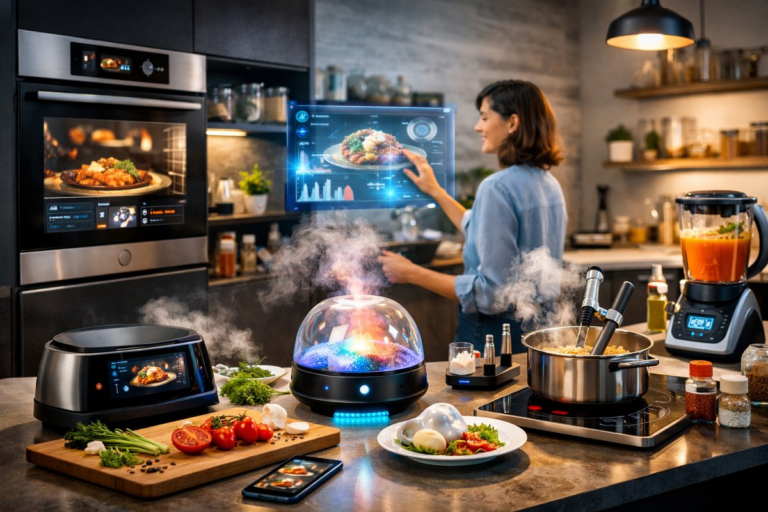
Home kitchens around the world are entering a new era of interconnected devices and intelligent tools designed to amplify creativity, boost sustainability, and simplify everyday cooking. Recent announcements from major tech fairs and specialty food expos showcase gadgets that range from voice-controlled mixers to sensor-driven smart ovens delivering precision heat and real-time feedback.
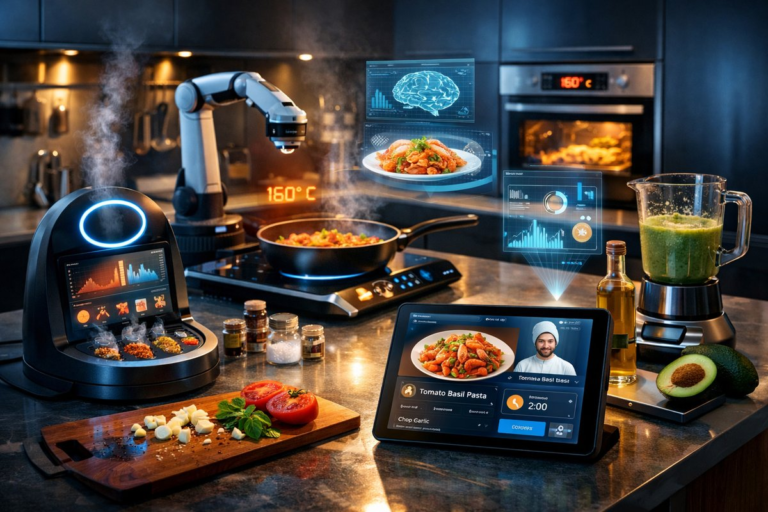
One of the star attractions at recent technology showcases is the rise of AI recipe assistants. These cloud-based platforms integrate with kitchen hardware to guide users from mise en place through plating. Featuring advanced image recognition, AI recipe assistants can identify ingredients, suggest substitutions, and even recommend plating styles based on visual analysis of the finished dish. For home cooks experimenting with unfamiliar spices or seasonal produce, the assistant’s step-by-step instructions ensure that nothing goes to waste or misunderstands the recipe’s intent.
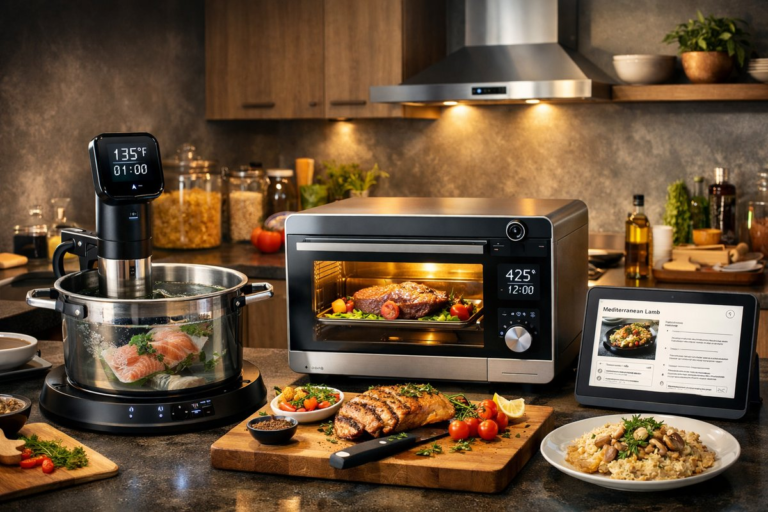
Smart ovens have also come a long way. Equipped with multiple temperature probes, integrated cameras, and Wi-Fi connectivity, these ovens can adjust cooking cycles in real time. If the internal temperature of a roast plateaus below the target, the oven automatically increases heat or switches from convection to broil mode. Integrated companion apps provide push notifications, cooking logs, and roast-done alerts. Early adopters report tighter control over cooking outcomes, consistently achieving desired browning levels and optimal moisture retention in meats and baked goods.
Voice-activated mixers and blenders are redefining hands-free convenience. By simply calling out commands, cooks can knead dough, whip egg whites, or pulse smoothie ingredients without interrupting other kitchen tasks. These devices synchronize with recipe apps, allowing the mixer to adjust speed and duration based on ingredient weight or dough elasticity sensors. Home bakers say this innovation reduces overmixing, which can toughen bread crumb, and under-mixing, which can leave lumps in batter.
Sustainability is another key theme driving kitchen technology. Countertop composting units use heat and agitation to transform food scraps into dry, odorless matter ideal for garden or potted plants. Meanwhile, water-saving dishwashers employ sensors that gauge soil levels on dishes, adjusting water pressure and cycle length accordingly. Some models even capture excess heat from the drying process to pre-heat incoming wash water, slashing energy consumption.
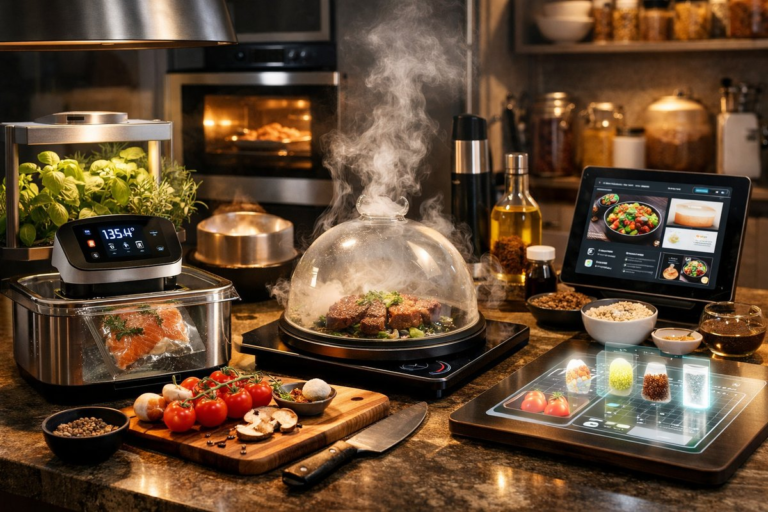
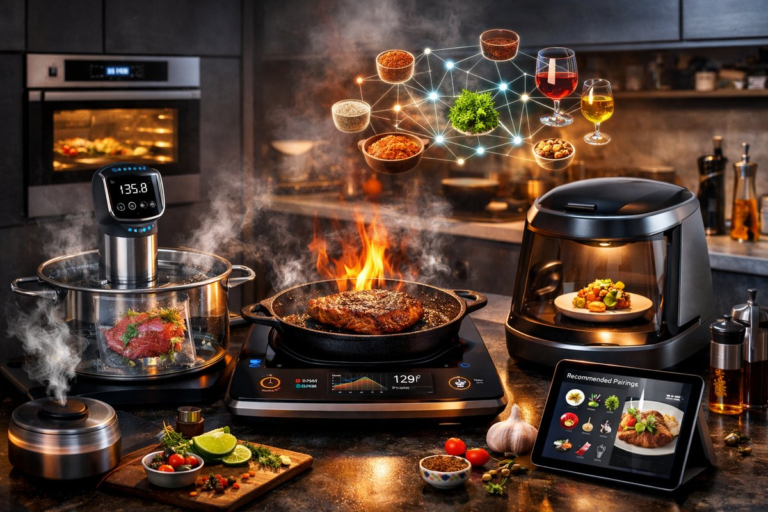
Sous vide precision cookers are no longer niche tools reserved for professional chefs. Compact, Wi-Fi enabled immersion circulators allow home chefs to seal protein in water baths at exact temperatures for extended periods. Paired with foldable silicone racks and vacuum-seal pouches, cooks report restaurant-quality results in steak, fish, and even delicate custards. Companion smartphone apps track doneness curves and alert users when the perfect temperature has been reached.
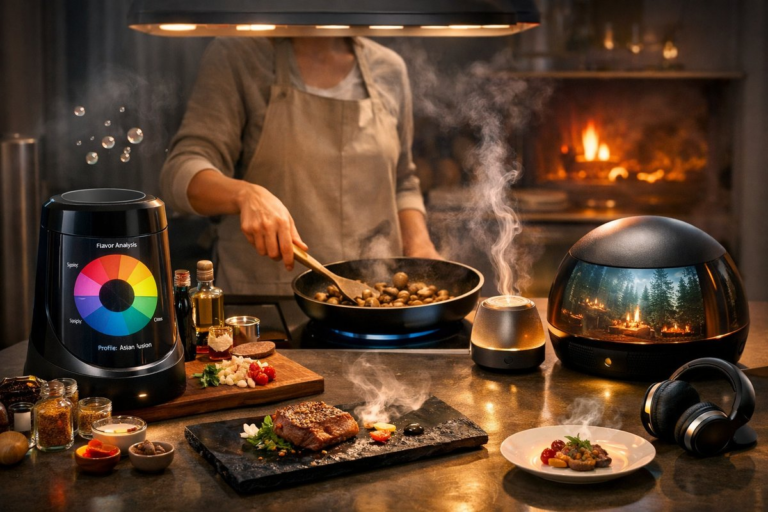
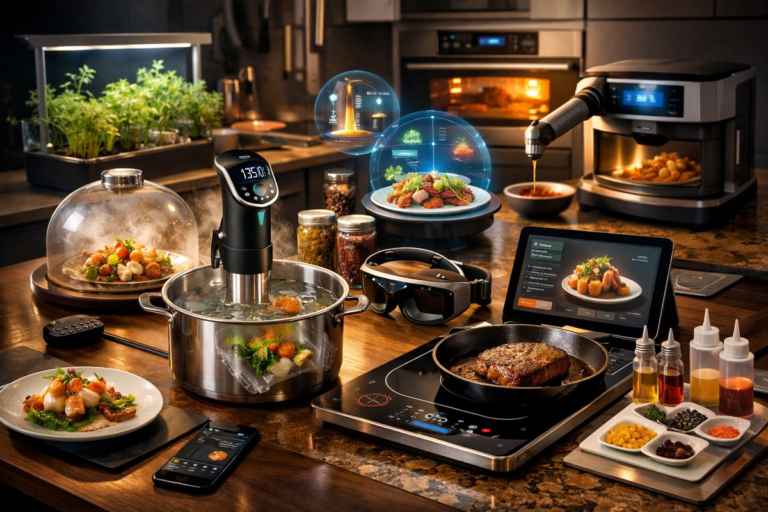
Augmented reality (AR) has also found its way into the kitchen. Using a tablet or AR-enabled glasses, cooks can see overlays indicating where to chop, mix, or fold ingredients. Interactive tutorials guide knife skills by showing ideal angles and motions on top of the cutting board. Some apps even simulate how flavors blend, visualizing compound aromas in color-coded diagrams so users understand the impact of each herb and spice.
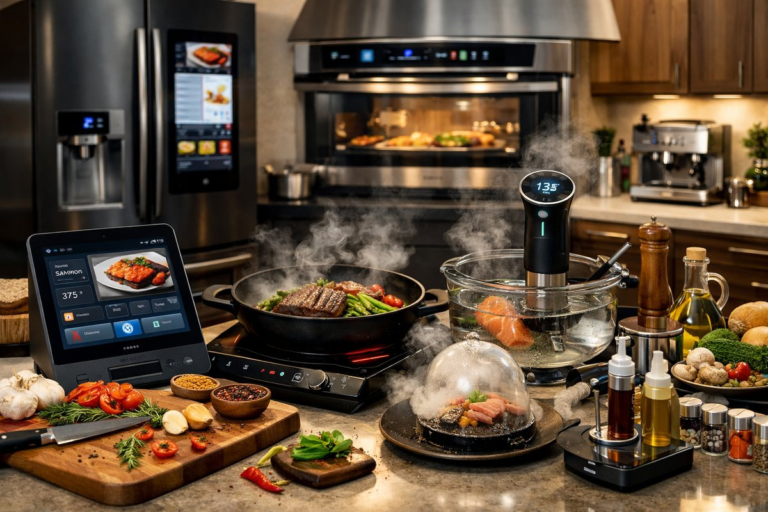
Connectivity remains the thread tying these innovations together. A single cooking hub can coordinate multiple devices: the induction cooktop pre-heats to a simmer, the smart oven holds a souffle at 85 percent humidity, and the beverage steamer froths milk to the perfect microfoam. Data collected across these appliances delivers insights into usage patterns, suggesting when to schedule maintenance or highlighting inefficient routines that could be streamlined.
Despite the promise, a few challenges remain. High-end smart appliances can carry premium price tags, and compatibility issues sometimes arise when mixing devices from different manufacturers. Privacy concerns surface as cameras and voice assistants collect cooking data. To address that, some brands now offer local-only operation modes where all analysis and storage remain on the device rather than in the cloud. This balances the benefits of data-driven cooking with respect for user privacy.
Curious cooks can dip into this tech wave gradually. Start with a smart kitchen scale that logs ingredient weights and nutritional data. Next, add a Wi-Fi-enabled multi-cooker that offers pressure, slow-cook, and sous vide settings in one unit. Over time, voice-activated mixers, countertop fermenters, and app-driven composters can join the lineup, each tool building toward a cohesive smart ecosystem.
Restaurants are watching this trend closely. Professional kitchens have long used precision cookers and blast chillers, but emerging tabletop versions could make advanced techniques accessible to small cafés and ghost kitchens. Integrated ordering systems might soon recommend personalized meal plans based on customer taste profiles and inventory levels, reducing excess purchasing and spoilage.
The social impact of this revolution extends beyond convenience. By making restaurant-quality cooking more approachable, home chefs gain confidence to explore global cuisines and share meals built on authentic techniques. Reduced food waste and energy-efficient appliances contribute to more sustainable households. And the playful nature of AR plating tutorials, voice-driven baking, and smart composting makes daily cooking feel less like a chore and more like an adventure.
As kitchen technology continues to advance, the boundary between professional and home cooking blurs. The passionate home cook of tomorrow will juggle cameras, sensors, and AI prompts just as easily as traditional tools. The result? More flavorful meals, fewer accidental mishaps, and a deeper sense of connection to the ingredients and rituals that turn a recipe into a memorable moment.
Whether you’re a seasoned food explorer or a newcomer eager to experiment, the latest gadgets promise to awaken the senses and inspire culinary creativity. From the satisfying hum of a precision cooker to the gleam of a voice-controlled mixer in action, these tools invite cooks of all levels to embrace technology as an ally, one delicious dish at a time.