Location
Mount Vernon, WA 98274

Location
Mount Vernon, WA 98274
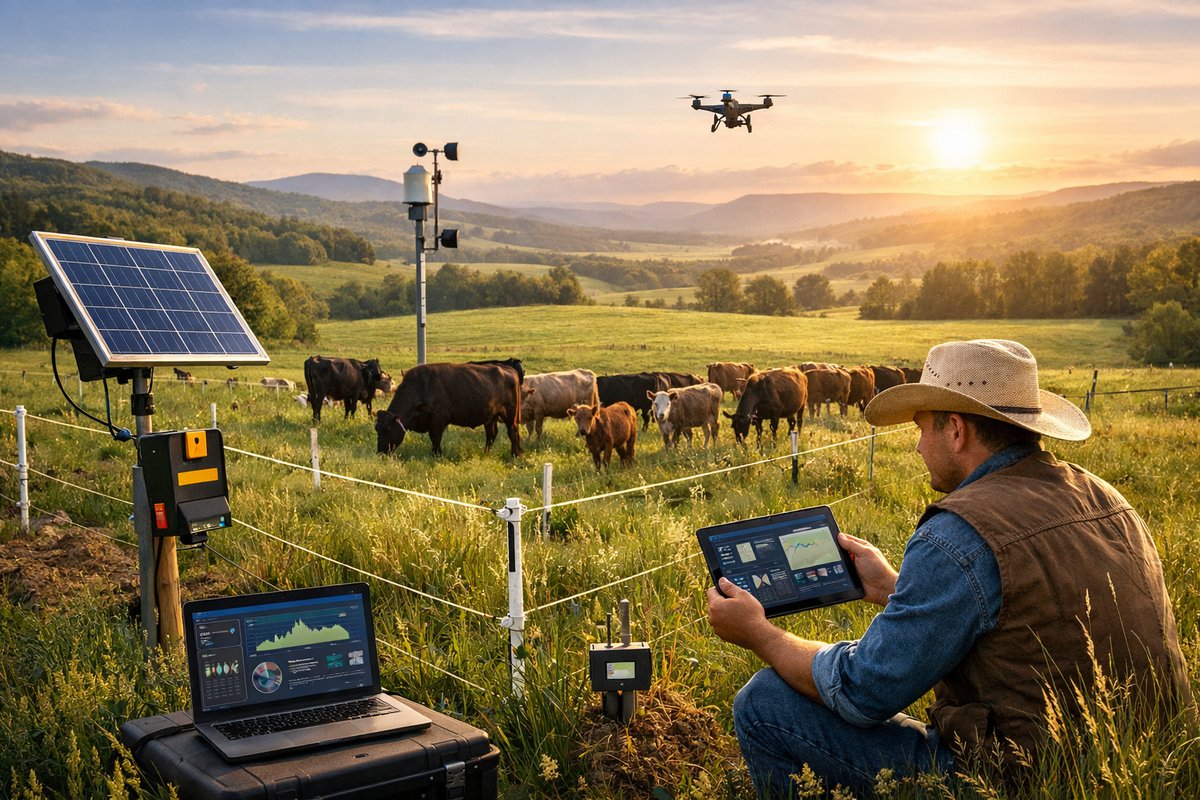
Across rolling pastures from the Ozarks to the Plains, small-scale ranchers are blending age-old grazing wisdom with sensors, solar fencing, and data analytics to regenerate soils, improve herd welfare, and boost resilience. This shift toward tech-augmented rotational grazing demonstrates how rural innovation can lead the charge on climate-smart livestock management.
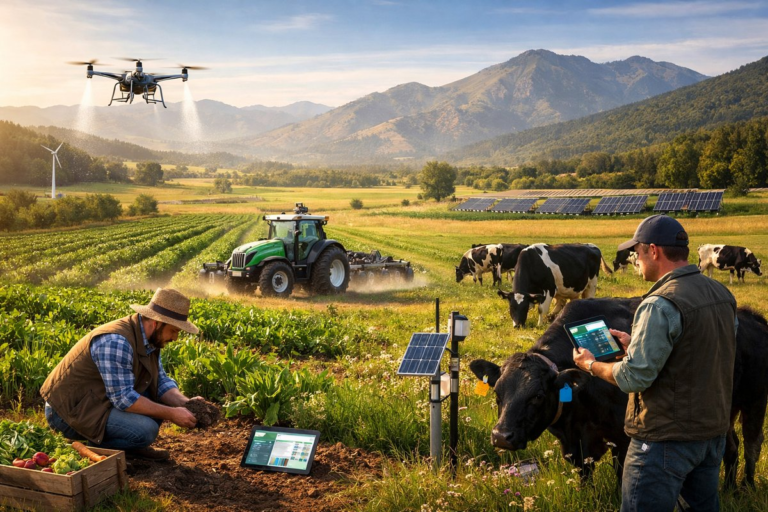
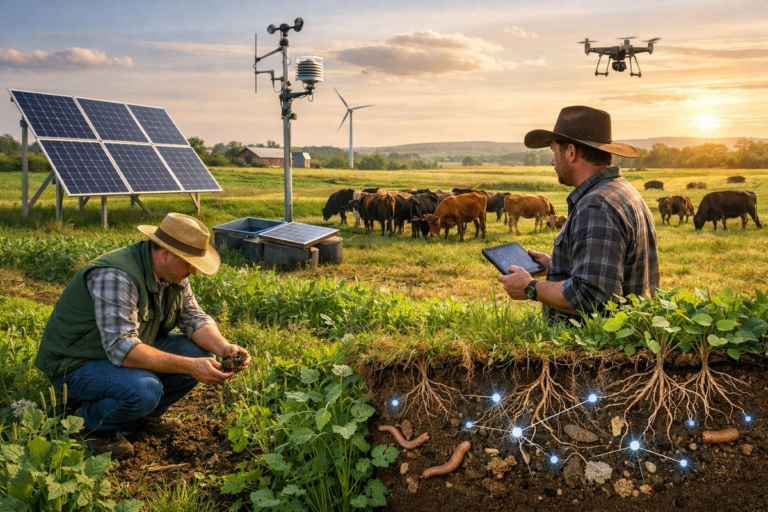
When wind turbines first rose above a Missouri cattle ranch five years ago, neighbors wondered if the big machines would spook the herd. Instead, the turbines unlocked an opportunity. Ranch owner Clara Nguyen discovered that by pairing wind-driven microgrids with solar-powered electric fencing, she could rotate her Angus cattle across ten paddocks every ten days, letting each field rest and recover. Today, her net-zero fencing system feeds real-time voltage data to her smartphone, while satellite imagery tracks forage regrowth-creating a feedback loop that optimizes grazing pressure and soil health.
Nguyen’s operation is part of a wider wave of regenerative livestock projects sprouting in the Ozark foothills, the Great Plains, and beyond. A recent report by the Sustainable Ranching Alliance found that farms integrating remote sensors, mobile pasture mapping apps, and solar energizers achieved 20 percent higher grass productivity and 30 percent lower reliance on supplemental feed. More important, innovative ranchers are reviving carbon-rich soils, boosting biodiversity, and improving animal welfare by mimicking natural herd movements.
Gone are the days of static fencing and year-round confinement. Modern ranchers are experimenting with portable netting, adjustable water troughs on wheels, and lightweight handling panels that minimize stress at vaccination or weighing. On a Nebraska dairy conversion project, a cooperative of 15 small herds replaced dry-lot pens with deep-bedded compost barns. Thermally insulated shelters provide cows cushioned bedding, while compost turners and temperature probes ensure aerobic conditions that break down manure into a nutrient-dense soil amendment. The end result: healthier cows with fewer hoof problems, better calves, and a steerable cycle of crop-field fertilization.
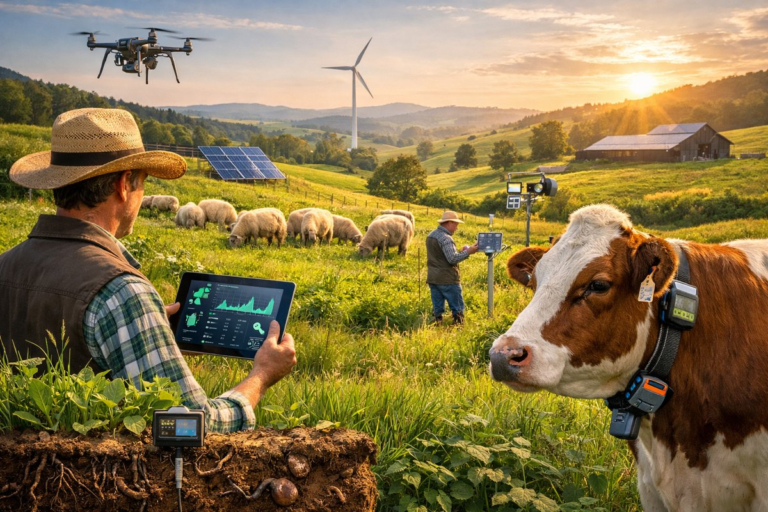
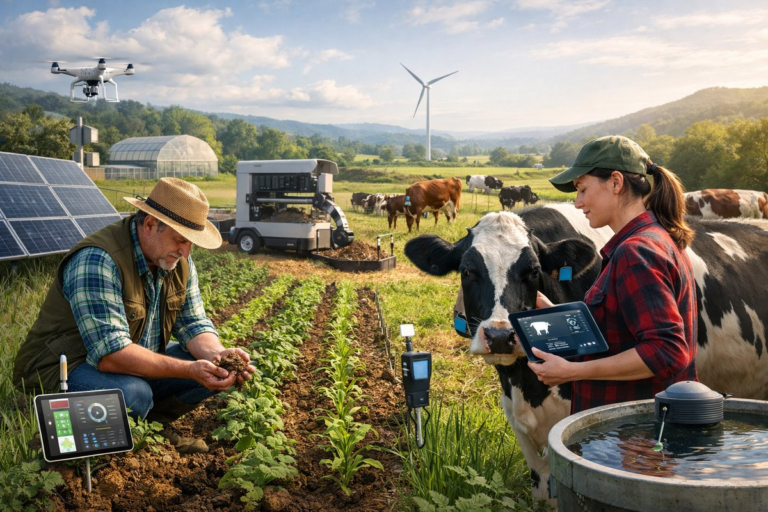
At the heart of this transformation is data democratization. A Kansas State extension grant funded open-source pasture-planning software that integrates fixed-wing drone imagery, smartphone soil sensor readings, and livestock collar signals. Ranchers can overlay rainfall, soil moisture, and forage biomass layers to decide when and where to move a herd. Sofia Ali, a regenerative grazing consultant in Colorado, calls it “precision on four legs.” She helps sheep and cattle producers set up wearable sensors that track animal temperature, heart rate, and activity levels. Early alerts for heat stress or lameness allow ranch hands to intervene before issues escalate.
This tech-meets-tradition approach didn’t arrive overnight. Many ranchers first cut their teeth on rotational grazing principles popularized in the 1980s and 1990s. Yet the real breakthrough came when off-grid solar panels dropped in price and battery storage became feasible. Now, portable energizers can run for months at a time without grid hookups. In the Ozark pilot, Nguyen’s neighbor, a mixed goat and sheep farmer, added solar flooding lights and automatic waterers in paddocks, reducing nighttime predator losses and ensuring livestock never go thirsty during hot spells.
Across the Midwest, youth-driven ag cooperatives are teaching these methods to the next generation. In a corner of western Iowa, a young cooperative of four cattle producers opened a central innovation hub with a climate-controlled demonstration barn. Here, they host weekend workshops on topics from soil biology and no-till cover crops to infrared scanners that spot inflamed joints in livestock. The hub also lends out pasture fence kits and mobile weighing scales so beginning ranchers can test systems before investing heavily.
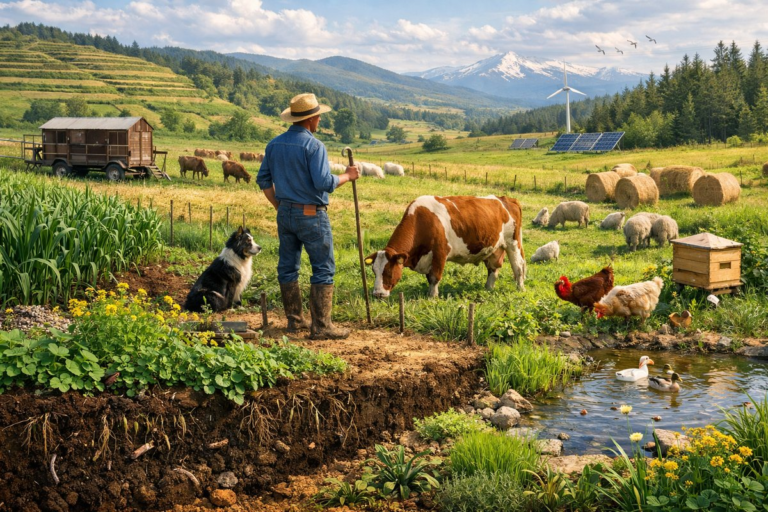
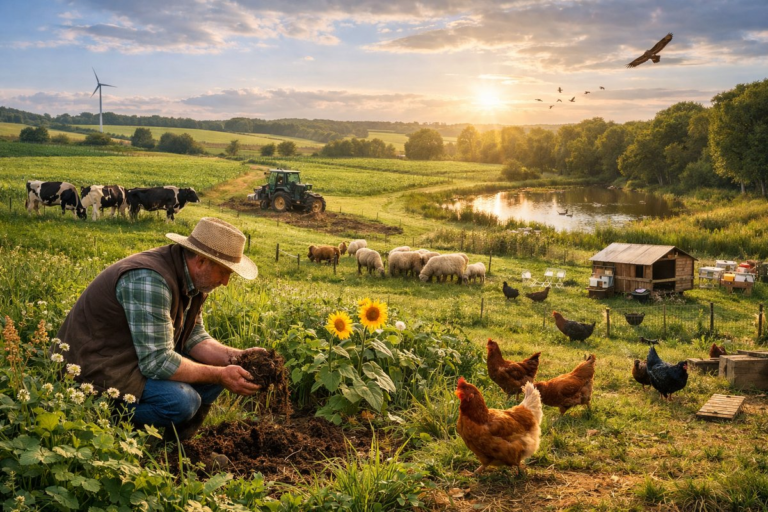
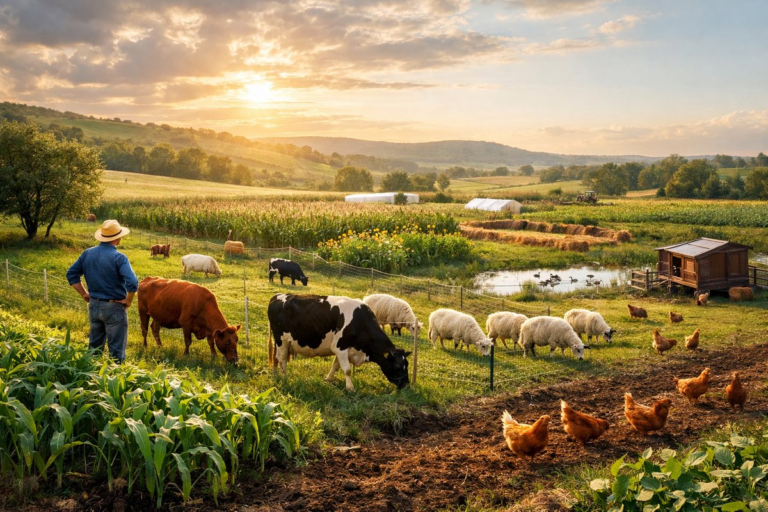
Animal welfare advocates note that when grazing systems are well designed, animals exhibit calmer behavior and natural social structures. Pastures divided into smaller cells emulate the way bison once roamed the prairies, grazing intensively then moving on to allow plant recovery. This reduces stress, hoof damage, and parasite loads. It also promotes deeper root growth, which sequesters more carbon underground and increases drought resilience.
Rancher testimonials reinforce the data. A small beef operation in Oklahoma used to feed hay to the herd year-round at a cost of nearly $60 per head per month. After implementing an eight-paddock rotation system with solar fencing and water trough trailers, feed bills dropped by 40 percent. The farm now sells “regeneratively raised” beef at a premium, tapping into a growing consumer preference for climate-smart protein.
Yet challenges remain. Initial costs for solar fence energizers, automated waterers, and sensor collars can be steep for family farms. Access to reliable rural broadband is patchy, complicating real-time data transmission. Some older ranch hands bristle at the learning curve of smartphone-driven systems. To address these gaps, agricultural extension services and local banks are stepping in with low-interest loans, rent-to-own equipment programs, and hands-on training.
In North Carolina’s Piedmont region, a pilot grant funded by a regional power cooperative equipped ten cattle farms with solar charger kits and livestock tracking collars. The program also facilitated weekly field demonstrations. After one grazing season, participating ranchers reported a 15 percent uptick in weight gain per head, fewer parasitic infestations, and an average payback period of under two years for their equipment investments.
Technology firms are taking note. Several startups now offer subscription-based grazing management platforms that sync fencing status, water level readings, and animal health metrics into a single dashboard. Some agritech accelerators are even pairing smallholders with urban data scientists for customized algorithms that predict forage growth based on local weather forecasts and soil characteristics.
Beyond the tech frontier, rural storytelling remains powerful. Farmers share success stories on social media, while virtual farm tours via 360-degree video help urban consumers connect to the source of their food. These narratives underscore ethical livestock care and sustainable land stewardship, strengthening consumer trust in regenerative brands.
Looking ahead, the next frontier could involve integrating biogas digesters with compost barns, turning animal waste into renewable energy and heat. Other farms are trialing insect fodder systems that convert leftover brewers’ grains into protein-rich mealworms, reducing reliance on soybean feed. Smart ear tags that measure rumen pH and methane emissions are on the horizon, poised to help ranchers benchmark and reduce their carbon footprints.
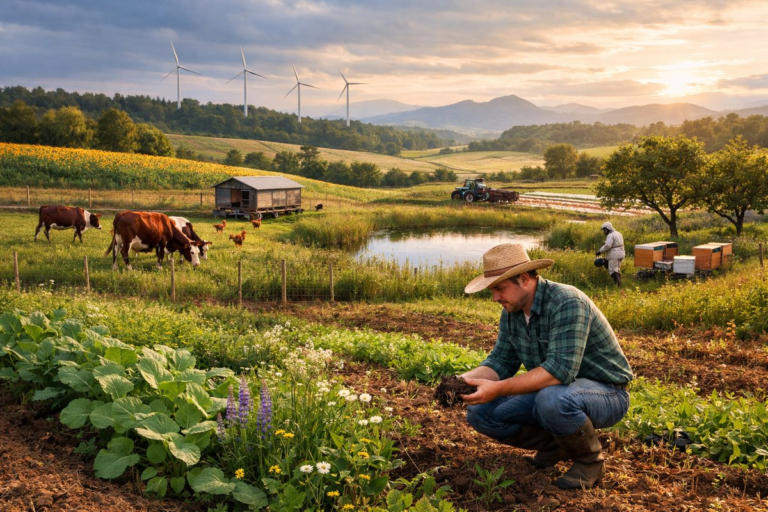
As ranchers refine these systems, collaboration will be key. Regional working groups, cooperative equipment loans, and open-source data protocols aim to lower barriers and accelerate adoption. The vision is clear: a livestock sector that thrives economically, nurtures animal welfare, and regenerates the land for future generations.
The story of Clara Nguyen’s pasture stands as proof. Where barbed wire once ruled, a network of solar-powered polywire now pulses with energy. Satellite-guided drones whir overhead, checking for patchy regrowth. Meanwhile, the herd moves on to fresh grass, leaving behind deeper soils and a small farm transforming into a carbon sink. In the heartland of America, modern ranchers are writing a new chapter-where sustainable farming and animal care converge through innovation, resilience, and respect for the land.
With each paddock shift and data-driven decision, they demonstrate that the future of livestock management lies at the intersection of cutting-edge tools and time-tested grazing wisdom. And for farmers weighing their next investment, the lesson is clear: the fields of tomorrow will be managed by those who blend tradition with technology, forging a more regenerative path for livestock and land alike.