Location
Mount Vernon, WA 98274

Location
Mount Vernon, WA 98274
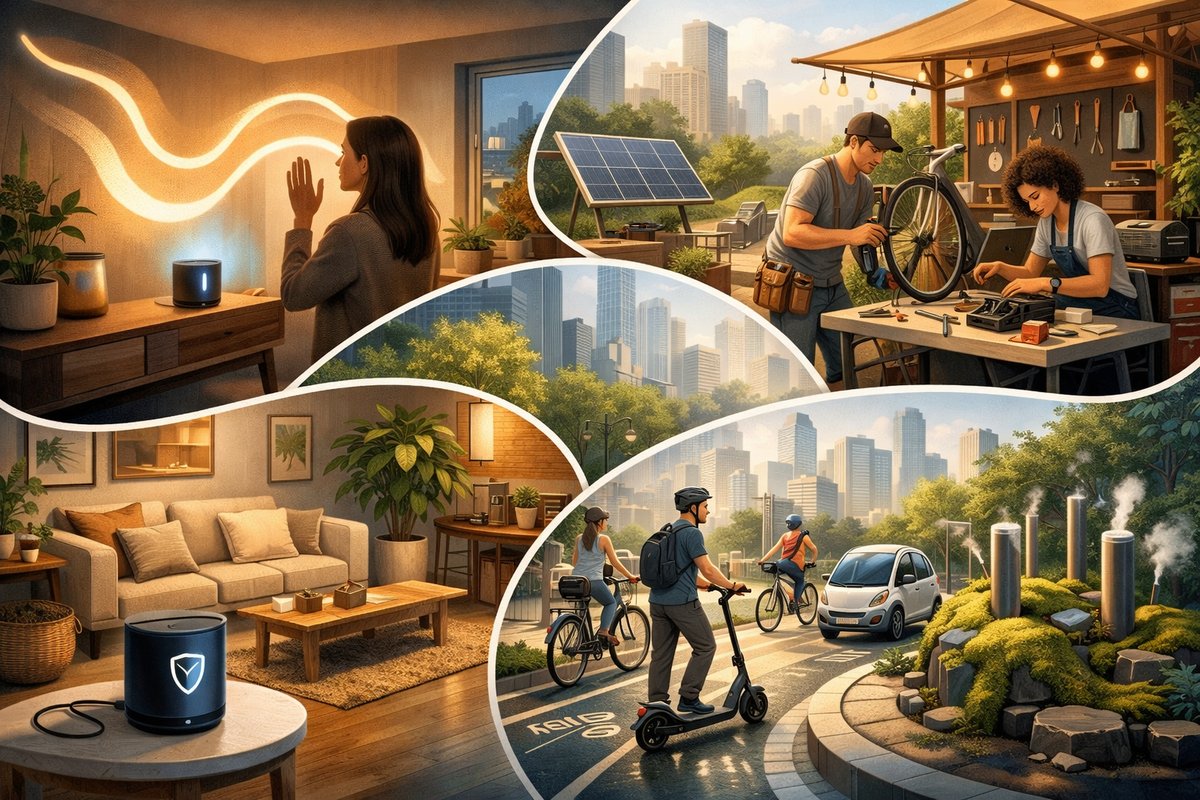
From voice-activated lightscapes to pop-up community fix-its, subtle shifts in tech, design, and social rituals are weaving a new tapestry for daily life. These under-the-surface trends reveal how privacy-first AI, eco-minimalist interiors, micro-mobility networks, and sensory-rich urban hacks are converging to redefine how we move, work, and connect.
In recent months, a collection of low-volume revolutions has begun to reshape routines that once felt set in stone. No single flash of innovation dominates the horizon; instead, we’re witnessing myriad small adjustments-ambient algorithms tuning our living rooms, pop-up art gatherings turning vacant lots into communal living rooms, and modular micro-mobility hubs sprouting at neighborhood edges. These developments operate below the radar, yet their combined effect is a quiet recalibration of how we inhabit public and private space. What unites these signals of change is a shared emphasis on human-centered values-privacy, sustainability, emotional intelligence-and an eye on everyday rituals, from buttering toast to boarding the bus.
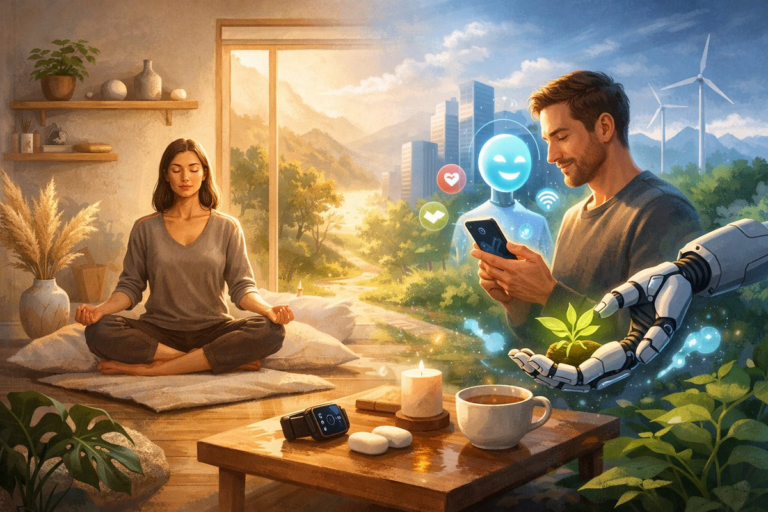
The most discreet yet profound shift can be found in the rise of ambient AI woven into physical environments. Instead of a glaring screen or a distinct device demanding attention, new voice-activated lightscapes and prosody-aware speakers blend so seamlessly into walls and furniture that you often forget they’re there. These systems don’t merely respond to commands; they learn personal routines-how long your morning coffee ritual takes, the exact hue of warm light that puts you in the right mood to read, or the gentle morning playlist that eases you into productivity. Crucially, a growing number of developers are adopting on-device processing to ensure sensitive data never leaves your home network, addressing privacy concerns head-on. What feels like a futuristic fantasy is now a stealthy takeover of the ambient soundtrack and lighting cues that subtly guide our circadian rhythms and daily moods.
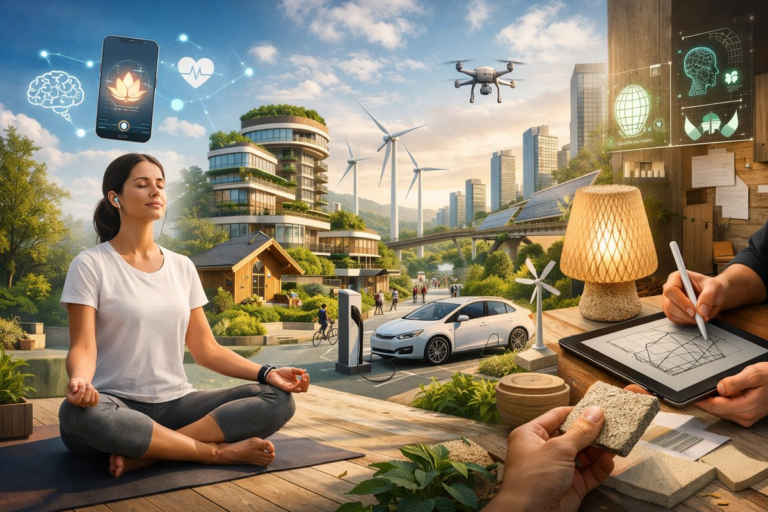
Parallel to this technological whisper revolution is a design movement dubbed biophilic minimalism. Far from cold, clinical minimalism of the past decade, this aesthetic embraces tactile imperfections-reclaimed-wood coffee tables etched with rings of old coffee mugs, upcycled textile wall hangings dyed with natural pigments, and sculptural planters made from recovered industrial ceramics. Digital interfaces are increasingly embedded into these organic forms: a slender touch-sensitive reed beside the potted jade plant can activate a hidden irrigation system, while a discreet e-ink display on the reclaimed frame shows indoor air-quality readings. The end result is a living room that feels alive, responsive, and respectful of the planet. And because many of the raw materials are sourced locally, these pieces carry stories that resonate with neighbors and visiting friends alike.
Meanwhile, on the streets and sidewalks, micro-mobility is evolving beyond a mere transport solution into a node of neighborhood engagement. Community-run e-bike repair cafes have sprung up behind cafes and bookstores, offering instruction to curious riders and swapping out old battery packs for refurbished modules. Skateboard swap meets and pop-up scooter tours are no longer fringe weekend activities but organized events where residents share tips on safe routes, lend protective gear, and collaborate on mapping quieter backstreets. These grassroots initiatives transform simple machines into social catalysts, fostering a sense of ownership and collective responsibility. The ripple effect? A drop in single-occupancy car trips, more intergenerational encounters at local hubs, and surprising reunions between neighbors who once exchanged only a quick wave across parked cars.
Cities themselves are responding with what urban planners call sensorial urbanism. It’s the idea that public spaces should engage all five senses, not just sight. Imagine benches that emit a soft vibration when the next bus arrives, relief patterns in sidewalk paving that guide you to wheelchair-friendly ramps, or holographic projections of local art hovering at eye level. Some municipalities are experimenting with smell mapping-identifying zones where the scent of blooming street trees or food trucks can help orient people or calm stress responses. A block lined with fruit-bearing trees becomes an open-air pantry, encouraging passersby to sample seasonal produce while forging spontaneous social connections. In this emerging landscape, navigating a city block is more like tuning into a multisensory playlist than following a sterile grid of asphalt.
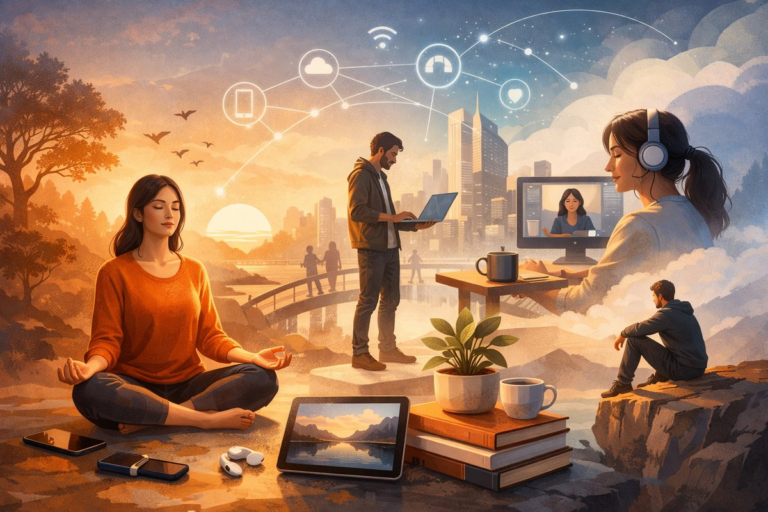
Closely tied to these urban shifts is a growing focus on digital well-being by design. Beyond apps that remind you to stretch or log screen time, new wearables incorporate gentle haptic pulses to nudge users toward mindful breathing when stress indicators spike. Portable aromatherapy diffusers are pairing with scent-mapping apps to release custom blends as you move through different city zones-uplifting citrus at a busy intersection, calming lavender as you approach a park bench. Even asynchronous coworking spaces are emerging: bookable by the hour, these pocket studios offer isolation pods with customizable light, sound, and perfume profiles so remote workers can tailor the sensory backdrop to their most creative state. This shift represents a deeper understanding of how our digital experiences can nurture rather than fracture attention.
A final ripple in this tide of change is the rise of micro-experiences and hyper-local festivals. Instead of sprawling, once-a-year carnivals, neighborhoods are hosting brief block-long art trails where projection maps animate vacant façades for two hours before moving on. Mobile theaters mounted on repurposed delivery trucks offer micro-performances on quiet side streets, inviting audiences to enjoy site-specific scenes of everyday life-an actor reading letters overheard at the corner coffee shop or a dancer interpreting the rhythm of passing trams. Local bookstores and coffee shops team up to host flash reading hours-thirty minutes of poetry between espresso shots. These ephemeral moments punctuate routines without demanding large time commitments or extensive travel, making cultural enrichment a built-in feature of daily life rather than a weekend exception.
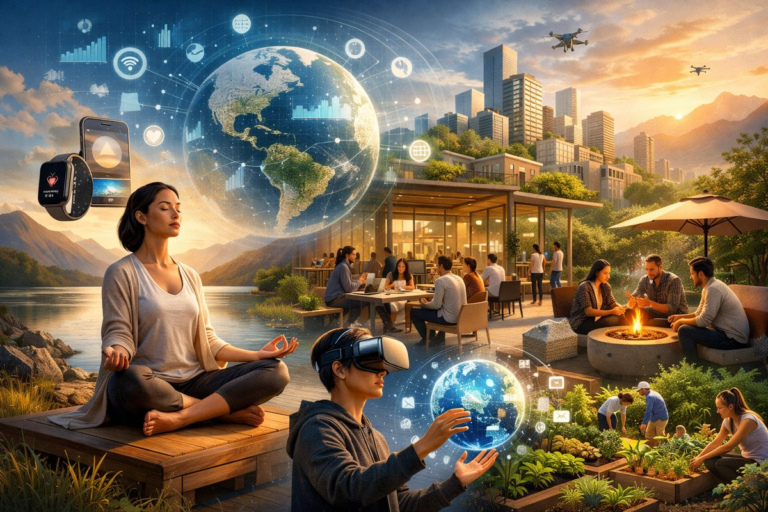
Taken together, these subtle phenomena share a common thread: an attention to scale and sensibility. They don’t bulldoze existing habits or flood us with yet another device that competes for attention. Instead, they operate quietly, enhancing what already exists-your living room’s acoustics, the angle of light by your desk, the feel of sidewalk paving beneath your shoes. They prioritize privacy by minimizing data sprawl, champion sustainability through upcycled materials and community partnerships, and foster emotional intelligence by engaging our senses in richer ways. The next time a voice-activated lamp eases you into sleep, a neighbor fixes your bike in a pop-up workshop, or a corridor of scented mist guides you to a hidden mural, pause to notice: these are the faint signals of a new chapter in daily living.
What started as isolated experiments in design studios, AI labs, and grassroots collectives is now converging into a broader movement that quietly redefines the texture of everyday experience. The era of loud, high-profile launches is giving way to an age of iterative, human-centered enhancements. As these patterns gain momentum, they remind us that real change often happens not with a bang but with a series of small taps-on a wireless speaker, a reclaimed‐wood panel, or the handlebar of an e-scooter. To stay attuned to what’s next, pay less attention to the megaprojects and more to the micro-routines. Those barely perceptible tweaks are the true signals of change, and they’re already guiding us toward a more nuanced, connected future.