Location
Mount Vernon, WA 98274

Location
Mount Vernon, WA 98274
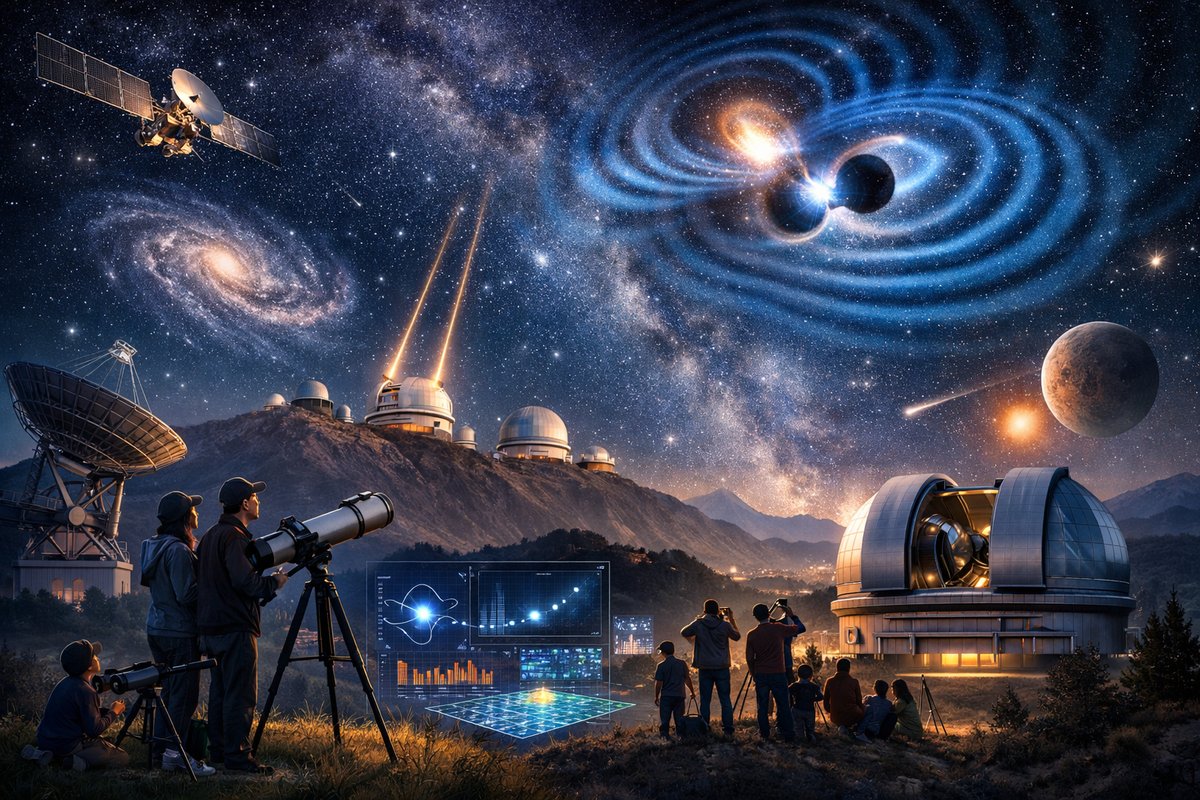
A new era of cosmic wonder is upon us as cutting-edge observatories, gravitational-wave detectors, and grassroots stargazing projects converge to deepen our relationship with the universe. From backyard telescope sessions to large-scale data dives, discover how scientific breakthroughs and community collaboration are fueling an ever-expanding sense of cosmic curiosity.
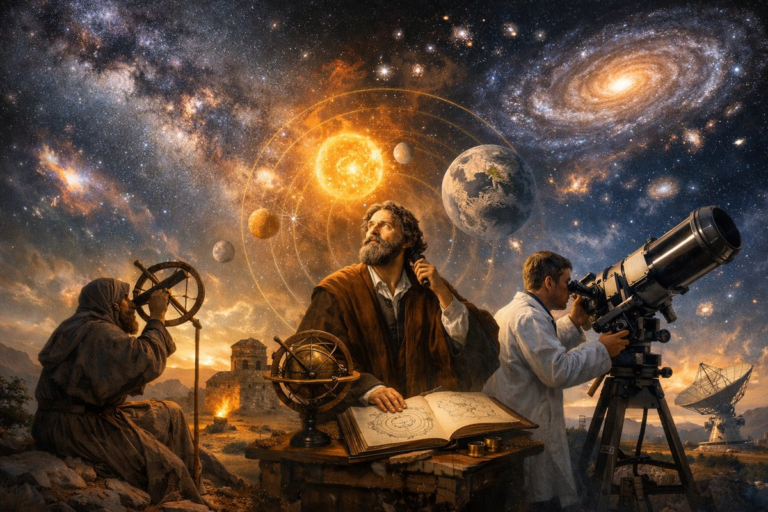
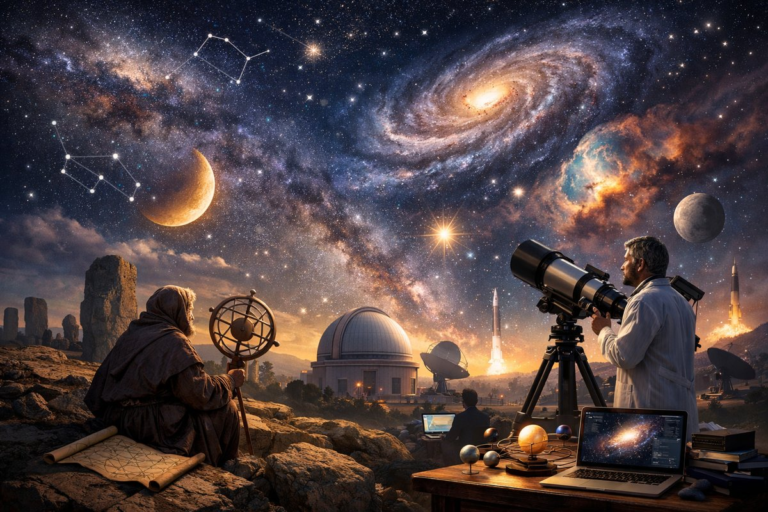
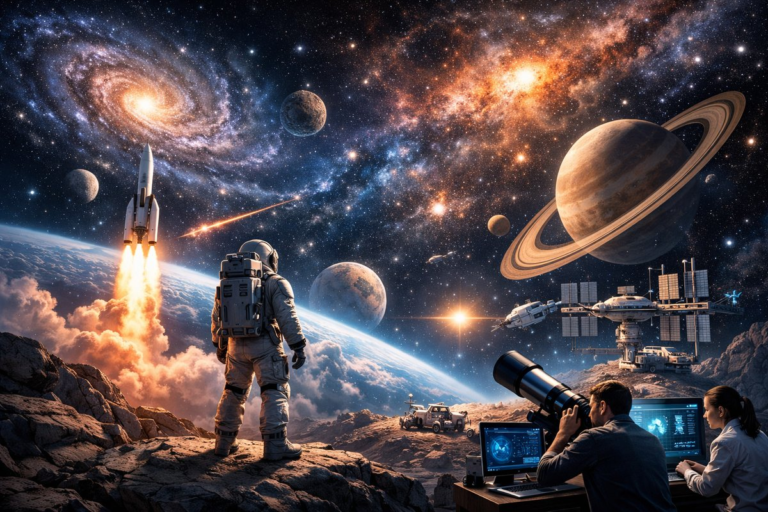
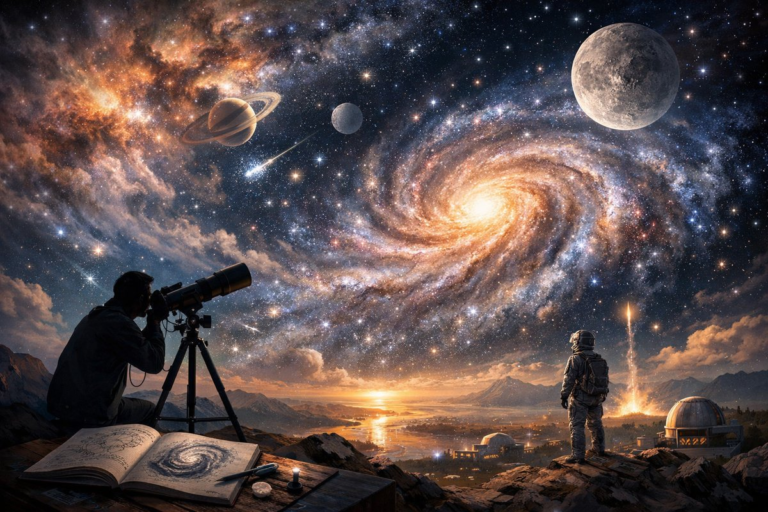
In the hush of a rural night sky, a faint smear of light emerges along the horizon-an intergalactic ripple born from galaxy clusters colliding billions of years ago. Across the globe, a cadre of professional astronomers prepares to unveil fresh data from an infrared observatory orbiting a million miles from Earth. Meanwhile, thousands of amateur stargazers line up their telescopes in urban parks, eager to glimpse a passing comet or point a smartphone at Jupiter’s swirling bands. It’s a moment that feels simultaneously timeless and brand-new: a renaissance of cosmic curiosity that bridges high-tech missions and kitchen-table exploration.
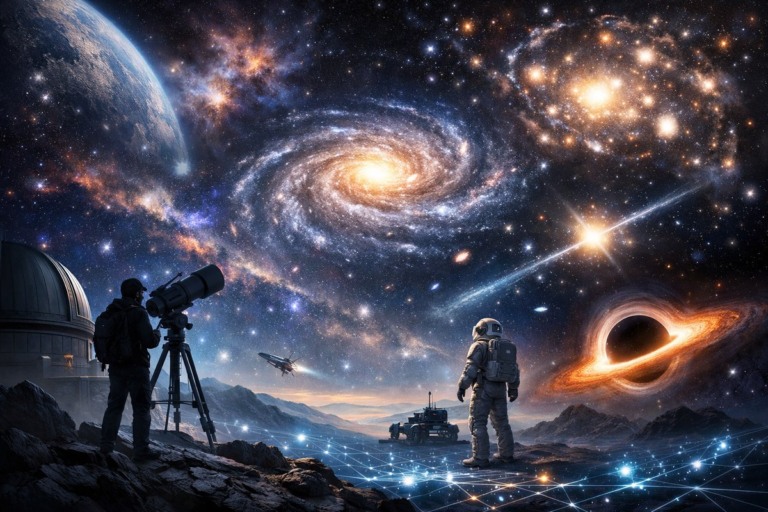
Recent breakthroughs in gravitational-wave detection have added a new sensory dimension to space science. When two neutron stars merged in a distant galaxy, ripples in spacetime washed over detectors here on Earth, sparking global alerts and an impromptu multimedia campaign that streamed data, animations, and live commentary. That event, along with milestone observations of exoplanet atmospheres and the first direct images of a black hole’s shadow, has captured public imagination in a way not seen since the early days of the space age. Suddenly, the cosmos feels personal-an unfolding story we all share.
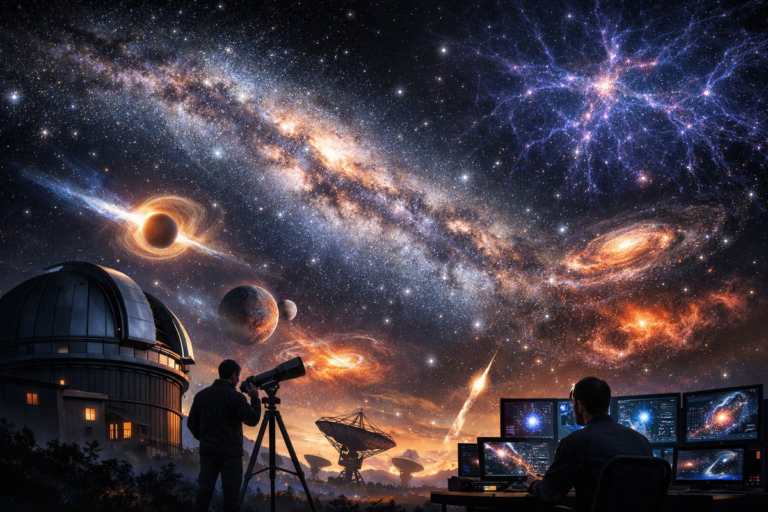
At the heart of this surge lies a dual trajectory: flagship observatories pushing technical boundaries, and citizen-science initiatives inviting anyone with an internet connection to join the quest. Online platforms now host millions of volunteered classifications of galaxy morphologies, supernova candidates, and auroral photographs. This global network of curious minds transforms raw telescope feeds into curated discoveries, often leading to professional publications. In one case, a schoolteacher in South America flagged an unusual dip in a star’s brightness that turned out to be a previously unknown exoplanet transit.
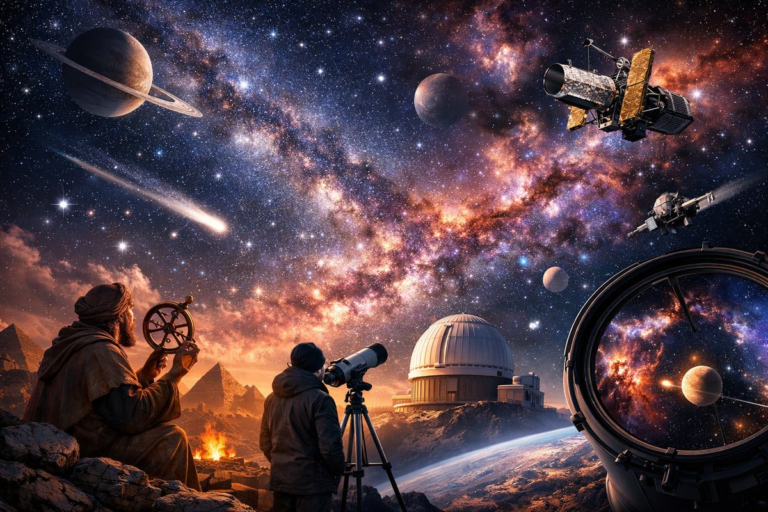
Looking ahead, a constellation of new missions promises even richer vistas. A next-generation space telescope operating in the ultraviolet and visible spectrum will hunt for the faint glimmer of habitable worlds. An array of small satellites will map the magnetic environment of the solar system in unprecedented detail. On the ground, a colossal survey telescope equipped with an 8.4-meter mirror will scan the entire southern sky every few nights, generating petabytes of data ripe for both algorithmic analysis and human review. These ventures are designed not just to expand our cosmic inventory, but to spark fresh questions about dark matter, cosmic inflation, and the ultimate fate of the universe.
But towering observatories and multimillion-dollar satellites are only one part of the story. In cities around the world, light-polluted skies were once deemed off-limits to meaningful observation. Now, portable star-mapping apps, wearable red-light headlamps, and collapsible telescopes are enabling urban dwellers to connect with the night. Community stargazing events-often organized by local astronomy clubs-combine slide-show talks with hands-on viewing sessions. Participants are encouraged to record their sightings, upload time-stamped images, and even report transient phenomena like meteor flashes or satellite glints. This decentralized network of observations helps calibrate global light-pollution studies and refines orbital debris tracking models.
Theoretical frontiers are advancing in parallel. Exotic ideas about primordial black-hole populations, quantum aspects of gravity, and multiverse frameworks are gaining traction in academic journals. While these concepts remain speculative, they serve as a beacon for thinkers who relish big questions. Public lectures on quantum cosmology draw packed auditoriums, and popular podcasts dissect the philosophical implications of a holographic universe or a cosmic bounce scenario. By bringing abstruse theories to lay audiences, science communicators are nurturing a culture where no question is too bold to ask.
Data privacy and ethical stewardship have become guiding principles in this open era of cosmic inquiry. Cloud-based archives now implement stringent protocols to protect proprietary instrument calibrations and anonymize contributor metadata. Collaborative projects often publish transparent privacy policies that respect volunteer rights while ensuring data integrity. This values-driven approach builds trust, inviting people from diverse backgrounds to participate without fear of unwanted data exposure. It’s a model that science communicators across disciplines can emulate.
The resurgence of cosmic curiosity also intersects with sustainability efforts. Observatories are increasingly powered by solar and wind energy, minimizing their environmental footprint in remote mountain or desert locations. Public outreach programs emphasize the preservation of dark-sky reserves, lobbying for smarter street-lighting policies and the reduction of skyglow. Backyard stargazers learn to swap high-wattage bulbs for low-impact LEDs, turning patios into eco-friendly observation stations. In this way, our fascination with the heavens translates into better care for life on Earth.
Participation comes in many forms. For those with a thirst for hands-on experimentation, home kits allow you to build your own spectrometer or track meteor showers with radio antennas. Smartphone apps leverage built-in sensors to guide telescope alignment or simulate future night-sky vistas based on your coordinates. Workshops teach budding astrophotographers to stack hundreds of long-exposure frames, teasing out faint nebulae from digital noise. And online forums serve as real-time help desks, where seasoned observers debug camera settings and clarify constellation lore.
Art and storytelling have always helped us process the immensity of space. Digital artists now weave real telescope data into immersive virtual environments, where users can ‘fly’ through a star cluster or visualize gravitational waves as ripples in a cosmic pond. Poets draw on supernova death throes and planetary transit shadows to craft metaphors for personal transformation. Musicians convert pulsar beats into ambient soundscapes. By translating scientific insights into sensory experiences, creative practitioners expand the emotional resonance of cosmic narratives.
Even children are finding their place under the stars. Citizens of new generation science clubs design balloon-launched cameras to photograph the curvature of Earth, record cosmic-ray detections with homemade Geiger counters, and build tabletop models of planetary orbits. Schools host ‘astro-hackathons’ where teams code simple algorithms to predict eclipse paths or classify meteorite samples. These early forays instill a sense of belonging in a universe that can sometimes feel overwhelmingly vast.
Institutional support is adapting too. Public-private partnerships fund open nights at major observatories, while local governments incorporate dark-sky preservation into zoning laws. Libraries stock telescopes for short-term loans, and makerspaces lend 3D printers for constructing custom eyepiece holders. This network of shared resources lowers barriers and ensures that cosmic curiosity need not be limited by geography or income.
Ultimately, the current wave of exploration reminds us that curiosity is the spark that transforms data into discovery. Whether you’re decoding the flicker of a far-off quasar, capturing your first Milky Way panorama, or simply lying back beneath a canopy of stars, you’re participating in an age-old dialogue between humanity and the cosmos. And as new missions unfold, as citizen-science platforms evolve, and as our theories stretch to encompass the unimaginable, one thing remains constant: our collective awe at the night sky’s infinite tapestry.
We stand at the threshold of a golden age for cosmic curiosity-one defined by collaboration, ethical stewardship, and a sense that every glimpse through a telescope or every click of a classification button brings us closer to understanding our place in the grand celestial story. The next time you look up, remember that beyond the shimmer of distant galaxies lies an invitation: to question, to explore, and to marvel.