Location
Mount Vernon, WA 98274

Location
Mount Vernon, WA 98274
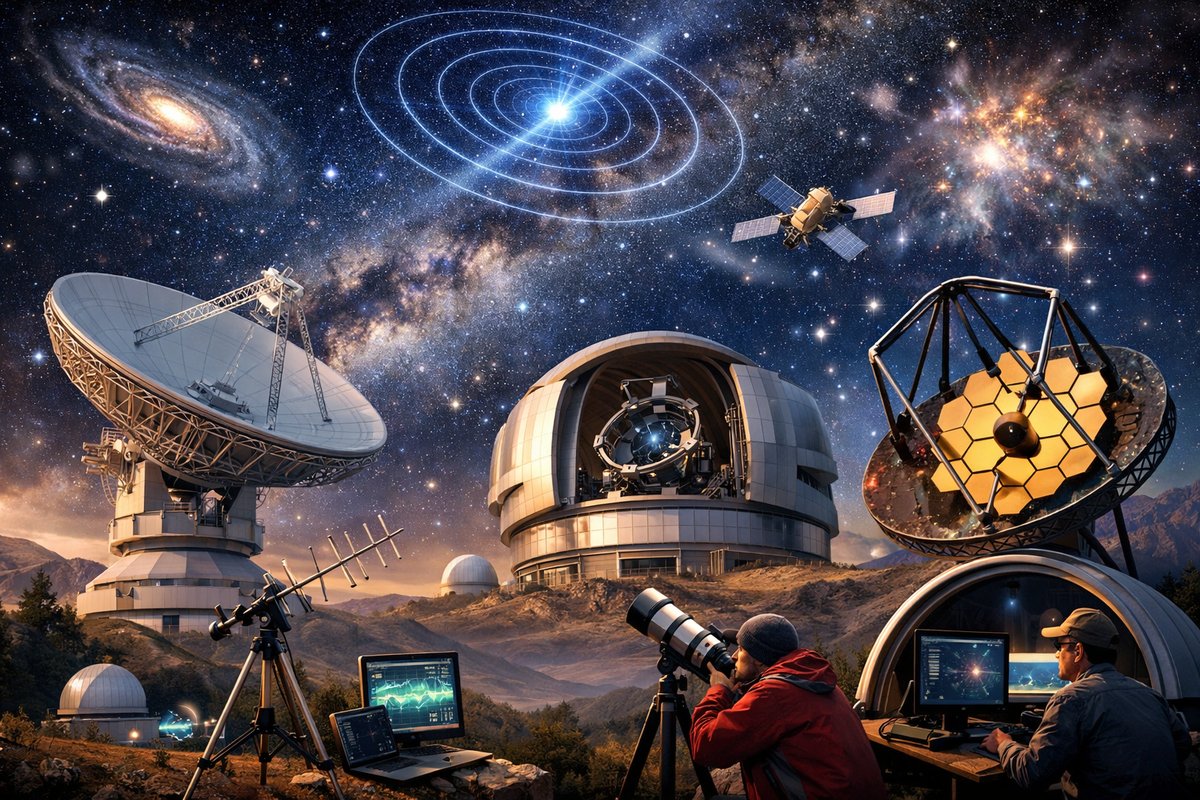
An array of innovative instruments and grassroots initiatives is revealing hidden secrets of the cosmos, inspiring fresh wonder across professional and amateur observers alike. From faint radio signals from distant galaxies to novel survey telescopes mapping billions of stars, this renaissance of curiosity is reshaping our view of space.
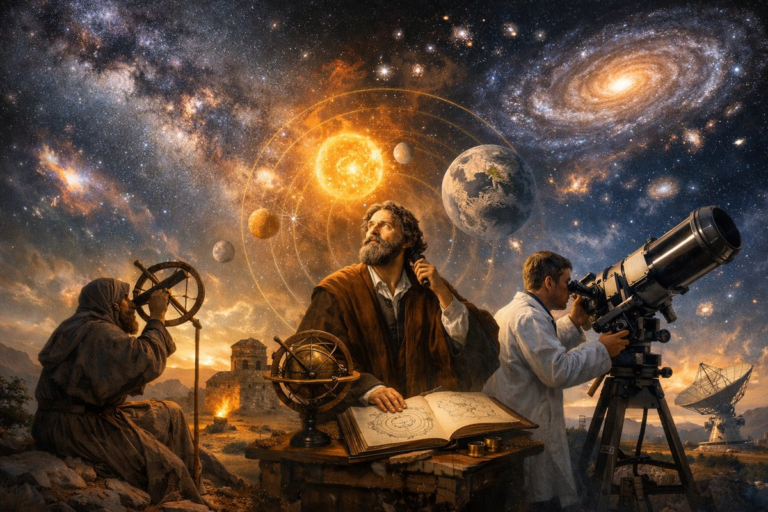
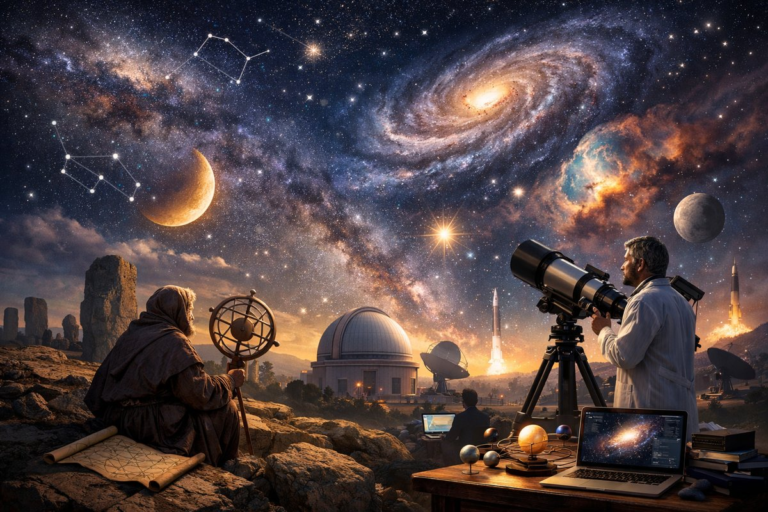
Our relationship with the night sky has always been one of awe and mystery. For millennia, humans have looked upward, tracing patterns of stars and weaving stories about their movements. Today, that impulse to explore has entered an electrifying new phase. In observatories scattered across mountaintops and deserts, and aboard cutting-edge spacecraft orbiting far above Earth, a series of breakthroughs is yielding a torrent of data-and with it, fresh questions about the very nature of reality.
A recent campaign by an advanced wide-field survey telescope has produced the most comprehensive maps of the southern sky in visible light ever attempted. Over the past months, this observatory has scanned billions of stars, countless galaxies, and hundreds of transient events-explosive flashes, variable stars, and objects that brighten then fade within hours. Each detection is a puzzle piece in the cosmic tapestry. Working around the clock, scientific teams deploy machine learning algorithms to sift terabytes of images each night, separating mundane artifacts from genuine new phenomena. One of the most exciting outcomes has been the identification of dozens of fast-moving objects on trajectories that challenge our understanding of small bodies in the solar system.
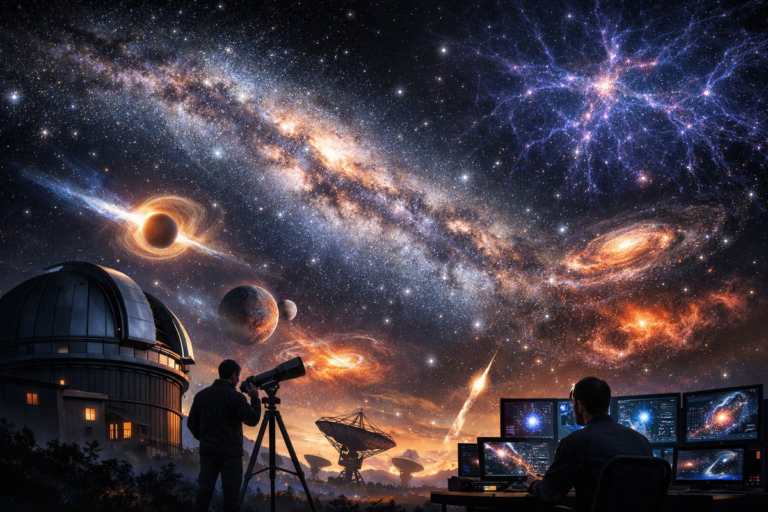
Meanwhile, an international network of radio telescopes has zeroed in on enigmatic bursts of low-frequency waves emanating from distant corners of the universe. These rapid radio flashes last mere milliseconds, yet they can outshine entire galaxies. Decades after their initial discovery, their origins remain fiercely debated. Are they signatures of exotic neutron star interactions, the final gasps of evaporating black holes, or evidence of something even stranger? Coordinated observations now combine radio data with optical and infrared measurements, offering the first multiwavelength glimpses of these bursts. The findings hint that some events may repeat from the same source, while others appear single and unique-an astronomical yin and yang that defies straightforward classification.
Above Earth’s atmosphere, the latest infrared space observatory has begun unveiling realms previously hidden by cosmic dust. In one recent deep field image, researchers spotted nascent galaxies forming just a few hundred million years after the Big Bang. These infant clusters glow faintly in long infrared wavelengths, their light stretched over billions of years of expansion. By charting their distribution and properties, astronomers can test competing models of early galaxy formation and track how primordial gas coalesced into the first star factories. Every pixel is a time machine, and every spectrum a coded message from the universe’s youth.
Closer to home, gravitational wave detectors have recorded a fresh cascade of spacetime ripples from colliding black holes and neutron stars. These cataclysmic mergers send shockwaves through the fabric of reality, producing telltale signals that researchers pick up with ultra-sensitive laser interferometers. When two neutron stars collide, they not only stir gravitational waves but also unleash heavy elements such as gold and platinum into the cosmos. Joint detections combining gravitational and electromagnetic data mark the dawn of true multimessenger astronomy-an era in which each cosmic event is observed through multiple channels, offering a richer, more holistic portrait.
Perhaps the most surprising development is the growing role of citizen scientists in this era of data abundance. Online platforms now host millions of images and spectral readings, inviting volunteers to classify galaxies by shape, flag anomalies, and even hunt for impact craters on distant moons. Enthusiasts armed with backyard telescopes contribute follow-up observations of transient events, ensuring that fleeting phenomena aren’t lost in the flood of data. Amateur astronomers are coordinating with professional teams across time zones, sharing their local sky conditions and real-time updates on unusual sightings. In some cases, these grassroots efforts have led to co-authorship on scientific papers, placing stargazers directly in the narrative of discovery.
What unites all these efforts is an expanding sense of cosmic curiosity-an eagerness to ask bolder questions and test theoretical boundaries. Dark matter, which permeates galaxies but eludes direct detection, is under intense scrutiny. New experiments deep underground and in orbit aim to catch the faintest interactions between hypothetical dark particles and ordinary matter. Meanwhile, dark energy-the mysterious force accelerating the universe’s expansion-remains inscrutable. But ever more precise measurements of distant supernovae, galaxy clusters, and the large-scale structure of space are gradually narrowing the field of viable explanations.
Beyond the mathematics and the detectors, this renaissance is stirring profound human emotions. Observers report a sense of wonder knowing that each pinpoint of light could be a window into a forgotten time or a realm of exotic physics. Amateur skywatchers speak of the same thrill that drove early astronomers: the chance to glimpse something entirely new, whether a comet blazing across the sky or an unexpected flare from a distant quasar. In classrooms and living rooms around the globe, children are downloading star-map apps and pointing binoculars at the Milky Way, inspired by the images flashing across their screens.
The challenges are formidable. Processing torrents of data requires ever more powerful computing and sophisticated algorithms. Maintaining precision in instruments that must operate under extreme conditions-vacuum, cryogenic temperatures, or remote mountaintops-is a constant battle. And as telescopes grow in size and sensitivity, light pollution and radio interference from Earth-bound sources threaten to drown out faint cosmic whispers.
Yet the incentives are clear. Every new insight helps refine our understanding of origins-of atoms forged in the hearts of stars, of galaxies shaped by unseen forces, of space and time woven together in a cosmic web. The discoveries ripple outward, influencing fields as diverse as particle physics, geology, and philosophy. They remind us that our planet is but a mote in a vast arena, and that the urge to explore is both a scientific imperative and a deeply human drive.
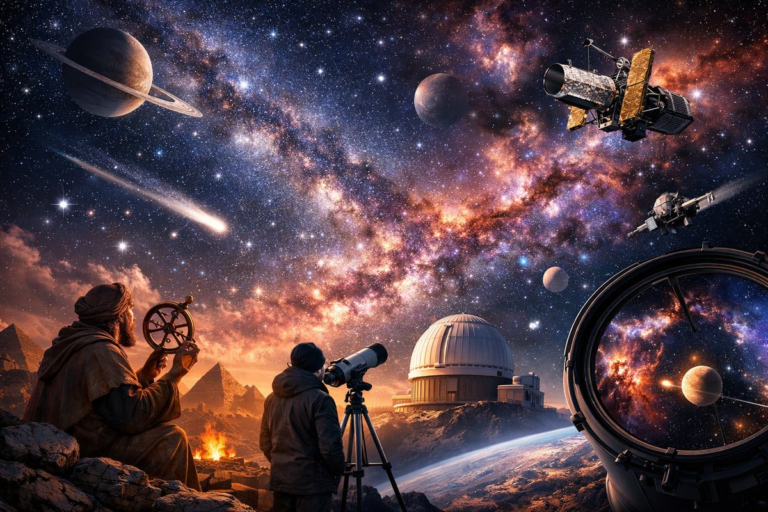
As instruments continue to evolve-combining optical, infrared, radio, and gravitational-wave observations-we stand on the threshold of unlocking secrets that once seemed forever out of reach. The universe is speaking. Thanks to an extraordinary blend of professional ingenuity and enthusiastic participation from curious minds worldwide, we are finally learning to listen.
This resurgence of cosmic curiosity honors a tradition as old as civilization itself. By melding cutting-edge technology with everyday passion, it invites each of us to look up and wonder. In the vastness of space, every question answered begets new mysteries, and every discovery is both an endpoint and a starting point. The sky is open once more, and our collective curiosity is the compass guiding us through the starlit unknown.