Location
Mount Vernon, WA 98274

Location
Mount Vernon, WA 98274
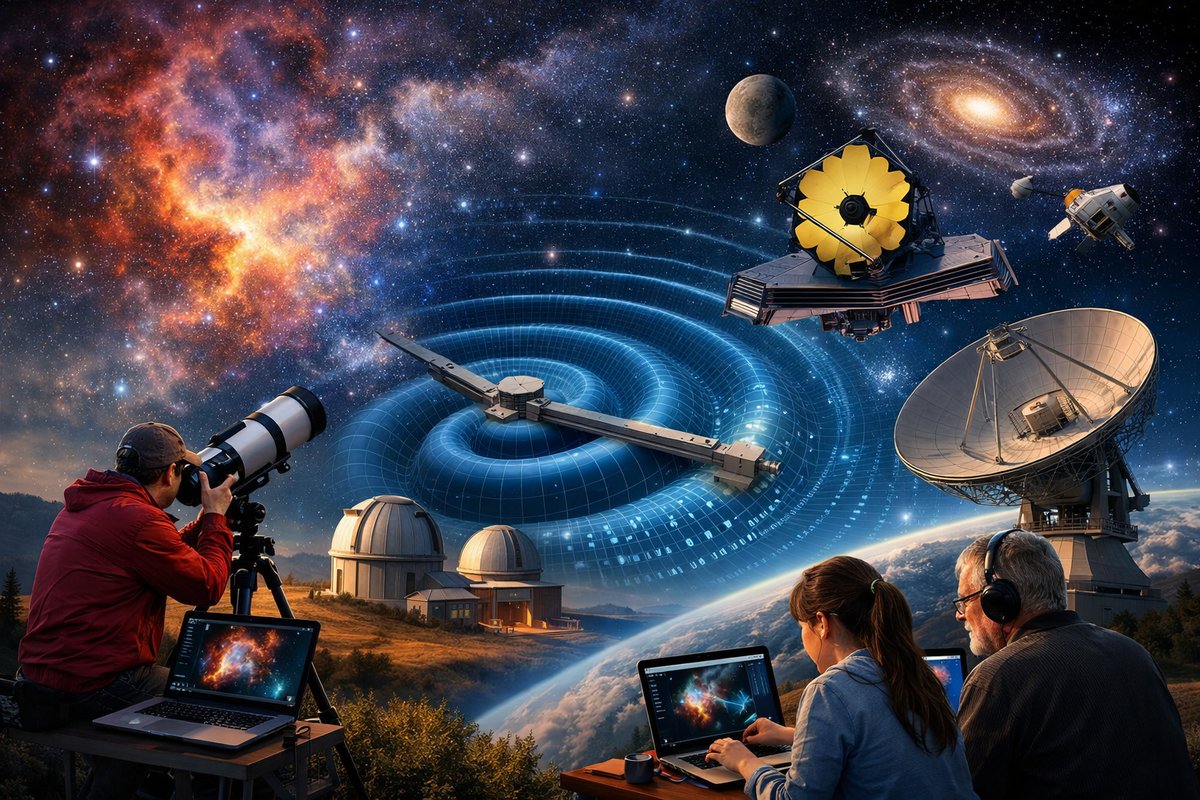
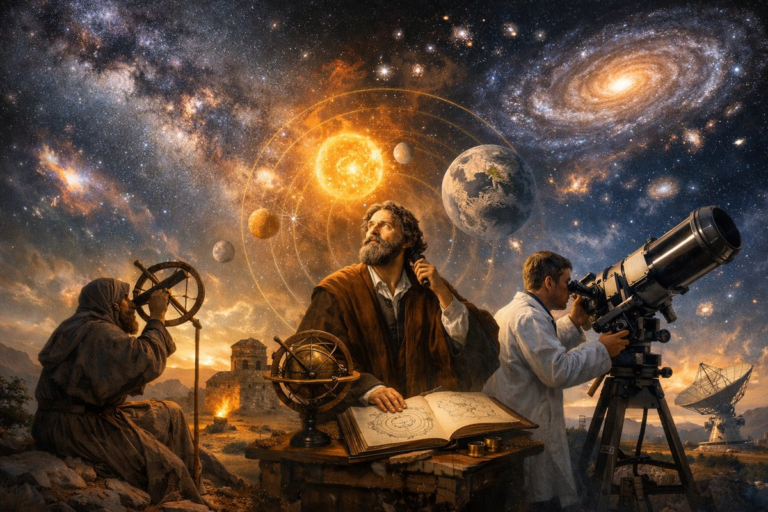
From backyard telescope enthusiasts mapping distant nebulae to international observatories detecting ripples in spacetime, an unprecedented wave of scientific openness and technological innovation is fueling a renaissance of curiosity about the universe. This article explores how cutting-edge instruments, open data initiatives, and passionate citizen scientists are coming together to deepen our understanding of the cosmos.
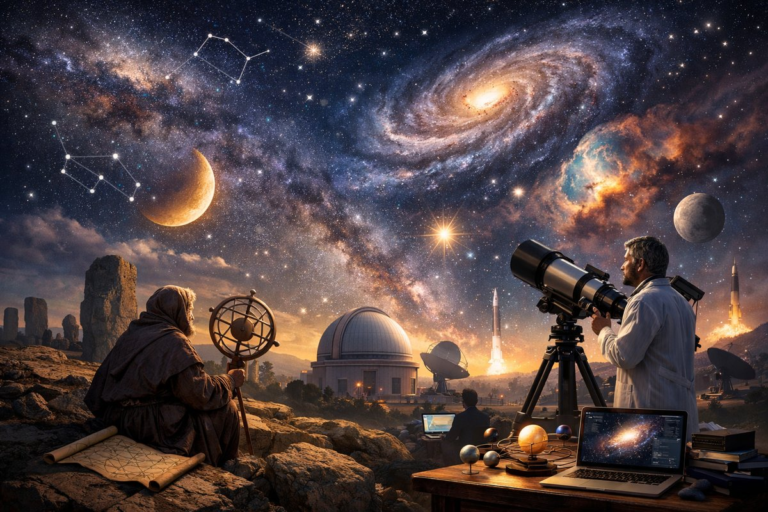
The night sky has always stirred wonder, but today’s wave of discovery feels uniquely collaborative. Gone are the days when telescopes were solely the province of national observatories. Modern hobbyists armed with affordable equipment, open-source software, and access to real observatory data are transforming patchwork sky surveys into global efforts to solve fundamental questions. It’s an age when a bedroom setup can rival a small professional installation, and when an amateur’s find can trigger follow-up observations by major research facilities.
At the heart of this movement lies a series of breakthrough missions and ground-based projects that continuously push the envelope of what’s possible. A flagship infrared space observatory has been peering deeper into stellar nurseries, revealing never-before-seen details of dusty clouds where stars are born. Meanwhile, a new wide-field survey telescope in the southern hemisphere has begun scanning the entire sky every few nights, capturing transient events-supernovae, asteroids, and flaring stars-on a scale never attempted before.
Those missions generate an overwhelming flood of data, and professional teams can process only a fraction in real time. That’s where citizen scientists step in. Platforms designed for crowd-sourced classification are enlisting volunteers to sort through galaxies, identify gravitational lens candidates, and even tag potential exoplanet transits. Projects like these have already led to the discovery of unusual planetary systems and rare variable stars. By turning curious observers into active participants, the field gains both manpower and fresh perspectives.
Beyond classification, open-source tools allow enthusiasts to analyze raw telescope outputs on personal computers. Powerful image-processing suites-once reserved for research labs-are now freely available and supported by vibrant online communities. Amateur astrophotographers routinely share tutorials on stacking multiple long-exposure frames to tease out faint nebular structures, then upload their processed results to public archives. This cross-pollination of skills raises the bar for everyone: professionals often examine outstanding amateur images for leads on deeper study.
In parallel, breakthroughs in gravitational-wave astronomy have opened a new sensory window on the cosmos. When two massive objects collide, they send ripples through spacetime itself. This was once a purely theoretical phenomenon; today, multiple observatories across continents coordinate to detect and triangulate these events within seconds. The data releases from these facilities are increasingly public, inviting outside researchers and even independent hobbyists to analyze waveforms and search for unusual signatures. The result is a democratized approach to one of the most cutting-edge frontiers of physics.
Space agencies have also embraced open data policies. Archives containing high-resolution imagery, spectroscopic readings, and time-series analyses are now downloadable by anyone with a reliable internet connection. This transparency serves two goals: accelerating scientific progress and inspiring a broader audience. Educational outreach programs integrate real mission data into classroom lessons, allowing students to measure the speed of stars orbiting a galactic core or trace the chemical composition of distant worlds. With each dataset placed in the public domain, the boundary between professional astronomer and curious learner blurs.
Technological advances extend beyond observatories. Artificial intelligence and machine learning algorithms are increasingly woven into every stage of exploration. Automated pipelines flag potential discoveries, prioritize follow-up observations, and even refine our models of cosmic evolution. Hobbyist developers contribute code to these projects, tailoring neural nets to specific problems-like distinguishing between star clusters and background galaxies. As these tools mature, they become more accessible, enabling smaller teams to tackle complex analytical challenges that once required extensive computing resources.
The emotional resonance of these discoveries cannot be overstated. Enthusiasts describe the thrill of finding an unknown object, naming a previously unidentified nebula, or contributing to a gravitational-wave alert. That sense of personal connection fuels sustained engagement, inspiring deeper study of physics, computer science, and instrumentation. Local astronomy clubs have flourished, hosting star parties where newcomers learn to align telescopes, calibrate cameras, and interpret spectra. In these gatherings, seasoned hobbyists mentor beginners, passing on techniques refined over decades.
On the horizon, next-generation projects promise to amplify this synergy. A planned array of radio antennas will probe the faint signatures of the universe’s first stars and black holes. A network of micro-satellites, each no larger than a shoebox, will work in concert to map stellar brightness fluctuations with unprecedented precision. And private initiatives are deploying small spectrographs in remote locations to monitor atmospheric disturbances around exoplanets, seeking the chemical fingerprints of potential habitability. Each effort invites interaction: public challenges encourage coding contributions, and data-analysis contests reward the most insightful interpretations.
Sustainability and ethical considerations have become integral to this new era. Observatories are exploring renewable energy to power remote stations, reducing their environmental footprint. Light-pollution mitigation guidelines are shared freely, helping communities darken urban skies and restore the view of the Milky Way. Projects also emphasize inclusive access: multilingual tutorials, accessible software interfaces, and partnerships with institutions in underrepresented regions ensure that cosmic curiosity transcends geographical and economic barriers.
At the same time, questions of data ownership and privacy emerge. Private companies operating small telescopes must navigate policies around proprietary sensor data and respect the rights of local stakeholders where ground installations are placed. Community-driven governance models are being tested to ensure that no single entity monopolizes key observations. This emphasis on transparency and shared stewardship underlines the values of openness that drive modern exploration.
For many participants, cosmic curiosity extends beyond scientific results. It fosters a deeper emotional connection to our place in the universe. Observing a distant galaxy cluster thousands of light-years away serves as a reminder of the vast tapestry of space and time to which Earth belongs. Stargazing becomes an act of mindfulness, an opportunity to reflect on both the wondrous complexity of the cosmos and the fragile beauty of our own planet.
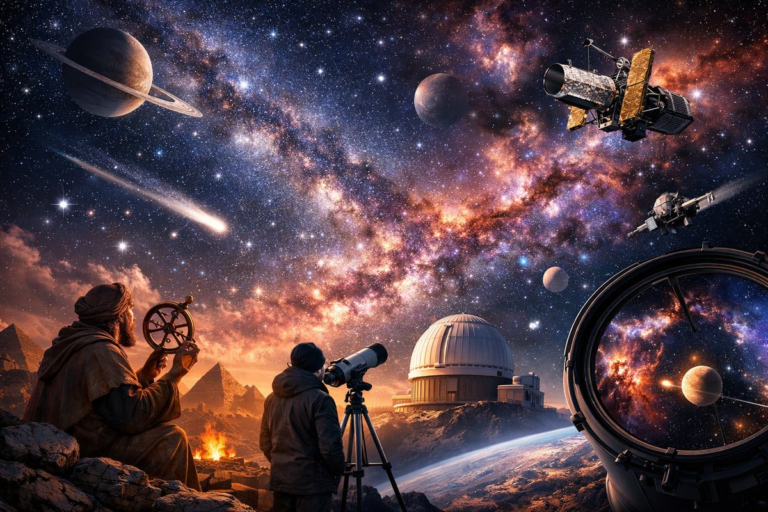
Ultimately, this renaissance of cosmic curiosity belongs to everyone. As cutting-edge instruments, global networks, and passionate individuals converge, the next groundbreaking discovery may come not from a major research lab, but from a garage in a quiet town or a laptop on a distant hillside. The universe is sending out an open invitation. All one needs is the right tools, a spark of wonder, and the willingness to look up and explore.