Location
Mount Vernon, WA 98274

Location
Mount Vernon, WA 98274
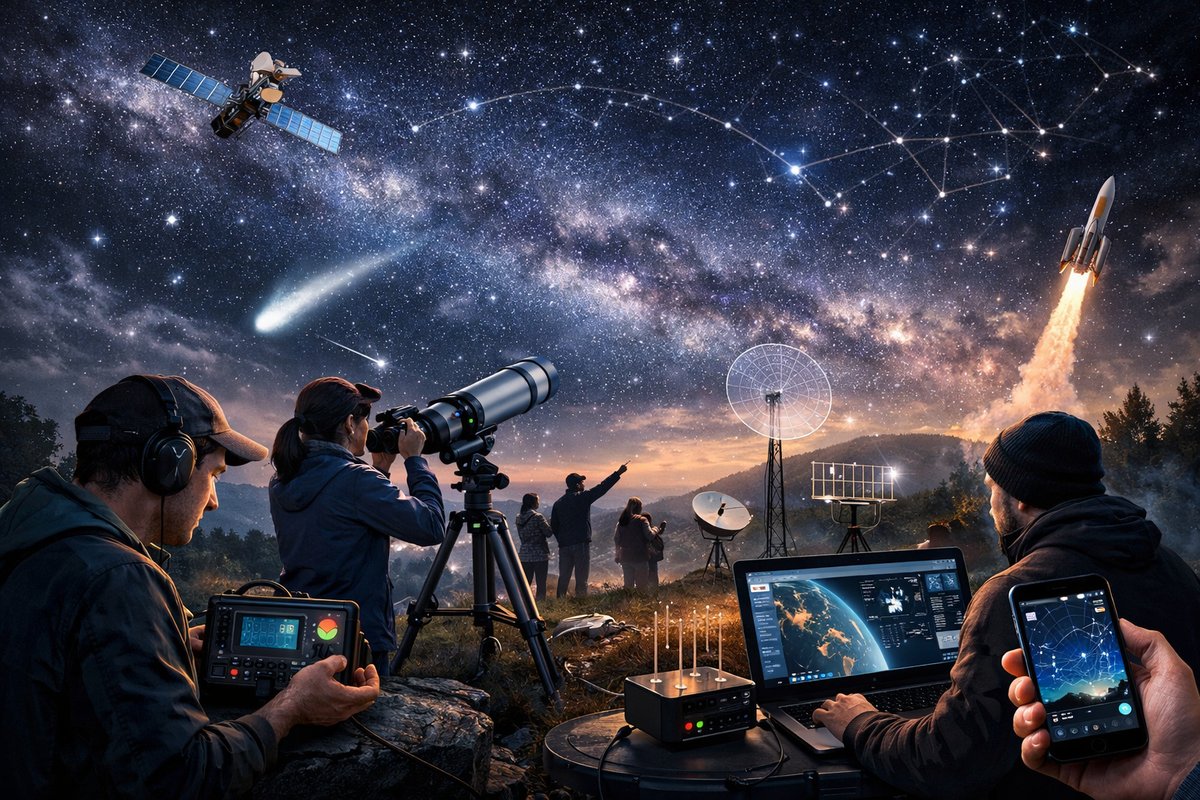
A fresh surge of cosmic wonder is transforming how amateur astronomers, citizen scientists, and casual stargazers engage with the night sky. From DIY radiation detectors to open-source data networks, this news report explores the emerging tools and communities driving a modern renaissance in space exploration.
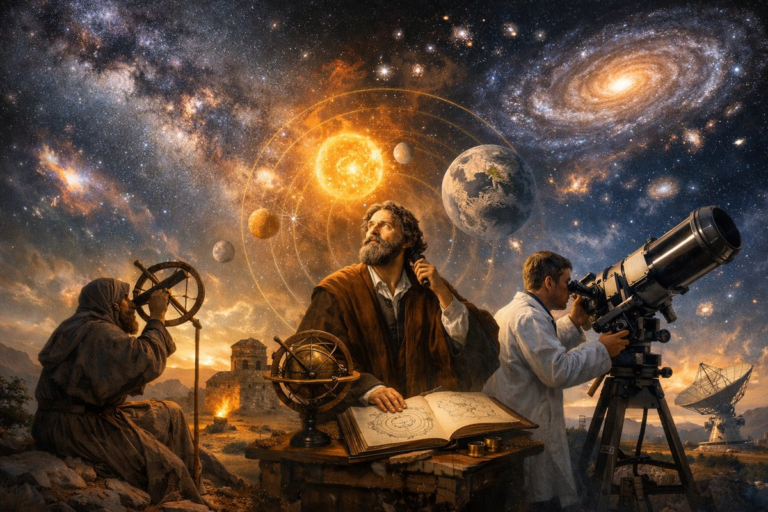
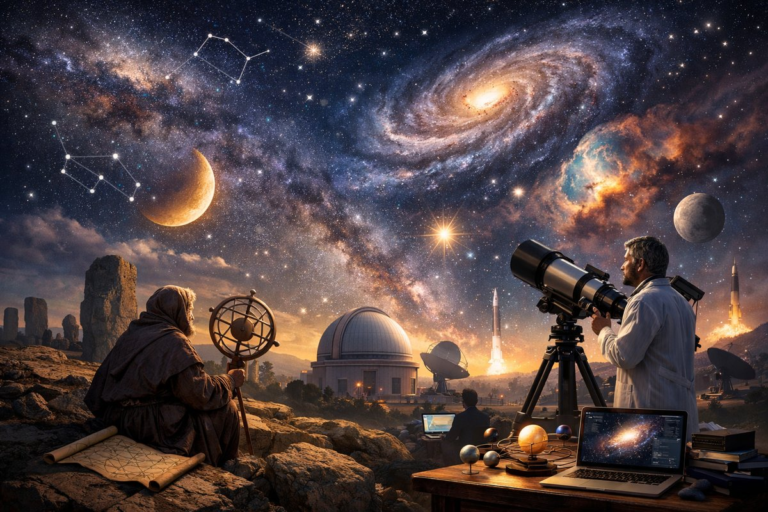
The sky has always been a canvas of mystery, but in recent months a new undercurrent of cosmic curiosity is drawing people away from their screens and into the open, scanning the heavens for signs of something extraordinary. Across small towns and city rooftops alike, amateur astronomers are swapping smartphone games for stargazing apps, mounting telescopes on portable tripods, and trading observations on social networks that connect backyard observers with cutting-edge research teams.
This isn’t just nostalgia for the classic view of the Milky Way. It’s a vibrant movement fueled by accessible, low-cost technology and guided by a spirit of shared discovery. DIY cosmic-ray detector kits are popping up in high school science labs and maker spaces, allowing students to track subatomic particles streaming through Earth’s atmosphere. A group of volunteers in a coastal community has launched a small radio array to monitor solar storms and auroral activity, feeding real-time readings into an open database that professional researchers consult when planning satellite operations.
What’s driving this burst of enthusiasm is twofold: the democratization of data and a growing awareness that space exploration doesn’t require a multimillion-dollar budget. Open-source software now enables amateurs to process raw image files from telescopes, calibrate them against known star catalogs, and even hunt for faint glimmers of new comets. A wave of online tutorials has turned first-time skygazers into citizen scientists able to contribute photometric measurements of variable stars, or to participate in distributed computing projects that search for gravitational-wave signatures buried in noisy datasets.
Underpinning many of these efforts is the rise of collaborative platforms that dissolve traditional barriers. Enthusiasts share code snippets that automate telescope alignment, host live streams of lunar eclipses, and convene virtual star parties where participants on different continents compare views of deep-sky objects. Amateur radio operators broadcast bursts of data tagged with GPS timestamps, allowing physicists to synchronize observations from widely separated detectors. As one coordinator put it, “We’ve gone from isolated pockets of interest to a global sensor network, all built on curiosity and a common love for the cosmos.”
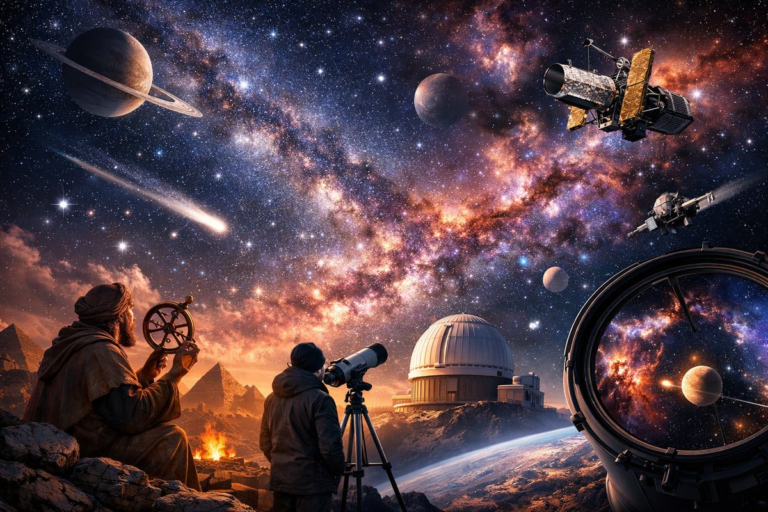
At the same time, recent upgrades to small satellites and CubeSats have inspired hobbyists to dream bigger. Crowdfunded payloads now carry miniature spectrometers and radiation monitors into low-Earth orbit, returning measurements of solar particle events. Earthbound observers track these tiny spacecraft using motorized antennas and open-framework orbital trackers-tools that were once the exclusive domain of university research groups. The result is a feedback loop: data collected by grassroots missions inform professional studies, which in turn spark new DIY experiments.
Back on the ground, astrophotographers are pushing boundaries by snapping frames of distant galaxies and nebulae with consumer-level DSLR cameras. Software enhancements reduce graininess and boost contrast, while motorized mounts guide lenses across the sky to compensate for Earth’s rotation. Shared galleries on community forums showcase breathtaking shots of star clusters, inspiring newcomers to pick up binoculars and planisphere charts and to plot their first midnight observatory sessions.
Stargazing apps have become indispensable companions for these adventures. They overlay constellations on live skies, predict satellite passes and meteor showers, and even simulate how upcoming eclipses will paint the moon’s surface. Many of these tools work offline, enabling explorers to navigate remote dark-sky preserves where cell coverage is unavailable. In parks and nature reserves, families unfold portable tripods and digital sky maps, turning what was once a casual campfire outing into a hands-on astronomy lesson.
Beyond sightseeing, citizen science projects are collecting data with practical applications. Volunteers measure light pollution levels using handheld photometers, feeding maps that guide municipalities in designing greener lighting policies. Others record the timing of cosmic-ray hits in backyard detectors, helping atmospheric scientists model how particle showers influence cloud formation. These grassroots contributions not only advance our understanding of space and weather but also strengthen the link between sustainability and extraterrestrial phenomena.
The emotional pull of cosmic exploration is undeniable. Skywatchers describe a sense of humility when they glimpse Saturn’s rings or trace the path of a meteor burning up in the atmosphere. Amateur groups organize “astro-retreats” under remote desert skies, where participants unplug from daily stress and rediscover perspective amid the grandeur of millions of stars. In these gatherings, conversations often wander from the technical-how to tweak a focus knob-to the profound questions that have always accompanied stargazing: Are we alone? What does it take to make a home among the stars?
Educational institutions are taking note. Workshops that once taught students only the theoretical aspects of astronomy are now incorporating hands-on modules, where learners calibrate telescopes, analyze real telescope imagery, and even send commands to robotic observatories half a world away. Some universities have partnered with citizen networks, granting amateur contributions formal recognition in research publications. This blurring of professional and hobbyist lines underscores a core tenet: curiosity knows no credential.
Looking ahead, advances in machine learning promise to amplify this grassroots revolution. Algorithms trained on massive catalogs of celestial objects can flag anomalies in amateur data streams-unusual light curves or transient phenomena that merit further investigation. Enthusiasts receive real-time alerts when their backyard detector spots a rare gamma-ray burst or when a new near-Earth asteroid passes by, enabling rapid response and coordinated observation campaigns.
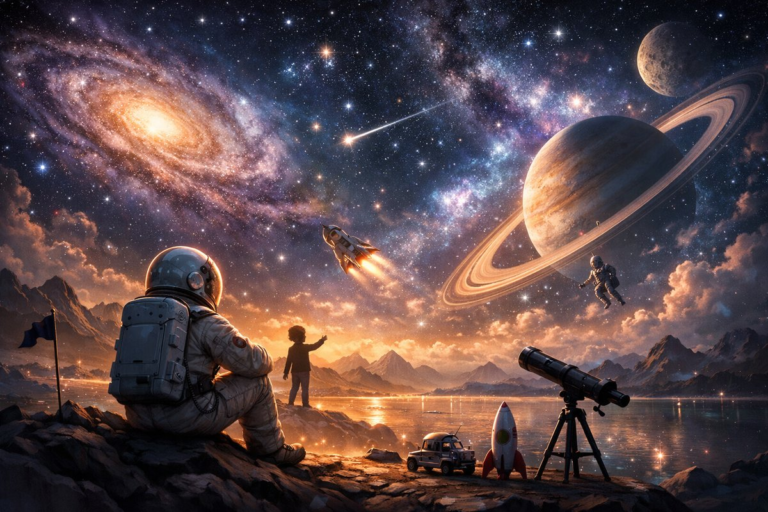
Despite these remarkable developments, the movement remains grounded in simplicity and wonder. A child pressing her eye to a small telescope or a retiree adjusting binoculars on a quiet lawn are as integral to the cosmic narrative as any deep-space probe. In every shared photograph, raw data upload, or whispered gasp at the sight of a distant nebula, we witness the same elemental drive that first led humans to chart the night: a longing to connect with something greater than ourselves.
In the end, this resurgence of cosmic curiosity reminds us that exploration need not wait for massive budgets or institutional backing. With a mix of low-cost hardware, open data networks, and a spirit of collective ingenuity, anyone can join the quest. Tonight, when you look up at a star-filled sky, know that you’re part of a new chapter-one where the boundary between professional and amateur is fading, and where the entire world is invited to look beyond the horizon.