Location
Mount Vernon, WA 98274

Location
Mount Vernon, WA 98274
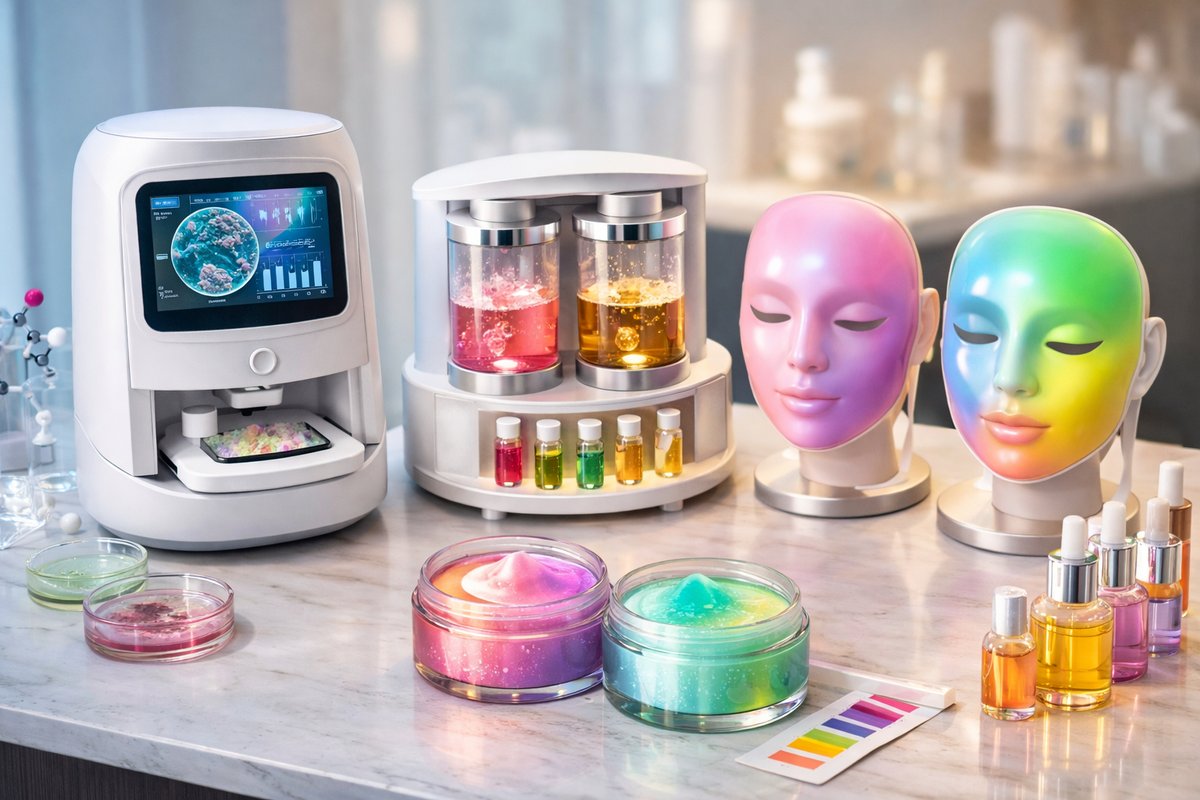
A wave of beauty startups has unveiled countertop devices that analyze skin microbiomes and ferment custom serums, while new color-shifting masks respond to pH and mood. Blending science and sensory rituals, these innovations promise a personalized, playful journey at the intersection of wellness and self-expression.
In a bright corner of a suburban kitchen, a sleek ceramic vessel hums quietly, maintaining a precise 38°C cradle for a living skincare potion. Moments away, a woman peels a rose-hued mask from her face, watching it shift to lavender as it meets her skin’s unique pH. These scenes, once glimpsed only in glossy concept videos, are rapidly entering real-world homes as part of a growing trend: personalized probiotic fermentation devices paired with dynamic, color-responsive serums.
Long before lab-grade bioreactors landed in spa suites, traditional cultures around the world harnessed fermentation to preserve food and nurture skin. From Japanese rice bran “nuka” baths to Eastern European whey compresses, fermented byproducts yielded gentle exfoliation and a bounty of amino acids. Today, a new wave of innovators is marrying high-resolution microbiome profiling, low-wattage temperature control, and micro-encapsulation technology to unleash custom brew-at-home skincare rituals.
Earlier this year, one startup quietly released its countertop “microbrewery” for facial serums. Users swab the surface of their cheeks, send the sample to an offsite lab for DNA sequencing, and receive back pods of freeze-dried probiotic strains tailored to their skin’s bacterial landscape. Slot in a pod, add distilled water and botanical extracts like chamomile or tea tree, and the device gently orchestrates a 12-hour fermentation cycle. The result is a living emulsion rich in hyaluronic acid precursors, peptides, and prebiotic polysaccharides that adapt to each user’s microbial signature.
“It’s a convergence of biology and craft,” explains a cosmetic microbiologist involved in the project. “We’re not just slapping lab-grown peptides on the skin. We’re growing them with your skin in mind.” Clinical trials hinted at measurable reductions in redness and transepidermal water loss, with no major irritation reported among mild rosacea sufferers. Early adopters on social platforms now share grainy videos of swirling amber liquids and time-lapse shots of biotic bubbles rising to the surface.
Yet fermentation is only half the story. Across the hall from the microbrewery showroom, another innovation has been quietly making headlines: chromatic clay masks that respond to pH, temperature, and even ambient humidity. Packing microcapsules of natural anthocyanins-pigments extracted from red cabbage, butterfly pea flower, and hibiscus-these formulations shift from minty green to dusky violet as the mask interacts with different zones of the face. The effect is both playful and diagnostic: lighter patches can indicate dry or oil-depleted areas, while deeper shades often map to zones with higher sebum or sweat production.
One patent-pending formula integrates encapsulated tropical fruit enzymes that begin digesting dead cells only when the clay measures a skin pH above 5.8. In practice, this means the mask’s transformation shelf-life extends from a quick 10-minute application to a more indulgent 30 minutes, without risking over-exfoliation. Beauty scientists say the next iteration will weave in biomineral microbeads derived from upcycled oyster shells, offering gentle microdermabrasion in harmony with local circular-economy goals.
These technologies share a common DNA: personalization, multi-sensory engagement, and sustainability. Instead of one-size-fits-all lotions perched on bathroom shelves, consumers are embracing countertop ritual stations. Some pair their microbrewery with gentle blue-light diffusers or Himalayan salt lamps, layering soundscapes of rustling leaves or ocean surf to heighten relaxation. On seller websites, playlists encoded with binaural beats are now marketed as “fermentation enhancers,” though skeptics note the real benefits lie in mindful presence rather than sonic frequencies.
Retailers are already bundling pH-sensitive masks with probiotic pods and offering refill subscriptions. By shipping freeze-dried powder in compostable sachets and encouraging users to upcycle existing containers, these models sidestep plastic-heavy supply chains. Early lifecycle analyses suggest a potential 30 percent reduction in carbon footprint versus conventional serums, largely thanks to eliminating transport of liquid water and heavy glass bottles.
Critics raise valid questions: What happens if a home device goes off-calibration? Could rogue microbial strains flourish on neglected equipment? To address these concerns, companies are embedding UV-LED sanitation cycles and smartphone alerts to remind users to run a quick internal cleanse. Built-in sensors monitor temperature fluctuations with ±0.2°C accuracy, and any deviation triggers a safety lock that pauses fermentation until the chamber returns to spec.
Meanwhile, dermatologists caution that microbiome research, though promising, remains in its early days. “We’re still charting which bacterial profiles correlate with healthy skin versus disease,” notes a research clinician at a university medical center. “Personalized fermentation is exciting, but it’s important to remember that results can vary widely. It’s not a substitute for proven treatments in cases like acne or eczema.” As a precaution, many brands recommend patch-testing small areas before full-face application and consulting a professional for severe concerns.
Beyond safety, there’s a cultural dimension. In East Asia, fermentation and skin-food traditions run centuries deep; travelers to Korean “hanbang” clinics or Japanese rice bran baths have long valued these rituals. In the West, biohackers and wellness influencers now borrow from these lineages, blending artisanal fermentation with cutting-edge biotech. The collision sometimes sparks debate: purists worry the high-tech sheen lubricates cultural appropriation, while others celebrate the democratization of age-old knowledge through modern lenses.
In New York, a bespoke spa quietly piloted in-salon versions of these countertop breweries, offering single-session “kombucha facial lifts.” Patrons don protective shields and watch a digital readout of microbial growth rates while the esthetician tunes an aroma diffuser to eucalyptus and grapefruit. The result, advocates say, is a lifted appearance and a glowy complexion without needles or lasers. Critics argue it’s a passing gimmick; proponents point to preliminary satisfaction surveys where 80 percent of participants described the ritual as the most memorable component, regardless of measurable skin benefits.
On the consumer front, forums dedicated to DIY beauty now buzz with experiments: enthusiasts ferment turmeric with goat milk, tweak starter-culture ratios, and even jury-rig old yogurt machines. Some have used Bluetooth-enabled thermometers to repurpose home kombucha brewers. In online threads, warnings circulate about overfermentation, contamination, and the importance of accuracy when dealing with living cultures.
Brands are keenly watching these grassroots movements. A handful of established beauty houses recently acquired small fermentation-tech startups, folding their IP into larger R&D pipelines. Others have launched “imitation” color-shift masks using synthetic dyes, prompting backlash from eco-conscious consumers seeking natural anthocyanin sources.
Looking ahead, experts foresee a deeper fusion of data analytics and sensorial experience. Imagine an AR mirror that not only tracks your skin’s hydration over weeks but also cues you to brew a specialized blend when humidity dips or UV exposure spikes. Or a hybrid ritual station that integrates color-shift masks, probiotic serums, and biofeedback games to nudge users toward healthier habits-hydration reminders delivered through playful animations calibrated to skin markers.
Whatever the next chapter holds, one thing is clear: beauty rituals are shedding their static shell. They’re becoming living, breathing sequences that respond to our biology, our environment, and even our moods. In place of off-the-shelf bottles, tomorrow’s skincare aficionados will orchestrate micro-experiments at home, surrendering to the gentle alchemy of microbes and pigments.
For now, shelves are assembling the building blocks: pH-test strips to map your skin’s starting point, countertop brewers for bespoke serums, color-responsive masks that double as diagnostic tools, and apps that transform each session into a multi-sensory ritual. Whether this movement matures into a mainstream staple or remains a niche frontier depends on rigorous testing, thoughtful design, and the willingness of consumers to embrace beauty as an exploratory act.
In kitchens and bathrooms from Seoul to Seattle, that exploration is already underway. The question now isn’t whether you’ll try fermentation-powered skincare, but how you’ll choreograph the soundscapes, colors, and microbes to craft a ritual that feels uniquely yours.