Location
Mount Vernon, WA 98274

Location
Mount Vernon, WA 98274
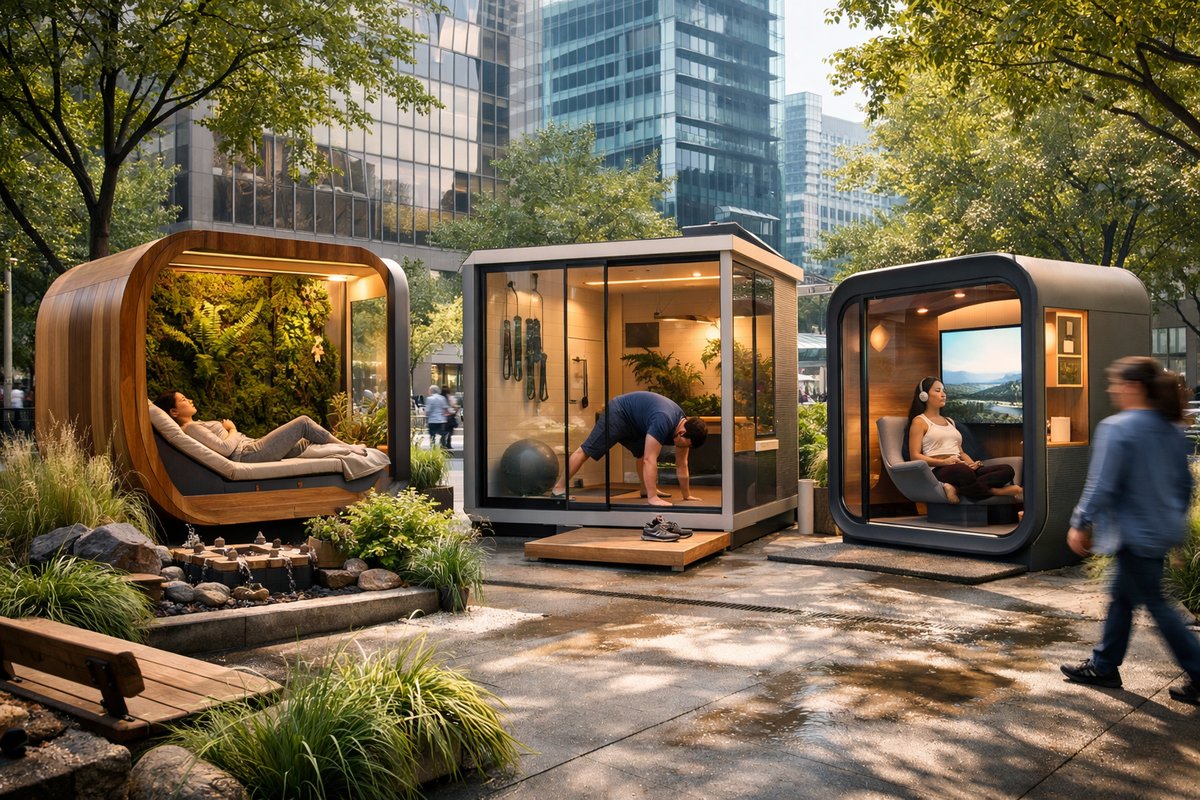
A new wave of micro-sized wellness pods is popping up on sidewalks and in public squares, offering passersby nature-infused rest areas, quick movement stations, and digital mindfulness corners. These modular hubs combine sustainable design, sensory tools, and brief rituals to support vitality, sleep health, and emotional clarity in busy neighborhoods.
City dwellers navigating crowded sidewalks and digital overload are discovering unexpected oases: small, modular wellness pods that blend greenery, gentle movement aids, and guided mindfulness in a space no larger than a telephone booth. Piloted in neighborhoods across North America and Europe, these stations are designed to fit into public plazas, libraries, university campuses, and transit stops. They offer a low-barrier invitation to pause, stretch, or recharge the mind before hopping back into the urban hustle.
In one newly installed pod near a commuter rail line, built-in benches with subtle vibration patterns cradle tired shoulders, while a living wall of low-maintenance succulents and ferns filters the air and adds a touch of biophilic design. A motion sensor cues a quick five-minute movement routine projected on a small screen: basic joint rotations, resistance-band stretches, or calf-raises on a removable platform. Visitors can step in for a micro-workout, log a brief journal entry on a touchscreen, or slip on blue-light filtering glasses before settling into a cushioned nook for a guided breathing exercise.
“These stations arose from a simple question: how do we bring wellness into everyday moments?” explains a program coordinator who helped develop the prototypes. Early trials showed that people were far more likely to engage with a two-minute stretch break or a three-minute guided breathing session when tools were immediately accessible on a busy route, compared to booking time at a separate gym or studio. By meeting people in their flow of life, the pods make short self-care rituals feel both natural and achievable.
Beyond movement and mindfulness, a row of digital nap capsules caters to sleep health. Each capsule features adjustable lighting that mimics dawn and dusk to support circadian rhythms, along with gentle white-noise or nature soundscapes tailored to help users drift off. Research from sleep scientists at a major public university found that even a 20-minute “power nap” with controlled light and sound can improve alertness by up to 30 percent and reduce stress markers. These micro-sleep stations are drawing commuters and office workers alike, particularly in neighborhoods where long workdays and screen exposure have disrupted natural sleep patterns.
Sustainability underpins every element of the design. Many pods are repurposed shipping containers or prefabricated timber modules topped with solar panels that power interior sensors and lighting. Rainwater harvesting systems irrigate the living walls, and recycled insulation materials ensure temperature comfort without excessive energy use. Modular components-like fold-away benches, removable planters, and plug-and-play resistance bands-allow communities to customize each station to local needs, whether that’s more seating, additional greenery, or expanded digital programming.
A key appeal of these micro-wellness hubs is emotional clarity. Inside each pod, visitors find touchscreen journals and drawing tablets preloaded with prompts to foster self-reflection: “Note three positive moments from today,” or “Sketch the shape of how stress feels.” A suite of curated audio options-ranging from ambient forest sounds to gentle piano loops-complements the prompts, guiding users into brief states of calm focus. For those with limited privacy, noise-cancelling partitions and soft-close doors ensure a few minutes of uninterrupted introspection.
Local artists have contributed to the visual identity of these pods, painting murals that shift in response to movement sensors. As someone approaches, abstract shapes glow and rearrange, reinforcing the sense that personal energy and public art can interact in real time. This integration of art and technology has sparked curiosity from urban planners, who see potential to deploy similar installations in underutilized alleyways, vacant lots, or along bike paths.
Partners ranging from public health nonprofits to neighborhood business associations have convened meetings to discuss pilot locations. In one midsize city, a coalition of community gardeners, school officials, and library staff is mapping out a series of pods that will rotate among parks, campuses, and shopping districts. They hope to gather data on usage patterns, user feedback, and health outcomes over the coming months. Funding comes from a combination of municipal wellness grants, private sponsors, and crowdfunding campaigns.
Health researchers are eager to evaluate behavioral shifts driven by the pods. A forthcoming study at a leading research institute will track sleep quality, stress levels, and daily step counts for participants who use the pods at least three times a week. Preliminary surveys suggest that over 60 percent of users report feeling more energized and emotionally balanced after just a few visits. Some participants even cite improvements in productivity and mood that carry over into evening routines at home.
Designers emphasize that the stations are not a substitute for long-term therapy, professional fitness coaching, or dedicated sleep clinics. Instead, they frame these installations as “first-touch” interventions-small nudges that invite curiosity and help people build awareness of their bodies and minds. For individuals with limited free time or unfamiliarity with mindfulness, the pods lower the activation energy required to explore new self-care practices.
To ensure inclusivity, many pods offer content in multiple languages, along with visual and audio options tailored for accessibility. Large print, voice navigation, and adjustable furniture heights aim to welcome visitors of all ages and abilities. Neighborhood focus groups have also requested specialized modules for families, seniors, and people recovering from injuries, all of which are currently in development.
Innovators envision extending the concept to pop-up campus tours, event festivals, and even corporate campuses. A technology incubator is exploring a version that integrates biometric feedback from wearable devices-heart-rate variability, skin temperature, and movement metrics-to dynamically tailor the on-screen guidance for optimal impact. Meanwhile, a coalition of parks departments is experimenting with outdoor versions, where solar-powered benches, retractable shades, and plant-infused acoustic panels create open-air micro-retreats.
Critics caution against overreliance on quick fixes or excessive technologizing of self-care. They argue that true well-being requires systemic change-affordable healthcare, green spaces, and work-life balance-rather than scattered pods. Proponents acknowledge these concerns but maintain that grassroots deployment of small, visible healthy-design elements can spark broader civic conversations about urban well-being.
In neighborhoods with pods already in place, early signs point to community engagement beyond solo visits. Residents have organized walking clubs that meet at the stations, hosted outdoor drawing classes using the art panels as inspiration, and scheduled informal debrief sessions where users share favorite prompts or movement routines. These social rituals suggest that micro-pods can serve as catalysts for local networks focused on collective health.
The trend of neighborhood wellness pods highlights a shift in how public space is conceived. Rather than seeing sidewalks and plazas solely as thoroughfares, planners are reimagining them as venues for brief, restorative encounters. By weaving together nature, movement, and mindfulness in compact, modular units, these installations help busy urbanites reclaim small moments of calm and vitality without straying far from their daily routines.
As more cities pilot the concept, the true test will be whether these pods become landmarks of everyday health practice or fade as novelty. Early indicators, however, point to a growing appetite for approachable, street-level self-care. In a world where time feels stretched thin, even a few minutes of guided stretching, a dose of fresh air from a living wall, or a short digital journal prompt can offer a sense of balance-and that might be just what the urban hustle needs.
A final thought comes from a first-time user, who described their visit as “like stepping into a gentle pause button for my brain.” And in a landscape of perpetual motion, those pauses may turn out to be the small miracles that keep cities humming with healthier, more mindful residents.