Location
Mount Vernon, WA 98274

Location
Mount Vernon, WA 98274
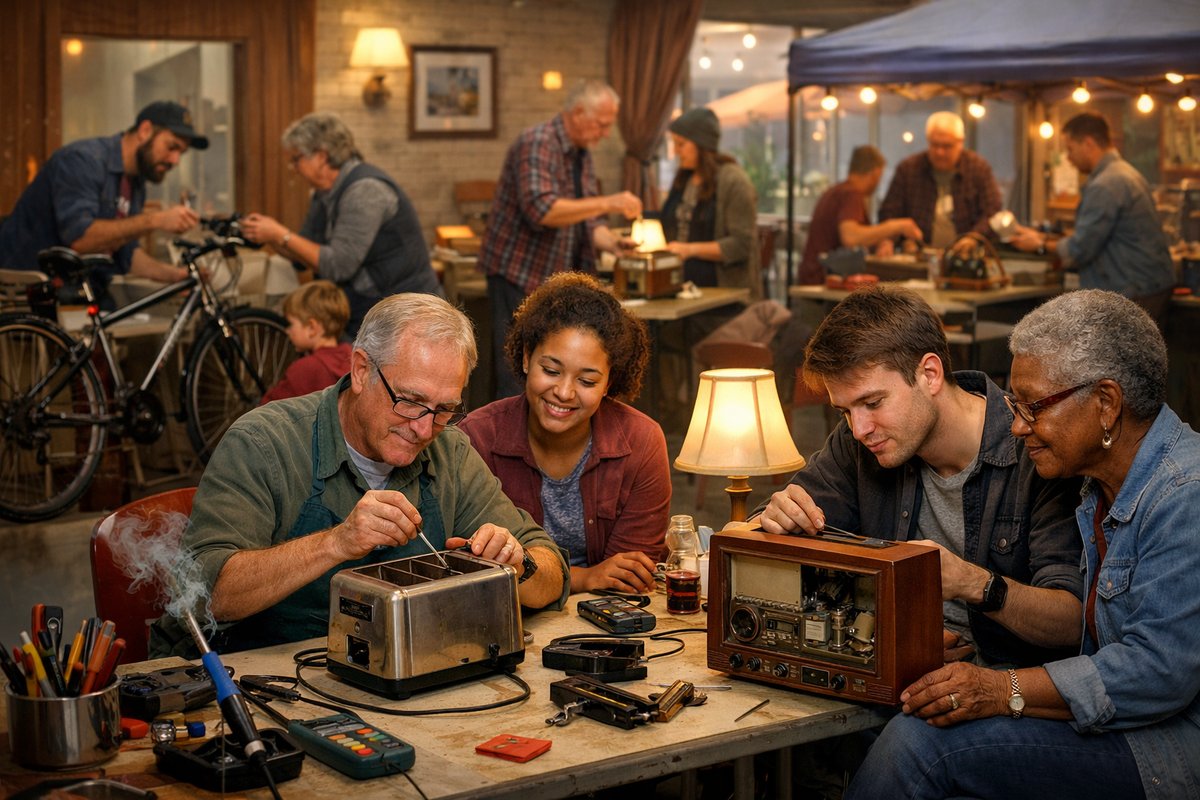
A growing network of neighborhood repair cafes is breathing new life into discarded toasters, bicycles and radios while weaving a tapestry of trust and skill across communities. In living rooms, church basements and pop-up tents, strangers become collaborators, turning the act of fixing into a ritual of resilience and connection.
On a brisk Saturday morning, a cluster of mismatched tables and folding chairs occupies the corner of a community center parking lot. Under a striped tent, volunteers greet visitors laden with cracked phone chargers, humdrum coffee makers and rattling bicycle chains. Amid the consoles and circuit boards, hammers and sewing needles, one young parent arrives with a battered baby monitor whose speaker has long since gone silent. What starts as a routine repair appointment soon unfolds into a multi-layered conversation about childhood memories, shared frustrations and hopes for a device that will once again provide solace in the dark hours of midnight feedings.
These informal gatherings-known broadly as repair cafes-have taken root in neighborhoods around the world. Born from a desire to halt the fast-fashion mentality of toss-it-and-buy-new, they offer both practical skill‐sharing sessions and a communal antidote to the alienation of modern life. Participants leave not just with resurrected gadgets but with renewed confidence, an expanded social circle and a clearer sense that mistakes are not final failures but stepping stones toward mastery.
The movement began with simple beginnings: a handful of enthusiasts concerned about landfills overflowing with electronics and textiles, determined to do more than recycle. By hosting open-door workshops, they invited anyone curious to learn soldering techniques, stitch up torn hems or tune rusty gears. Over time, these pop-up repair hives developed a steady rhythm-annual tool drives, monthly skill-swap fairs and traveling caravans that bring their tents to underserved corners of the city.
In one inner-city outpost, a retired machinist and a recent graduate in industrial design stand side by side, coaxing a whirring turntable back to life. Across from them, a teenager learns to thread a sewing machine under the patient guidance of a grandmother whose own hands bear decades of quilting stitches. A local café owner donates coffee grounds and second-hand tables. Nearby, a parent hands over a broken tablet to an engineer who disassembles it with the same reverence others might show a precious heirloom.
Fixing broken objects becomes a gateway to larger conversations about impermanence, self‐reliance and collective care. When one attendee realizes her mutated bread machine motor can be swapped with a part from another malfunctioning unit, she experiences a revelation that carries far beyond appliances: collaboration unlocks solutions that no one person could accomplish alone.
At a suburban branch of the network, organizers noticed a steady uptick in attendees seeking help with clothing repairs. A handful of dedicated stitchers stepped forward to develop a textile station, stocked with patch kits and fabric offcuts. Soon, torn denim jackets became canvases for neighborhood art-each patch telling a personal story of adversity overcome. One participant confided that repairing her favorite jacket helped her reclaim a sense of identity after a period of illness erased her confidence.
These gatherings embody sustainability not only in conservation of resources but in the preservation and transfer of tacit knowledge. As one volunteer put it, people learn more from each other than from any manual. Loose electronic components and orphaned garments are anchors for generational exchange, bridging gaps between retired professionals and eager novices. In the process, repair cafes create localized circular economies-surplus materials circulate, skill sets expand and waste dwindles.
The mental hurdles of repair can be daunting. Many newcomers confess fear of making mistakes or intensifying damage. Yet in the friendly atmosphere of a repair cafe, mistakes are celebrated as valuable teaching moments. When a solder joint fails, a mentor arises to demonstrate proper technique. When a sewing needle snaps mid-stitch, the table falls silent before collective chuckles remind everyone that even experts encounter setbacks.
In a cobbled-together annex behind an aging library, a weekly repair cafe focuses on refurbished electronics destined for students in low-income neighborhoods. Out of sight of the main doors, volunteers meticulously revive laptops and tablets, then donate them to families in need. Young participants learn that their efforts perform a double service: empowering classmates with technology access while refining their own diagnostic skills.
City officials have begun to recognize repair cafes as community assets. Municipal grants underwrite tool maintenance and space rentals; local schools partner with chapters to integrate hands-on lessons into STEM curricula. Even sustainability councils highlight repair cafes in public awareness campaigns, encouraging residents to attend before discarding malfunctioning items. The result is a subtle shift in consumer behavior-residents report thinking twice before ordering a new gadget when a repair cafe is just around the block.
Challenges remain. Reliable funding is sporadic, volunteer burnout is ever-present, and finding suitable venues can be an uphill battle. To combat these hurdles, organizers have forged alliances with libraries, churches, makerspaces and environmental nonprofits. Crowdfunding pages not only offset tool purchases but also connect donors to personal stories of machines saved from the scrap heap.
Perhaps the most poignant outcome is intangible: a renewed sense of civic belonging. In communities where social bonds have frayed, the repair cafe becomes a neutral ground where visitors arrive as equals-no resumes, no resumes, no status symbols required, just broken items and a willingness to learn. Strangers end their sessions with mutual respect and shared triumphs, and sometimes, with plans for a community garden or a late-night film screening born from newfound camaraderie.
Back under the striped tent, the young parent’s baby monitor crackles once more with soft white noise. She lifts it with awe, as though cradling new hope in her arms. Around her, people celebrate the moment, cheer on fellow menders and conjure a collective truth: when we repair together, we heal more than machines-we mend the frayed edges of community.
Repair cafes are a quiet revolution in motion, driven by empathy, curiosity and the conviction that failure is not an endpoint but an invitation to grow. In a world spinning ever faster, these humble workshops remind us that some of our greatest achievements begin when we simply decide to keep going, keep learning and keep trusting one another.