Location
Mount Vernon, WA 98274

Location
Mount Vernon, WA 98274
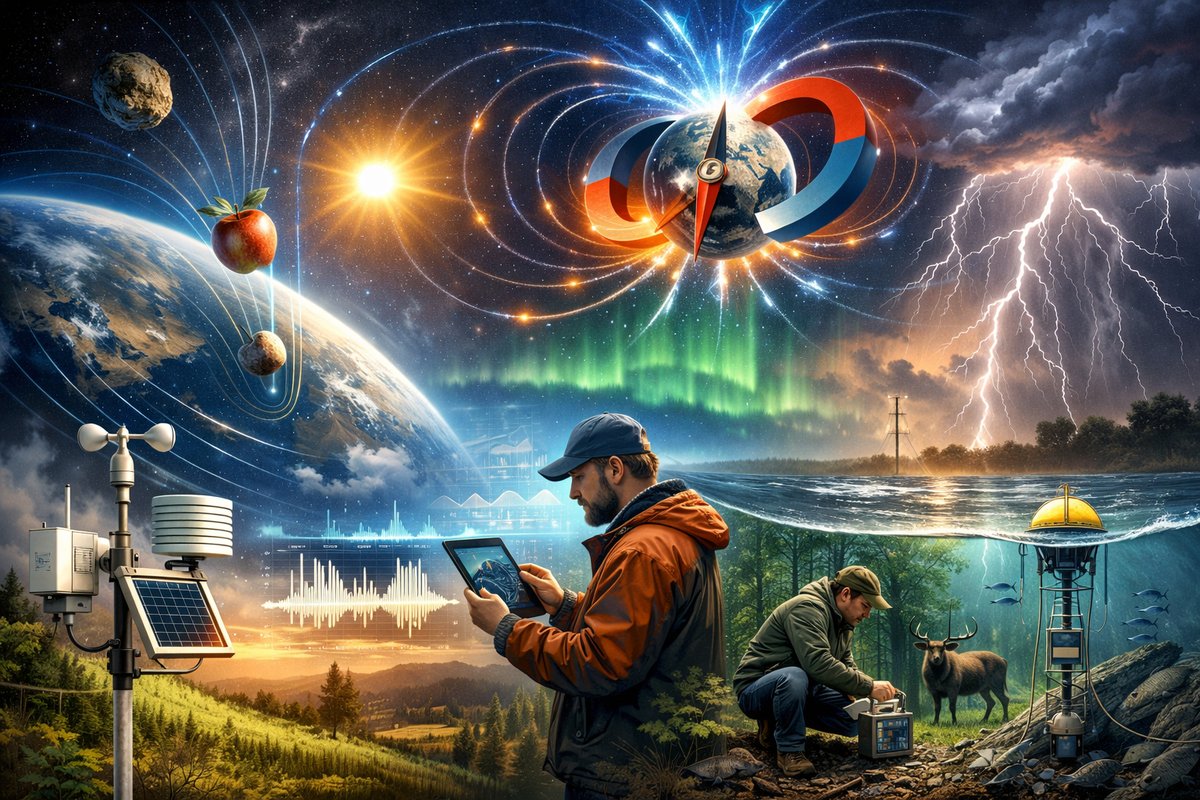
Natural forces like gravity, magnetism, and atmospheric electricity govern our planet's dynamics in ways both profound and often imperceptible. Recent advances in sensing technology and citizen science are illuminating these hidden phenomena, revealing complex interactions that influence everything from weather patterns to ecological balance.
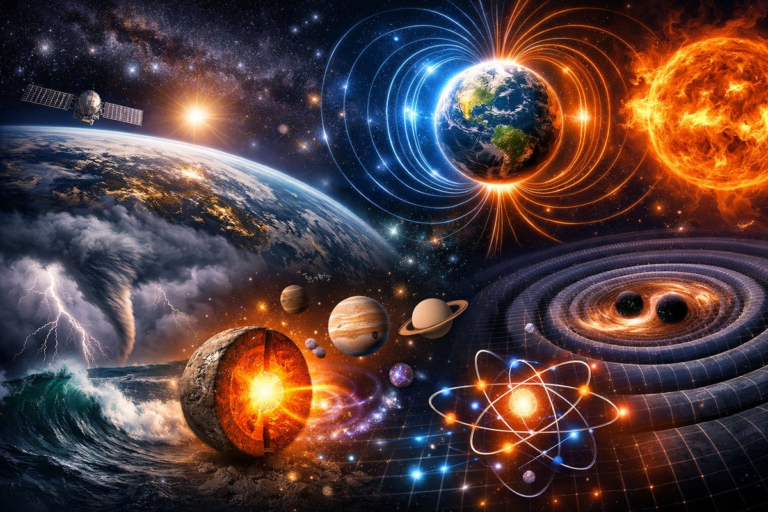
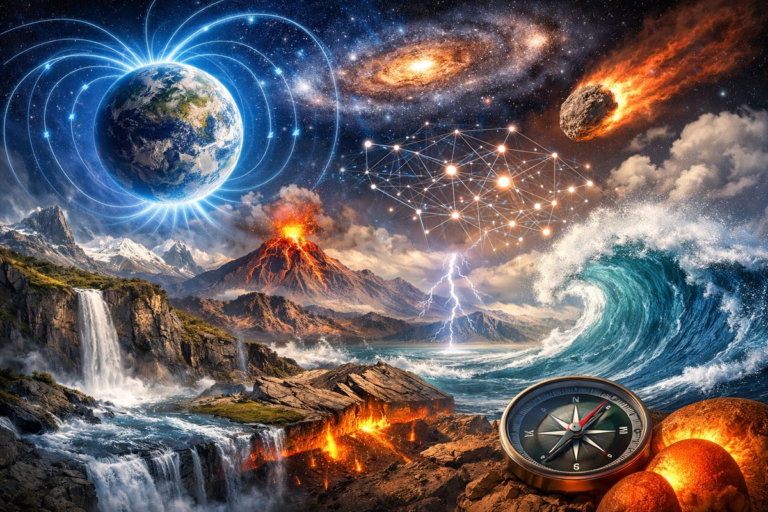
The world around us is a vast interplay of invisible forces that continuously mold the environment and influence life. Gravity tugs relentlessly at every object, magnetism weaves an unseen web around the planet, and atmospheric electricity crackles silently above our heads. While these natural forces have long been subjects of scientific inquiry, new technologies and collaborative networks are now enabling a deeper understanding of their subtle, often hidden effects.
Gravity, the force that anchors us to Earth, extends far beyond the simple pull we feel beneath our feet. Variations in gravitational strength, caused by factors such as the distribution of mass within the Earth’s crust and ocean tides, create intricate patterns that can be mapped and studied. These gravitational anomalies influence ocean currents and even seismic activity, acting as a silent conductor of Earth’s dynamic systems. Advanced gravimeters-highly sensitive instruments capable of detecting minute changes in gravitational acceleration-have become essential tools for geophysicists exploring these nuances.
Magnetism, generated by the molten iron core spinning within Earth, creates the geomagnetic field that shields us from harmful cosmic radiation. This magnetic field is not static; it fluctuates, shifts, and occasionally reverses polarity over geological time scales. Modern magnetometers allow researchers to track these changes with remarkable precision, revealing how solar storms interact with Earth’s magnetic shield and induce phenomena like the auroras. These interactions have practical implications, affecting satellite operations, navigation systems, and even power grids.
Beyond gravity and magnetism, atmospheric electricity presents a fascinating frontier. The planet’s atmosphere is constantly charged with electrical energy, primarily generated by thunderstorms and cosmic rays. This electrical environment influences cloud formation, precipitation patterns, and even the chemistry of the upper atmosphere. Recent studies using balloon-borne sensors and ground-based electric field mills have begun to map these electric fields in unprecedented detail. These insights are crucial for improving weather prediction models and understanding climate dynamics.
One of the most exciting developments in recent years is the rise of citizen science networks dedicated to monitoring natural forces. Equipped with affordable sensors and data-sharing platforms, volunteers worldwide contribute to a growing global dataset that captures the rhythms of Earth’s gravitational, magnetic, and electrical fields. This democratization of data collection not only accelerates scientific discovery but also fosters a deeper public connection to the planet’s invisible processes.
Emergent systems-the complex behaviors arising from simple interactions among natural forces-add another layer of intrigue. For example, the coupling between magnetic field fluctuations and atmospheric electricity can trigger chain reactions influencing weather systems over vast regions. Understanding these emergent phenomena requires interdisciplinary approaches, blending physics, meteorology, and environmental science.
Quantum effects, though often associated with the microscopic world, also have subtle roles in natural forces. Quantum fluctuations contribute to the background noise in sensitive measurements of gravitational waves and magnetic fields. Exploring these quantum quirks enhances the precision of instruments and opens new avenues for detecting phenomena like dark matter or gravitational anomalies.
The practical implications of decoding natural forces are far-reaching. Improved gravitational mapping aids in natural resource exploration and earthquake risk assessment. Enhanced understanding of geomagnetic storms helps protect critical infrastructure from solar-induced disruptions. Better grasp of atmospheric electricity informs climate models and disaster preparedness. Moreover, the ethical stewardship of this knowledge aligns with values of sustainability and respect for the planet’s delicate balance.
As we continue to unveil the invisible threads that connect natural forces, the blend of cutting-edge technology, collaborative science, and public engagement promises to deepen our appreciation of Earth’s complexity. This ongoing journey not only satisfies human curiosity but also equips society with tools to live more harmoniously within the planet’s dynamic systems. The once-hidden forces shaping our world are becoming visible, inviting us to listen, learn, and respond with care.