Location
Mount Vernon, WA 98274

Location
Mount Vernon, WA 98274
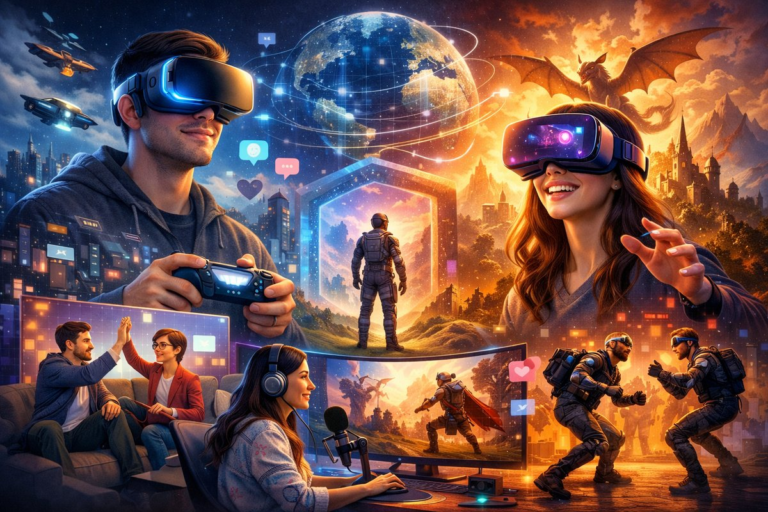
From living-room pods that blend physical sets with digital realms to urban lounges offering haptic feedback and spatial audio, gamers are redefining what it means to play. A new wave of phygital entertainment is transforming hardware, décor, and social rituals alike, turning every frame and vibration into an experience.
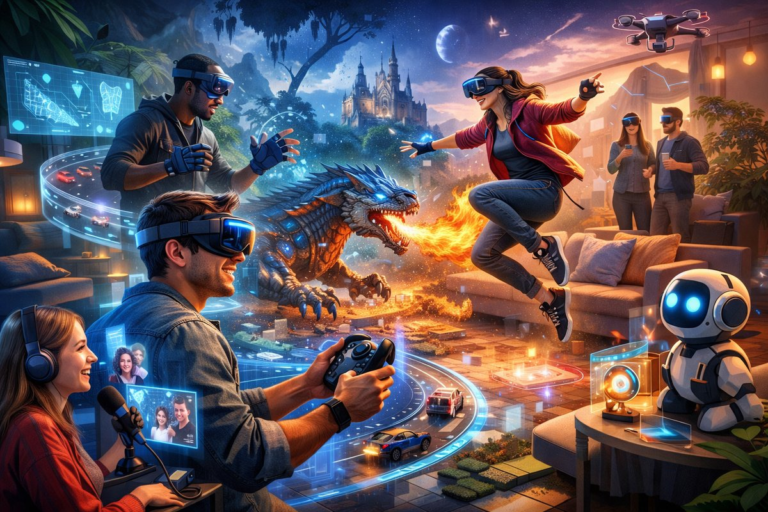
In a dimly lit corner of a converted loft, a quartet of friends slips on headsets, straps on vests, and steps onto raised platforms. Within seconds they’re immersed in a neon-lit fortress, dodging virtual barriers and communicating through spatial audio. Back in the real world, LED strips pulse in sync with in-game action, while a gentle hum from haptic suits reinforces every hit and collision. This isn’t a theme-park ride or a movie premiere. It’s the living room of 2024, where phygital gaming spaces are redefining play.
Just a few years ago, home gaming meant sitting in front of a TV, controller in hand, headphones optional. Today, powered by advances in VR headsets, haptic wearables, and environmental lighting, players are actively co-directing their surroundings. Developers are shipping small-footprint projection systems that turn any wall into a dynamic battlefield. Sound designers are optimizing binaural audio to trick the brain into believing footsteps are circling behind you. And furniture makers are responding with modular chairs, adjustable desks, and power-smoothing surge protectors designed to keep cables tucked away and reflexes razor-sharp.
At the heart of this transformation is a term known in some circles as “phygital entertainment”-the seamless blending of physical elements with digital content. Rather than passively consuming a screen, participants become actors in a hybrid environment that adapts as they move. In independent studios around the world, immersive theater troupes are collaborating with game designers to craft narratives that unfold over hours of play, with hidden compartments, scent diffusers, and tactile puzzles offering clues. Back at home, that same ethos is trickling down to DIY makers who build cardboard mockups of sci-fi control panels or set up fog machines in basements to recreate cinematic atmospheres.
Underlying this craze is an appetite for multisensory experiences. VR headsets can transport you to a sunken pirate ship or a Martian desert, but the dissonance between sight and touch remains obvious without haptic reinforcement. Enter the next generation of haptic vests, gloves, and leg bands. By mapping vibrations to game events-a heartbeat-pounding footsteps approach, the sting of a laser blast-these devices heighten immersion without causing discomfort. Early adopters report that even simple rhythm games take on new life when a blind beat is turned into a physical pulse on the sternum.
Sound is similarly undergoing a revolution. True spatial audio rigs use multiple speaker nodes placed around the room or leverage advanced audio drivers in wireless headsets to create a 360-degree soundscape. This makes every creak in a haunted maze or distant rumble in a space-combat sim feel like it’s emanating from a precise direction. Combine that with customizable LED lighting that responds to on-screen colors and intensity, and you have a living canvas that dances in time with every explosion and spell.
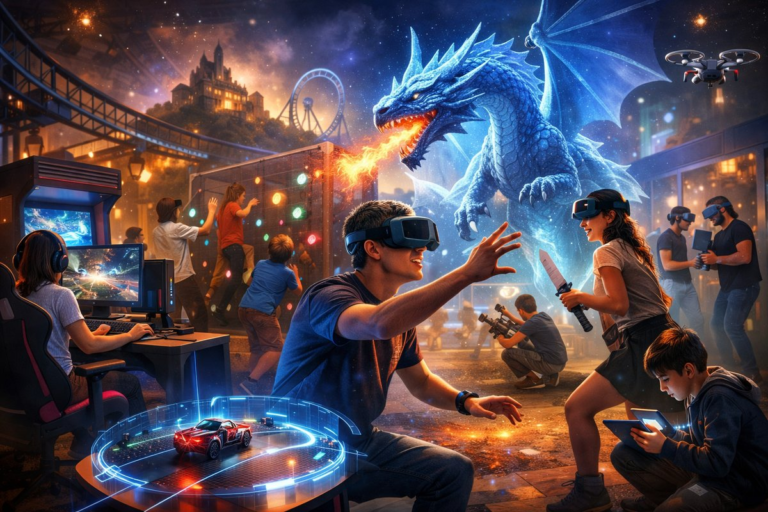
Commercial venues have been quick to seize on these trends. Urban gaming lounges now offer rentable pods outfitted with high-end VR gear, haptic feedback floors, and sculpted set pieces that change with each new title. Patrons can choose from a catalog of experiences-dungeon crawls, zombie swarms, stealth assassinations-and play alongside strangers or friends. These studios often employ technicians who calibrate the space in real time, adjusting airflow, lighting angles, and even room temperature to maximize immersion. Subscription-style memberships give local enthusiasts a chance to rotate through the latest modules without committing to pricey hardware purchases.
But many gamers prefer crafting phygital sanctuaries at home. A corner of a bedroom can be transformed into a command center with the right layout: a sturdy desk for multiple monitors and peripherals, an ergonomic chair designed for long sessions, and a carpeted area for VR room-scale tracking. Shelves stocked with figurines and art prints set the mood, while blackout curtains eliminate glare and outside distractions. For those short on square footage, foldaway rigs and wall-mounted brackets keep headsets and controllers stowed away until mission time begins.
This wave of home installations has given rise to a cottage industry of customization tools. Software apps now sync room lighting with live gameplay, crawling through pixel data to match hue and brightness. 3D-printable accessories allow bespoke mounts for cameras, microphones, and even cable channels. And open-source communities share wiring diagrams for DIY haptic boards that convert controller rumble signals into direct-touch transducers.
All this flair can boost engagement, but it also raises questions about comfort and balance. Experts in ergonomics caution against chairs with poor lumbar support or desks that force wrist extension, warning of potential strain injuries over months of use. Designers of immersive spaces stress the importance of ventilation to prevent overheating when users are sweating under multiple layers of wearables. And mental-health advocates encourage scheduled breaks, especially when VR can trick the brain into losing track of time.
For beginners eager to build their own setup, a phased approach helps manage budget and complexity. Start with a reliable headset and a wireless controller, then introduce a gaming chair with adjustable features. Once the core setup is stable, layer in environmental enhancements: LED strip lights, spatial audio speakers or a premium wireless headset, and cable management solutions to keep the floor clear. If you’re feeling adventurous, explore a standalone haptic vest or gloves, knowing that many devices still await full game support.
As phygital gaming continues to evolve, content creators and platform owners will need to tackle new challenges. Privacy concerns around room-scale tracking data have already spurred discussions about local-only processing and anonymized analytics. Energy consumption in more elaborate setups is also under scrutiny, pushing manufacturers toward power-efficient displays and low-voltage peripherals. Even sustainability advocates ask whether disposable VR face-warmer pads or single-use sensor adhesives can be replaced with washable or recyclable alternatives.
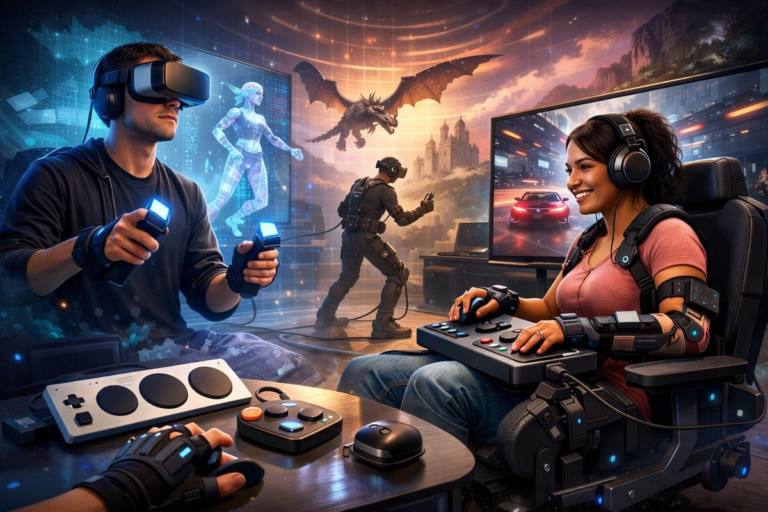
Looking ahead, the frontier of multisensory entertainment may stretch beyond sight, sound, and touch. Early research into aroma delivery systems hints at olfactory elements-smoke machines are already used in arcades to foreshadow dramatic reveals. Temperature regulation modules might simulate a sudden drop in a cavern or the warmth of a virtual desert. And as artificial-intelligence-driven engines learn individual player behaviors, environments could adapt in real time for accessibility, pacing, or narrative branching.
Phygital gaming is not just another upgrade cycle; it’s a shift in how we define presence. Whether through a city-center lounge or a PS5-powered nook at home, these experiences demand new design philosophies, social norms, and comfort standards. For players, the payoff is a sense of agency and wonder rarely found in static screens. For the industry, it’s an invitation to reimagine the boundaries between the physical and the digital, one beat, one glow, and one pulse at a time.
As the headset powers down and the lights dim on today’s session, it’s clear that we’re standing at the threshold of a gaming renaissance. The question isn’t whether you’ll game-everybody already does-but how deeply you’re willing to dive, and what shape your own phygital playground will take.