Location
Mount Vernon, WA 98274

Location
Mount Vernon, WA 98274
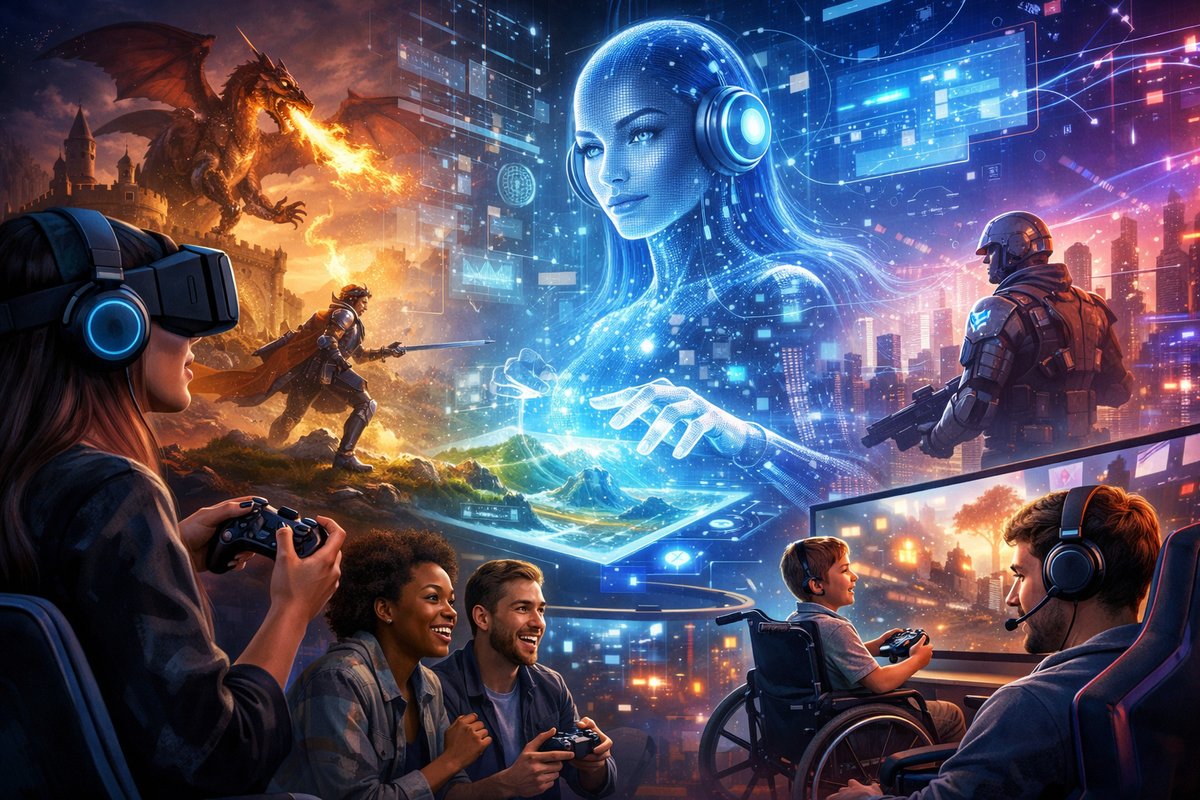
The gaming world is entering a new era, where artificial intelligence and adaptive technologies are redefining player engagement and immersion. This shift not only enhances gameplay but also fosters more personalized and inclusive experiences, inviting a broader community to participate in the evolving landscape of digital entertainment.
Gaming has always been a domain where technology and creativity intersect, but recent advances in artificial intelligence (AI) and adaptive technologies are pushing this intersection into uncharted territory. These innovations are not merely incremental upgrades; they are transforming how players interact with games, how stories unfold, and how communities form around shared experiences.
At the heart of this transformation lies AI-driven procedural generation. Unlike traditional game design, where every element is meticulously crafted by developers, procedural generation uses algorithms to create vast, dynamic worlds that can adapt in real time to player actions. This results in game environments that feel uniquely alive and responsive, offering new challenges and narratives with every playthrough. Titles leveraging this technology are creating ecosystems that evolve, making replayability a richer and more personalized experience.
Beyond world-building, AI is enhancing non-player character (NPC) behavior, enabling characters to learn from player choices and exhibit complex emotional responses. This shift towards more human-like interactions deepens immersion, fostering empathy and emotional investment. Players find themselves in narratives that respond not only to their strategic decisions but also to their moral and emotional choices, blurring the line between player and character.
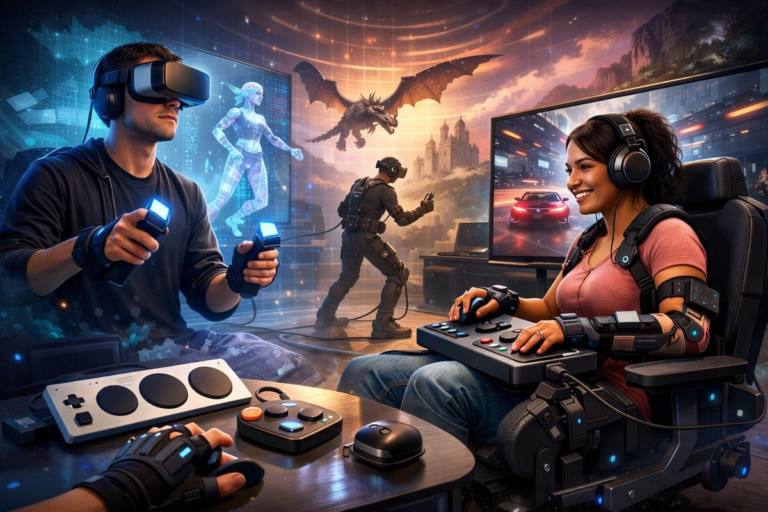
Accessibility is another critical frontier where adaptive technologies are making a profound impact. Gaming has historically struggled with inclusivity, but the integration of AI-powered assistive features is breaking down barriers. Real-time speech-to-text, customizable control schemes, and AI-guided tutorials are empowering players with diverse abilities to engage fully and comfortably. This commitment to inclusivity enriches the gaming community, inviting fresh perspectives and talents.
Moreover, the rise of cloud gaming and edge computing is democratizing access to high-fidelity gaming experiences. Players no longer need expensive hardware to enjoy complex, graphically intensive games. Instead, games are streamed from powerful servers, allowing seamless play across devices. This shift is supported by AI optimizations that manage bandwidth and latency, ensuring smooth gameplay even under varying network conditions.
Social connectivity is evolving alongside these technological advances. AI-driven matchmaking systems analyze player behavior and preferences to create balanced and enjoyable multiplayer experiences. Meanwhile, immersive social hubs powered by virtual and augmented reality technologies foster genuine connections, enabling players to collaborate, compete, or simply socialize in richly textured digital spaces.
The convergence of AI and gaming also raises important questions about ethics and player agency. As games become more adaptive and personalized, transparency about AI decision-making processes and data privacy becomes paramount. Developers and communities are increasingly focused on creating ethical frameworks that respect player autonomy and foster trust.
Looking ahead, the integration of AI with emerging technologies such as brain-computer interfaces and haptic feedback promises even deeper immersion. Imagine games that respond directly to neural signals or simulate tactile sensations with unprecedented realism. These innovations could redefine what it means to play, transforming gaming into a multisensory, deeply personal journey.
In this rapidly evolving landscape, players, developers, and researchers alike are embracing curiosity and emotional intelligence to navigate new challenges and opportunities. Gaming is no longer just about entertainment; it is a vibrant space for connection, creativity, and exploration of human experience through technology.
As the industry continues to innovate, the fundamental value of play remains central. Whether through AI-generated worlds, empathetic NPCs, or adaptive accessibility features, games invite us to explore, to learn, and to connect. The future of gaming is not just about what technology can do, but how it can enrich the human spirit through immersive, inclusive, and thoughtful design.