Location
Mount Vernon, WA 98274

Location
Mount Vernon, WA 98274
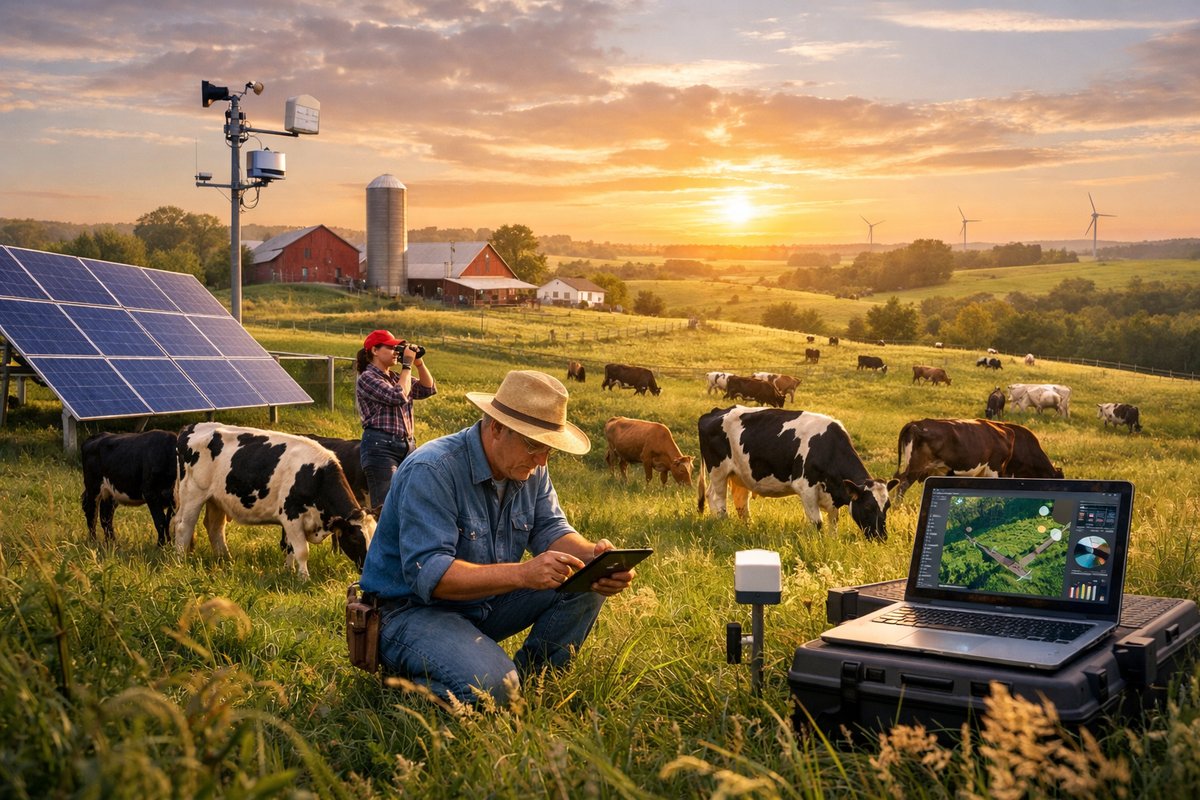
Across rolling pastures in the heartland, a group of family farms has launched an experiment combining century-old grazing wisdom with solar power, remote sensing and collaborative data sharing. Their work demonstrates how sustainable management practices can boost animal welfare, improve soil health and strengthen rural economies without losing touch with generational know-how.
On a dew-damp morning along the Platte River, three ranching families gather under the shade of a cottonwood tree. They don’t carry clipboards or tablets-yet. Instead, they revisit pasture boundaries, comparing notes on grass height, recent rainfall and herd health. This cooperative spirit is at the core of the newly formed Heartland Grazing Collective, a project uniting sustainable farming and rural innovation to reinvent livestock stewardship.
The collective began as a small trial last spring when an extension agent introduced members to a rotational grazing model that traces its roots to practices used by prairie tribes. Rather than leaving cattle on a single plot for weeks, they move herds every few days to allow grass stands time to recover. Early results show improved forage density, fewer mud-bound hoof prints after storms and stronger water retention in soil samples pulled from former overgrazed paddocks.
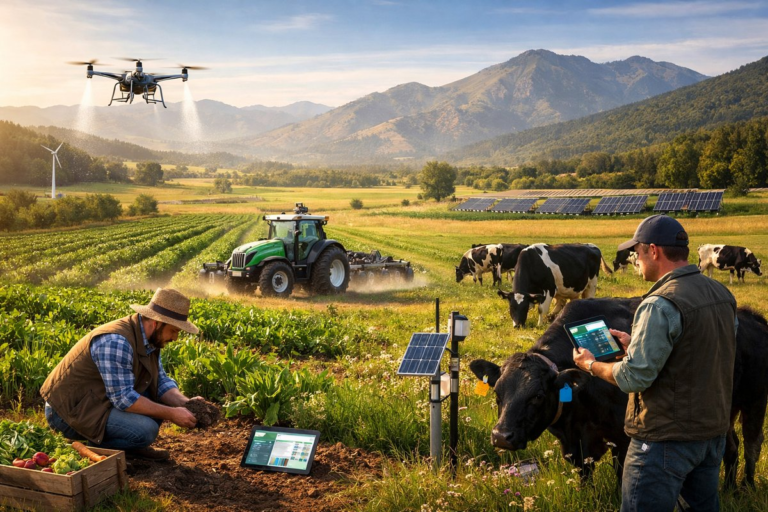
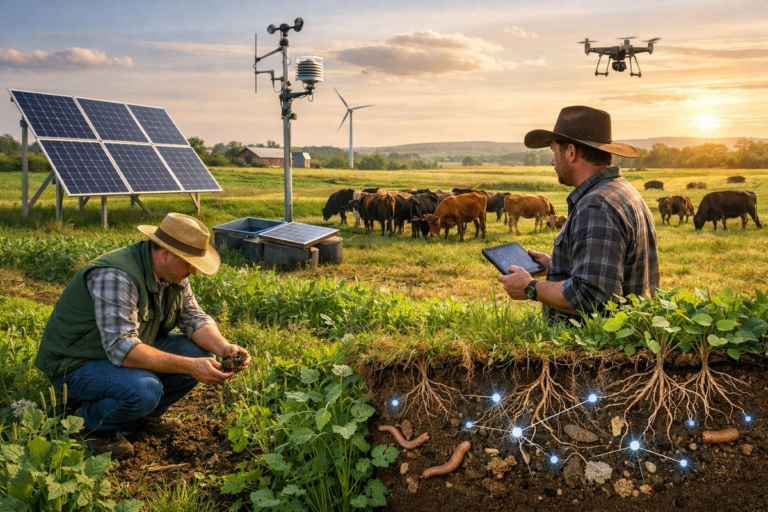
Building on this foundation, the group embraced solar-powered electric fencing. Lightweight polywire and portable posts let them reshape grazing units on the fly, adapting to drought-stressed patches or nutrient-rich strips planted with nitrophilous cover crops. Solar fence energizers eliminate the need for generators or long AC cables, cutting fuel costs and reducing carbon footprints. When a battery runs low, an app on any smartphone pings a warning, prompting a quick midday swap rather than leaving animals uncontained.
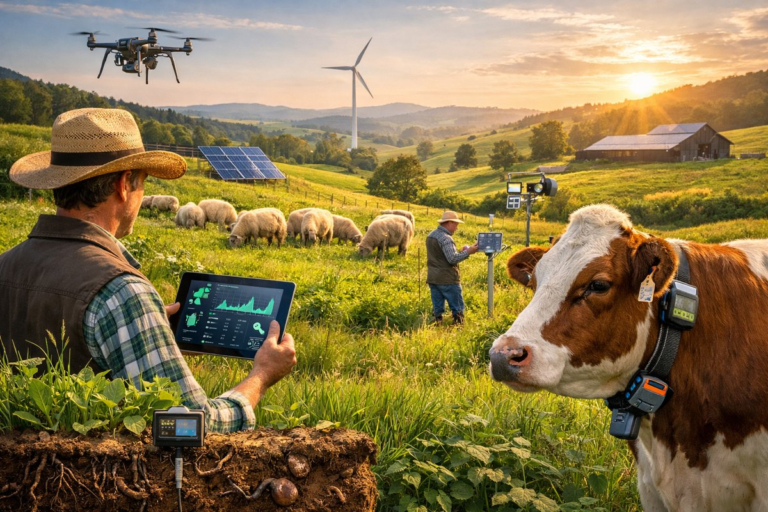
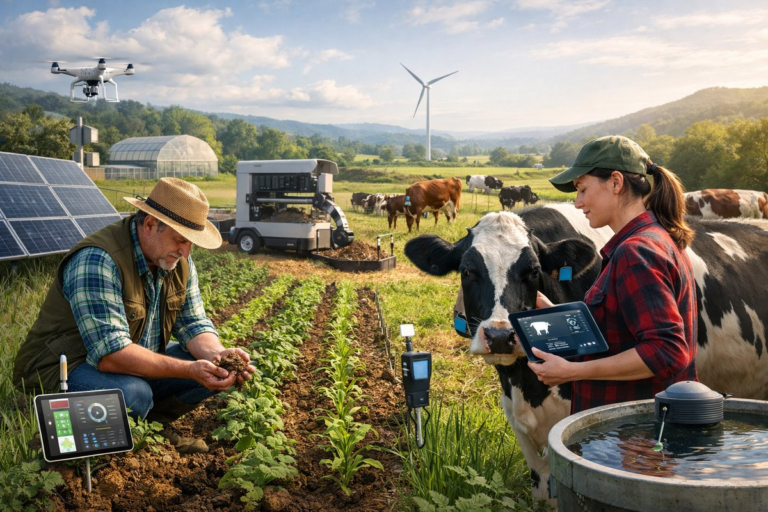
Underpinning these hardware upgrades is a network of soil moisture sensors dotted around different pastures. Each sensor records moisture at depths between four and ten inches, feeding data to a shared dashboard. Ranchers can see the exact moment a paddock risks turning too dry or waterlogged. Armed with this intel, they adjust grazing rotations, supplement feed earlier or strategically rest portions of land for cover-crop intensification. The result has been up to 40 percent fewer supplemental hay bales hauled in during spring calving season.
Animal welfare has been front and center. The Heartland Herd Health Handbook, a collaboratively edited digital guide, compiles low-stress handling techniques, vaccination schedules aligned with regional climate trends and protocols for remote veterinary check-ins. When lameness rates ticked upward last fall, producers convened a videoconference with a large-animal vet who walked them through real-time hoof inspections via a handheld infrared thermometer. This portable device offered precise temperature readings without startling the cows, helping detect inflammation before it escalated.
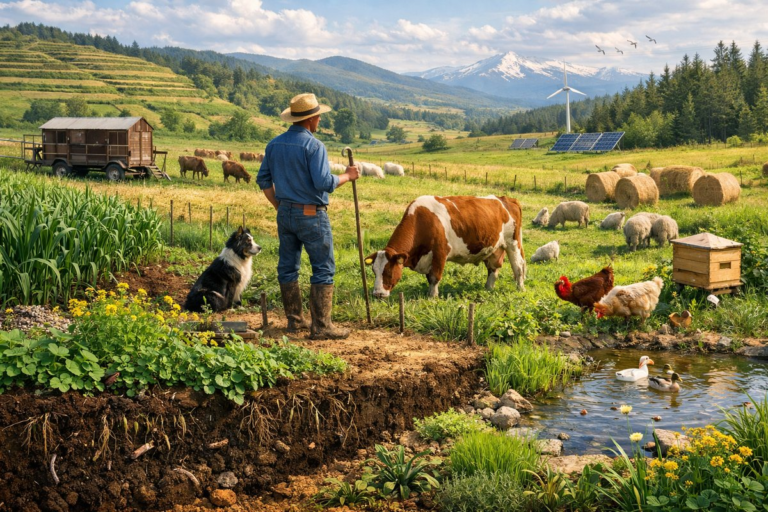
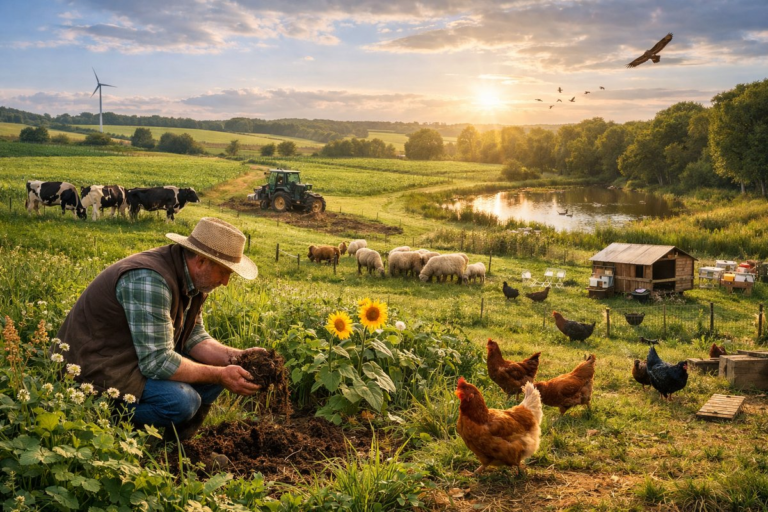
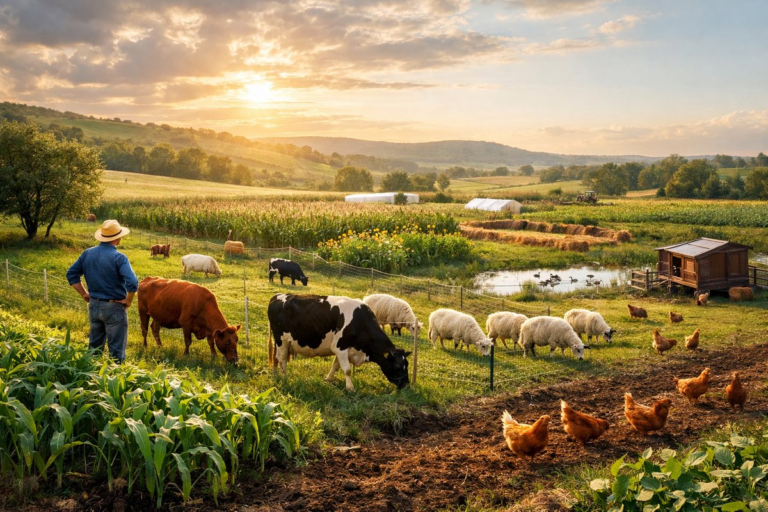
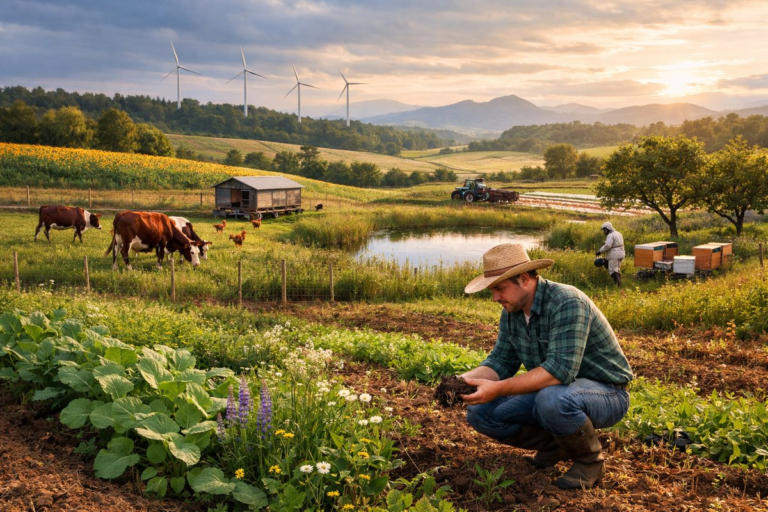
Pasture diversity is another pillar of the initiative. Instead of mono-grass stands, members sow mixes of rye, oats, turnips and clover. Sheep and cattle rotate together, targeting different plants at various heights. This multispecies approach suppresses weeds, breaks parasite cycles and spurs deeper root penetration, enriching organic matter. Soil tests from next season are expected to show added carbon sequestration, a potential boon for ranchers considering new carbon credit programs rolling out in neighboring states.
A less visible but vital piece of the puzzle is digital record-keeping. A cloud-based livestock management platform lets each farm log births, feed rations and pasture visits. Data is tagged by GPS so the collective’s agronomist can map grazing pressure over time. Patterns emerge: certain paddocks respond better to sheep during dry spells, while cattle thrive on native grasses after spring sowing. Armed with these insights, participants fine-tune stocking rates and forage mixes.
Local processors have joined the loop too. A direct-to-consumer meat box subscription launched by three co-op members links back to pasture logs. Customers receive an online dashboard showing exactly when an animal grazed a particular field and how its diet evolved. This traceability taps into growing consumer demand for transparency and regenerative credentials. Early sales reports indicate a 25 percent premium over conventional grass-fed beef, with waiting lists forming in nearby cities.
Coordination hasn’t always been smooth. Early meetings revealed divergent priorities: some family operations prized scale, while smaller farms wanted to preserve heritage breeds and mixed livestock. The cooperative structure now splits focus into three workgroups-land management, animal health and market development-each with rotating leadership. Decisions require a two-thirds majority, ensuring no single business overshadows the rest.
Beyond profit metrics, the cooperative has sparked a social renaissance. Quarterly potluck dinners rotate among homesteads, featuring pasture-based lamb stew or dungane bean chili. Local schoolteachers bring students for field trips, turning seasonal routines into living science labs. Junior high classes monitor insect biodiversity in wildflower buffer strips and record bird sightings in hedgerows. This cross-generational exchange keeps rural traditions alive while nurturing the next wave of agtech enthusiasts.
Policy incentives have begun to catch up. State agriculture departments are piloting cost-share grants for solar fence gear and sensor networks, citing the Heartland project as a proof of concept. New federal guidelines on carbon credits are also in draft form, with officials looking at multispecies grazing as a validated method for drawing down atmospheric carbon. If approved, these programs could offset at least a quarter of annual operational costs for participating producers.
What started as a modest demonstration has inspired ripples well beyond county lines. Nearby cooperatives and individual operators have reached out for advice, often through online forums dedicated to sustainable livestock systems. The Heartland Grazing Collective shares anonymized data sets and learning modules under a Creative Commons license, hoping to accelerate adoption rather than gatekeep insights.
Yet challenges remain. Record droughts still threaten water supplies, and the upfront cost of sensors and fencing gear can be steep. Not every operation can retrofit pasture landscapes overnight. That’s why cooperative leaders are exploring a rental pool for fencing kits and a sliding-scale subscription for the data dashboard. Early underwriting from a regional foundation has provided seed funding to offset membership fees for smaller farms.
Looking ahead, the collective plans to pilot drone-assisted aerial seeding of late-season cover crops and to test biochar applications for carbon capture. They’re also investigating an open-source blockchain ledger to further guarantee traceability from paddock to plate. The guiding principle remains the same: lean into innovation without losing touch with ancestral grazing lore.
The story unfolding across these Nebraska pastures is a microcosm of a broader renaissance in rural America. By marrying solar-powered infrastructure, sensor-driven analytics and tried-and-true herding methods, the Heartland Grazing Collective is forging a path toward resilient, regenerative livestock management. What once seemed like a tug-of-war between technology and tradition is becoming a two-handed handshake-one that could secure the future of family farms for generations to come.