Location
Mount Vernon, WA 98274

Location
Mount Vernon, WA 98274
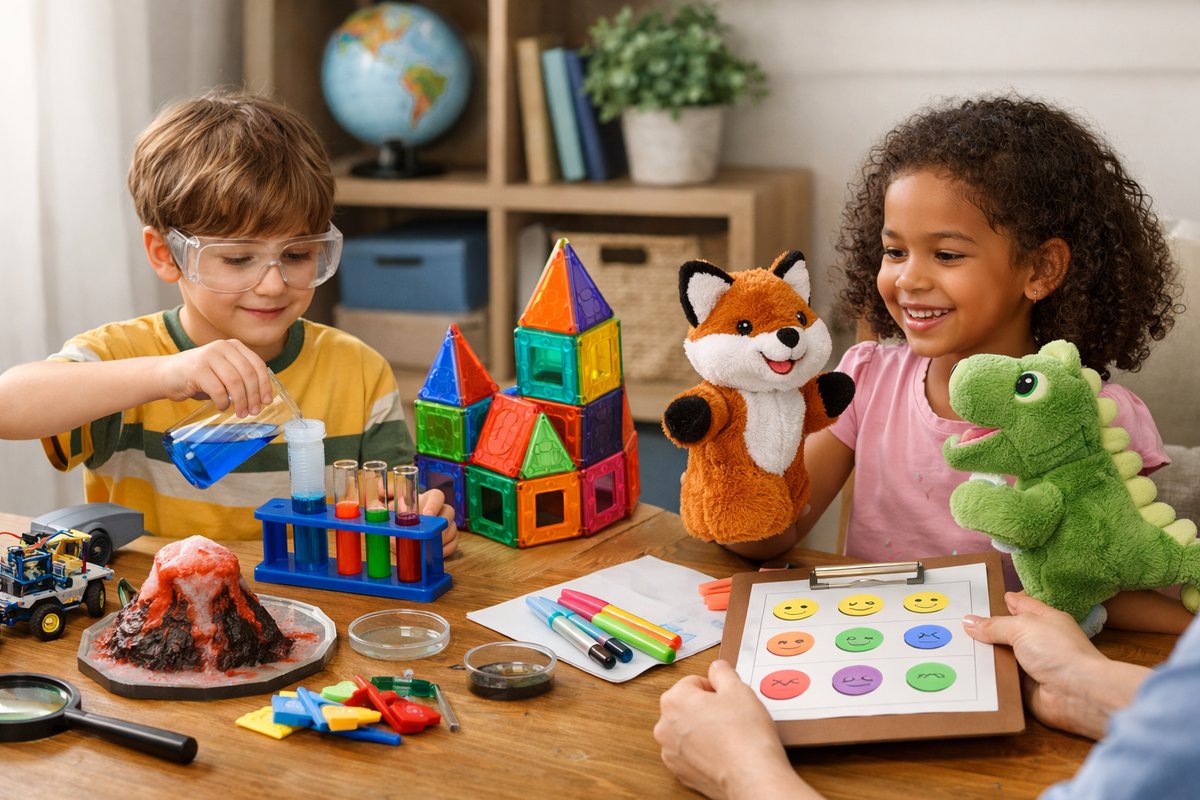
A new wave of at-home learning blends hands-on STEM experiments with emotional check-ins, creating a richer environment for young minds. Parents and educators report that simple kits-ranging from magnetic tiles to storytelling puppets-are sparking both cognitive curiosity and emotional resilience in children.
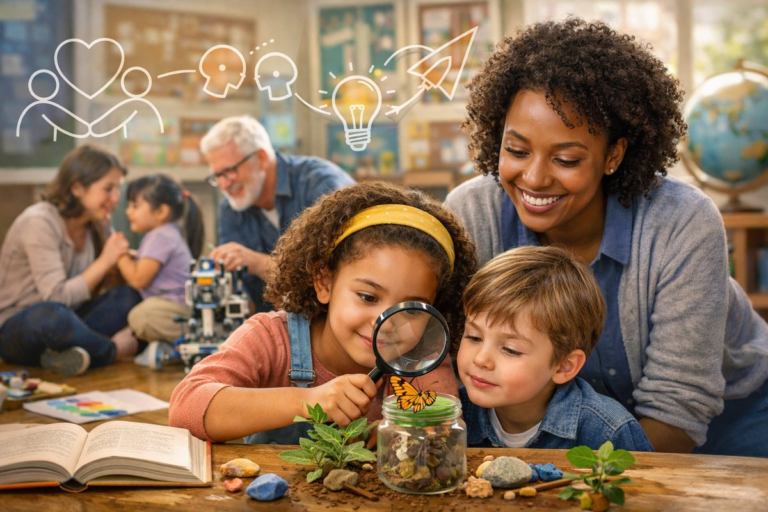
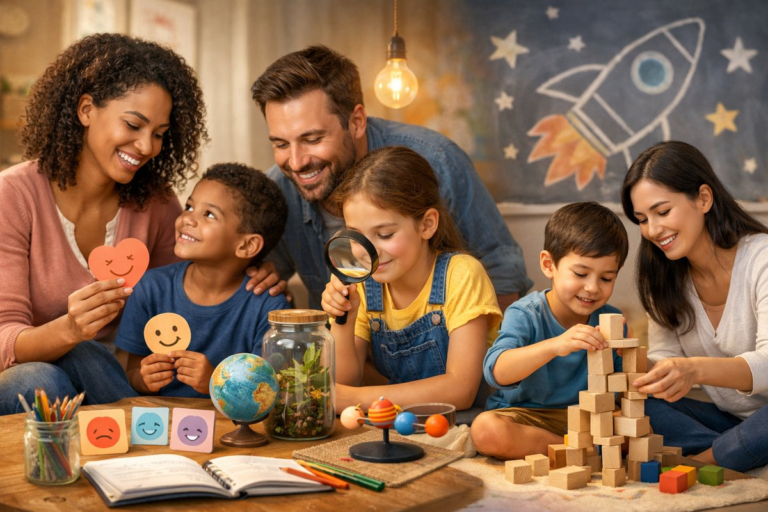
Across living rooms and kitchen tables, families are discovering a fresh approach to home education that places equal emphasis on building circuits and building empathy. Rather than relying on tablets alone or rote worksheets, many parents this spring have turned to kits designed for hands-on science experiments alongside tools that guide conversations about feelings. The result: children who tinker with a light sensor one moment and talk about what makes them feel proud the next.
In one suburban neighborhood, a pilot program rolled out sample sets of magnetic building tiles and emotion cards to dozens of households. Local educators offered virtual meet-ups where families shared successes and challenges. What began as a small-scale trial now includes waiting lists from parents eager to tap into a curriculum that honors both the head and the heart.
Parents describe the impact in vivid detail. One mother observed her five-year-old glueing LED lights to a cardboard ramp and then pausing to explain why she felt excited when the lights glowed. Another father noted that after assembling a simple pulley system, his son asked if working together could solve bigger problems at school. Such moments underscore how combining physical play and emotional reflection can spark deeper learning.
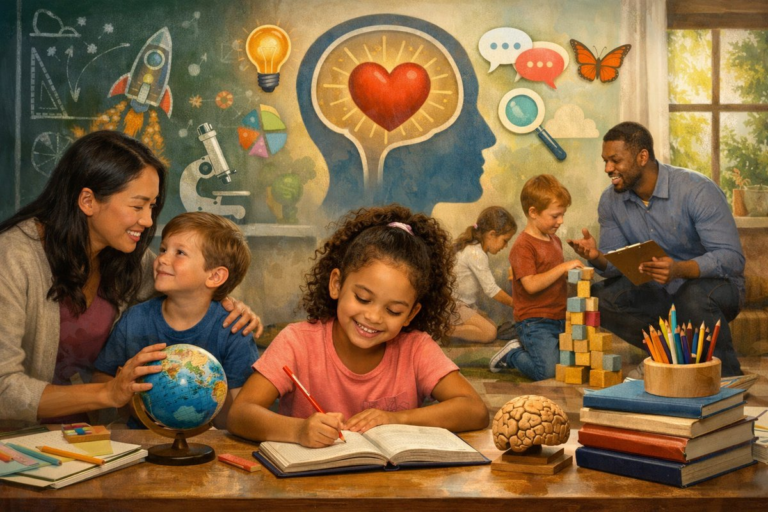
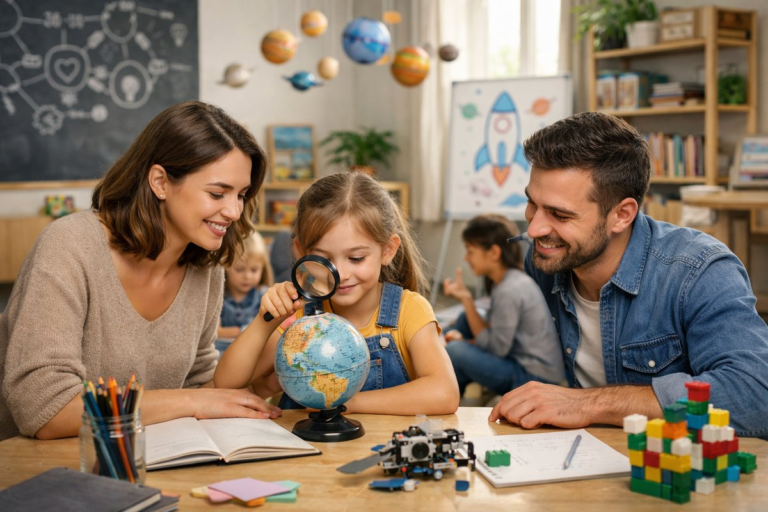
Educators leading the initiative point out that socioemotional growth and STEM skills reinforce one another. A child who learns to identify frustration during a tricky puzzle can then develop persistence when a coding challenge goes awry. When emotional check-ins become part of the daily routine, young learners grow more confident in tackling unfamiliar concepts and sharing their discoveries with others.
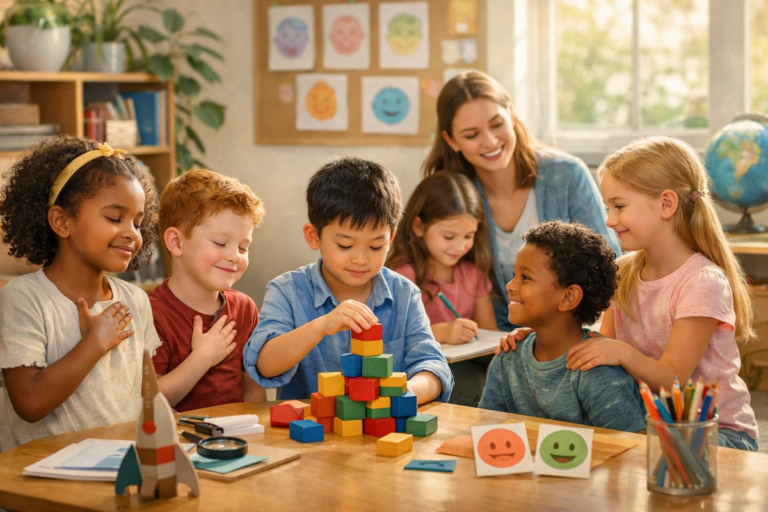
Central to the pilot are two standout tools: a set of translucent magnetic tiles for building geometric structures and a deck of emotion-learning flashcards. The tiles invite open-ended experiments in shapes, angles and balance, while the cards prompt children to name and discuss feelings like curiosity, nervousness or joy. Parents report that pairing the two encourages kids to notice how they react to both triumphs and setbacks.
By giving children agency-letting them choose what to build or which emotion to explore-families see more focused engagement. One eight-year-old used the magnetic tiles to map out a mini roller coaster, timing the marble’s journey and adjusting slopes for speed. Afterwards, she picked an emotion card labeled “pride” and described the thrill of fine-tuning her design until it ran smoothly.
Many parents are also keen to limit screen fatigue. Instead of turning on another app, they’ve brought in tactile play. Sand trays, light-up sensory tables and plant-growing kits offer physical experiences that awaken the senses. Children measure water levels, scoop colored sand and watch seeds sprout, each activity doubling as a lesson in measurement, texture and responsibility.
Take the light-up sensory table: at first glance it’s a shallow box of translucent tiles perched over an LED panel. But add water, oil, colored shapes or small magnets, and a simple surface becomes a dynamic lab. Kids observe refraction, magnetism and color mixing while naming the feelings that surface-surprise when colors swirl, calm when the scene settles into place.
Storytelling remains a powerful bridge between cognitive and emotional learning. A puppet theater kit donated to the program includes fabric backdrops, finger puppets and wooden rods. Children script short plays, assigning voices to characters that navigate challenges like sharing toys or making new friends. As they rehearse, they naturally explore empathy, conflict resolution and narrative structure.
Educators have noted how the flexibility of the puppet theater enhances its impact. One five-year-old staged a scene in which a lonely dragon learned to ask for help. Another retold a family memory about moving homes. In each case, puppet play offers a safe space to express uncertainty and practice new social skills before venturing into real-world interactions.
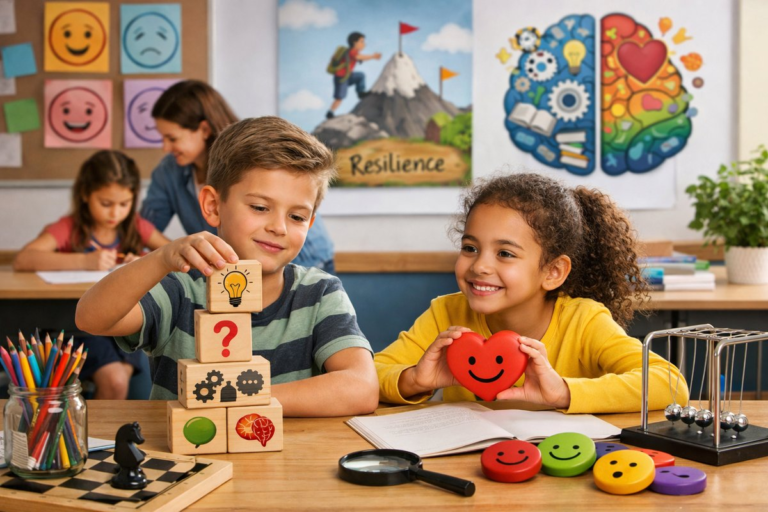
Meanwhile, classic wooden stacking blocks-cast in bright primary colors-have found renewed popularity. Unlike electronic gadgets, these open-ended shapes let children invent towers, bridges and abstract sculptures. Through trial and error, they refine fine motor skills, spatial reasoning and patience. When a tower collapses, caregivers use that moment to discuss resilience and problem-solving strategies.
Another staple is the child-sized adjustable art easel. Equipped with a chalkboard on one side and a dry-erase surface on the other, it invites artists and mathematicians alike. Children sketch diagrams, outline experiment hypotheses or simply doodle feelings in color. As creativity flows, families report that kids become more willing to experiment across subjects and share their learning process aloud.
Integrating these tools into daily routines has been surprisingly seamless. Some families dedicate a corner of the playroom to a rotating “discovery station,” swapping out themes every week-one week focuses on simple machines, the next on storytelling prompts. Others turn routine chores into mini-investigations: timing how long it takes to sweep a floor or measuring the weight of laundry loads.
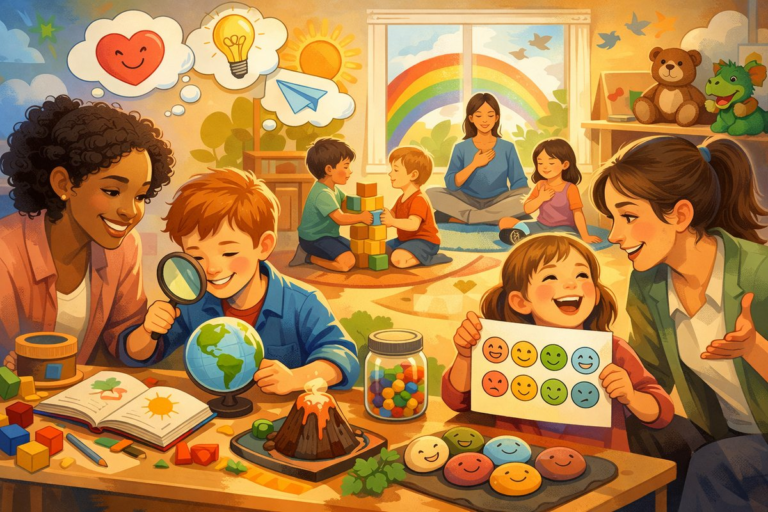
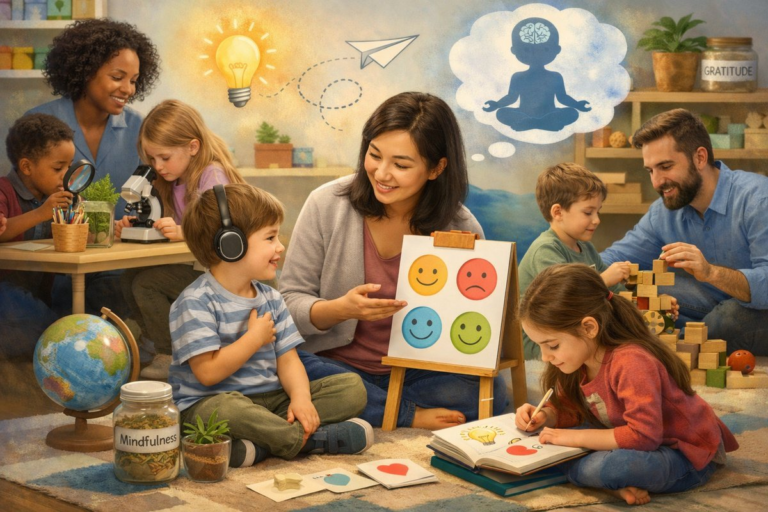
Parent testimonies highlight the importance of emotional check-ins before and after play sessions. One caregiver sets a five-minute “feelings circle,” where each family member picks an emotion card to describe how they’re arriving-whether calm, anxious or excited. After the hands-on activity, they circle back to note new feelings like pride or surprise, reinforcing self-awareness alongside newfound skills.
Child development specialists praise the hybrid model. Dr. Lee, a psychologist partnering with the pilot, explains that children who practice naming emotions alongside measuring angles or mixing colors develop stronger neural connections. “When you teach a child to say ‘I felt frustrated when the pieces didn’t fit, but I’m proud I kept trying,’ you’re linking self-regulation with critical thinking,” she says. “That combination lays the foundation for both academic success and emotional resilience.”
For families eager to get started, experts recommend building a toolkit gradually. Begin with a versatile building set, a simple emotions deck and a quiet space free from digital distractions. Over time, introduce sensory bins, puppet stages or art stations. The goal isn’t to accumulate every gadget but to curate a selection that aligns with your child’s interests and invites organic exploration.
Looking ahead, educators hope these home-based experiments will inform broader curriculum design. When socioemotional tools and STEM materials work in harmony, children gain confidence not only in subjects like math and science but also in expressing themselves and collaborating with others. The pilot’s success has sparked conversations about integrating similar approaches into preschool centers and after-school programs.
Community networks have sprung up around the pilot, with parents sharing DIY tutorials, printable emotion charts and video demos online. Virtual swap meets allow families to trade gently used building tiles or puppet props. Such grassroots cooperation mirrors the collaborative spirit the program aims to cultivate-children and adults alike learning from each other.
In living rooms remodeled as labs and stages, a subtle revolution is unfolding. What started as an effort to enrich home learning has blossomed into an invitation: to see every play session as an opportunity for discovery of both the outer world and the inner self. By weaving together STEM and emotional growth, families are nurturing not just thinkers, but compassionate innovators ready for the challenges ahead.