Location
Mount Vernon, WA 98274

Location
Mount Vernon, WA 98274
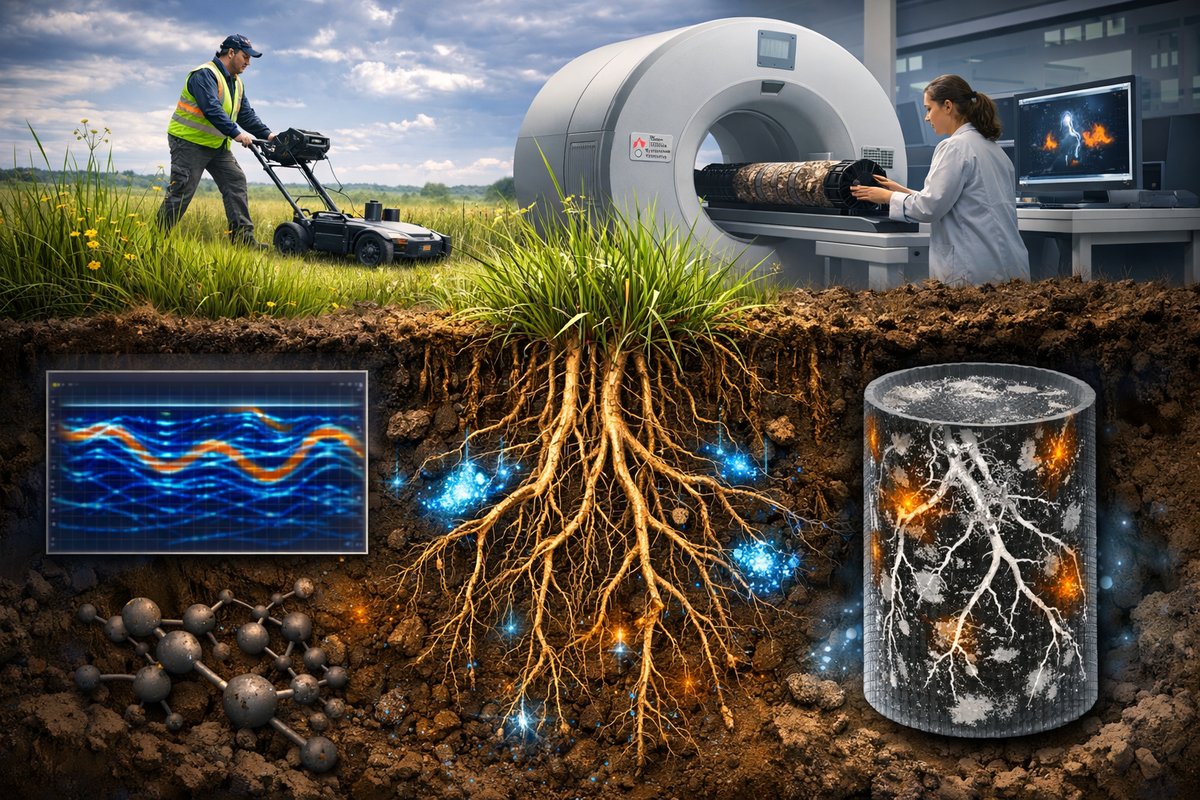
A groundbreaking combination of ground-penetrating radar and X-ray CT scanning is giving scientists an unprecedented view of grassland root networks and their role in carbon storage. This breakthrough could reshape restoration practices and climate models by revealing the hidden habits of soil carbon dynamics.
On the windswept reaches of temperate grasslands, a silent process unfolds beneath our feet. Roots thread through soil horizons, exuding sugars, risking decay or preservation, and ultimately dictating how much carbon remains locked belowground. Until recently, these sprawling underground networks have been notoriously difficult to study.
Now, an interdisciplinary team of ecologists and geophysicists has unveiled a novel approach that pairs portable ground-penetrating radar (GPR) with field-deployable X-ray computed tomography (CT) to map and quantify root architectures in situ. Their first field trials, conducted at restored prairie sites, are already revealing that denser, deeper root systems sequester significantly more carbon than earlier models predicted-sometimes up to 40 percent more.
This revelation carries enormous implications. Soil holds nearly three times as much carbon as the atmosphere and terrestrial vegetation combined. Yet much of it remains poorly represented in global carbon budgets. By peering into the subterranean world, scientists hope to refine climate projections, shape restoration priorities, and guide sustainable agricultural practices.
A New Window on Roots
Drawing from advances in medical imaging, the research team adapted a mobile X-ray CT scanner to operate in the field. Paired with lightweight GPR units, researchers can now generate three-dimensional maps of root density and distribution without disturbing the soil. The result is a digital model that tracks root both horizontal spread and vertical depth down to a centimeter resolution.
In one study area, a former farmland plot converted into a prairie restoration zone five years ago, the combined imaging revealed a complex network of roots plunging more than a meter below the surface. This depth surprised researchers, who had expected most biomass to remain within the top 30 centimeters of soil. Instead, the prairie species planted-tallgrass natives like big bluestem and switchgrass-had forged a carbon highway deep into the ground.
Lead ecologists estimate that these deeper root systems accounted for an extra 0.6 tonnes of carbon per hectare compared with conventional measurements. Extrapolated across millions of hectares of restored grasslands worldwide, this could represent a massive boost to nature-based climate solutions.
Impacts on Restoration and Agriculture
For land managers, the insights are already valuable. Knowing which species build the most resilient and carbon-dense root systems allows for more targeted restoration mixes. In regions prone to drought, deeper roots also enhance soil moisture retention, reducing the need for irrigation and improving ecosystem resilience.
Farmers are taking notice too. Cover-crop trials now include imaging components to compare traditional radish or clover plantings against deep-rooted grasses. Early results suggest that integrating a portion of prairie species into crop rotations could help rebuild depleted topsoil and capture carbon that would otherwise escape into the atmosphere.
“By moving beyond surface measurements, we’re closing a significant gap in our understanding of how land use affects carbon cycling,” says one soil scientist involved in the project. “This technology can be a game changer for both conservation and agriculture.”
Refining Climate Models
Global climate models have long struggled to account for the complexities of soil carbon storage. Most rely on simplified assumptions about root depth and turnover rates. The new imaging data provide a richer, more nuanced view of how carbon is allocated belowground over time, enabling modelers to adjust projections of how much atmospheric CO₂ can be sequestered by terrestrial ecosystems.
Early collaborations between field teams and computational modellers have already begun. Incorporating real-world root architecture data into carbon cycle modules reduced uncertainty ranges by nearly 20 percent in some regional simulations. This refinement boosts confidence in long-term climate forecasts and underscores the potential of technological convergence in environmental science.
Challenges and Next Steps
Despite the promise, several challenges remain. The current portable CT units require a stable power source and careful calibration to handle variable field conditions. Data processing also demands high computing resources to reconstruct three-dimensional images from raw scans.
Researchers are exploring solar-powered battery packs and streamlined software to make the system more accessible for remote or underfunded projects. The goal is to build open-source processing pipelines so that citizen scientists and land stewardship groups can contribute data as well.
Meanwhile, expanding trials to different ecosystem types-from savannas to peatlands-will test the method’s versatility. If successful, widespread adoption could transform our collective grasp of soil carbon dynamics across diverse biomes.
A Deeper Connection
Beyond the numbers and diagrams, this research invites a deeper relationship with the hidden half of nature. Observing root networks in living soils reminds us that ecosystems are intimate webs of interdependence. The growth of a single root hair can influence water flow, microbial communities, and ultimately the air we breathe.
Through technological innovation, we gain not only data but also a renewed sense of wonder at the complexity beneath our steps. As we strive to address climate change, such insights offer both practical tools and an emotional call to stewardship.
From prairie restoration projects to sustainable farming systems, the lessons emerging from the soil hold promise for a more resilient future. In the quiet patterns of root growth, we find new pathways for hope-and a reminder that sometimes the most profound transformations happen out of sight.