Location
Mount Vernon, WA 98274

Location
Mount Vernon, WA 98274
Across kitchen tables and playrooms, parents are transforming home education by weaving simple emotional learning exercises into everyday routines. From storytelling dice at breakfast to mindfulness journals before bedtime, families are nurturing both curiosity and resilience in the next generation.
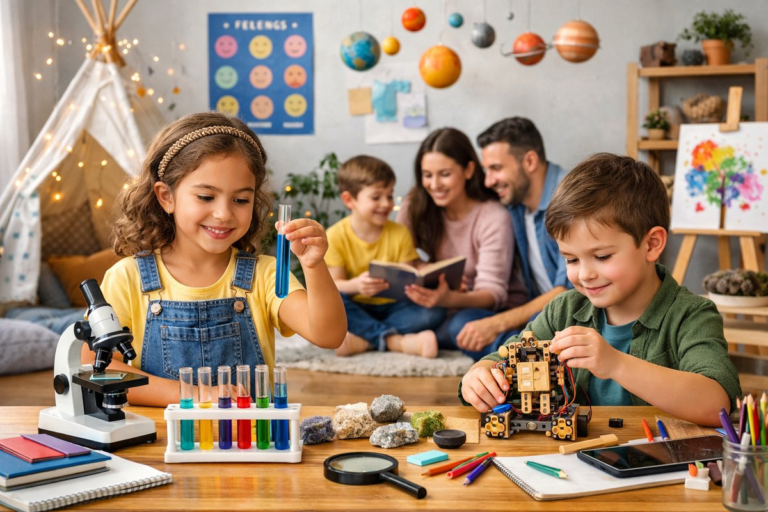
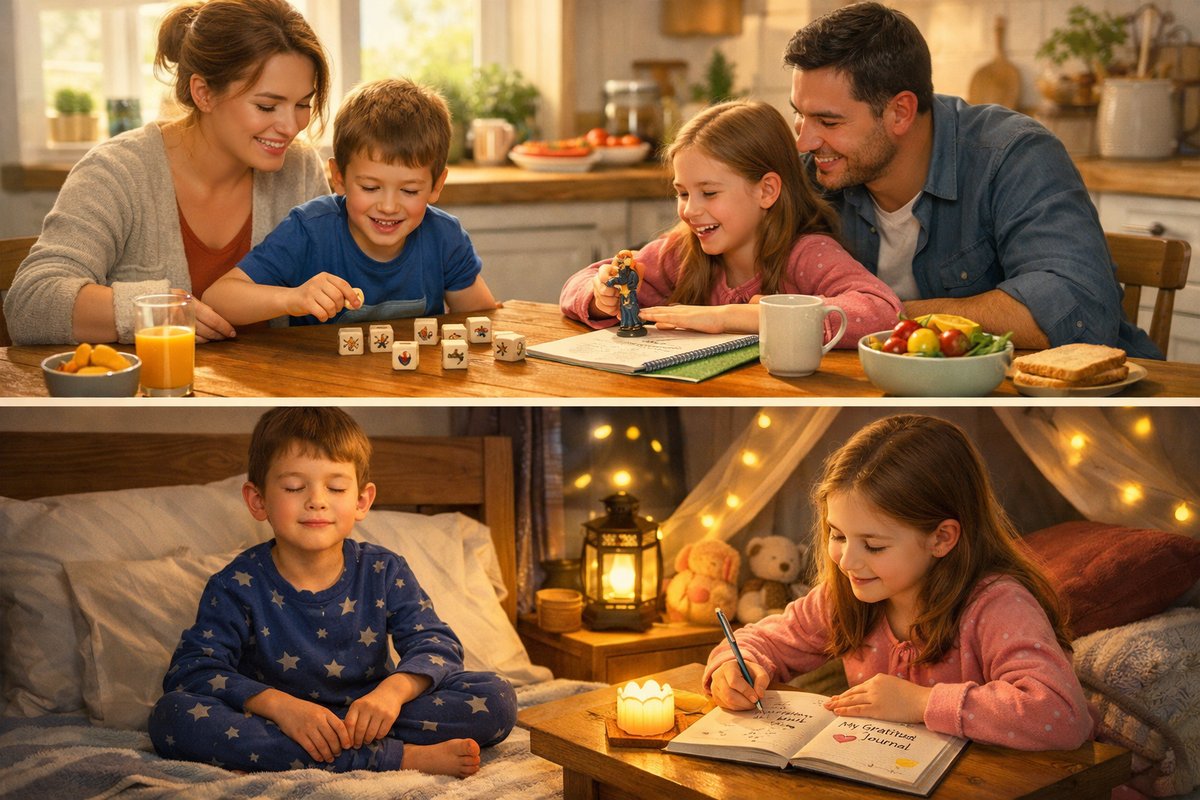
When eight-year-old Mara helps her younger brother tuck a toy dinosaur into a makeshift bed, her mother notices more than sibling kindness. She sees empathy in action. Over morning pancakes, the family rolls a set of storytelling dice that prompt feelings like “proud,” “curious,” or “nervous.” Each roll sparks a brief tale: Mara pretends to be a sea turtle exploring a shipwreck, while her brother imagines a brave kitten discovering a new friend. No app dings, no screen glows-just wooden cubes and a circle of eager listeners.
This scene reflects a growing movement among parents who believe that social-emotional learning (SEL) isn’t limited to school curricula or high-tech platforms. Instead, it’s emerging as a do-it-yourself practice that blends familiar toys, simple prompts, and everyday moments. A recent survey of family educators found that nearly 70 percent of parents now incorporate at least one structured SEL activity at home each week-up from 45 percent just two years ago. Motivated by pandemic-era stress and a renewed focus on mental wellness, caregivers are seeking tools that build self-awareness, empathy, and emotional vocabulary while keeping children engaged and playful.
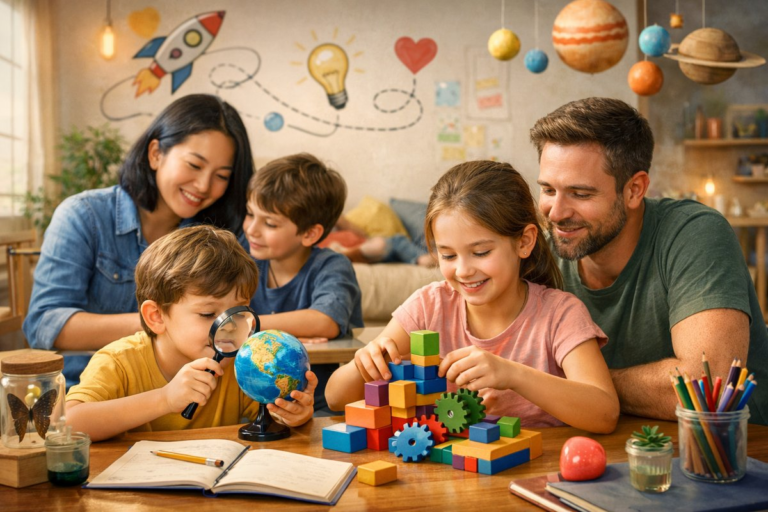
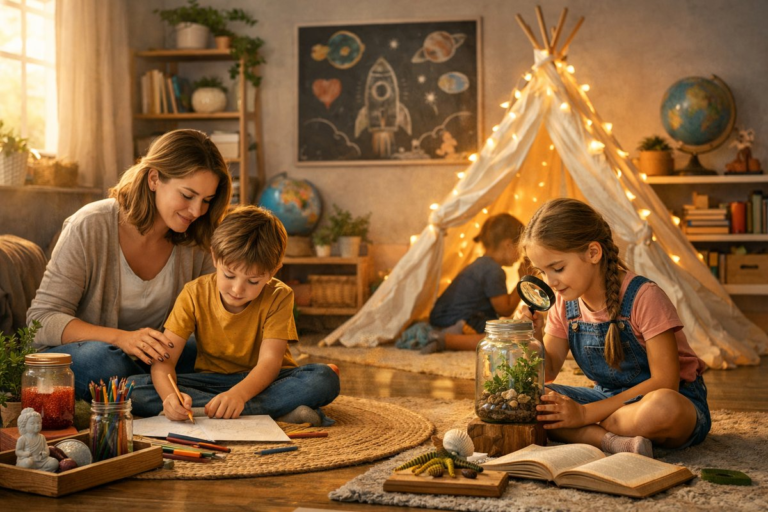
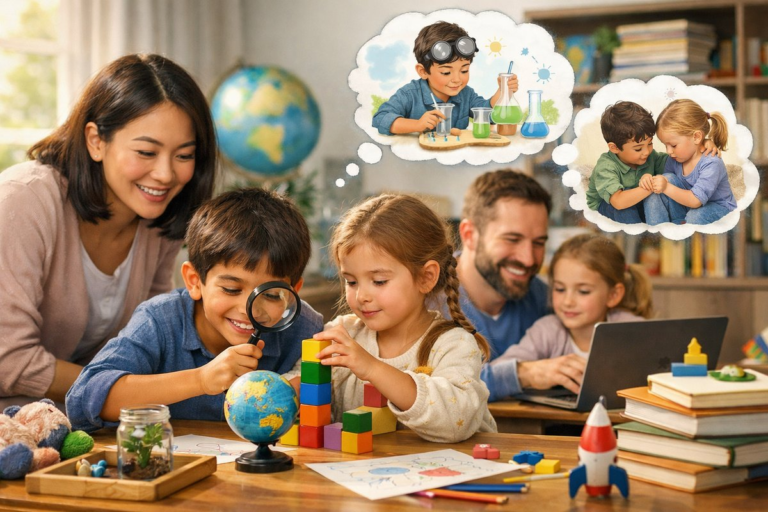
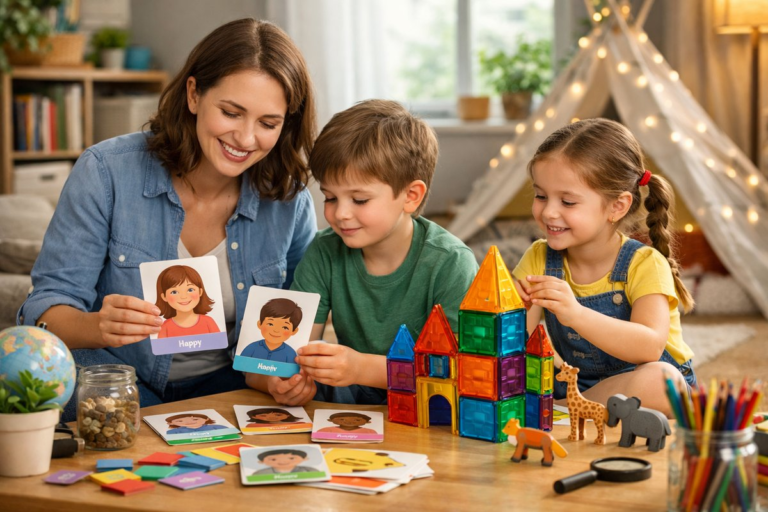
Ancient traditions meet modern needs in these evolving routines. Storytelling cubes or dice have roots in improvisational theater games, but today’s versions often feature brightly colored icons representing emotions, actions, or settings. Flashcards once designed for vocabulary drills now highlight feelings like “excited,” “overwhelmed,” and “proud.” Early elementary students are encouraged to keep simple mindfulness journals, where they sketch clouds to represent their mood or jot short reflections on their high and low points of the day. Wooden building blocks become characters in miniature dramas that allow children to role-play conflict resolution and cooperation. All of these tactile, screen-free approaches share a common goal: creating low-stakes opportunities for kids to explore emotions in a playful context.
Social-emotional competence is not merely a soft skill-it’s linked to academic outcomes, mental health, and future career readiness. A landmark longitudinal study from a leading university showed that children who received SEL support by age ten were significantly more likely to graduate high school, report lower rates of depression, and demonstrate stronger leadership skills in adulthood. Educators have long integrated SEL into classroom lessons, but extending the practice to the home taps a more flexible and personalized environment. Parents can tailor conversations to their child’s actual experiences, celebrate small victories in real time, and offer gentle guidance during sibling spats or playground disappointments.
Teachers often praise the role of consistent routines in reinforcing emotional learning. At home, routines might start with a two-minute breathing exercise before breakfast or a “rose and thorn” check-in at bedtime-each child names one highlight and one challenge of the day. These habits create safe spaces for expression and help kids label complex feelings in words. A short guided meditation or a five-question journal prompt can shift the mood from hurried to reflective, cultivating self-regulation skills that serve children through tantrums, test anxiety, or social awkwardness.
Yet implementing SEL tools at home comes with its own hurdles. Busy schedules, digital distractions, and limited shelf space can leave parents wondering where to begin. Many caregivers initially stockpile dozens of activity books or apps, only to let them gather dust in a closet. Educators advise starting with one or two versatile materials that can slot into existing routines. A small deck of emotion flashcards can live on a nightstand; storytelling dice fit in a kitchen utensil drawer; a compact journal and pen travel easily in a backpack.
Skeptics sometimes worry that deliberate emotional coaching feels forced or inauthentic. But practitioners stress the importance of modeling rather than lecturing. Instead of quizzing children on definitions of feelings, parents might share their own: “I felt frustrated when my computer froze, so I took three deep breaths.” Shared vulnerability fosters trust and invites children to reciprocate. Likewise, turning routine tasks into playful moments-there’s a reason knock-knock jokes endure-reminds kids that learning about emotions can be as natural as brushing teeth.
Technology retains a supporting role for families who seek interactive versions of analog tools. Some SEL apps offer guided breathing exercises with animated shapes, while e-flashcard platforms adapt to a child’s pace. But many experts caution against letting screens monopolize emotional coaching. The tactile and communal nature of physical play-rolling dice on a table or passing around a stack of cards-reinforces social bonds in a way digital interactions rarely match. For parents aiming to dial back screen time, even repurposing old art supplies can spark ingenuity: drawing feeling faces on pebbles, or writing mood words on color-coded sticky notes.
Community resources amplify the impact of home SEL. Libraries increasingly host free lending programs for game-based learning kits that include emotion charts and cooperative board games. Local parenting groups often trade tips on neighborhood message boards or host toy-swap events to circulate gently used materials. Faith organizations, after-school programs, and local nonprofits sometimes offer mini-workshops on mindful parenting techniques. The result is a patchwork ecosystem where families can discover, borrow, and share tools without overspending.
Not all SEL materials require upfront purchase. Most communities have public parks, playground murals, or even art installations that invite movement and reflection-a labyrinth painted on a schoolyard for walking meditations, for example. A simple gratitude walk around the block, where each child names one thing they appreciate, can substitute for a structured journaling exercise. During daily chores, parents might turn foldable laundry into a metaphor for recognizing life’s messy moments and smoothing out rough patches.
Experts encourage setting realistic expectations. Emotional growth unfolds gradually and nonlinearly. A child who enthusiastically grapples with the “proud” card one day might resist sharing a “sad” moment the next. Progress isn’t measured solely by neat journal entries or spotless dice rolls-it’s in those off-hand moments when a youngster pauses, takes a breath, and says, “I’m feeling a bit confused about this.” That self-awareness is the foundation of empathy and resilience.
For parents juggling work responsibilities, screen time pressures, and household tasks, integrating SEL need not be an extra chore. Think of these practices as infusions of mindfulness into familiar activities. Storytelling games can replace rote bedtime readings; emotion check-ins can coincide with mealtime blessings; even a handful of building planks can evolve into cooperative design challenges that spark conversations about fairness and teamwork.
Educational toy retailers have responded to rising demand by offering hybrid bundles that combine physical pieces with simple digital guides-downloadable conversation starters, printable mood trackers, and photo prompts that encourage kids to document how they feel over a week. Yet the heart of SEL remains the human connection, not the technology. Every “How was school today?” matters when followed by genuine interest and an open ear.
As summer approaches, families will find new opportunities to extend emotional coaching beyond indoor routines. Neighborhood scavenger hunts can focus on spotting acts of kindness or collecting natural objects that evoke different feelings. Backyard camping trips become chances to reflect on courage and adaptability when the wind picks up tents or a raccoon investigates the snack bag. Combining outdoor adventure with emotional exploration reminds children that inner life and outer world are intertwined.
Parents don’t need to overhaul their entire routine to support emotional growth. A pair of dice, a simple journal, and a willingness to listen can transform ordinary moments into lessons in self-discovery. In the process, these playful practices help raise thinkers who are not only intellectually curious but also emotionally resilient, empathetic, and ready to navigate the complexities of tomorrow.
In the soft glow of a bedside lamp, eight-year-old Mara writes a one-sentence journal entry: “I felt brave when I helped my brother.” Her mother tucks the journal away and whispers, “That’s my brave girl.” Around the world, countless families are crafting similar bedtime rituals-quiet acknowledgments of inner strength that may light the way for children long after the pages of their journals have faded.