Location
Mount Vernon, WA 98274

Location
Mount Vernon, WA 98274
In a once-forgotten neighborhood, a former corner store has become a crucible for shared healing and creative renewal. Guided by personal stories of struggle and solidarity, locals are harnessing art, practical skills, and mindful gatherings to rebuild both spaces and spirits.
On a chilly morning before dawn’s first light, a small group gathers on cracked pavement outside a defunct corner store. The building’s boarded windows and peeling paint speak of years of neglect, yet here they stand with seedlings in hand and tools at the ready. This motley crew of neighbors, newcomers and long-time residents alike has chosen this overlooked spot as the birthplace of a community project that refuses to be defined by past dereliction.
For many of these volunteers, the effort is deeply personal. Carina, a single mother who lost her job during a factory closure, remembers walking past this store at her lowest point. “I felt invisible,” she recalls. “Every morning, I’d see that sagging sign and wonder if I’d ever have a reason to wake up.” That moment of despair planted a seed of frustration-and then, unexpectedly, connection. When organizers invited Carina to help plan a neighborhood mural, she saw it as a chance to add color to both the walls and her life.
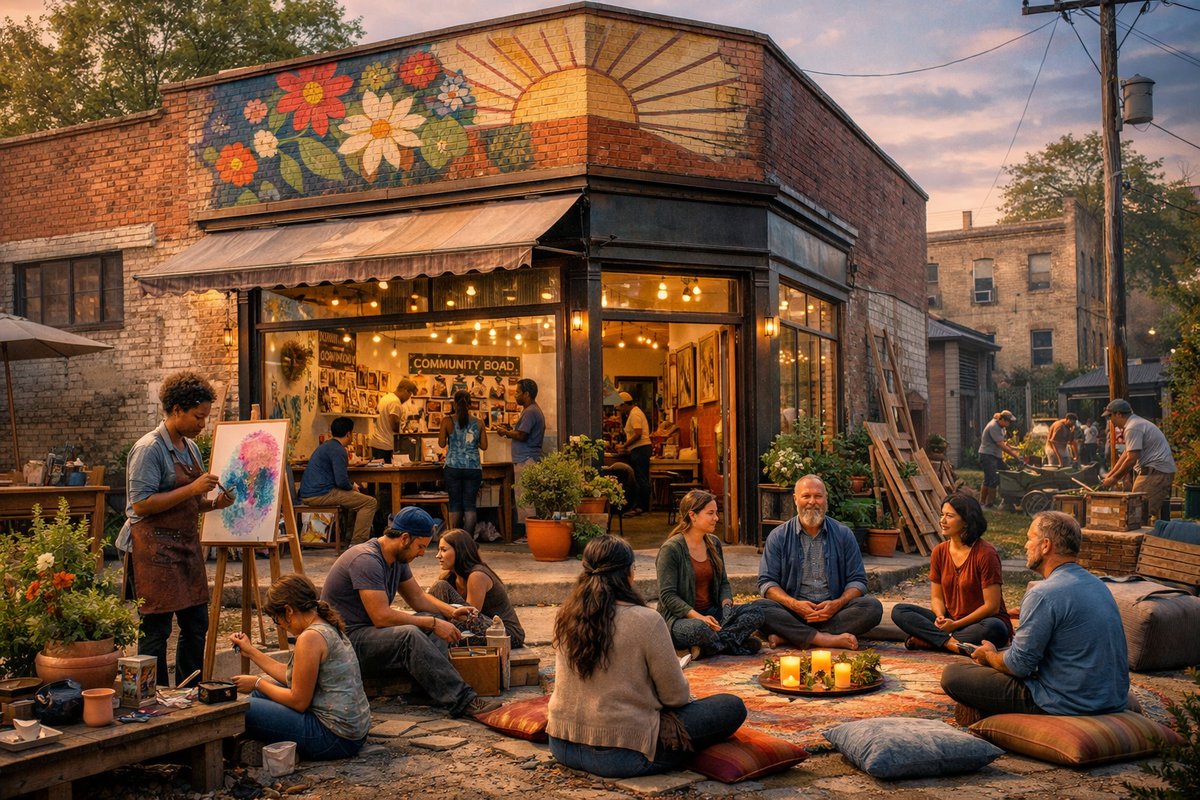
By midmorning, the storefront transforms. Volunteers mix paint in reclaimed buckets while local teenagers patch holes in the brickwork. An elderly carpenter, once a specialist in bespoke furniture, teaches younger helpers how to sand and seal salvaged wood planks destined to become window trim. Nearby, a portable folding stool offers a rest point for anyone who needs it: a witness to the idea that healing can be both active and gentle.
Inside the former store, now dubbed “The Cornerstone,” tables of reclaimed lumber share space with art supplies and potted ferns. Creative workshops happen side by side with practical skill sessions-woodworking alongside urban gardening classes. Overturned barrels sprout lettuce, basil and marigolds under grow lights powered by donated solar panels. As sun filters through newly installed windows, the scent of fresh soil mingles with the smell of sawdust.
At midday, a circle forms in the back room: chairs arranged for an open forum where residents share stories of hardship and resilience. A retired nurse offers breathing exercises. A university student leads a short guided meditation. These sessions, initially met with quiet skepticism, have become a cornerstone of emotional support. Participants leave with notebooks full of reflections-both prompts and prayers-that bridge the gap between individual woes and collective hope.
Local mental health advocates praise the initiative’s holistic approach. Rather than treating art, labor or mindfulness in isolation, The Cornerstone interweaves them. “We see fewer hospitalizations for stress-related ailments,” reports a community health worker. “People who come just to learn carpentry end up finding emotional tools they never knew they needed.”
Integral to this ecosystem is a volunteer-run tool library. Hammers, measuring tapes, power drills and hand saws line built-in shelves. Members check out equipment with nothing more than a name and a promise to return items in good condition. This low-barrier lending model empowers aspiring makers and cuts down on single-use plastic packaging common to retail tools. More than machinery, it amplifies a message: resources are meant to circulate, not gather dust.
Of course, the path hasn’t been without obstacles. Rainstorms have flooded the early garden beds, and a wave of vandalism once threatened freshly painted panels. Fundraising remains a constant challenge; grants cover materials but not utility bills. Still, each setback has galvanized the group. When walls were defaced, neighbors rallied to touch up paint. When seedlings drowned, they replanted stronger varieties. The narrative of failure has never been an endpoint but a call to adapt.
As twilight approaches, a small solar-powered lantern illuminates the renovated façade. Inside, Carina writes in her journal, documenting the day’s triumphs and missteps. Across the room, a teen crafts a reclaimed-wood bench, humming a tune she composed during this morning’s circle. In a city often defined by speed and isolation, this repurposed store pulses with unhurried connection.
Looking ahead, The Cornerstone plans to launch a series of DIY resilience kits: packages containing seeds, soil pouches, basic tool sets and guided reflection cards. A pop-up library of paperback novels and poetry collections will offer quiet escapes. And as local demand grows, organizers hope to replicate the model at other vacant lots and storefronts, stitching together a network of renewal hubs.
What began as a modest volunteer effort has blossomed into a living testament: that healing is not a solitary act but a shared journey. Each stroke of a paintbrush, each seed planted in reclaimed soil, each story whispered in a supportive circle reaffirms a simple truth-when people lean into the work of kindness, creativity and mutual aid, even the most neglected corners can rise again.