Location
Mount Vernon, WA 98274

Location
Mount Vernon, WA 98274
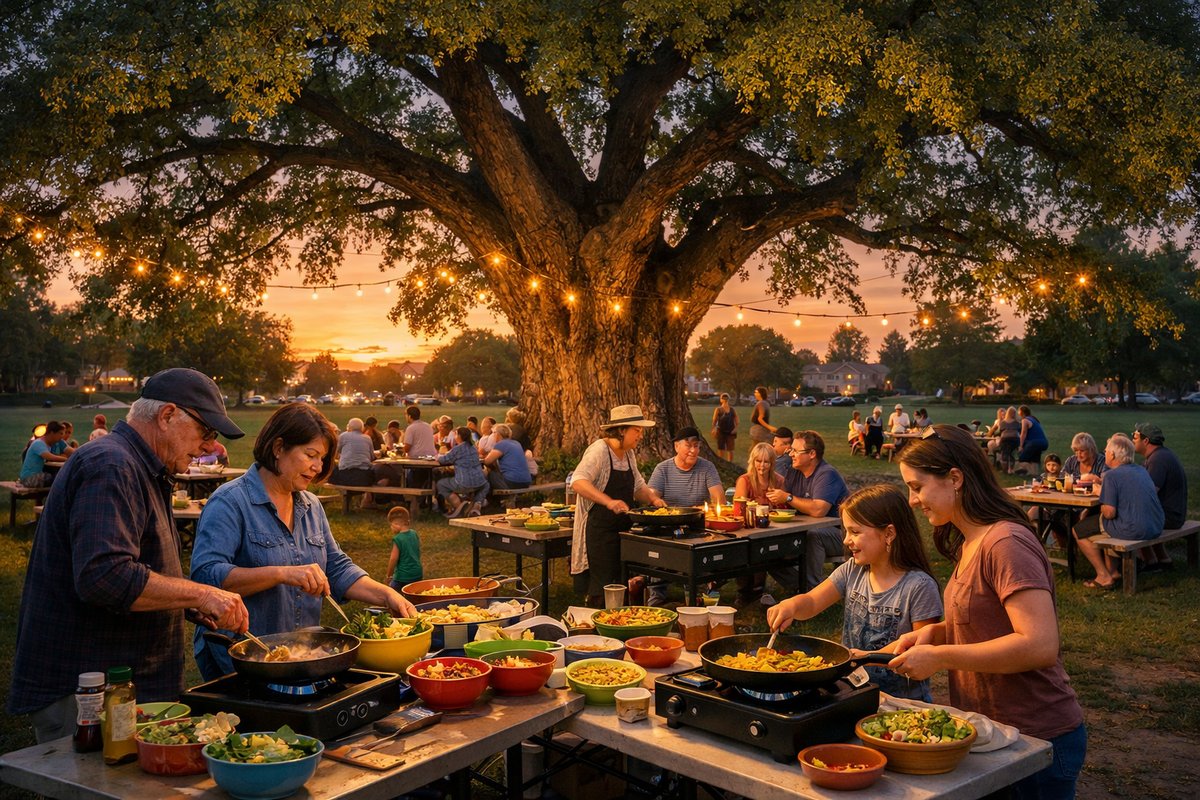
Every Thursday evening, neighbors gather beneath a century-old elm in Sunnyside Park, hauling portable cooktops and colorful bowls to prepare shared meals. What began as a small experiment to combat isolation has blossomed into a weekly ritual that nourishes both bodies and bonds across generations.
On a crisp spring evening, the hush of Sunnyside Park is broken by the hum of portable stoves and the chatter of neighbors who have come together for ‘Table Under the Elm.’ What started as a modest invitation to share a homemade stew has evolved into a vibrant communal kitchen where strangers become friends, and familiar faces anchor those who once felt adrift.
Shortly after a local chef planted the seed of the idea last summer, a handful of volunteers painted picnic tables in cheerful hues and strapped on propane burners. Today, dozens of participants-young professionals, retirees, single parents, college students and seniors-come armed with fresh vegetables, spices and stories to swap. The elm’s sprawling canopy provides a natural pavilion as dusk settles, lanterns flicker on, and the first simmering pots begin to send fragrant steam into the evening air.
“Food breaks down barriers,” says one of the project’s original organizers, a community volunteer who prefers to be called Maya. “The act of cooking side by side sparks conversations that might never happen otherwise. Someone arrives alone but leaves feeling seen.” Each week, she curates a loose theme-plant-based dishes one Thursday, multicultural street-food the next-inviting participants to bring ingredients and recipes that remind them of home.
As the steam from a cast-iron skillet rises, a retired schoolteacher shows a teenager how to roll dumplings, patiently guiding small fingers over the dough. Nearby, a group debates the secret to the perfect tomato gravy, passing a recipe journal between them. The pages of that journal have become a living archive: scribbled notes on spice ratios, philosophical asides about courage, and the occasional doodle of a laughing face or a steaming bowl.
The project’s impact reaches beyond simmering pots. Mental health professionals in the neighborhood have observed fewer calls to crisis lines on Thursday evenings. “When people feel anchored to a ritual and to each other, they experience a sense of belonging,” notes a local counselor. “It’s preventive care for loneliness.” Indeed, mutual support often emerges organically: someone who arrives feeling anxious might find a listening ear over a shared plate of roasted greens.
Sustainability is baked into every decision. Reusable bamboo plates and metal utensils replace disposables. Compost bins stand ready to transform food scraps into nutrient-rich soil for the nearby community garden. Solar-powered lanterns cast a gentle glow under the elm, eliminating the need for extension cords. One volunteer even built a small rainwater catchment system to wash produce on site.
Local businesses have chimed in to support. The neighborhood coop donates surplus bread, a spice shop offers discounted bulk herbs, and a secondhand furniture dealer lends folding tables when extra seating is needed. Participants pitch in a few dollars for propane or fresh produce, but no one is turned away for lack of funds. At the end of each evening, leftovers are bagged and delivered to a nearby shelter.
From the outset, the organizers recognized the challenge of permits and park regulations. They worked closely with the city parks department to secure temporary use permits, drafted safety plans for the propane burners, and invited health-code inspectors to consult on food storage. What began as a guerrilla potluck has matured into a formalized city-sanctioned program.
One Thursday, a young software developer arrived straight from her day job, clutching a batch of homemade chili. She confesses she was nervous-accustomed to virtual meetings, not communal cooking circles. By the end of the evening, she had swapped email handles with an amateur gardener, promised to test her slow-cooker recipe on the group next week, and felt her week’s stress begin to lift.
The ripple effect is evident in the surrounding blocks. Neighbors greet each other on morning dog walks. A local bookstore now hosts short recipe-sharing events. Parents and children coordinate carpools to bring fresh produce for the communal table. Even city planners are paying attention, exploring how outdoor kitchens can be integrated into future park designs to strengthen social cohesion.
Experts observe that communal cooking has a storied history in human societies. Sociologists point to traditional practices in markets, temple courtyards and village squares where food was literally the currency of social capital. In today’s fast-paced urban environments, replicating those communal kitchens can reignite a sense of shared purpose.
Looking ahead, the organizers plan to expand Table Under the Elm to other parks and launch an accompanying recipe archive on a neighborhood website. They hope to partner with local schools for culinary workshops, empowering young people to take ownership of the space. Meanwhile, every Thursday evening remains a testament to the idea that public spaces can be fertile ground for care, connection and collective resilience.
By the time the last pot is emptied and the embers of the burners cool, the park feels charged with a quiet warmth. Strangers who arrive as individuals depart feeling woven into a tapestry of stories and flavors. Under that elm tree, a simple pot of soup transcends sustenance, becoming a ritual of belonging for a city hungry for genuine connection.
In a world fragmented by screens and schedules, Table Under the Elm offers an antidote: a weekly reminder that when we break bread together, we build something more vital than a meal. We build community.