Location
Mount Vernon, WA 98274

Location
Mount Vernon, WA 98274
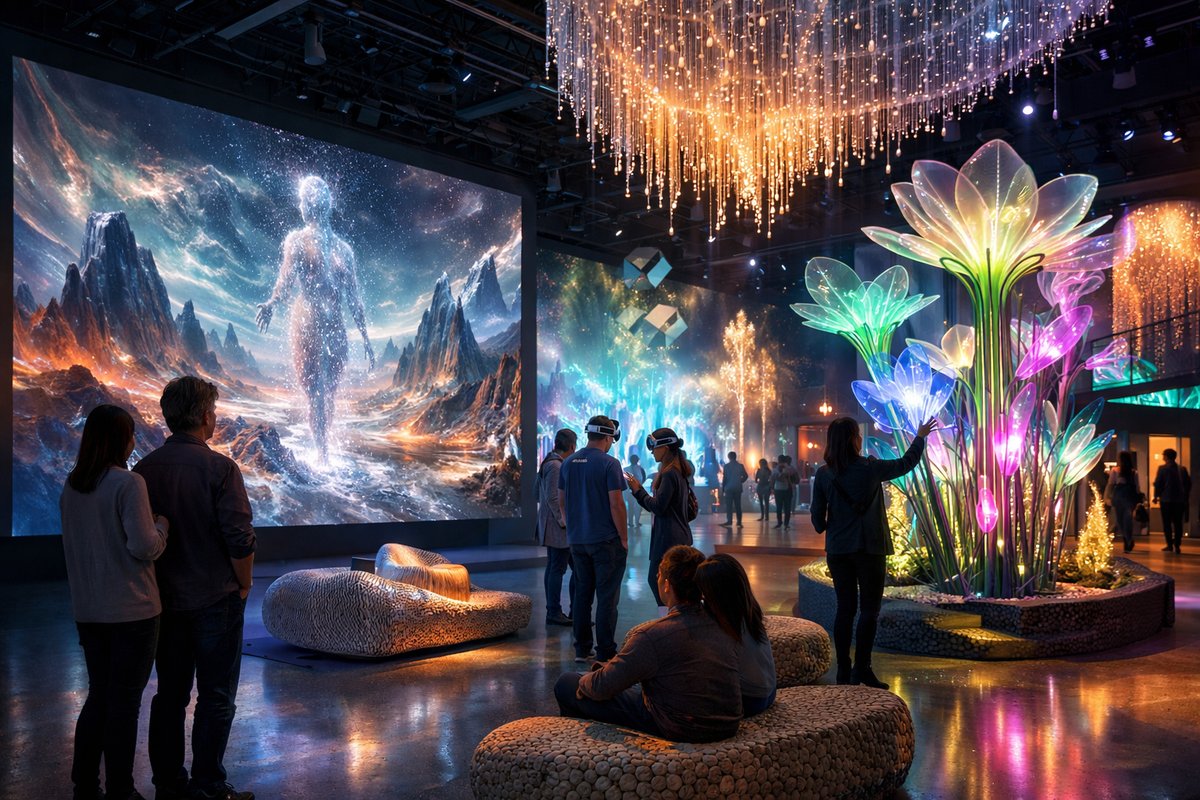
A major new exhibition at a leading cultural center is spotlighting the collision of artificial intelligence, augmented reality and sustainable materials in art and design. From generative film installations to interactive light sculptures, immersive experiences are reshaping how visitors engage with creative environments.
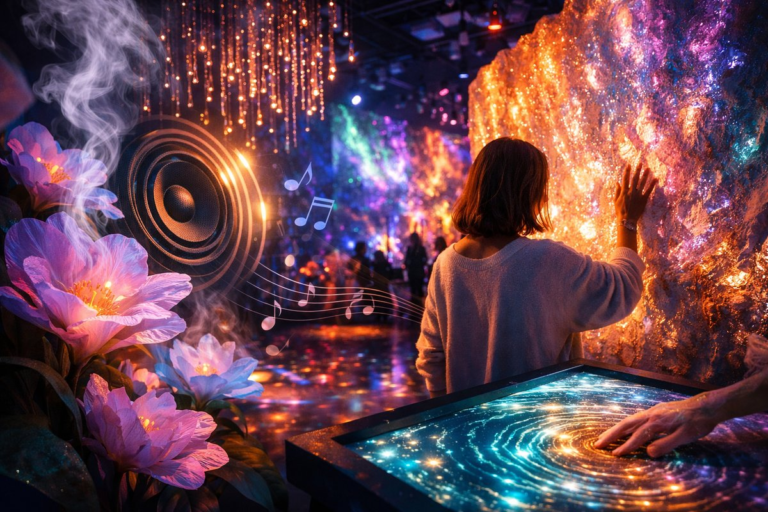
In a cavernous hall bathed in pulsating colors, an audience of museumgoers dons augmented reality headsets and steps into a world that exists only at the interface of code and light. They wander among virtual sculptures that appear to float in midair, their forms shifting in response to every gesture. This scene, now on view at a major exhibition space in London, captures a turning point in contemporary art and design: the embrace of intelligent systems and immersive technologies as core tools of creative expression.
The exhibition, titled “When Machines Imagine,” brings together more than two dozen installations that blend algorithmic processes, real-time data and interactive hardware. Curators describe it as a cross-disciplinary showcase: AI-generated films play alongside kinetic sculptures that respond to human presence, while AR and projection mapping blur the line between physical galleries and virtual realms. Underlying this surge in immersive work is a broader shift in the global arts landscape. According to the latest Global Art Market Report by leading industry analysts, digital and experiential installations accounted for roughly 35 percent of major exhibitions across Europe and North America last year-up from just 20 percent two years ago.
At the heart of the show is a sprawling generative film by an artist-technologist duo. Titled “Deep Field,” the piece uses live environmental data streams-everything from satellite imagery to local traffic patterns-to train neural networks that then paint shifting landscapes in real time. Spectators stand before a 20-foot screen as forests, cities and oceans dissolve into fractal abstractions, each frame unique to that moment in space and time. The creators liken the work to a digital meditation on climate change and urban expansion: “It’s both a mirror and a dream,” one artist explains via an audio guide.
Nearby, an interactive light sculpture fills a darkened chamber with ripples of pink and violet. Motion sensors track the movement of bodies as they weave between tall columns, causing individual tubes of LED lights to pulse and cascade downward like digital waterfalls. The effect is uncanny: guests report a sense of vertigo as ripples radiate outward from their own silhouettes, inviting spontaneous play and collective choreography. This piece, developed with open-source software and sustainable acrylic tubing, exemplifies a growing trend in design communities to combine low-impact materials with high-impact visuals.
Augmented reality also takes center stage. Along one corridor, visitors use wireless AR headsets to view a series of virtual sculptures anchored to the floor. One hologram mimics gelatinous blobs that stretch and compress on command; another depicts geometric rings that orbit invisible axes. These works reference historical movements-from mid-century Op Art to Brutalist architecture-while deploying spatial computing to push those traditions into new territory. Developers built the virtual objects using industry-standard game engines and hand-scanned material textures, then calibrated them to a network of ceiling-mounted sensors. The result is a seamless dance between the tactile and the intangible.
Behind the scenes, designers are turning to AI to automate parts of the creative pipeline. A robotics arm in an adjacent workshop paints porcelain busts with generative patterns derived from centuries of art history. The machine’s brush strokes-patches of turquoise and ochre-shuffle and repeat in ever-changing permutations. Nearby, a 3D printer fabricates small sculptures layer by layer in biodegradable PLA filament, an eco-friendly alternative to traditional resins. Both processes underscore a willingness to relinquish control, inviting algorithms and machines to “co-author” with human makers.
Sustainability is a guiding principle throughout the exhibition. Organic dye is used to color a textile installation made from hemp and recycled cotton, while modular LED panels are powered by on-site solar arrays. In gallery notes, designers explain how they tested algae-based pigments and low-energy projection hardware to reduce carbon footprints. Their goal: to demonstrate that immersive design need not come at the expense of environmental stewardship.
On opening night, a series of panel talks explored the philosophy behind these works. One speaker described a “symbiotic vision” in which humans and machines collaborate through iterative feedback loops. Another proposed that augmented reality will soon become as ubiquitous as smartphones, blurring our perception of public and private spaces. Across these discussions ran a common thread: creative practice is evolving from object-making to experience-engineering-a shift that presents both thrilling possibilities and ethical questions.
While high-profile exhibitions like this often draw headlines, the technologies on display are also trickling into more modest settings. Graphic design studios are integrating real-time motion tracking into corporate branding events; architects are embedding interactive light panels in building facades; and independent artists are experimenting with DIY projection mapping setups for pop-up galleries. A growing number of open-source communities now share code libraries for generative visuals and AR toolkits, democratizing access to previously specialized workflows.
For visitors, the appeal is visceral. Many cite a sense of enchantment not just at the spectacle, but at the tactile intimacy of controlling light and form. One attendee, a student of interior design, described the show as a revelation: “I never imagined that a simple gesture could sculpt space in real time. It feels like stepping into tomorrow’s studio.” Such reactions underscore a deeper shift in perception: art and design are no longer static disciplines confined to flat surfaces or fixed installations. They are living systems, responsive to context, data and human interaction.
“When Machines Imagine” runs through the spring months, and it is already scheduled to travel to two other institutions next season. Along the way, its curators hope to spark dialogue about the evolving role of technology in creative practice. Is the artist still the sole author of a work, or does agency now reside in lines of code? Can sustainable design keep pace with the resource demands of large-scale tech installations? And what does it mean to experience a space that only partly exists in the flesh?
As you leave the final gallery, the sound of your footsteps triggers a gentle ripple of light across the floor-an echo of your presence, translated into luminous waves. It is a fitting reminder that art and design today are about more than objects. They are about relationships: between people and machines, between past and future, between the tangible world and imagined realms.
In the end, the newest wave of art and design exhibitions suggests a simple truth: the boundaries of creativity are only as fixed as our willingness to imagine beyond them.