Location
Mount Vernon, WA 98274

Location
Mount Vernon, WA 98274
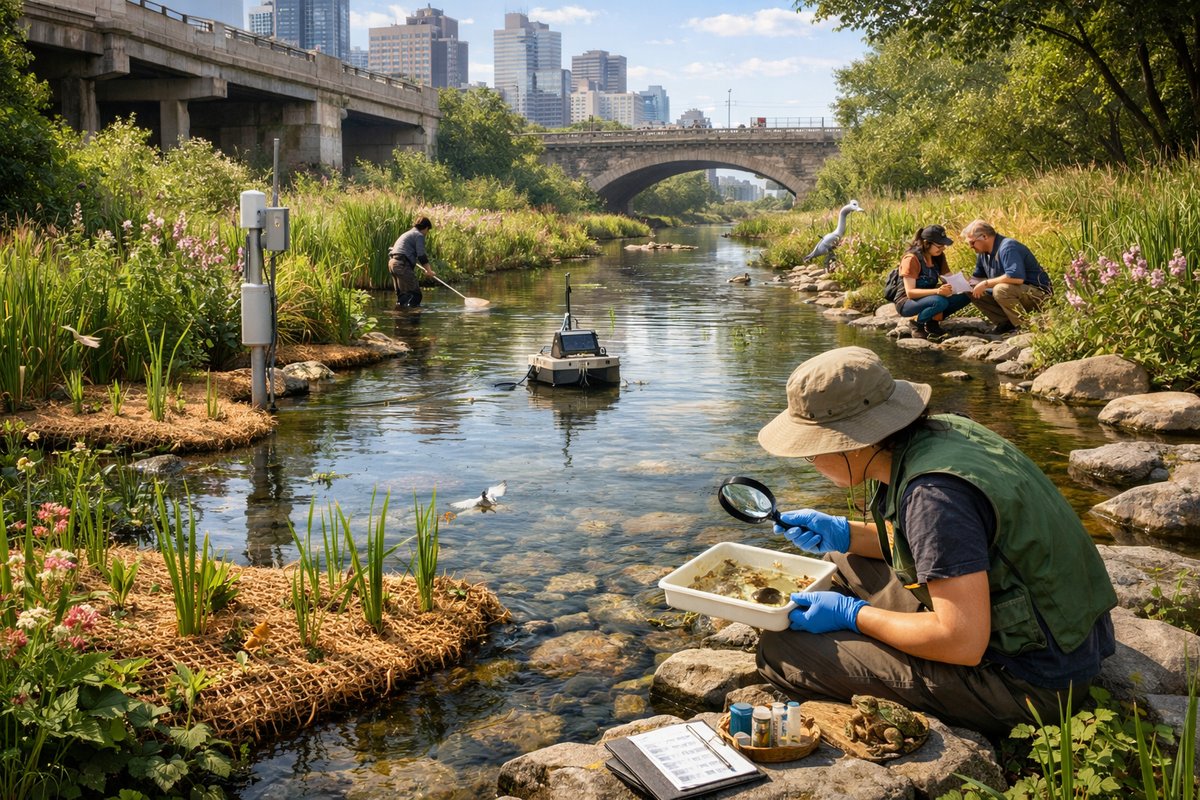
Once overlooked and buried beneath concrete, an urban tributary is now humming with life thanks to an innovative blend of living wetlands and volunteer-led monitoring. Sensors, seed mats, and macroinvertebrate surveys are revealing a richer ecosystem and granting residents a renewed sense of connection to their city's hidden waterways.
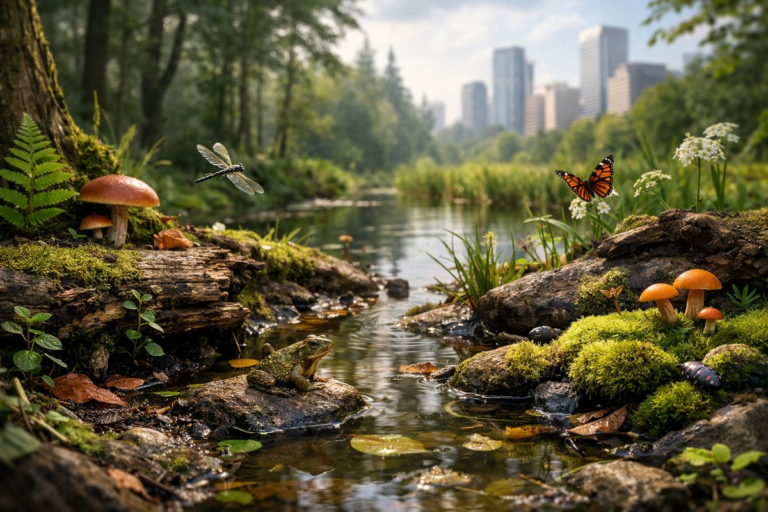
A narrow ribbon of water glistens beneath a canopy of young willows and rushes, threading its way through a neighborhood park that until recently was home to cracked asphalt and scattered debris. Here, where storm drains once channeled runoff directly into a polluted stream, a team of volunteers and environmental scientists has pieced together a living puzzle: a constructed wetland that mimics marsh processes to filter water, provide habitat, and celebrate the wild patterns of renewal.
Decades of industrial discharge and urban runoff left this tributary on the brink of collapse. Concrete culverts sealed it off from daylight and human sight, while residue from road oils and fertilizers discouraged both fish and plants. Conditions favored algae blooms in summer and muddied flows in spring. Yet beneath the surface, a seed bank of dormant plants waited. Microbial communities lay in slumber, and deep in the sediment, eggs of pond snails and frogs persisted in fragile stasis.
The breakthrough came when city planners partnered with a local nonprofit that specializes in “living technologies”-systems that draw on ecological processes rather than mechanical pumps and concrete channels. Instead of retrofitting the channel with standard stormwater pipes, they carved shallow basins and islands, lined with gravel and coir logs, then planted sedges, rushes, and emergent wildflowers. These green features slow the flow, trap sediments, and host complex microbial mats that metabolize nutrients before they reach the main river.
Crucially, the project invited residents to roll up their sleeves. A community science program equipped volunteers with handheld devices to test water quality at weekly intervals. Families learned to dip probes into the stream, reading real-time data on dissolved oxygen, nitrate levels, and temperature. On a smartphone app, these readings synced to a public dashboard, where color-coded maps tracked progress from “poor” orange to “good” green.
One Saturday morning, a group of middle-schoolers crouched at the water’s edge with insect nets and clear trays. Under a volunteer guide’s watchful eye, they swept through the shallow pools, capturing stonefly nymphs, mayfly larvae, and tiny caddisfly cases that signaled clean, well-oxygenated water. In labs set up at the park pavilion, they counted and classified each specimen, entering the results into a shared database that spans the entire watershed.
Soon the chorus of amphibians returned. On balmy spring evenings, automated audio recorders picked up sudden crescendos of chorus frogs and spring peepers. The recordings revealed multiple species singing in harmony-an indicator of habitat complexity and good water quality. Acoustic data, combined with the insect surveys and sensor readings, painted a holistic picture of recovery that far outstripped traditional visual assessments alone.
High above, a lightweight UAV captures multispectral imagery of the wetland. Infrared bands highlight moisture gradients and plant health, while visible light shows the shifting patterns of algae and emerging seedlings. These aerial snapshots help guide maintenance crews, who selectively thin dense stands of cattail and plant plug seedlings in low-cover zones to ensure a balance of habitats.
Along the banks, volunteers have laid down biodegradable seed mats imbued with native grasses and wildflowers. Within weeks, the mats sprout, anchoring soil and inviting pollinators. Bees and butterflies flit between blossoms, while small birds perch on the new shoots. This edge habitat merges the stream’s aquatic realm with upland wildflowers, creating a seamless corridor for wildlife movement even in the heart of the city.
The initiative has fostered unexpected partnerships. An engineering class from the local college designed custom sensor housings that resist vandalism and cope with flooding. A veterans’ group organized weekend plantings, finding therapeutic value in mud-stained boots and hands-on restoration. Nearby businesses sponsored supply drives for waders, shovels, and field guides. Together, they transformed a neglected ditch into a thriving living machine.
At dusk, a volunteer biologist recharges a compact audio recorder that sits half-submerged among sedges. These battery-powered units record 24-hour cycles of frogs, birds, and insect calls. Back at home, the biologist uploads the files to an open-source software platform that uses machine learning to identify each species’ unique call. Over the course of a season, the data reveal shifting peak times for different choruses, guiding when to minimize disturbances and when to encourage nighttime strolls along boardwalks.
Meanwhile, the public dashboard has become a local conversation starter. Commuters check nitrate levels on their morning train ride. Garden clubs compare oxygen readings from different reaches of the stream. City councilors cite the recovery statistics when proposing further green infrastructure investments in nearby neighborhoods.
As seasons turn, the wetland demonstrates remarkable resilience. High-flow events that once scoured the channel now spread gently over floodplain benches, dissipating energy and recharging groundwater. In winter, the basin holds ice and snowmelt, releasing it slowly to prevent sudden surges downstream. The combination of plants, microbes, and geomorphic design acts as a self-adjusting system that weathers extremes without human intervention.
Beyond its technical merits, the restoration has reshaped how residents view their environment. Children who once saw the stream as a smelly drain now toast frogs’ successful spawning runs. Elderly walkers pause to watch dragonflies skim the water’s surface. Photographers capture reflections of yellow loosestrife against smooth pebbles. It’s a space that invites quiet awe and fosters a sense of stewardship.
Cost analyses show that constructed wetlands can be more affordable than storm sewers when factoring long-term maintenance and ecosystem services like water purification and flood mitigation. In this city, saved expenditures on chemical treatment have partly funded interpretive signage and benches along the wetland boardwalk.
Similar projects are taking shape in other urban centers-converting parking-lot depressions into rain gardens, retrofitting detention basins with planted islands, and integrating green roofs with rainwater reuse. Each model draws on the core principle that living communities of plants and microbes can outperform concrete structures in both ecological and social returns.
Volunteers describe a quiet transformation in themselves. They talk of learning to listen-to record the hum of a water strider or the subtle puff of a marsh wren. A sense of wonder grows from hours spent observing minute details: the ripple patterns ants make on mud flats, the way sedge leaves shift when fish dart beneath.
The project’s leaders emphasize that science and emotion need not be separate. Data charts inspire confidence in the wetland’s performance, while the tactile experience of digging in mud or pressing a sensor probe into water evokes deep connections to place. When people feel invested, they guard the landscape: reporting illegal dumping, organizing winter clean-up days, and sharing photos on social media that spark curiosity in neighbors.
At its heart, this urban wetland stands as an invitation to belong-to discover that resilience exists in the intersection of human creativity and ecological processes. It beckons us to notice the hidden patterns of water as it slows, percolates, and engages with living networks of roots and microbes.
Looking ahead, the success of this living wetland will inspire new experiments in micro-restoration-small interventions with outsized impact. From porous pavement that feeds shallow groundwater to rooftop gardens that double as pollinator oases, the principles remain the same: collaborate with nature rather than constraining it. As more cities adopt these approaches, each restored creek becomes part of a vast tapestry of flowing connections, reminding us that healing landscapes can also heal communities.
The once-forgotten stream has returned not as a sterile channel, but as a vibrant artery of life. Here, volunteers and scientists continue to measure, marvel, and protect. Each ripple in the water and each chirp in the air testifies to a deeper truth: when we open our eyes to the patterns of renewal all around us, even the most hidden waterways can find their voice again.