Location
Mount Vernon, WA 98274

Location
Mount Vernon, WA 98274
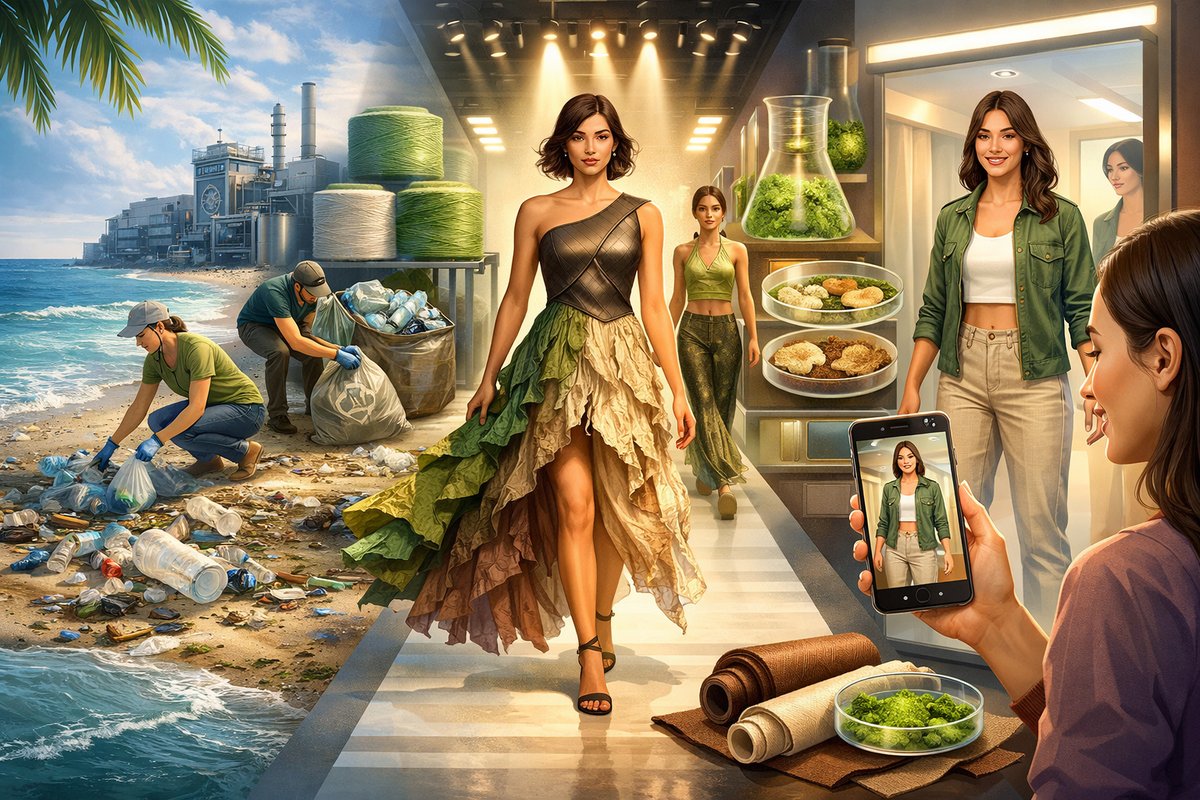
A wave of sustainable fashion pioneers has transformed runways into living labs, blending recycled fibers, biofabricated leather alternatives, and virtual try-on tech. From seaside cleanup drives that feed new polyester yarn to smartphone-powered fitting rooms, this story explores how creativity and conscience converge in every seam.
A hush fell over the converted warehouse as models took their first steps down the runway, each wearing eco-innovations that would once have seemed futuristic. Jackets spun from ocean-retrieved plastic bottles shimmered under spotlights, while handbags crafted from lab-grown mushroom leather swayed alongside 3D-printed bracelets. This was no ordinary showcase. It was the launchpad for a fashion future where sustainability, transparency, and digital wizardry converge.
The event, tagged under the banner of “Circular Couture,” drew designers, tech entrepreneurs, and ethically minded influencers from around the globe. But its true stars were humble materials once destined for landfills-discarded fishing nets, agricultural waste, even spent coffee grounds-reborn as soft-knit sweaters and avant-garde accessories. Many attendees described it as the most inspiring runway in years, not because of glitzy logos or celebrity cameos, but for the tangible proof that style and responsibility can coexist.
At the heart of this transformation lies the concept of closed-loop production. Startups are partnering with coastal cleanup organizations to salvage nylon nets and ropes, then using mechanical and chemical recycling techniques to spin them into virgin-quality fibers. One such initiative funnels reclaimed ocean plastics into transparent yarns that catch the light like glass threads, a reminder of both the material’s troubled origins and its new purpose on a high-fashion stage.
But ocean plastics are just one chapter of the story. Designers showcased jackets made from mycelium-based leather-grown in clean labs without pesticides or slaughterhouses-and biodegradable knits dyed with pigments derived from algae blooms. These bio-dyes react to changes in humidity and temperature, causing subtle color shifts that evolve throughout the day. It’s an aesthetic statement wrapped in a scientific marvel, challenging the notion that environmentally friendly must mean visually bland.
Behind the scenes, digital tools are rewriting the rules of sampling and fitting. Traditional sample runs produce mountains of unsold prototypes, each destined for destruction. Now, designers employ augmented-reality fitting mirrors powered by smartphone sensors. A shopper can stand in front of a motion-sensing screen, select a garment from the digital collection, and see it draped over their silhouette in real time. Not only does this cut sample waste, but it also extends reach: a boutique in Milan can virtually outfit customers in Tokyo without shipping a single fabric swatch.
Blockchain ledgers add another layer of accountability, tracking every step of a garment’s journey from raw material to retail rack. Consumers scan a QR code on a recyclable paper hangtag and witness a transparent timeline: when the cotton was harvested, which factory stitched the seams, even the carbon footprint of each production stage. Such radical openness fosters trust, turning shoppers into informed participants rather than passive buyers.
The circular mindset extends beyond purchase. Rental platforms have exploded in popularity, letting consumers borrow special-occasion dresses or statement coats for a fraction of the retail price. Once worn, these items return to the company, where quality checks and gentle cleaning (using plant-based detergents) prepare them for the next user. This peer-to-peer sharing economy not only reduces consumption but also makes luxury accessible to a broader audience.
Local communities are joining the movement through repair cafes and DIY upcycling workshops. In one pop-up, attendees brought old tees and jeans to learn simple stitching techniques with a portable garment repair kit. They transformed ragged hems into fringe-trimmed skirts and patched holes with decorative embroidery. Beyond mending tears, these gatherings rekindle a sense of ownership and craftsmanship long lost in fast-fashion culture.
Technology continues to push boundaries as well. Compact desktop 3D printers churn out custom-fit button molds, zipper pulls, and even lightweight eyewear. Designers upload digital models to an open-source marketplace, where independent makers download files and print components at home before assembling them with hand-stitched straps. This democratizes accessory production, decentralizing supply chains and empowering micro-enterprises.
Despite all the innovation, challenges remain. Scaling up sustainable materials to meet global demand requires large-scale infrastructure investments. Recycling certain fiber blends still poses technical hurdles, and biofabrication labs must prove they can produce at competitive prices. Yet venture capital flows steadily into eco-fashion, driven by consumer surveys showing that half of shoppers now prioritize sustainability when buying clothes.
Industry incumbents are taking note. Major retailers have launched take-back programs, transforming returned or unwanted items into raw material for next-year’s collections. Collaborations between fast-fashion giants and eco startups aim to retrofit existing supply chains, replacing virgin polyester lines with recycled alternatives. Critics warn of greenwashing, but proponents see these moves as necessary accelerants toward a low-carbon industry.
Consumer education is crucial. Brands invest in interactive digital content-mini documentaries, virtual factory tours, and style guides-helping customers care for their garments properly. Simple acts like air-drying clothes, using gentle wash cycles, and patching small holes immediately can extend a garment’s life by months or even years. These practices cut down on landfill waste and reinforce a deeper connection between individuals and their wardrobes.
Financial models are evolving alongside. Some designers adopt a “dematerialized” approach, offering digital-only collections that customers can overlay onto their existing attire in social media posts or virtual environments. Others introduce subscription boxes, sending curated seasonal capsules and retrieving them at the end of each term. The goal is consistent turnover with minimal waste, combining novelty with circular design.
By the time the finale played out, models returned in a living installation of green vines and biodegradable LED lights-an homage to nature reclaiming spaces. The audience rose to applaud a vision where every stitch tells a story of regeneration. It was a powerful reminder that fashion needn’t choose between creativity and conscience. With the right blend of innovation, transparency, and community, tomorrow’s wardrobe can be as kind to the planet as it is captivating to our senses.
As the industry pivots from mass production to mindful creation, consumers wield new power-not just in their purchasing choices, but in their storytelling. Each outfit becomes a page in a collective narrative, weaving responsibility, technology, and artistry into a tapestry that transcends seasons. The future of fashion may be stitched in laboratories and shown on digital screens, but its real threads connect people, planet, and purpose.