Location
Mount Vernon, WA 98274

Location
Mount Vernon, WA 98274
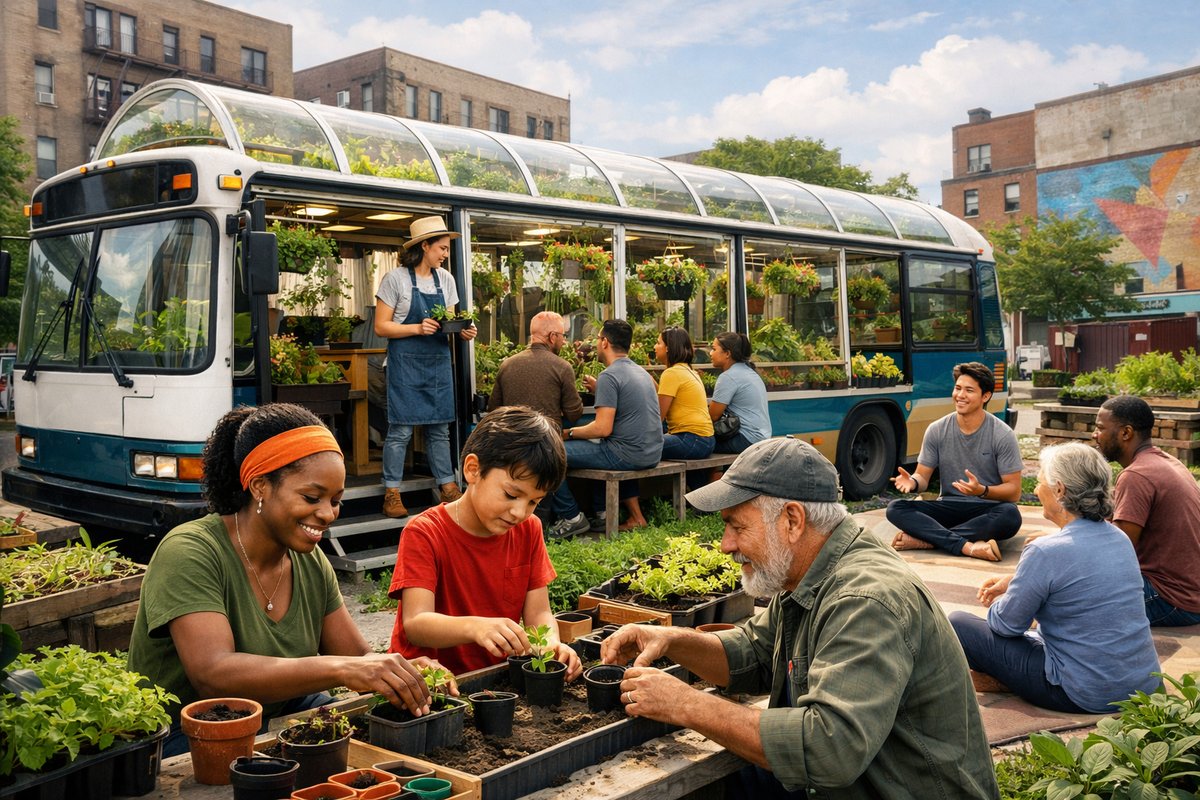
A converted city bus transformed into a mobile greenhouse is touring low-income neighborhoods, offering free workshops in urban agriculture and mental wellness. This rolling initiative not only plants seeds in soil but also sows hope, resilience, and connection among residents facing isolation and economic hardship.
A once-retired transit bus now hums with life as it navigates narrow streets and broad avenues of Haven City’s Crestmoor district. Adorned with hand-painted vines and cheerful murals, the vehicle has been reborn as the Green Journey Bus-a mobile greenhouse and workshop space dedicated to teaching urban agriculture, mental health first aid, and community resilience.
Urban farming isn’t new, but the idea of taking a classroom on wheels directly into neighborhoods with limited resources has attracted attention from local residents and social innovators alike. Since its launch six months ago, the Green Journey Bus has parked in vacant lots, schoolyards, and community centers, offering pop-up sessions on seed starting, compost management, and the emotional benefits of cultivating living plants.
Organizers describe the project as an experiment in regenerative community-building. “We wanted to address two urgent needs at once,” says one of the founders. “Access to fresh food and tools for coping with stress. By bringing soil, seeds, and support directly to people, we’re breaking down barriers-financial, logistical, and emotional.”
The bus’s interior unfolds like a miniature greenhouse. Seedling trays line custom-built shelves under energy-efficient, solar-powered grow lights. Hanging planters cascade herbs, while a small seating bench invites participants to gather in a circle. Volunteers demonstrate how to fill biodegradable pots with compost, check soil moisture, and prune baby tomato plants. A handful of rear seats have been replaced by a compact counseling nook, offering confidential chats for anyone seeking a listening ear.
At recent stops in Crestmoor, dozens of neighbors queued up after work. Some carried empty yogurt cups or tin cans to repurpose as seed starters. Others brought scraps of vegetables to add to community compost bins. Children pressed their fingertips into damp soil, marveling at seeds that looked as small as specks of dust. For many, this was their first hands-on gardening experience.
Beyond practical skills, the bus offers brief guided exercises in mindful planting. Participants close their eyes as they scoop soil, focusing on the scent of earth and the rhythm of their breath. A facilitator leads a ten-minute reflection on growth, change, and patience-qualities mirrored in both plants and personal journeys. Several attendees reported feeling calmer, more connected, and inspired to keep caring for their window boxes or fire escape planters at home.
Local nonprofits and small businesses have chipped in resources. A roofing supply shop donated sheets of clear polycarbonate to create a rain shield for the bus’s roof garden. A bicycle co-op helped retrofit the engine compartment to power a battery bank that runs lights and a small fan. These collaborations highlight a spirit of collective effort, transforming a simple vehicle into a communal beacon.
Statistically, urban greenhouse projects are gaining traction nationwide. According to a recent Urban Agriculture Report, community-driven gardening initiatives have increased by 35 percent over the past five years. In neighborhoods where fresh produce outlets are scarce, residents involved in gardening report a 20 percent improvement in access to fruits and vegetables, and a 15 percent reduction in reported stress levels.
For people like Jasmine, a single mother of two, the bus feels like a sanctuary. She admits she used to associate gardening with sprawling backyards she could never afford. “Here, everything is possible,” she says. “I learned how to grow peppers and herbs in old coffee cans. My kids help water the plants, and we eat better. It also reminds me that growth takes time-and that feeling makes me want to keep trying, in my life and in the garden.”
City leaders have taken note. The Department of Social Services has provided seed money for a second bus slated to tour adjacent districts. Officials hope the model can be replicated in other cities facing similar challenges. “This initiative nails the intersection of food security, mental health, and community engagement,” one city planner says. “It’s a moving example of how small-scale interventions can drive big social impact.”
Critics caution that a bus alone can’t solve deep-rooted inequities. They call for more permanent investments in community land trusts, affordable housing, and accessible healthcare. Organizers agree, positioning the mobile greenhouse as a complement rather than a cure-all. “We’re planting seeds-literal and figurative,” one volunteer explains. “We want people to see possibility where there was despair. But real change demands systemic support in tandem with grassroots creativity.”
Looking ahead, the team behind Green Journey is exploring partnerships with local schools and senior centers. They plan to develop age-specific curricula: garden-based science lessons for kids and therapeutic horticulture sessions for older adults coping with isolation. By nurturing cross-generational connections, they hope to reinforce social bonds that extend beyond the bus’s monthly visit.
In a city that often feels compartmentalized-by income, by geography, by opportunity-a rolling greenhouse offers a fresh narrative. It reminds residents that growth can happen anywhere, even in a rusty bus parked under a chain-link fence. And when roots take hold in concrete, so too can new stories of resilience, hope, and shared purpose.