Location
Mount Vernon, WA 98274

Location
Mount Vernon, WA 98274

Families are turning everyday moments into brief, intentional explorations known as micro-adventures, blending sensory play, storytelling prompts, and reflective pauses. Early research suggests these bite-sized learning quests boost emotional intelligence, spark creativity, and strengthen parent-child bonds.
In living rooms around the world, a new trend is unfurling quietly: micro-adventures in home learning. Rather than sprawling obstacle courses or all-day expeditions, parents are carving out five to fifteen minutes of focused, themed exploration. These mini-journeys-planned around a single object, story prompt or sensory box-invite children to slow down, ask questions, and connect feelings with discovery.
A 2023 study published in the Journal of Child Development followed 150 families experimenting with daily micro-adventures. Researchers found improvements in children’s emotional language and a 20 percent increase in spontaneous problem-solving during free play. “It isn’t about packing a bag and heading into the wilderness,” one early childhood specialist explains. “It’s about weaving wonder into the corner where a child sorts pebbles, sketches a leaf, or spins a wooden top while naming how each moment feels.”
Many parents start with simple touchpoints: a small collection of natural items-pinecones, shells, smooth stones-laid out on a tray. Children are encouraged to describe textures, invent stories tied to each artifact or sort them by weight and color. This sensory spotlight turns a routine afternoon into a tactile meditation. “My daughter paused to notice how a striped shell reminded her of rain patterns,” a parent shares. “We talked about emotions that feel layered, like excitement mixed with calm.”
Beyond natural finds, micro-adventures lean on narrative tools such as storytelling dice or prompt cards. A set of numbered cubes-each face engraved with an image-guides families to roll and build a collective tale around a dragonfly, a map or a hidden door. As children personify shapes and creatures, they practice perspective-taking: What might a quiet stone feel if it could dream? How would a shy ant share a secret?
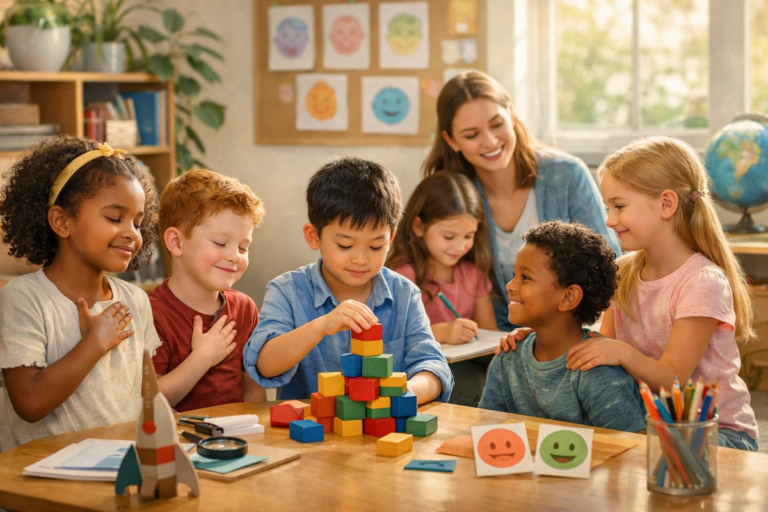
Educators note that coupling story elements with emotional check-ins transforms screen-free time into a social laboratory. A parent-led moment of asking “How do you think the leaf feels when it drifts off the branch?” can open conversations about change, loss, excitement or curiosity. Dr. Elena Suarez, a developmental psychologist, observes that such small narrative interludes strengthen a child’s vocabulary for inner life-a cornerstone of emotional intelligence.
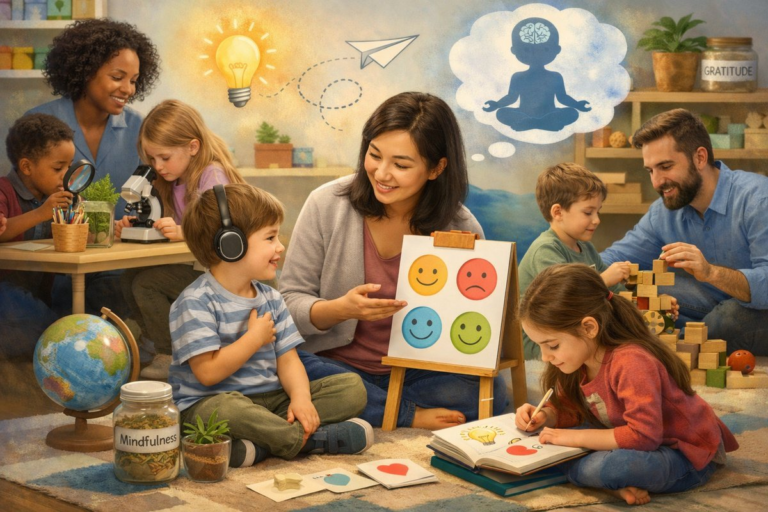
Mindful pauses are another hallmark. After a quick sensory or narrative activity, families take a breath to reflect. A five-minute guided visualization-imagining floating like a feather or planting a small seed-grounds the child before spinning into the next part of the day. The technique is borrowed from classroom mindfulness practices but scaled to home life. Early results indicate a 15 percent reduction in sibling conflicts when these pauses become ritual, gifting children words to name disappointment or impatience.
In urban apartments where outdoor space is limited, micro-adventures adapt to small footprints. One family transformed a windowsill into a miniature weather observatory: children note cloud shapes, measure sunlight with a simple sundial and press raindrops between two panes of glass. Over days, they chart moods tied to each weather pattern-stormy afternoons leading to cozy reading sessions, clear skies sparking energetic dance circles.
Rural households, by contrast, layer micro-adventures onto garden beds or backyard corners. Children learn to trace the life cycle of a caterpillar by tracking leaf-eating patterns, sketching stages in a child-sized field notebook and then reflecting on themes of growth and transformation. Emotional labels follow: identifying moments of nervousness as the caterpillar spins its chrysalis, and joy when a butterfly finally emerges.
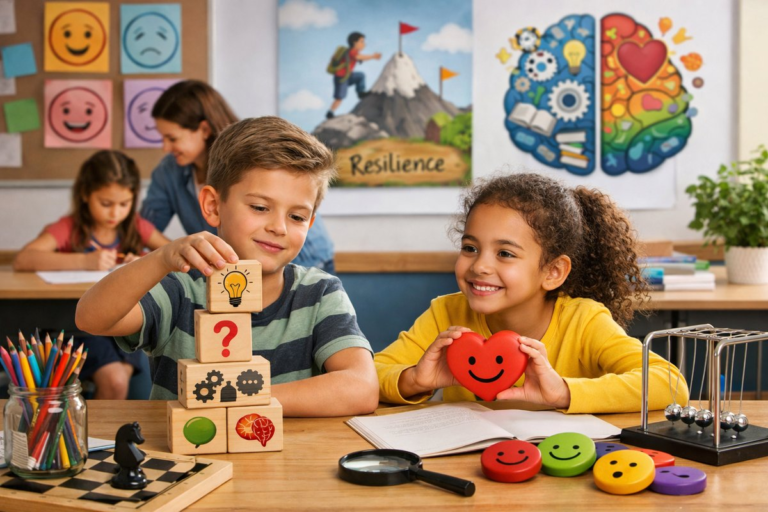
While micro-adventures are low-cost and require minimal prep, many families draw on tools designed to deepen each moment. Reflective journals encourage kids to draw and write about what surprised them or made them feel brave. Emotion-coaching card decks offer question prompts such as “When did you feel most curious today?” or “What part of our adventure was the silliest?” These tangible tools serve as anchors: physical reminders that even a 10-minute quest can spark lasting insight.
Critically, micro-adventures place agency in the child’s hands. Instead of a rigid lesson plan, the parent acts as facilitator-someone who listens, offers scaffolding and honors emotional data. If a prompt lands awkwardly or a game feels forced, the activity shifts. This fluidity teaches children to trust their responses and dismantles the idea that learning must fit a strict schedule.
Interest from schools and community groups is growing. A pilot program in three public libraries asked families to pick up “Curiosity Kits”-boxes containing story dice, a small notebook, colored stones and emotion cards-for check-out. Over six weeks, librarians reported families returning weekly for new prompts and sharing insights on a community board. Organizers plan to expand the kits and curate neighborhood micro-adventure trails using local parks and public art.
Experts caution that micro-adventures complement but do not replace broader social-emotional learning curricula. The strategy is most effective when woven into daily life, not treated as an add-on. When parents maintain open-ended support and follow a child’s lead, these mini-quests become natural extensions of play, not another assignment.
Ultimately, the rise of micro-adventures signals a shift in how families conceive of home education. It’s less about ticking academic boxes and more about nurturing emotional bedrock-curiosity, resilience and the power of shared wonder. In the quiet hush of a five-minute themed exploration, children practice empathy, name inner states and ignite imaginative fires that fuel long-term growth.
For parents seeking to dip a toe into this trend, no elaborate set-up is required. A small collection of objects, a pad of paper and a willingness to ask playful questions can open doors to emotional discovery. As one family summed it up: “Our living room turns into a castle courtyard or a secret forest at the drop of a dice, and in that moment, we’re explorers together-learning about the world and each other.”
Whether practiced daily or a few times a week, micro-adventures offer a heart-centered approach to home learning. They remind us that wonder thrives in small pockets of time, and that emotional intelligence grows best when curiosity and kindness walk hand in hand.