Location
Mount Vernon, WA 98274

Location
Mount Vernon, WA 98274
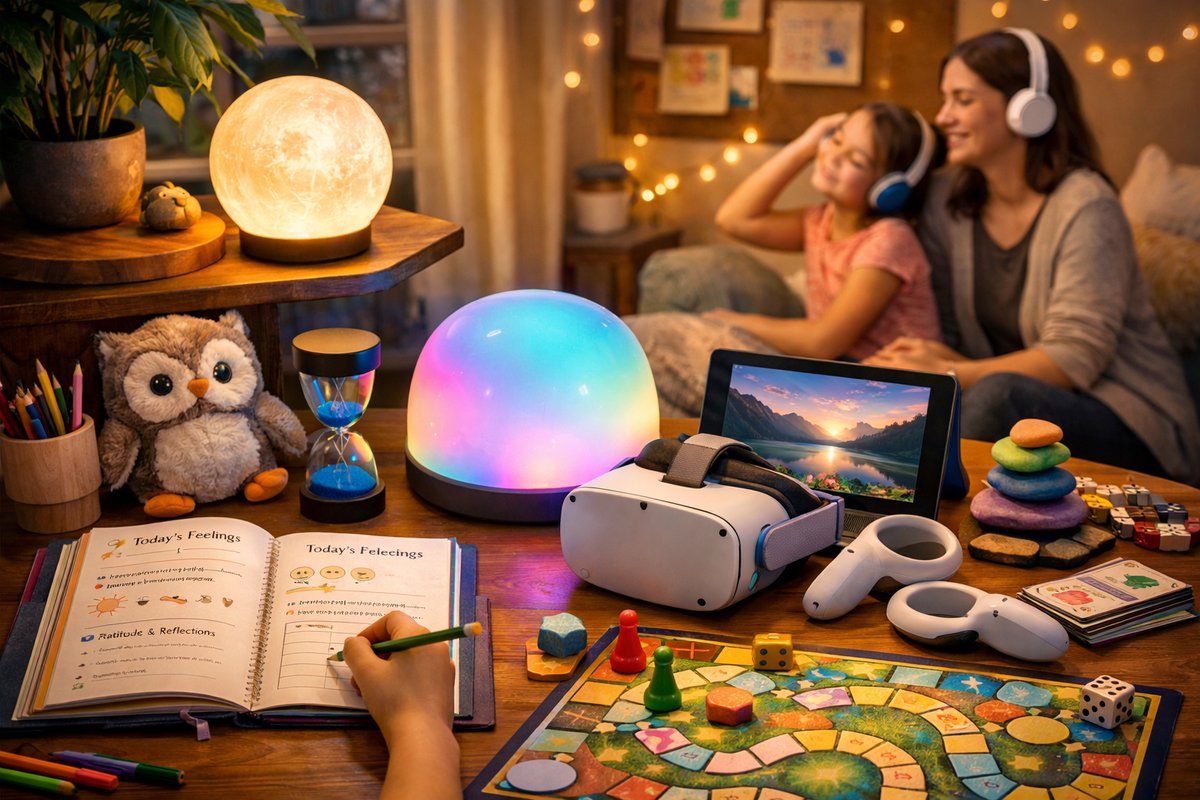
In homes across the country, parents are integrating smart gadgets and hands-on tools to nurture curiosity and emotional intelligence. Guided journals, color-changing mood lights, VR mindfulness journeys and cooperative board games are converging in family learning corners to spark reflection, resilience and joy.
Over the past year, a growing number of parents have woven digital tools, interactive lighting and analog play into daily routines to deepen children’s emotional awareness. This shift transcends passive screen time, centering on mindful engagement and reflective exploration. Major home-tech showcases have highlighted this trend, positioning software, hardware and handcrafted activities as equal partners in family well-being.
A recent study by a leading child-development research center found that elementary-aged children who use guided journaling tools three times a week expand their emotional vocabulary by nearly thirty percent. That boost in self-expression lays the foundation for stronger interpersonal skills, according to developmental experts.
In one suburban household, parents schedule a five-minute “digital diary” check-in each evening. The child selects an illustrated prompt on a lightweight journaling app: a storm cloud for anxiety, a sun for excitement, a leaf for calm. Tapping the icon triggers a recording space where they describe moments from the day. Parents review entries later, sparking follow-up dialogues that reinforce active listening and empathy.
Meanwhile, families are experimenting with color-changing mood lights mounted in learning nooks and bedrooms. Using a smartphone interface, children swipe through a wheel of hues to represent their feelings. Deep blue might signal sadness, while a warm amber signals contentment. Parents say these visual cues become gentle conversation starters before homework or bedtime, helping siblings and caregivers tune in to one another.
At the intersection of play and immersion, family-friendly virtual reality experiences are gaining traction. Guided journeys under crystalline oceans or through enchanted forests introduce simple breathing exercises, narrative challenges and light-hearted tasks that reinforce calm focus. Young children and teens alike appreciate the shared adventure: pausing a VR session to debrief together often leads to spontaneous discussions about courage, curiosity and coping strategies.
In living rooms across neighborhoods, emotion-based cooperative board games are reclaiming screen-free evenings. One popular format prompts players to share stories about times they felt proud, scared or grateful before advancing pieces on a colorful path. Collaborative mechanics ensure no one is left behind, fostering a sense of agency and mutual support around the table.
Digital art tools have joined the mix, too. Pressure-sensitive drawing tablets allow children to sketch abstract representations of their feelings, layering colors and textures that they might not yet find in words. Paired with a rechargeable stylus and a palette of digital stickers, these kits offer a private space for visual journaling that families can review together or keep confidential to honor personal boundaries.
Designing a multi-modal emotional learning corner has become a weekend project for many. A small bookshelf houses guided-journal kits and analog mood-tracker stickers. A cube table holds the drawing tablet and its charging dock, surrounded by a set of color-tunable LED bulbs. A storage basket inside the nook holds a stack of emotion-focused board games and a lightweight VR headset with adjustable head straps-a blend of tactile, digital and narrative stimuli.
“A single tool can spark a conversation, but combining multiple modalities engages children’s brains in unique ways,” says a child-psychology consultant. “Flipping a light switch to a new color fires different neural circuits than verbal reflection or sketching. That cross-training builds emotional resilience in a holistic manner.”
To keep digital diaries private and secure, many parents choose apps that store entries locally rather than in the cloud. Journaling kits printed on recycled paper add a tactile alternative for nights when screen use is restricted. Families report a sense of stewardship over their own stories when they choose analog options alongside digital ones.
Sibling dynamics can shift dramatically in this environment. Older children learn to notice younger siblings’ mood-light cues and offer support-like fetching a favorite book or cuddling with a plush toy-before a meltdown escalates. Younger kids feel empowered to signal when they need space or encouragement, reducing misunderstandings and outbursts.
Public-library makerspaces and after-school programs are also stepping in, lending out VR headsets, mood-light kits and journaling bundles for weekend adventures. These community partnerships make experimental emotional learning affordable for families who might otherwise hesitate to invest in every device.
Market analysts report a twenty-five-percent uptick in family-focused emotional-wellness technology purchases over the past eighteen months. That growth reflects rising demand for tools that balance digital novelty with meaningful connection.
Sustainability advocates emphasize choosing rechargeable or long-lasting devices and pairing them with eco-friendly journals made from bamboo fiber or recycled paper. Modular light fixtures and open-source VR apps further reduce waste, letting families upgrade individual components instead of replacing entire systems.
Online parent communities have sprung up around these innovations. From tutorial videos on DIY mood-lamp diffusers to curated playlists for mindful VR voyages, families share low-cost hacks and party-themes that integrate emotional check-ins. These networks reinforce the idea that emotional learning is a creative, customizable journey rather than a one-size-fits-all program.
Experts caution that technology should never replace face-to-face interaction and outdoor play. “Screen-based tools are catalysts, not substitutes,” notes a developmental specialist. “The ultimate goal is to equip children with internal strategies they can carry beyond any device or game.” Many parents complement tech tools with backyard campouts, neighborhood walks and garden-based mindfulness rituals.
Looking ahead, new releases of sensor-driven empathy trainers and portable mindfulness pods promise to add fresh layers of interactivity. Augmented-reality simulations that respond to vocal tone and heart-rate sensors are already in pilot programs, offering real-time feedback on stress levels and emotional states.
As technology and emotional learning converge, families are discovering a wealth of options to cultivate curiosity, self-awareness and mutual support within the home. The most successful setups blend digital diaries, tactile journaling, collaborative games and ambient lighting-each element amplifying the others to form a rich tapestry of discovery.
In the end, the heart of family learning remains the same: a series of small moments where parents and children pause, listen and learn together. The latest gadgets and apps simply provide new languages for those conversations to unfold in truly colorful ways.