Location
Mount Vernon, WA 98274

Location
Mount Vernon, WA 98274
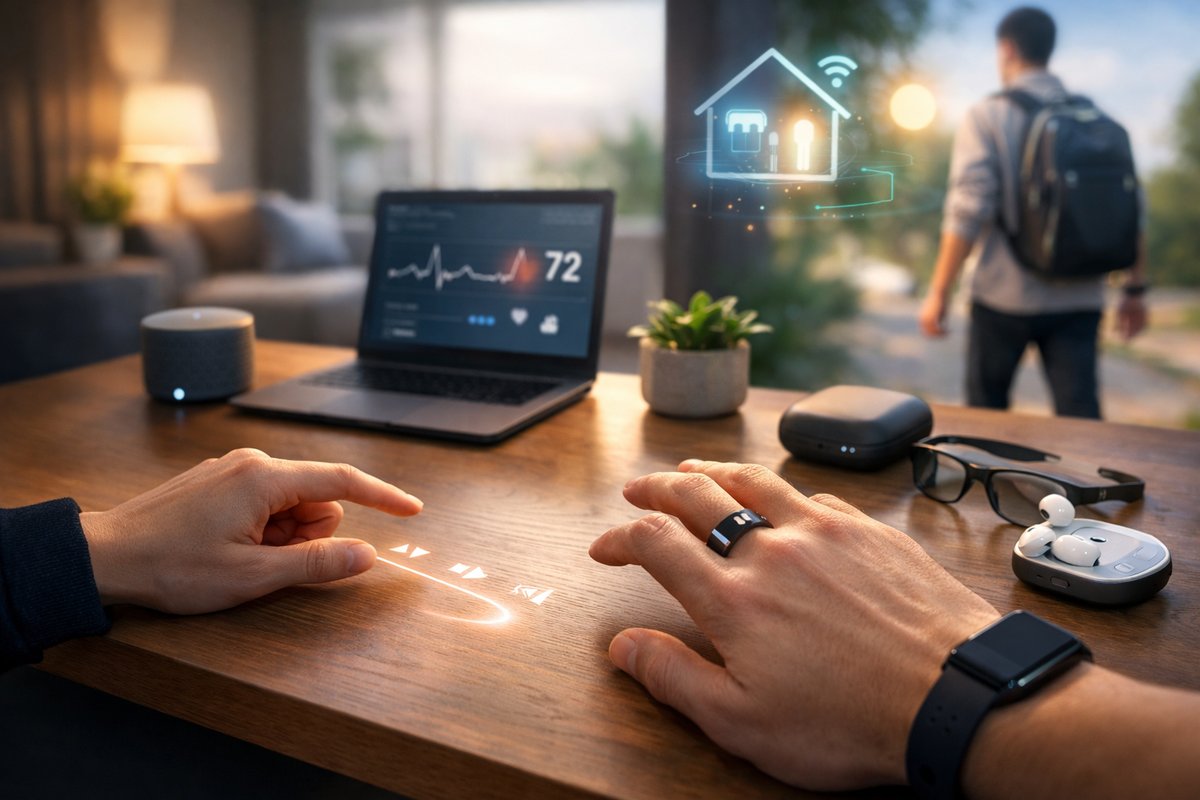
From invisible gesture controls embedded in your desk to smart rings that monitor stress in real time, the next wave of gadgets is about blending into your environment. These ambient intelligence tools deliver powerful capabilities without demanding your constant attention, promising seamless, sustainable experiences in home, work, and on the go.
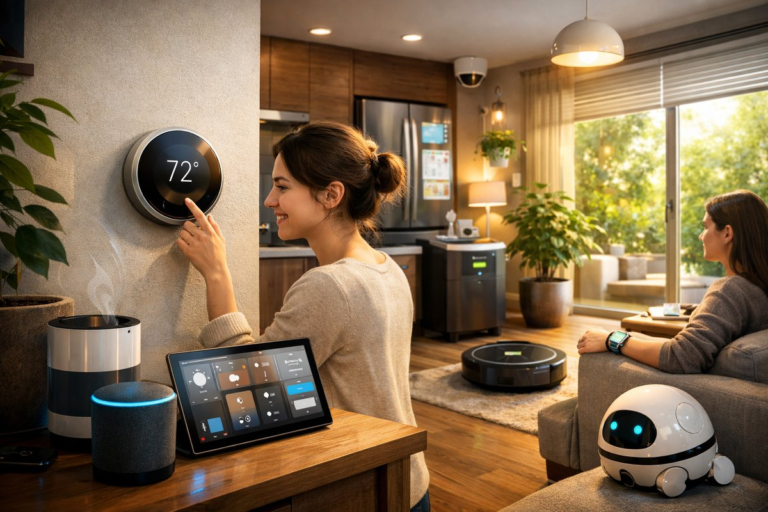
The classic vision of futuristic tech involves bulky headsets or towering robots-but a quieter revolution is underway. Ambient intelligence, where devices fade into the background and respond to context rather than commands, is taking center stage. This shift values subtlety over spectacle: sensors woven into fabric, displays etched onto glass, and AI assistants that sense moods through biometric cues. These innovations aim to make technology less obtrusive and more intuitive, aligning with our desire for emotional intelligence, sustainability, and privacy.
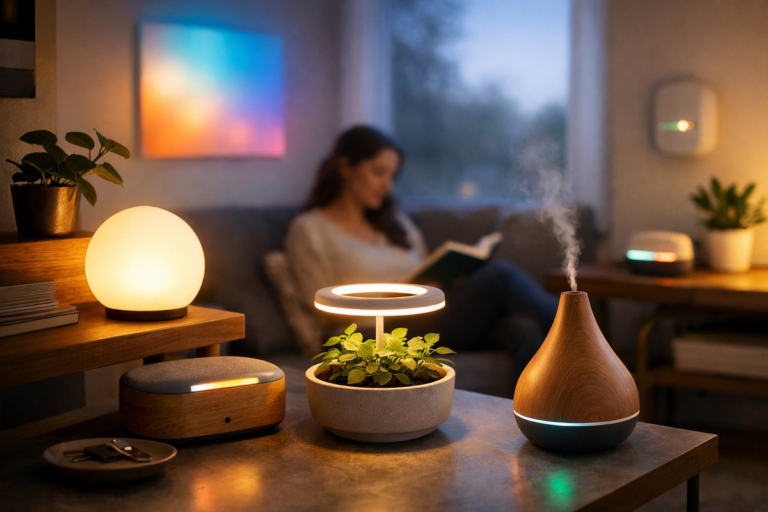
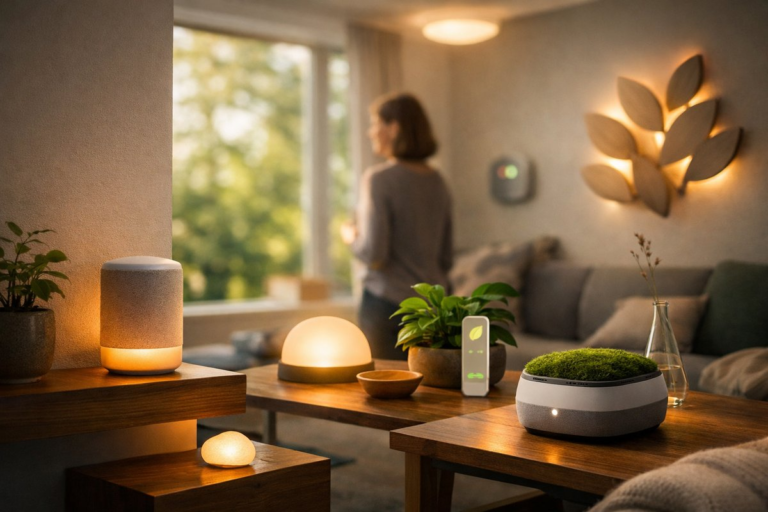
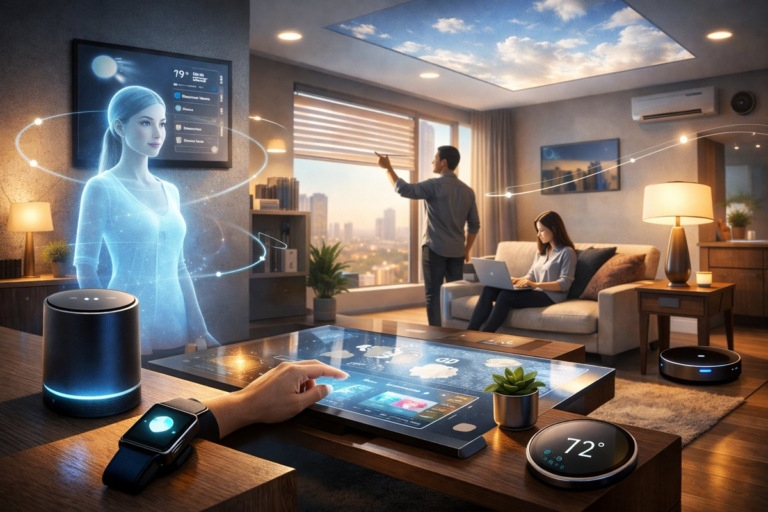
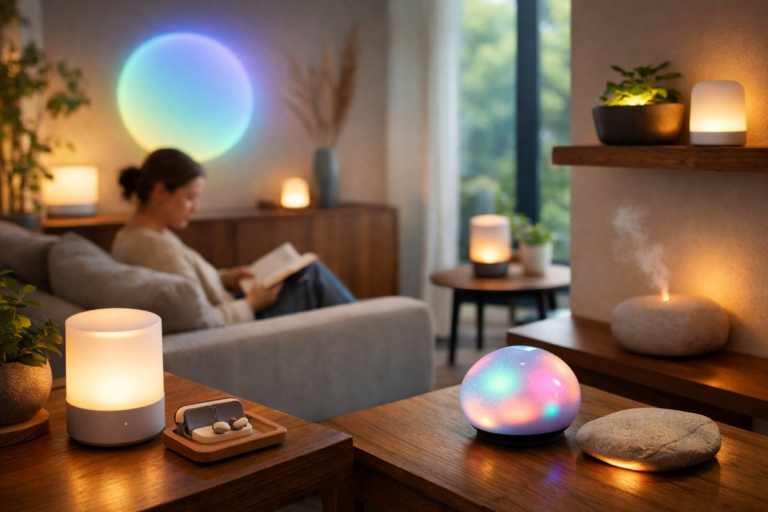
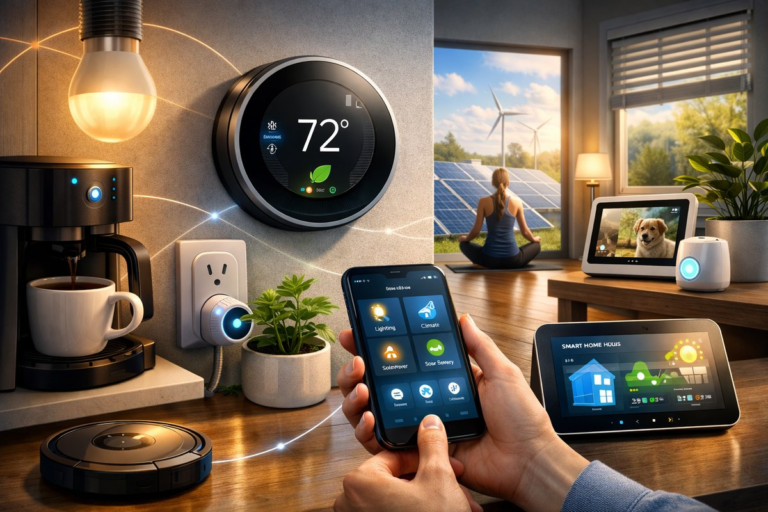
Imagine arriving home after a long day to lights that gently brighten as you enter, not because you told them to, but because temperature and motion sensors recognized your presence and circadian rhythm. A table lamp doubles as a touch-free control panel: wave your hand to adjust brightness or switch on a white-noise soundscape tailored to unwind your mind. By embedding tiny cameras, microphones, and environmental sensors in everyday objects, designers are turning rooms into responsive ecosystems that learn rather than require you to learn them.
At the heart of this transformation is a new class of surfaces. E-ink panels are migrating from e-readers to wall art-displaying weather updates, digital calendars, or rotating artwork that draws minimal power. These ultra-thin displays can stick to your fridge or office cubicle, updating in real time via Bluetooth or mesh networks. Their minimal energy draw allows solar cells or energy-harvesting wallpaper to keep them buzzing without ever plugging into the grid. Sustainability meets convenience: users gain low-impact notification centers that blend seamlessly into interior decor.
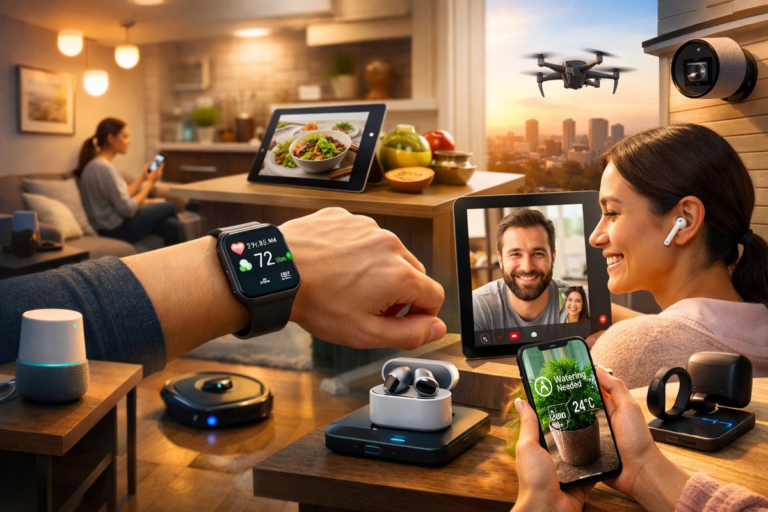
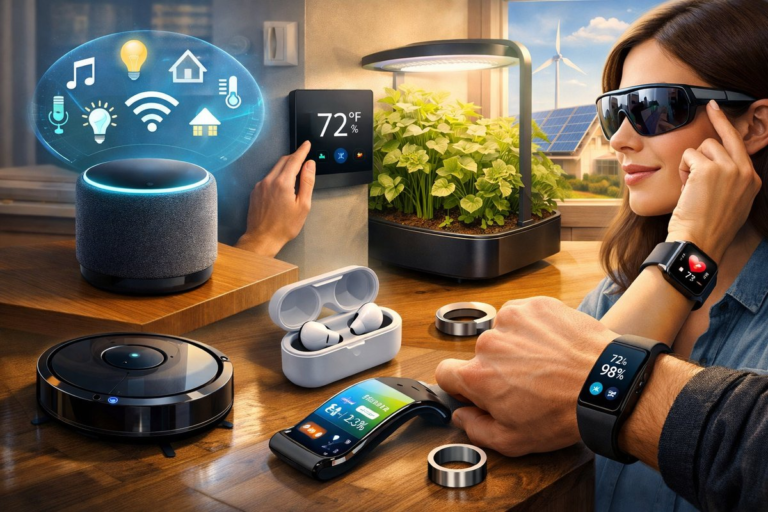
But ambient intelligence isn’t confined to walls and tables. Wearables are shrinking and diversifying. Gone are the days when your health tracker needed a wristband; today’s smart rings measure sleep quality, blood oxygen levels, and stress indicators with optical sensors smaller than a grain of rice. Worn on a finger, these discreet devices whisper health trends to your phone app, nudging you toward mindful breathing or alerting you when it’s time to hydrate. Because they’re so small, they slip under gloves and can even accompany you into the shower, making continuous monitoring truly unobtrusive.
This same miniaturization trend is fueling new personal assistants beyond smartphones. Clip-on gesture sensors attach to your laptop or monitor, turning any surface into a touchless controller. Scroll through documents, skip music tracks, or zoom into presentations with a simple wave. By tracking the position of your fingers in three-dimensional space, these modules eliminate the need for traditional peripherals, encouraging a more natural, ergonomic interaction. They’re especially appealing for shared workspaces and labs where hygiene matters-no more communal keyboards or mice.
In the auditory realm, true wireless translation earpieces are arriving in consumer hands. Slip one into each ear, and multilingual conversations flow in near real time. Powered by local AI chips instead of cloud servers, they prioritize privacy while cutting latency. Instead of pulling out your phone and opening an app, you simply speak in your native tongue and hear the translation instantly. For frequent travelers, remote teams, or families with diverse linguistic backgrounds, these devices break down communication barriers without making you look down at a screen.
Connectivity has also gone modular. Magnetic wireless charging stations now consist of interchangeable puck modules that snap onto a base. Swap out a solar cell puck for a fast-charging coil or a battery pack in seconds. When you’re on the move, peel off the battery puck and drop the base at home; then magnetically attach your new module and keep working. No more carrying multiple bulky power banks or fumbling with tangled cables. This plug-and-play approach extends to smart speakers and ambient hubs, too: add a high-fidelity microphone module for meetings or a laser-based LIDAR sensor for advanced home security.
Portable screens are shrinking in thickness as well as weight. Flexible e-paper monitors now fold down to the size of a tri-fold brochure. Pop one out of your bag and clip it to your laptop or mount it on a stand to create a dual-screen workstation anywhere. Because e-paper mimics ink on paper, it consumes power only when the image changes-ideal for reading documents, coding, or referencing maps on the go. Their glare-free surface cuts down eye strain, and a thin-layer solar film powers them under ambient light.
Of course, the rise of all-seeing sensors and always-on AI raises privacy questions. That’s why many of these devices ship with local-first processing: your voice, gestures, and biometric data never leave the gadget unless you explicitly opt in. End-to-end encryption and open-source firmware audits ensure no hidden backdoors. In response to sustainability demands, manufacturers are also turning to recyclable metals and biodegradable polymers, offering hardware buy-back programs to recover precious materials at end of life.
Researchers are even exploring self-healing electronics-circuits printed with conductive inks that reknit themselves when cracked. Imagine a solar-powered e-ink display that survives a drop or a foldable monitor that seals its micro-crevices after a scratch, extending its lifespan by years. While prototypes are still early stage, they foreshadow a future where gadgets live up to our ideals of durability and repairability rather than planned obsolescence.
This ambient wave is not just about gadgets; it’s about reshaping human-machine relationships. By stepping away from screens and gestures requiring direct contact, designers hope to free users from distraction and physical strain. Whether it’s a bedroom that greets you with tailored lighting patterns or a workspace that anticipates your needs before you articulate them, the goal is to foster a calm coexistence with technology.
However, seamless integration also demands mindful adoption. Experts recommend starting small: add a single e-ink display to your home office or swap your fitness band for a smart ring before overhauling your living environment. Test how these ambient assistants influence your daily habits-do you find yourself more present, more relaxed? Tweak settings so that notifications appear only when truly relevant, and keep firmware up to date to benefit from privacy and security enhancements.
As ambient intelligence continues to unfold, we’ll see collaborations between material scientists, AI ethicists, and product designers. They’ll debate trade-offs between invisibility and control, between energy harvesting and performance. The most successful innovations may be those that invite user agency rather than supplant it-tools that augment our senses without eclipsing them.
In the next few years, you won’t just carry technology; you’ll live within it. Chairs will recognize your posture and suggest stretches. Windowpanes will display pull-down privacy shades at a voice prompt. Clothing fibers may adapt their thermal properties based on microclimate data. These ambient layers will become as natural as the walls of our homes and the fabrics we wear, reminding us that the most powerful tech often feels like magic precisely because we stop noticing it.