Location
Mount Vernon, WA 98274

Location
Mount Vernon, WA 98274
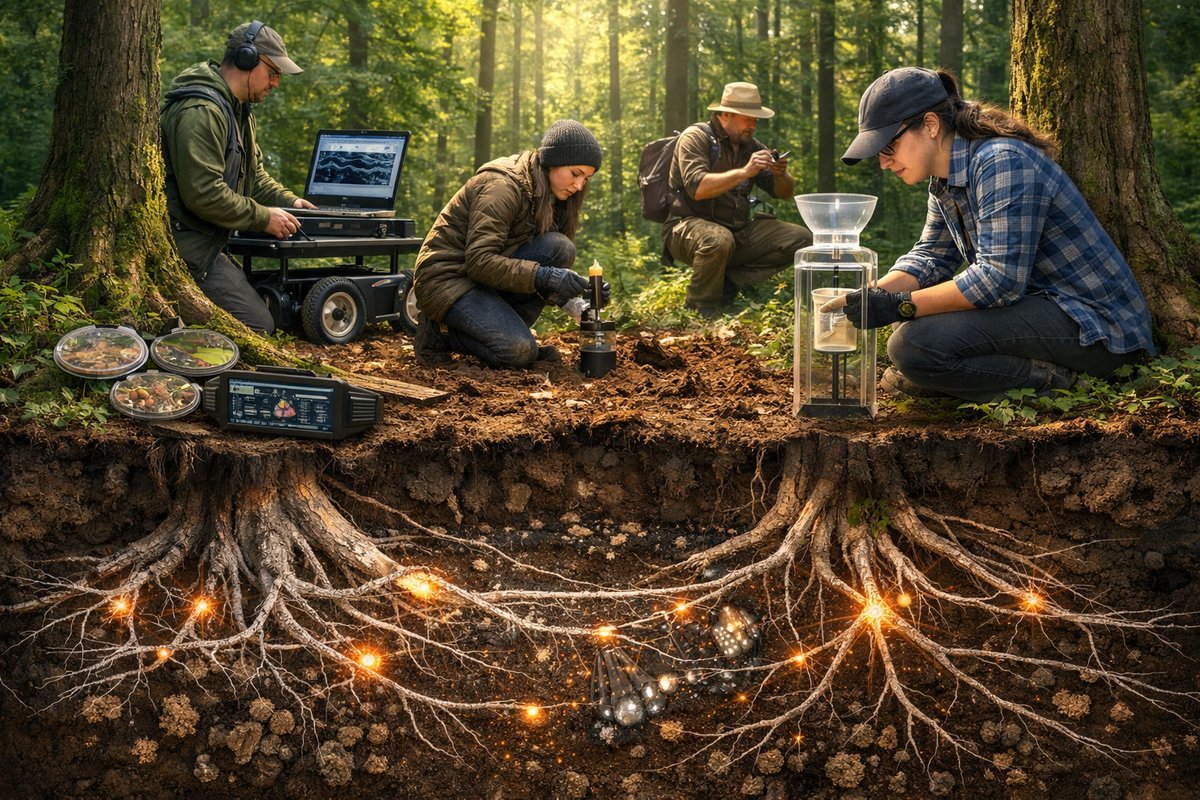
A new collaboration between researchers and citizen scientists is revealing the hidden fungal highways beneath the forest floor. By combining ground-penetrating radar, DNA sampling, and DIY spore traps, the project is tracking how mycelial networks support soil health, tree growth, and carbon storage under changing climates.
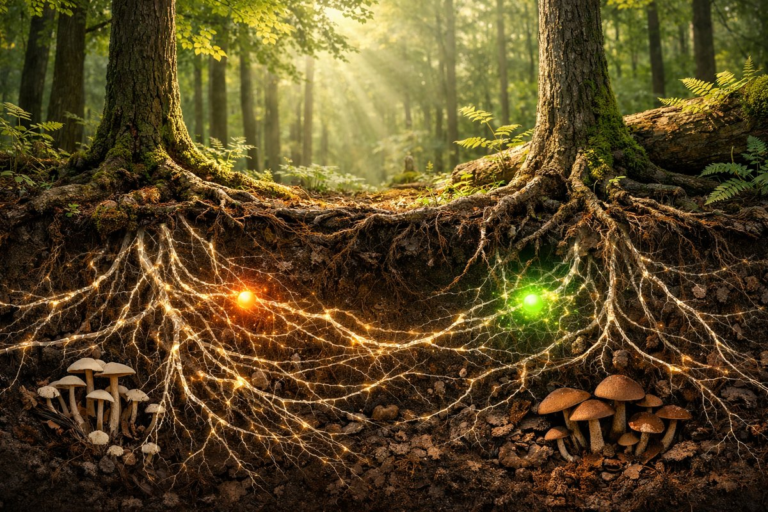
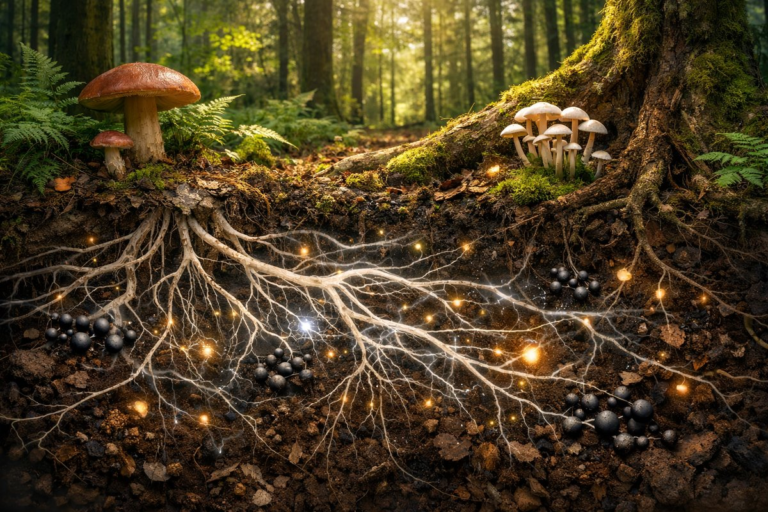
On a misty morning in an old-growth forest, a team of volunteers kneels beside a mossy oak to deploy a simple cardboard spore trap. They aren’t there to collect seeds or insects-they’re hunting fine, thread-like structures that lace the soil beneath our feet. Known as mycelium, these fungal networks connect tree roots, transport nutrients, and even deliver warning signals when drought or disease strikes. Now a multinational research effort is combining high-tech sensing with grassroots ingenuity to map these underground connectors at an unprecedented scale.
The effort comes at a moment when forests around the globe face mounting stress from drought, pest outbreaks, and shifting weather patterns. While satellite imagery and bioacoustic sensors have illuminated canopy health and wildlife movements, the realm belowground has remained largely invisible. Mycelium operates in darkness and moisture, weaving vast webs that can span hectares. Yet understanding its distribution and resilience could unlock new strategies for forest restoration and climate mitigation.
“Mycelial networks are the bloodstream of the forest,” says Dr. Elena Martinez, an ecologist at the International Institute for Forest Science. “They regulate nutrient flows, support tree seedlings, and even influence soil carbon storage. If we can monitor how these networks respond to stress, we gain a powerful tool for predicting forest health and adapting management practices.”
This initiative merges three complementary approaches. First, researchers deploy ground-penetrating radar (GPR) systems along transects to capture physical anomalies in the soil profile. Second, field crews collect small soil cores for DNA barcoding, pinpointing which fungal species inhabit each layer. Third, citizen scientists build and place low-cost spore traps-simple cardboard sheets treated with a sticky surface-to sample fungal spores drifting through the understory.
Over the past year, more than 500 volunteers in North America, Europe, and East Asia have recorded nearly 3,000 sampling points. Each site yields a snapshot of mycelial diversity and network density. After volunteers upload spore cards to a central database, lab teams extract DNA and identify species via rapid sequencing techniques. Meanwhile, GPR scans reveal changes in soil structure that correlate with mycelial mass and moisture pathways.
Early analyses are already yielding insights. In Mediterranean woodlands hit by historic droughts, mycelial abundance plunged by up to 40 percent in shallow soils, while deeper networks showed surprising resilience. In boreal forests recovering from wildfire, fungal diversity peaked in zones where soil moisture remained moderate. These findings mirror patterns seen in tree ring data and satellite moisture indices, suggesting that mycelial mapping could become an early warning signal for forest die-off.
“In one site we saw a dramatic collapse of shallow networks after a heat wave,” recalls volunteer coordinator Amir Patel. “But deeper strands persisted, and saplings in those plots grew at rates 20 percent higher than in areas where the network had thinned out completely. That tells us there’s a buffer capacity built into these systems-if we can protect or restore those deep connectors, we might safeguard future forest regeneration.”
The project also highlights the power of community engagement. Many volunteers report that building spore traps and learning about fungal ecology has deepened their connection to the land. “It’s one thing to walk through the woods,” says long-time hiker and volunteer Olivia Chen. “It’s another to realize you’re standing on a vast communication network, with fungi sending nutrients and signals under your boots. It changes how you think about conservation.”
Techniques are still evolving. Early GPR units required heavy batteries and trained operators, limiting coverage to short transects. Newer portable models use lighter power packs and user-friendly software, allowing volunteers to run scans under expert guidance. Similarly, affordable handheld DNA extraction kits are replacing time-consuming lab protocols, so preliminary species identifications can occur within hours of sampling.
Data integration poses another challenge. Soil moisture, temperature, and organic content vary dramatically across landscapes. To tease apart environmental drivers of mycelial change, researchers are deploying networked moisture probes and temperature loggers alongside fungal sampling stations. They’re also incorporating publicly available climate data to model how heat waves and precipitation extremes ripple through belowground ecosystems.
By the next field season, the team hopes to overlay three-dimensional maps of fungal networks onto satellite-derived maps of leaf area and canopy structure. This multilayer approach could reveal how belowground and aboveground resilience intertwine-a vital insight for forest managers aiming to bolster carbon sequestration and biodiversity in a warming world.
Restoration groups are already taking note. In parts of eastern Europe, where agricultural abandonment has left woodlands fragmented, project partners are trialing mycelial inoculation: introducing healthy fungal strains into degraded soils. Preliminary trials suggest that seedlings paired with targeted fungi exhibit higher survival and growth rates, even under erratic rainfall. If scaled up, such techniques could speed reforestation efforts and rebuild ecosystem services.
Beyond practical applications, the project underscores a shift in how we perceive forests. No longer just collections of trees, they emerge as dynamic, interconnected living systems-organisms in their own right that pulse with hidden life. Mapping mycelial highways is more than a scientific exercise; it’s an invitation to recognize the subtler layers of nature’s complexity.
“We’ve asked forests to shoulder decades of carbon emissions, biodiversity loss, and land-use change,” reflects Dr. Martinez. “Now we need to listen to what they’re telling us, both above and below ground. Mycelial networks are the forest’s nervous system. If we learn to monitor and nurture them, we stand a better chance of preserving these landscapes for generations to come.”
As dusk settles, volunteers pack up their spore traps and sensors. Soon, DNA sequencers in distant labs will hum to life, decoding the fungal signatures they’ve gathered. In the weeks ahead, digital maps will emerge-vivid cross-sections of a hidden world. And in every pixel of data, a lesson on resilience, adaptation, and the quiet power of life beneath our feet.