Location
Mount Vernon, WA 98274

Location
Mount Vernon, WA 98274
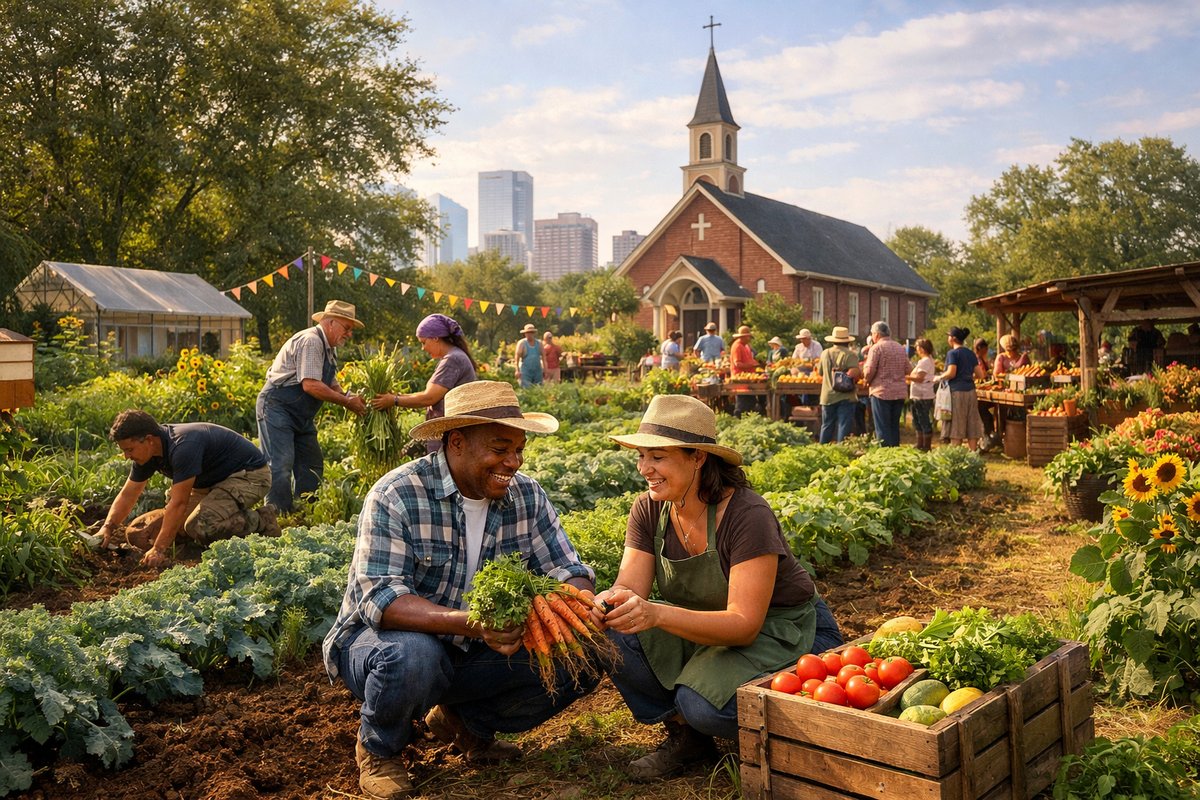
Across towns and cities, congregations are trading pews for plots as they adopt regenerative farming practices to address food insecurity and steward the earth. From soil-restoring techniques to community harvest festivals, faith communities are cultivating both crops and connection.
In neighborhoods long defined by concrete sidewalks and chain stores, a new kind of ministry is taking root: church gardens adopting regenerative agriculture. Across urban lots and suburban fields, congregations are reimagining what it means to feed both body and spirit. What began as a handful of backyard plots has blossomed into a network of faith-based farms where soil health, ecological restoration, and neighborly care converge.
At St. Mark’s Episcopal Church on the city’s east side, volunteers in brightly colored gloves tend to rows of kale, beans, and heirloom tomatoes planted in raised beds layered with rich compost. The church’s rector remembers a time when parishioners struggled to fill plates for the monthly food pantry. “We wanted to go beyond handouts,” she explains. “By growing food on our own land, we empower people to learn new skills and reclaim a sense of dignity.” St. Mark’s gardeners embrace no-till methods, cover crops, and natural pest control, turning former turf grass into thriving living soil.
Elsewhere, First Community Church leased an abandoned warehouse rooftop to launch an aquaponic greenhouse that combines vegetables with tilapia fish. In nearby towns, Methodist, Baptist, and non-denominational congregations have joined forces under the banner of GreenFaith Harvest to share seeds, tools, and technical advice. Local nonprofit partners provide training on regenerative techniques rooted in scientific research by leading institutes. Together, these churches are sourcing cover crop seed mixes, composting food waste, and installing rainwater harvesting tanks to reduce reliance on municipal supplies.
Regenerative agriculture extends well beyond conventional organic gardening. It emphasizes holistic systems that restore biodiversity, improve water infiltration, and sequester carbon underground. Techniques such as rotational planting, intercropping, and on-site compost tea applications revitalize exhausted soil, allowing each harvest to contribute to long-term fertility. For faith communities, this approach resonates deeply with teachings on creation care and stewardship. In gardening circles, Sunday sermons now include reflections on the Book of Genesis and the responsibility to “till and keep” the earth.
These church gardens have become living classrooms for adults and children alike. Youth groups are discovering the wonder of planting seeds and observing germination, while older volunteers share wisdom on preserving harvests through canning and fermentation. Intergenerational teams meet weekly for prayer, soil testing, and communal meals prepared entirely from garden produce. For many, this fusion of spiritual practice and hands-on labor refocuses worship on tangible acts of service, blurring the line between pulpit and planter’s bench.
Community impact extends beyond plates filled with fresh vegetables. Congregations report that garden days strengthen neighborhood ties, drawing in families who had never set foot inside church doors. Local food pantries say their shelves have never been so well stocked, even as demand rises. One pantry director notes that clients often ask for tips on starting their own windowsill herb gardens after trying homegrown basil in a simple tomato soup. The ripple effect of church-led growing reaches living rooms, school cafeterias, and street corners.
Environmental benefits are equally remarkable. Soil samples from pilot gardens show dramatic increases in organic matter, sometimes doubling within a single growing season. Deep-rooted cover crops like rye and clover capture atmospheric carbon and store it underground, contributing to climate resilience. Native pollinator plants included along garden borders support bees, butterflies, and beneficial insects, creating microhabitats in areas once void of life. For congregations seeking to embody a faith that protects the planet, these verdant patches provide proof that small actions can yield big results.
Funding stands as one of the biggest hurdles. Many churches rely on grants from faith-based environmental organizations, grassroots crowdfunding campaigns, and partnerships with local businesses. Some have reached beyond their membership, inviting community foundations to support greenhouse construction or to help underwrite the cost of high-quality compost. Volunteer labor remains the backbone of the movement, with retirees, students, and curious neighbors pitching in. In turn, volunteers form tight bonds over shared goals that transcend denominational lines.
A handful of pioneers are taking the concept even further. In a hilly coastal town, a Presbyterian congregation partnered with a nearby vineyard to practice agroforestry, planting fruit and nut trees alongside cover crops to mimic natural ecosystems. Another group transformed an old fuel station into a microfarm that serves free weekend produce markets. These experiments speak to a broader shift in how faith communities understand mission: not just as charitable outreach but as hands-on collaboration with creation itself.
Experts in the field emphasize that knowledge-sharing is vital for sustaining momentum. Monthly webinars connect church leaders with regenerative agriculture specialists, while social media groups document successes and failures in real time. A digital toolkit circulating among dioceses includes step-by-step guides for soil analysis, crop planning, and volunteer coordination. As congregations adapt these resources, they report greater confidence in tackling everything from drought stress to vegetable disease.
Theologically, the movement taps into an ancient wellspring of Christian tradition. Parables about seeds sown on fertile ground take on new life when preached beside tomato trellises. Eucharistic metaphors resonate as gardeners break bread made from their own wheat harvest. These symbolic links between faith and farming help explain why so many church members feel galvanized by the work. It becomes an act of prayer, a devotional rhythm marked by sunrise planting and dusk harvest.
Looking ahead, organizers envision a national network of faith farms that share surplus produce with food banks, schools, and eldercare programs. Plans are underway for an annual conference where churches can swap heirloom seeds, demo soil restoration techniques, and host panel discussions on ethics and ecology. Some hope the movement will inspire policy changes that incentivize community-based agriculture and secure land access for small-scale growers.
For congregations that once saw ministry confined to sanctuaries, regenerative agriculture has opened new horizons of service and solidarity. God’s creation, it turns out, is not a distant backdrop but an active partner in spiritual renewal. By caring for soil and sowing seeds, Christians across the country are cultivating hope one row at a time.