Location
Mount Vernon, WA 98274

Location
Mount Vernon, WA 98274
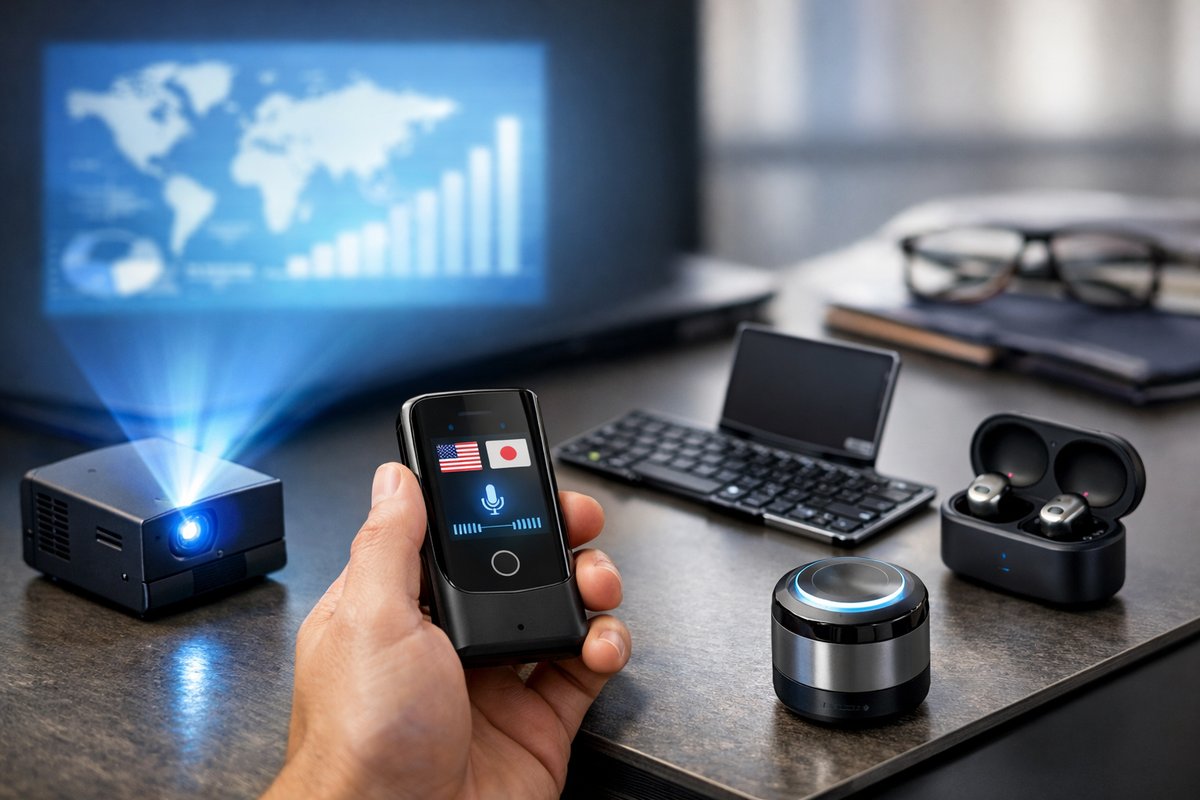
A wave of ultra-compact gadgets is transforming everything from impromptu presentations to real-time translations, packing powerful computing, audio, and projection into devices small enough to slip into a jacket pocket. Advances in materials, energy storage, and on-device AI are fueling an era where innovation hides in plain sight-and small-scale design is making big impacts on work, travel, and sustainability.
In the heart of a bustling city morning commute, people swap out bulky laptops for slender sticks barely larger than a USB flash drive. In cafes across the globe, whispered conversations flow through discreet smart rings that double as biometric sensors and gesture controllers. A new generation of miniaturized gadgets is quietly reshaping daily routines-transforming how users work, connect, and explore without weighing down pockets or wrists.
Advances in semiconductor packaging and energy storage have driven a continuous shrinkage of consumer electronics. In the past decade, energy density for lithium-ion cells climbed by nearly 30 percent, unlocking longer runtimes for portable devices packed into ever-smaller chassis. Meanwhile, breakthroughs in system-on-chip design allow full-featured computing platforms to fit inside modules smaller than a matchbox.
One of the most visible trends has been the rise of micro projectors, often called pico projectors. These palm-sized units leverage LEDs or lasers to cast images up to 100 inches across walls. Portable enough to slip into a jacket pocket, they enable impromptu presentations or movie screenings anywhere with a flat surface. In educational programs in remote areas, these devices are bringing digital lessons to classrooms without the need for large screens or power-hungry hardware.
Complementing visual micro gadgets, audio innovations have produced truly wireless earbuds that rival the performance of full-size headphones. By integrating active noise cancellation and multi-driver speaker arrays within capsules smaller than a dime, engineers have delivered studio-grade clarity on the go. Gesture controls embedded in their touch-sensitive surfaces enable users to skip tracks with a flick or adjust volume with a pinch, all without ever touching a phone.
Portable power solutions have kept pace with these hungry mini-devices. Ultracompact power banks now incorporate graphene-enhanced cells that recharge compatible gadgets at up to 100 watts, all from a battery pack smaller than a paperback novel. Solar charging models add photovoltaic panels to hulls crafted from recycled aluminum, reflecting a growing emphasis on sustainable materials and off-grid resilience.
Wearable translators, once bulky headsets tethered to laptops, have also shrunk into lightweight earpieces. Leveraging cloud-based neural networks, these earbuds can deliver near real-time translations across dozens of languages. Travelers now pass conversations through invisible interpreters, fostering more genuine connections while reducing reliance on bulky phrasebooks or unstable mobile hotspots.
The most recent arrival in the mini gadget niche is the pocket-sized AI assistant-a voice-activated module that pairs locally with other smart devices to execute commands without sending data to remote servers. These privacy-focused hubs boast neural processing units designed to handle speech recognition and natural language understanding on-device. Users gain a measure of control over their personal data, avoiding constant cloud uploads while still benefiting from intelligent automation.
In the health and wellness domain, miniaturization is unlocking continuous monitoring that once required clinic visits. Microfluidic patches the size of postage stamps can analyze sweat composition, blood glucose levels, or hydration status, transmitting alerts to a paired smartphone when anomalies arise. For athletes, these unobtrusive sensors enable data-driven performance tweaks without bulky chest straps or wristbands.
Modularity is another frontier. Some manufacturers deliver building-block gadgets with magnetic connectors, enabling users to snap together camera sensors, environmental monitors, flashlights, or battery packs around a central computing core. A morning might begin with a camera module for time-lapse nature photography, then switch to a sensor pack that records temperature, humidity, and air quality on a weekend hike. This adaptable approach extends device lifecycles and reduces electronic waste.
DIY enthusiasts and makers have also embraced the trend with open-source kits that allow anyone to solder together microcontrollers, sensors, and wireless radios into bespoke gadgets. Online communities share blueprints for pocket-friendly drones, personal environmental monitors, and wearable art pieces that respond to sound or light. This democratization of innovation fuels creativity, sparking unexpected applications beyond mass-market offerings.
Emerging materials have played a crucial role in this shrinkage. Graphene-infused heat spreaders keep chips cool under load, while nanostructured plastics provide durability without bulk. The introduction of advanced ceramics in wireless charging coils improves efficiency, allowing power to transfer through thicker surfaces-meaning gadgets can remain slim without sacrificing fast charging.
Manufacturers are also tapping into ambient intelligence: devices that sense presence and context to adapt proactively. Imagine a wearable health monitor that detects stress-indicative sweat compounds, then nudges your smart ring to initiate a guided breathing session. Or picture a keychain flashlight that automatically switches to red light if ambient brightness falls below a threshold, preserving night vision for outdoor enthusiasts.
These innovations are more than novelties-they address real challenges. In disaster relief, responders rely on pocket-sized projectors to illuminate makeshift clinics and inform communities. Urban cyclists carry micro air quality sensors along their rides, mapping pollution hotspots to advocate for cleaner routes. Remote field researchers deploy modular sensor arrays to monitor soil health, then swap in a satellite communication module to transmit data from off-grid locations.
However, miniaturization brings trade-offs. Thermal management becomes more complex as components are packed closer together. Repairing or recycling ultra-compact gadgets can be tricky, driving conversations around right-to-repair and evolving standards for modularity. Developers are now exploring bioresorbable circuit boards or eco-friendly adhesives to ease end-of-life disassembly.
Looking ahead, the convergence of nanotechnology, ambient AI, and sustainable design promises even more dramatic shifts. Projects under development include sub-kilogram drones that stow into belt clips, holographic microdisplays woven into eyeglass frames, and micro-robots capable of basic household tasks. While some concepts remain in laboratories, they signal a future in which intelligence and utility condense into objects so small they can be overlooked-until you need them.
For those weighing which mini gadgets to explore first, consider core needs. If productivity on the move is critical, a micro PC stick and a portable projector can turn any wall into a workstation. Frequent travelers may find wireless earbuds with real-time translation invaluable. Eco-conscious consumers should look for power banks with recyclable materials and solar recharge options. And anyone intrigued by adaptable tech ecosystems can start with a modular core unit that grows alongside their imagination.
As this wave of pocket-sized powerhouses continues, it underscores a broader shift: innovation not just in features, but in scale, sustainability, and sensitivity to the environments and lives they serve. The next big gadgets may be the smallest ones, quietly enabling possibilities we once thought reserved for laboratories and science fiction.