Location
Mount Vernon, WA 98274

Location
Mount Vernon, WA 98274
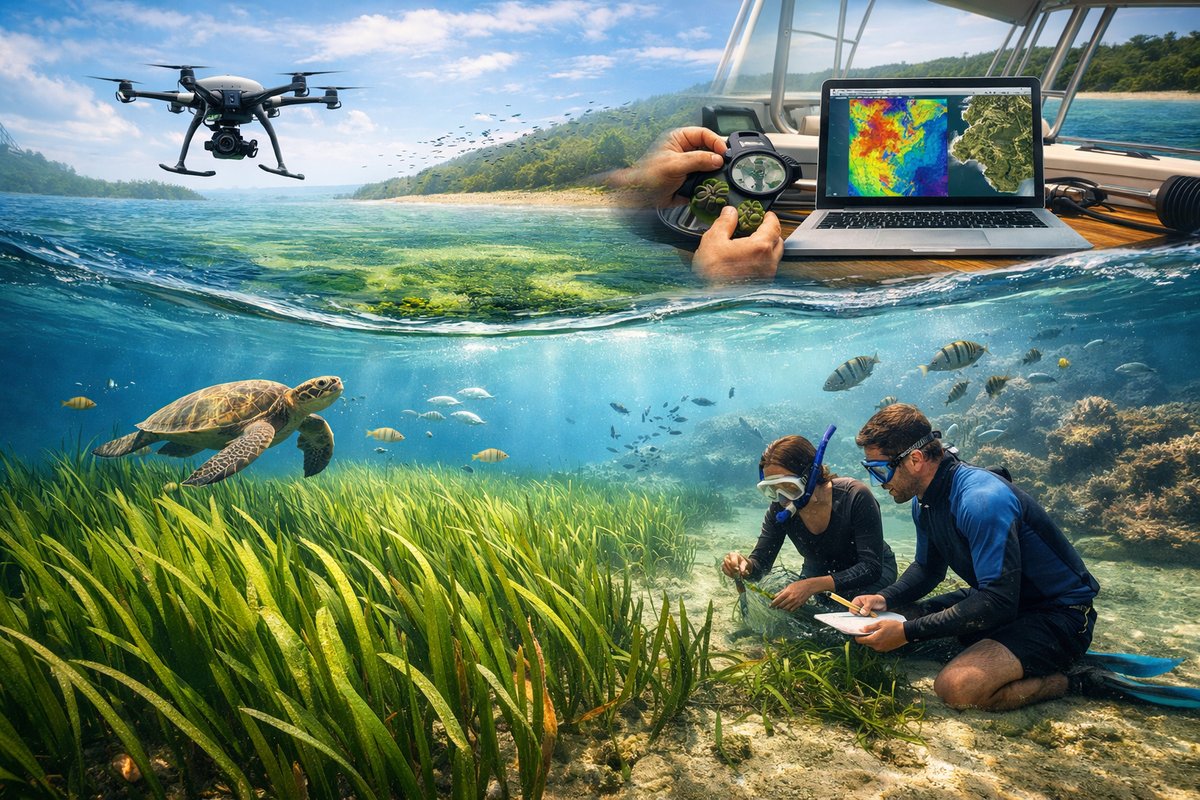
Vast underwater meadows of seagrass are quietly anchoring coastlines, capturing carbon, and supporting marine biodiversity. Recent advances in drone mapping, hyperspectral imaging, and citizen science are unveiling how these submerged grasslands recover after storms and how communities can help them thrive.
Seagrass meadows stretch along tens of thousands of miles of coastline worldwide, forming lush underwater prairies that many overlook. Far from mere seaweed, these flowering plants build complex ecosystems, support fisheries, stabilize sediments, and sequester carbon at rates rivalling the world’s forests. For years, scientists have known that seagrass beds act as vital buffers against erosion and hurricane surge, but only now are we beginning to measure their recovery with precision and speed.
A recent study published in a leading environmental journal brings fresh insight into how seagrass meadows bounce back after major storms. A multinational team of marine ecologists combined satellite data, underwater drone surveys, and multispectral imaging to track changes in seagrass coverage along Gulf Coast shorelines following two successive hurricanes. Their findings show that some meadows regrow within months, while others may take years, depending on water clarity, nutrient levels, and local human disturbance.
At the heart of this research is a new breed of aerial drone equipped with hyperspectral cameras. Flying low above the water in preprogrammed grids, these drones capture hundreds of narrow spectral bands, teasing apart subtle differences in leaf pigment, sediment depth, and algal growth. The resulting maps reveal not only where seagrass beds are thinning but also hint at early-stage stress factors-such as increased turbidity or nutrient spikes-before visual die-off appears.
Complementing the sky-based view, underwater remotely operated vehicles (ROVs) glide through the meadows, collecting high-definition video and sonar data. These vehicles, often no larger than a small suitcase, are tethered to a surface float and piloted from a boat or beach. Onboard sensors measure temperature, salinity, and dissolved oxygen, while robotic arms can take small core samples of rhizomes and roots. By combining surface and sub-surface observations, researchers gain a 3D understanding of meadow structure and soil stability.
Hyperspectral imaging below the waves is another game-changer. Small spectrometers attached to ROVs or divers record reflectance across wavelengths from visible blues and greens into the near-infrared. This approach allows scientists to distinguish between healthy seagrass blades, epiphytic algae growing on them, and patches of bare sediment. In one Mexican bay, a hyperspectral survey detected a decline in chlorophyll absorption even before divers noticed thinning grass, prompting early intervention measures.
Citizen science has joined the professional ranks in this push to monitor seagrass health. Coastal volunteers armed with waterproof smartphones upload geotagged photos and simple water-clarity readings to an open-source platform. Within days, automated algorithms flag areas of possible concern-brown patches indicating decay, sudden shifts in color pointing to algal blooms, or washed-out zones revealing sediment shifts. Local conservation groups then organize targeted surveys to verify and address issues.
Smartphone apps designed for marine monitoring include built-in GPS, color charts for estimating turbidity, and guides that help users identify seagrass species by leaf shape and texture. With a few taps, a weekend paddler or snorkeler can report a new patch of invasive algae encroaching on vital Blue Carbon reserves. Already, thousands of such reports have enriched regional maps, enabling researchers to detect declines earlier than traditional ship-based surveys.
Integrating these varied data streams requires robust geospatial software. Cloud-based platforms merge satellite footprints, drone flight lines, ROV tracks, and citizen observations into unified dashboards. Interactive tools let managers overlay storm-tracking models or nutrient-runoff projections, then simulate restoration scenarios. In Florida’s Indian River Lagoon, these simulations helped authorities plan targeted planting of seagrass plugs in areas most likely to recover rapidly, saving time and resources.
One of the most compelling revelations from these integrated studies is just how powerful seagrass carbon sequestration can be. Despite covering less than 0.2 percent of the ocean floor, seagrass meadows store an estimated 10 percent of the ocean’s “blue carbon.” Their dense root mats trap organic material year after year, while leaves incorporate carbon through photosynthesis. When preserved or restored, these meadows can lock away atmospheric carbon dioxide for centuries.
Storm resilience is another remarkable trait. After Hurricane Ida, researchers found that heavily buffered embayments with intact seagrass meadows experienced up to 40 percent less bottom scouring than bare-sand regions. The intertwined roots and shoots dissipate wave energy, reducing shoreline erosion and promoting sediment deposition. This natural defense not only protects coastal infrastructure but also safeguards habitats for juvenile fish and invertebrates.
Policy makers are taking note. Several coastal states now include seagrass restoration in their climate adaptation plans, recognizing that a dollar invested in meadow rehabilitation yields multiple dividends: carbon credits, fisheries enhancement, flood protection, and tourism preservation. In Europe, pilot projects are testing market-based mechanisms to finance seagrass planting through tradable carbon offset credits, while community groups in Southeast Asia run microgrants that pay fishers to transplant healthy shoots.
On-the-ground restoration relies on tried-and-true techniques. Divers collect seagrass shoots by hand or with simple cutters, then plant them in pre-scored trenches on the seabed. In clearer waters, pneumatic planters inject plugs into the sediment with minimal disturbance. Some teams anchor biodegradable mesh over sandy flats to hold seeds in place, allowing natural germination. These methods may vary, but all share a reliance on affordable field kits and training workshops to build local capacity.
Globally, the picture remains uneven. While meadows in protected marine parks often show robust recovery, coastal areas facing urban runoff, dredging, or anchor drag suffer chronic decline. Pesticide residues and nutrient overload fuel algal blooms that block sunlight, while warming waters disrupt reproductive cycles. Long-term monitoring and collaborative governance are essential to ensure that restoration gains are not lost to short-term economic pressures.
Community engagement emerges as a critical factor. In one Australian bay, a grass-roots “Seagrass Guardians” program pairs local schools with research vessels. Students learn to identify species, measure shoot density, and document changes on a regular schedule. These experiences foster stewardship, and the resulting data become part of official management plans. Graduate students onshore then analyze the findings, closing the loop between education, research, and policy action.
Scaling up restoration requires innovation. Buoyant seed pods that release thousands of seeds when submerged are being trialed in the Mediterranean. Autonomous surface drones equipped with seed-spreading dispensers cruise over shallow banks, broadcasting pods in precise patterns. Early trials indicate that such methods can plant tens of thousands of seeds in a fraction of the time manual teams require, opening possibilities for restoring entire coastal stretches at landscape scale.
Despite the promise, uncertainties remain. How will rising temperatures affect seagrass reproduction? What happens when meadows migrate poleward in search of cooler waters? Can automated monitoring systems keep pace with rapid environmental shifts? Ongoing research funded by international science foundations is exploring these questions, deploying experimental plots in both tropical lagoons and temperate estuaries.
As we delve deeper into the silent world beneath the waves, seagrass emerges as a vital sentinel of coastal health. By illuminating its seasonal rhythms, stress responses, and regenerative capacities, modern technology and community action together forge a path toward resilient shores. Whether through hyperspectral sensors or citizen-powered apps, the message is clear: nurturing these underwater prairies safeguards both nature and coastal communities.
For readers, the takeaway is immediate. Next time you paddle along a shallow bay or dive off a dock, look down. You might glimpse the first green shoots of recovery, a testament to nature’s tenacity. These silent sentinels, anchored in shifting sands, remind us that even in stillness there is strength-and in the unlikeliest places, hope for a sustainable tomorrow.