Location
Mount Vernon, WA 98274

Location
Mount Vernon, WA 98274
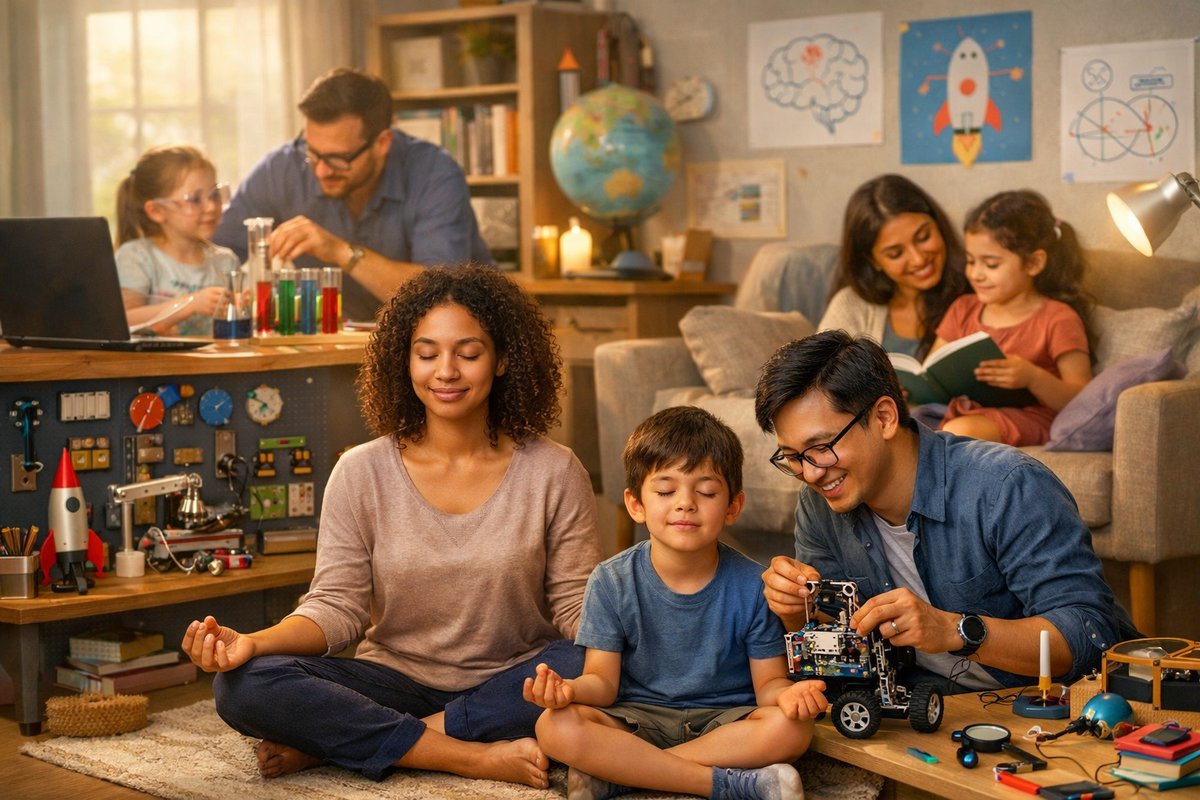
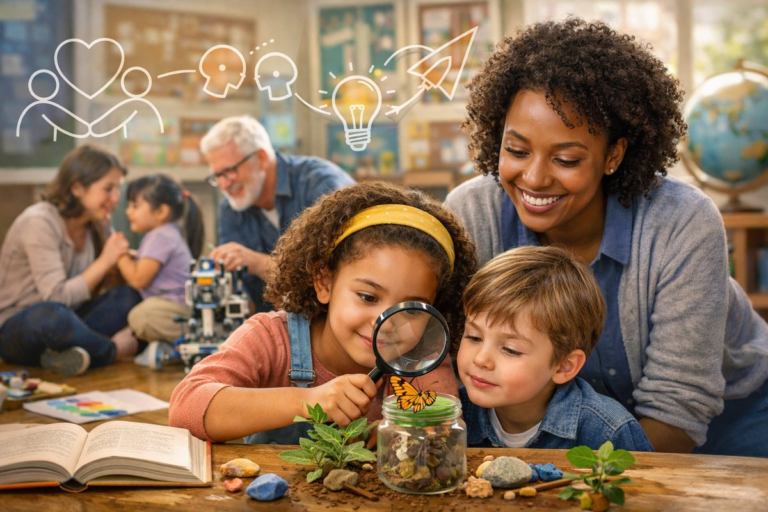
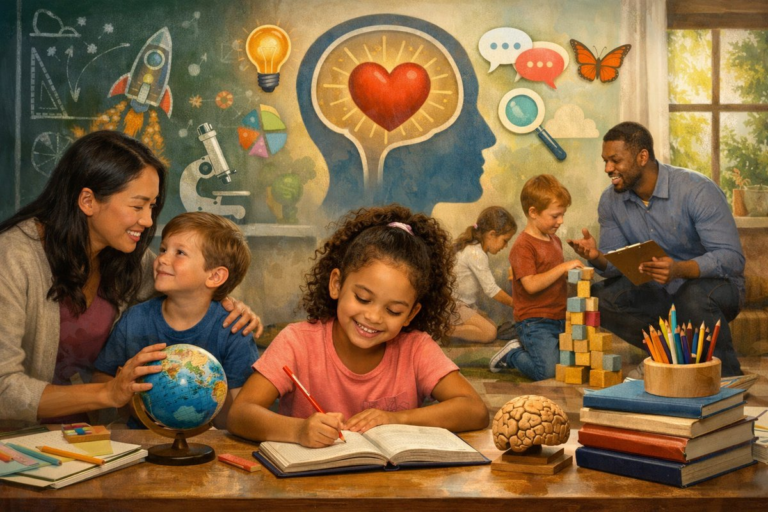
Families around the world are blending emotional coaching and hands-on STEM exploration into daily routines, tapping into new research and tools that foster both cognitive and social growth. From DIY maker corners to mindfulness storytimes, parents are pioneering a holistic approach that raises analytically sharp and emotionally attuned young thinkers.
Across living rooms and dining tables, a quiet revolution in home education is taking shape. Parents are no longer content to choose between unplugged play and tech-driven lessons, nor must they sacrifice emotional understanding for math drills. Instead, a new approach weaves together storytelling, sensory experimentation, coding puzzles, and guided conversations about feelings. The driving idea: intellectual growth and emotional intelligence are not separate tracks but two sides of the same coin.
A recent report from the National Institute of Child Health and Human Development highlights this synergy. Children who experienced integrated sessions-combining social-emotional activities like role-playing with simple circuitry experiments-showed significant gains in problem-solving and peer collaboration. According to researchers, these gains held steady six months later, underscoring the lasting impact of a curriculum that honors both head and heart.
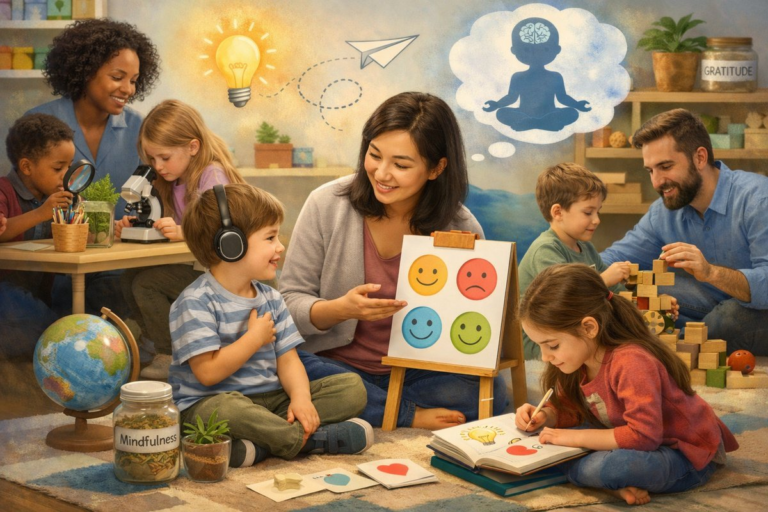
Educators at community centers and nonprofit learning hubs are taking note. At a pilot program in Seattle, families gather once a week to rotate between mindfulness story circles, basic robotics stations, and collaborative art projects. Observers report that children transition smoothly from building gear-driven contraptions to leading group reflections about frustration and perseverance. One facilitator describes the scene as “two worlds colliding in the best possible way-circuit boards paired with compassion.”
Parents share enthusiastic anecdotes. In Austin, a father recounts how his ten-year-old used to rush through worksheets without pausing. After incorporating emotion-focused flashcards before each math session, the same child now checks in with siblings and asks questions like “How do you feel when you solve a tricky puzzle?” Meanwhile, a mother in Chicago builds a “maker nook” in her hallway with bins of magnetic tiles, sensory putty, and emotion dice. When her eight-year-old revisits past missteps, she’s more likely to accept gentle corrections from her brother or friend.
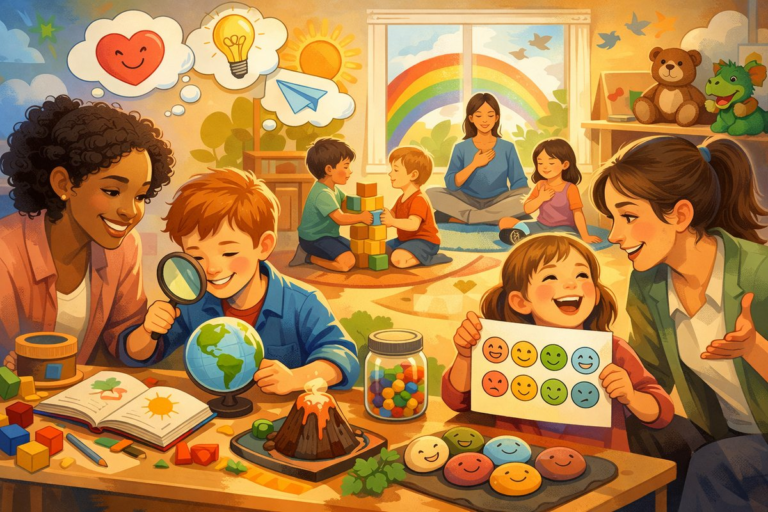
Central to this movement are versatile toolkits that spark curiosity while inviting introspection. Magnetic building tiles and gear sets let children prototype bridges or robotic arms, then reflect on teamwork and trial-and-error. Interactive storybook projectors bring tales of resilience to life, prompting conversations about characters’ motives and fears. Mindfulness cards illustrate breathing exercises, guiding young learners to articulate worries before diving into a logic puzzle. Together, these elements foster a climate where innovation and empathy feed each other.
Parents cite multiple benefits. When children practice emotional check-ins alongside hands-on challenges, they learn to manage frustration and remain curious in the face of setbacks. Family mealtime discussions about “today’s aha moments” become richer when one sibling describes a coding breakthrough and another opens up about feeling left out during a playdate. Anecdotal reports suggest siblings develop stronger bonds, and parents observe fewer meltdowns when homework time arrives.
Underpinning these stories is growing scientific evidence. A Stanford University study tracked 200 children over two years, comparing traditional at-home tutoring with sessions that interlaced reflection prompts and makerspace activities. Those in the integrated group not only scored higher on standardized math and literacy exams but also demonstrated improved conflict-resolution skills in role-play assessments.
Experts emphasize that coaches and parents don’t need formal training to get started. Simple shifts-like framing building blocks as “tools to test hypotheses” and pausing to ask “How do you feel about that result?”-make a difference. Online workshops hosted by local libraries now guide families through DIY circuits from household materials and short scripts for launching feelings-focused dialogues. Social media channels dedicated to play-based learning overflow with creative setups made from recycled cardboard and fabric scraps.
Cost and accessibility remain key considerations. While some ready-made kits can run several hundred dollars, many families repurpose common items: old shoeboxes become shadow-puppet theaters, mismatched keys turn into pattern-making tools, and empty cardboard tubes transform into wiring conduits. Community toy libraries and swap days help spread gently used sensory toys and building sets. Nonprofits in underserved neighborhoods organize pop-up maker labs, lending out equipment and hosting group reflections in parks and rec centers.
Balancing screen time with tactile experiences continues to challenge busy households. Pediatrician guidelines encourage no more than one hour of recreational screen use for preschoolers, yet many STEM apps promise instant engagement. The emerging consensus: mix digital simulations with real-world exploration. For instance, a child might prototype a simple lever using blocks before testing a virtual physics game that mirrors the same principle, then journal about how the two experiences felt different.
Sustainability and emotional resonance go hand in hand. Parents craft sensory bins from rice dyed with food coloring, inviting children to sort shapes while naming emotions. A homemade “gratitude jar” doubles as a color-coded experiment in geometry and reflection: each note folded and stacked becomes a tactile data point. These DIY solutions root learning in everyday practices, underscoring values of resourcefulness and curiosity, while reinforcing that big ideas can arise from humble objects.
As this blended approach gains momentum, families report a renewed sense of agency. Children feel empowered to ask questions, pivot on ideas that flop, and share triumphs without fear of judgment. Parents find themselves coaching both coding loops and conversation starters, celebrating the moment when a child’s eyes light up at a successfully wired LED and when they articulate the joy of helping a friend. Over time, this holistic model promises to reshape not just home education, but how society views the intertwined journeys of the mind and heart.