Location
Mount Vernon, WA 98274

Location
Mount Vernon, WA 98274
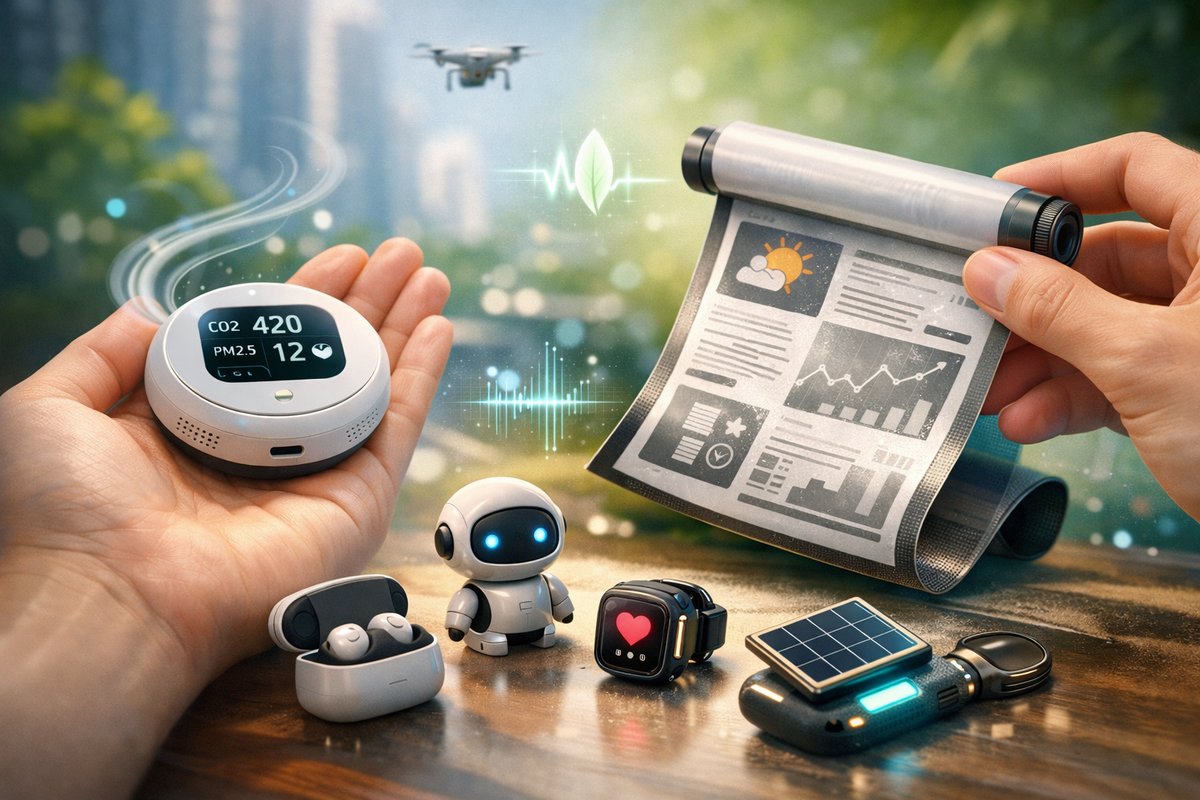
From palm-sized air sensors to rollable e-ink pages, a new generation of miniature, intelligent tools is weaving high-tech magic into daily life. This article uncovers the innovations-micro-powered, eco-aware, and emotionally attuned-that promise to shrink complexity and expand capability on the go.
In an age where big technology often looms large on billboards and conference stages, a quieter revolution is taking place in the palm of your hand. Engineering ingenuity is pushing devices into ever-smaller footprints without compromising their ability to transform routines at work, home, or in transit. These nano-scale gadgets are built for curiosity, crafted for impact, and designed to embed intelligence into everyday moments.
The Rise of Ubiquitous Micro-Sensors
Air quality, UV exposure, even volatility in carbon monoxide levels-once the territory of industrial labs-can now be monitored by a device smaller than a credit card. Tiny optical sensors paired with wireless radios slip into pockets or clip onto backpacks, sampling the atmosphere on foot or during a bike commute. Data streams in real time to companion apps, alerting users to sudden pollutant spikes before they head indoors or change route.
Key innovations here include miniaturized spectrometers that analyze light wavelengths to identify particulates and VOCs. Low-power microcontrollers manage data logging for days at a stretch, tapping nearly invisible coin-cell batteries. And with built-in machine learning routines, these pocket monitors can even learn a city’s pollution patterns, offering personalized health advisories for runners, cyclists, or commuters with asthma.
Smart Textiles: Clothing That Thinks Alongside You
What if your morning workout shirt could track posture, breathing, and muscle fatigue without needing a chest strap? Smart textiles embed conductive threads and flexible sensors into everyday fabrics, turning garments into data hubs. A sleeve resonant with stretchable electrodes can detect hydration levels by sensing skin impedance, prompting a gentle vibration when sweat loss crosses a threshold.
Beyond wellness tracking, this class of wearable tech is branching into haptic feedback. After a long day at a standing desk, a shirt might signal a reminder to shift weight or stretch back muscles. Under the hood, tiny coin vibrators and adaptive control boards are woven into seams so seamlessly you barely know they’re there. Thanks to detachable, washable electronic modules, laundering isn’t a headache-a design choice that makes adoption feel less like science fiction and more like selecting a new favorite tee.
Foldable Displays and Ephemeral Surfaces
E-ink isn’t just for e-readers anymore. Rollable, flexible displays can unfurl from a tube as thin as a pen, offering low-power reading surfaces or quick note-taking sheets. The advantage lies in permanence of image without continuous power draw: a document stays on screen until you choose to clear it, making it perfect for boarding passes, to-do lists, or reference diagrams on a crowded café table.
Some prototypes use micro-LED arrays embedded in film, producing color, video-capable rollups that could one day replace sticky notes and printed memos. They pair with gesture-sensing rings or pens so you can jot ideas or swipe between screens without needing a bulky tablet.
Nano-Scale Robotics in Everyday Hands
Small drones have been on the market, but the latest generation shrinks motors, propellers, and control boards into packages that recall origami paper swans. Ultra-light frames-often 3D printed with latticed geometry-deliver surprising stability and flight times approaching 20 minutes. Equipped with micro-camera modules, these pint-sized scouts can slip through crowded rooms, inspect tight plumbing spaces, or capture unique overhead angles at family barbecues.
Pair them with smartphone tethering or mesh radio networks, and you get live HD feeds into apps that automatically stitch footage into shareable highlights. Some crafts even recognize gestures, launching or landing when you simply raise a hand.
Energy on Demand: Solar and Kinetic Charging
A challenge for any miniaturized gadget is keeping juice on tap without constant wall-plug dependency. Enter ultra-thin solar cells laminated onto neoprene sleeves or bike frames, harvesting ambient light during commutes. In low-light conditions, kinetic generators harness wrist motion or backpack sway to top up a supercapacitor bank.
The beauty of these hybrid systems is seamless integration. A power bank built into the spine of a backpack charges wirelessly from the sun during a hike, then shares that energy via magnetic puck connectors to earbud cases or micro projectors. Smart power management firmware balances between solar yield and motion harvesters, so you’re never stranded with a dead gadget.
Emotional Intelligence in Compact Form
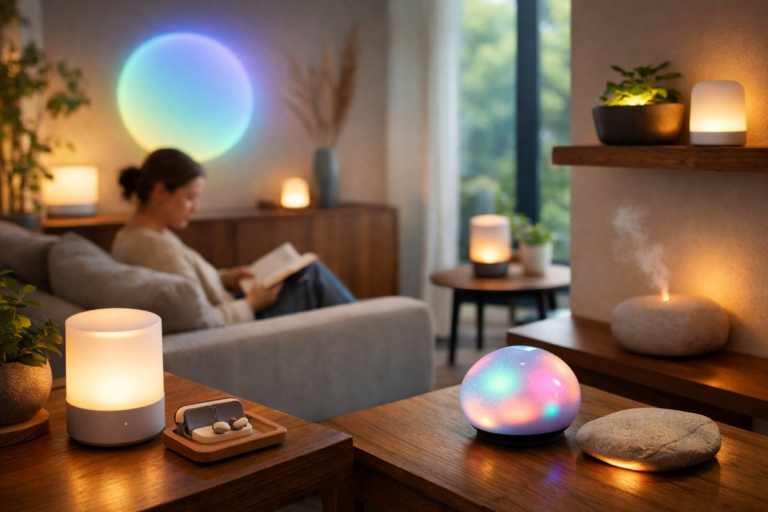
Beyond raw data and visuals, the next frontier for tiny tech lies in emotional attunement. Devices are beginning to interpret voice tone, facial micro-expressions, and physiological cues (like heart-rate variability) to gauge stress or calm. A palm-sized companion might glow a warm hue when it senses rising tension, prompting you to pause, inhale deeply, or open a guided meditation clip.
This layer of empathetic computing draws on miniature microphones, micro-LED arrays, and on-board AI optimized for privacy-processing all sensitive inputs locally rather than in distant servers. By keeping data in the device, users retain control over personal metrics and avoid broad-brush profiling.
Pocket Productivity: Micro-Printers and Projectors
In remote field offices or on road trips, printing or presenting often means hauling a fleet of gear. Now, stress-level micro thermal printers slip easily into satchels and churn out receipts, tickets, or quick sketches on demand. They rely on heat-activated paper rolls, so ink cartridges become a thing of the past.
Even more visually compelling are pocket projectors that beam bright, colorful images up to a foot wide onto nearby walls. Using LED engines the size of a postage stamp, these projectors can run for hours from a built-in rechargeable cell. Connectivity spans USB-C display out, Bluetooth streaming from a phone, or mirror-casting from a laptop.
Practical Impacts and Ethical Considerations
As with any leap in convenience, questions arise about data privacy, environmental costs, and equitable access. Manufacturers are leaning into modular architectures so that worn-out sensors, batteries, or circuits can be replaced individually-reducing electronic waste. Open-source firmware communities ensure that anyone can audit the AI models behind emotion-sensing or localization features.
Because these devices live in public spaces, design teams must also consider social norms: a drone’s blinking light and gentle hum tell bystanders when it’s operating; smart translators show a visual cue before tapping into a conversation. Thoughtful design fosters trust in gadgets that slip quietly into daily routines.
Looking Ahead: The Next Wave of Shrink-Tech
What’s on the horizon? Researchers are exploring microfluidic channels woven into smart fabrics that can dispense anti-odor or cooling agents on command. Others are embedding nano-antennas into eyeglass rims, enabling discreet augmented-reality prompts without bulky goggles.
Imagine a tiny diagnostic lens dropped into a glass of water that changes color to confirm purity, or a coin-sized module attached to a pet collar that transmits real-time health indicators. As power densities climb and sensors shrink further, the line between device and everyday object will blur entirely.
In this landscape of perpetual miniaturization, the true measure of success isn’t in how many transistors a gadget packs but in how seamlessly it enriches human moments. From mindful breathing guides in your palm to rollable screens that turn any wall into a workspace, the next generation of nano-scale tech invites us to rethink the relationship between the big picture and the smallest detail.
A new era has dawned where extraordinary capability fits in your pocket-and it’s just getting started.