Location
Mount Vernon, WA 98274

Location
Mount Vernon, WA 98274

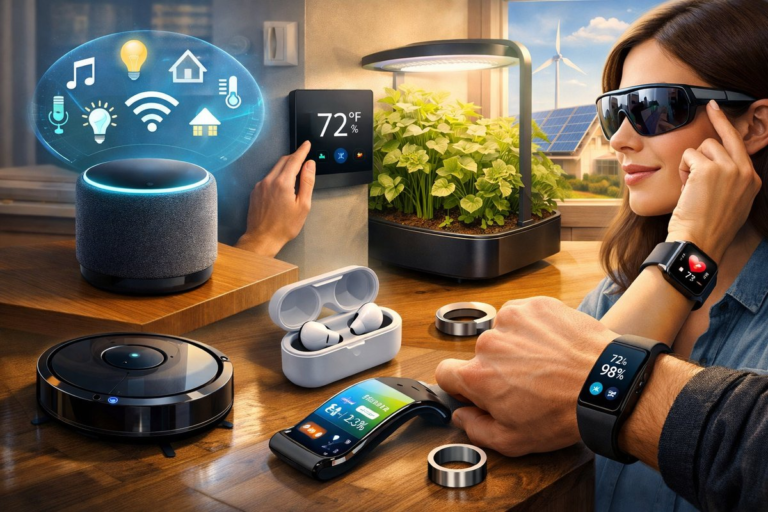
From on-the-go translators in headphones to pocket projectors that turn any surface into a screen, a new generation of ultraportable gadgets is weaving intelligence into the margins of our routines. These innovations blend semiconductor breakthroughs, advanced sensors and modular design to deliver head-turning convenience without adding bulk.
A commute can feel endless when the city grinds to a halt. Yet slipping a translation earbud into your pocket transforms that delay into a chance to catch up on audiobooks or chat in a foreign language with little more than a tap. Just across town, a small projector no larger than a smartphone sits ready on a café table, casting crisp presentations or movie nights onto any blank wall. This wave of ultraportable gadgets is reshaping how we work, learn and recharge on the fly.
The past year has seen major strides in miniaturization. Semiconductor foundries introduced chipsets combining power efficiency with AI acceleration in packages barely larger than a watch face. These tiny compute engines now fuel everything from ambient noise-cancelling earbuds to palm-sized health monitors that track blood oxygen and skin temperature. At the same time, advances in battery technology-from graphene-infused cells to micro-solid state prototypes-are squeezing more hours of uptime into lighter, slimmer formats.
But performance is only part of the story. Modular construction is empowering users to adapt gadgets to their exact needs. Swappable sensor modules, magnetic accessory ports and compact expansion bays let a single device juggle multiple roles: audio interface, fitness tracker, translation assistant or wireless display. This flexibility cuts waste and invites makers and hobbyists to tinker, creating custom add-ons or limited-run specialty editions.
Connectivity has also gotten smarter and leaner. The arrival of next-generation wireless standards offers stable video streaming, low-latency game play and ultra-secure data transfer-all without a tether. New mesh protocols seamlessly switch between Wi-Fi, low-power mesh and short-range direct links, ensuring a gadget stays online in dense urban districts or remote landscapes.
These developments are converging in surprising ways. Imagine an envelope-thin e-ink sleeve that slides over a smartphone, extending battery life by days and surfacing notifications only when you need them. Or consider a clip-on sensor that turns any backpack strap into an environmental monitor, logging pollen counts, UV levels and air quality. For digital nomads, 5G-capable mini hubs now fit in the palm, granting secure private networks wherever cell towers roam.
Designers are pushing further by blending electronics with textiles. Smart shirts with conductive threads and micro actuators now offer haptic feedback for guided exercise or posture correction. Running jackets can harvest solar energy from unobtrusive flexible panels woven into the fabric. And voice-activated smart scarves integrate microphones and speakers so wearers can interact with assistants without reaching for a phone.
The software side is catching up, too. Developers are releasing lightweight AI models optimized for tiny devices-on-device translation, gesture recognition and noise cancellation all run without ever touching the cloud. This approach prioritizes privacy and low power, enabling features even in areas with spotty coverage. For caregivers, pocket monitors can now detect early signs of irregular heart rhythms or respiratory issues, alerting loved ones immediately through an encrypted mesh network.
Take the latest pocket translator as an example. It boasts a six-month battery life in standby, fits into an eyeglass arm, and processes spoken phrases in under 200 milliseconds. By packing a miniature neural processing unit alongside multi-band radios and MEMS microphones, designers have created a tool that feels nearly invisible in daily use. Its companion app offers custom voice training, dialect updates and integrated phrasebooks for travelers exploring off-the-beaten path.
Health tech is also in the spotlight. Ultra-compact wellness trackers-some as small as a coin-adhere to the skin via hypoallergenic patches, continuously monitoring hydration, perspiration pH and lactic acid levels. These devices sync with your smartphone to recommend micro-breaks or hydration reminders. In sports labs, they’re already aiding elite athletes; soon they’ll help desk workers avoid burnout and dehydration without ever glancing at a screen.
Entertainment gear isn’t immune to this trend. Pico projectors are shrinking projector engines and battery packs into credit-card-sized modules, delivering HD visuals onto any surface. Some models now include onboard storage and media players, so you can leave your phone tucked away and still enjoy a big-screen experience anywhere. Acoustics follow suit: some portable speakers weigh less than 100 grams yet fill rooms with clear, room-filling sound thanks to AI-driven audio tuning.
The DIY community has embraced these breakthroughs, too. Open-source hardware platforms now support sub-50-gram compute boards with camera modules, touch displays and wireless radios. Makers build custom drones, environmental stations and wearable art installations that react to user movement or weather. Compact solderless expansion ecosystems let novices snap sensors onto boards as easily as snapping toy bricks together.
All this innovation also raises questions about sustainability and lifespan. With devices growing ever smaller, how do we repair, recycle or responsibly dispose of them? A growing push for modular end-of-life standards means components can be reclaimed. Refillable battery packs and replaceable sensor cartridges extend gadget lifespans. Some communities even host swap meets for micro-controllers and sensors, treating obsolete parts as currency for building the next big thing.
Privacy remains a central concern. When so much processing moves onboard, how do we ensure these gadgets respect personal data? Open-source firmware initiatives and transparent AI model audits help establish trust. By default, many new devices now operate in offline modes or encrypt all local data before syncing with cloud services. These design choices reflect a values-driven approach that privileges user control over convenience.
Looking ahead, the horizon is dotted with tantalizing prospects. Researchers are experimenting with micro-optics that could project holographic interfaces from a ring-sized device. Battery breakthroughs hint at pocket-sized units matching the energy density of today’s laptop cells. And combinations of nanomaterials may enable self-healing electronics that repair minor damage without human intervention.
For everyday users, the implications are clear: technology is weaving itself into our lives in ever-more subtle, supportive ways. From commuters juggling real-time translation to remote workers projecting whiteboards onto any wall, ultraportable gadgets are democratizing capabilities once reserved for labs or studios. They let us focus on creative tasks, meaningful conversations and shared experiences without being tethered to desks or bulky hardware.
As this era unfolds, gadget aficionados and casual users alike can take part-choosing devices that fit their routines, swapping modules to match evolving needs, and even contributing to open-source projects that shape the next wave of tiny wonders. In the world of ultraportable tech, big surprises really do come in small packages.