Location
Mount Vernon, WA 98274

Location
Mount Vernon, WA 98274
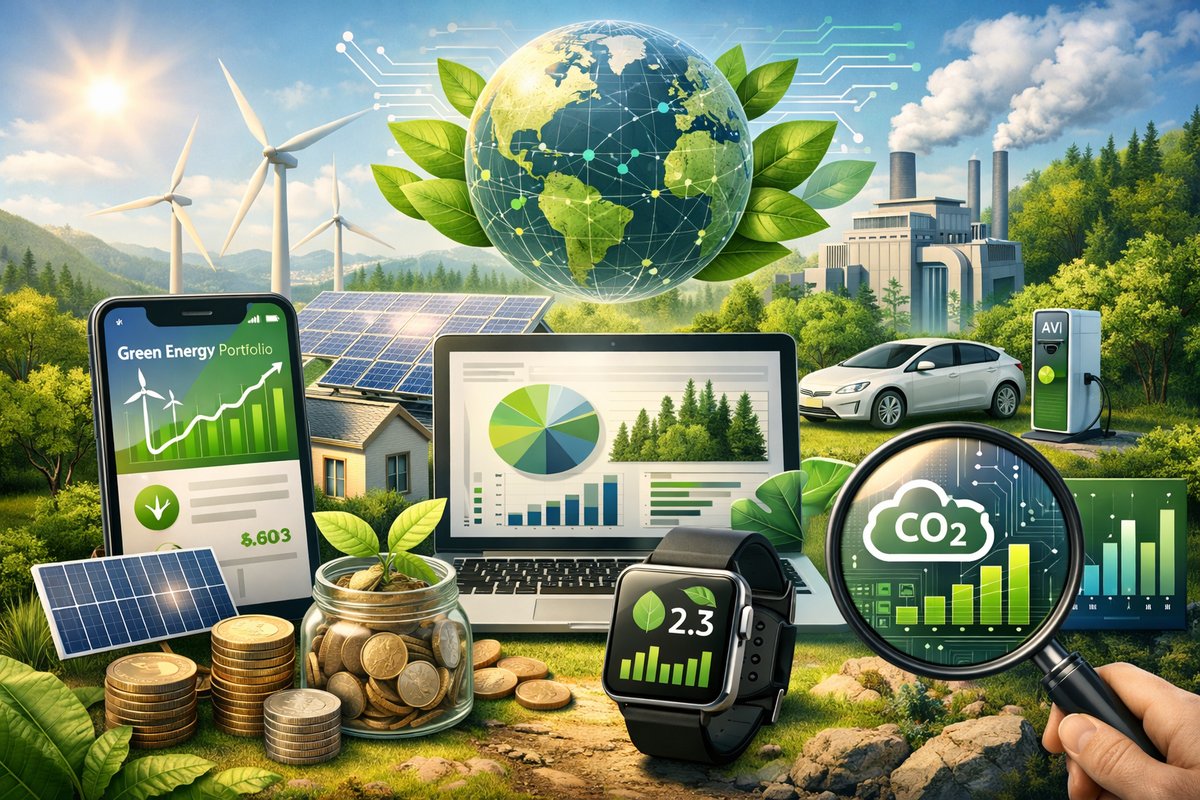
A wave of new tools is empowering budgeters and investors to align their money moves with environmental values. From micro-investing in clean energy to AI-driven carbon trackers, here's how everyday finance is going green without jargon.
The personal finance landscape is evolving beyond simple spreadsheets and basic savings goals. Today’s tools are designed to connect your bank balance with your beliefs, making it possible to track carbon footprints alongside monthly expenses, invest a dollar at a time in renewable energy, and blend high-tech insights with classic envelope budgeting. What was once a niche interest in responsible investing has grown into a mainstream movement, driven by retail demand and bolstered by user-friendly platforms.
Retail investors are increasingly seeking portfolios aligned with climate goals. According to a widely cited industry report, global sustainable fund assets crossed $4 trillion in mid-2023, as more everyday savers prioritized environmental, social and governance criteria. This surge is a reflection of both rising awareness and the proliferation of digital tools that simplify the process. Gone are the days when choosing a “green fund” required poring over complex prospectuses. Modern apps now offer one-click filters for low-carbon investments, real-time ESG scores and impact analytics that translate corporate emissions data into easy-to-understand grades.
At the same time, micro-investing platforms have democratized access to fractional shares of clean energy funds and green bonds. Rather than waiting to accumulate thousands of dollars, users can start with spare change round-ups that funnel small amounts into sustainable ETFs. This approach turns everyday purchases-the cup of coffee, the online order-into incremental investments that add up over months. It’s one part financial discipline, one part environmental commitment, and the convenience of autopilot savings.
Community-based savings circles are also undergoing a digital revival. Long a staple in various cultures around the world, rotating savings groups have found new life through mobile money integrations. Participants contribute fixed amounts into a shared pot, which is then distributed on a rotating schedule. Digital platforms handle contributions, reminders and secure disbursements, eliminating cash-handling risk and offering transparent records. For many, this blend of social accountability and modern convenience feels like a financial safety net rooted in community trust.
Beyond investing and group savings, personal carbon tracking tools are carving out a place in budget apps. Imagine seeing how much carbon your utility bills produced last month, then linking that figure to a recommended contribution to a forest conservation fund. Some apps now enrich spending categories-like groceries or travel-with average emissions data, nudging users to choose lower-impact options. A recent survey found nearly half of retail investors wanted to incorporate carbon metrics into their portfolio decisions, and these hybrid budgeting platforms answer that call.
Underlying many of these innovations is artificial intelligence. New advisory services analyze millions of data points-from corporate sustainability reports to satellite imagery of deforestation-and distill them into bite-size insights. Users receive automated alerts when climate risks may affect assets they own, such as potential water-stress in agricultural supply chains or rising flood risk for real estate holdings. By layering predictive analytics on top of traditional financial advice, these AI-driven solutions add dynamic climate resilience to everyday money management.
While the digital features impress, there’s also a resurgence of tactile, analog tools. Paper budgeting remains potent for many, offering a break from screen fatigue and providing a physical connection to spending habits. Environmentally minded consumers are embracing recycled-paper ledger books, refillable pens with plant-based ink and color-coded envelope systems made from natural fibers. Writing down goals, tracking variable expenses and reviewing paper statements fosters intentionality-an antidote to mindless digital scrolling.
Security and data privacy sit at the center of this ecosystem. With personal financial data flowing between apps, institutions and analytics engines, robust encryption and transparent privacy policies are nonnegotiable. Leading platforms now allow users to revoke permissions, anonymize transaction data and choose exactly which metrics-carbon footprint, spending categories or investment holdings-are shared with third-party services. This selective data approach empowers users to benefit from sophisticated tools without surrendering their digital rights.
Bridging the gap between advanced AI-driven insights and down-to-earth budgeting rituals, a handful of hybrid solutions have emerged. Picture a mobile app that syncs with bank accounts, calculates your monthly carbon emissions in real time, generates investable micro-buckets for green ETFs, and then prints a simple summary sheet you can slip into your recycled-paper planner. In one interface, you see both numbers on screen and a tangible snapshot on paper. This integrated workflow resonates with diverse preferences-digital natives seeking quick feedback and analog enthusiasts craving the satisfaction of handwritten check-offs.
As more people adopt these tools, communities of practice have formed around sustainable finance. Online forums, local meetups and social-media groups provide peer coaching on everything from creating a zero-waste budget to evaluating the impact credentials of new bond issuers. Knowledge-sharing accelerates the mainstreaming of advanced features and helps novices navigate jargon-heavy disclosures. Within these networks, veterans share templates for environmental impact reports, while newcomers discover simple starter strategies like setting aside 1 percent of income for carbon offset projects.
What does the future hold for personal finance? Expect deeper personalization and cross-sector partnerships. Fitness-wearable data may feed into health-spending projections. Smart-home energy usage could inform budget forecasts and suggest investment adjustments based on household consumption patterns. Financial institutions may collaborate with climate research labs to deliver hyper-customized advice, such as “If you shift 10 percent of your electricity consumption to renewables by next year, you could reduce your portfolio’s carbon exposure by X points and expect Y percent return enhancement.”
Ultimately, the convergence of sustainability, community finance and intelligent automation is remaking money management for a generation that sees profit and purpose as inseparable. No matter where you start-envelope budgeting, micro-investments or carbon tracking-today’s ecosystem supports a journey toward financial well-being and planetary stewardship. The result is a more transparent, values-driven relationship with money: one that stresses clarity over complexity, and confidence over confusion.
By linking everyday spending to long-term environmental goals, these new tools turn each financial decision into a statement of intention. Whether you’re digitizing a savings circle, allocating small funds to green bonds or simply jotting down monthly emissions in a recycled-paper planner, the future of personal finance is about wielding technology for both personal gain and collective good. That’s a narrative worth investing in.