Location
Mount Vernon, WA 98274

Location
Mount Vernon, WA 98274
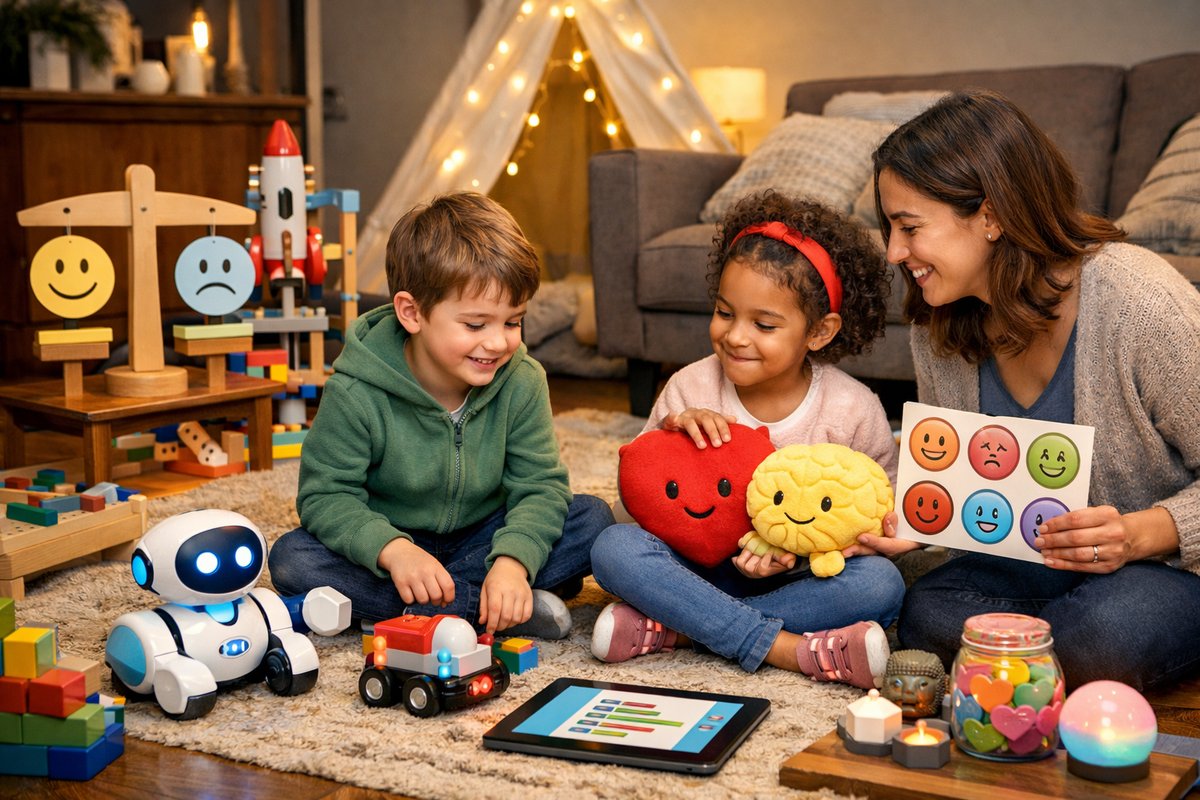
A growing number of parents are equipping living rooms with more than just blocks and tablets-infusing emotional tools alongside coding bots to nurture empathy and curiosity in equal measure. Recent pilot studies and home experiments reveal how blending play-based STEM with feelings-focused activities can deepen parent-child bonds and foster resilient young minds.
From a bright corner strewn with colorful emotion cards to a kitchen table doubling as a coding station, the modern home classroom is evolving into an ecosystem where science experiments coexist with heart-to-heart check-ins. Across diverse neighborhoods, families are integrating emotional learning tools with technology-driven play, marking a subtle but significant shift in how children engage with school subjects and feelings alike.
In one suburban district’s after-school pilot, parents and educators teamed up to pair a simple robotics kit with an ’emotion check’ ritual. Before assembling circuit boards, children select an illustrated card depicting a feeling-joy, frustration, curiosity-and share a quick story about a recent moment when they experienced it. As they progress through wiring sensors and watching tiny motors come to life, facilitators guide them to notice emotional checkpoints: “How did you feel when the robot finally moved?” or “What helped you stay patient when the wires got tangled?”
Early observations from the pilot program, led by a consortium of child development specialists at a major university, suggest more than 80 percent of participants demonstrated improved teamwork and the ability to articulate emotions with greater nuance. Parents report that coding frustrations-like a loose connection or a misaligned sensor-become teachable moments in perseverance and self-calming, rather than sources of defeat.
The trend isn’t confined to formal pilots. Online parenting forums and social media groups feature daily snapshots of DIY lessons: families roll homemade story cubes to spark imaginative narratives about characters sorting through fears; siblings build marble runs and pause at each bend to name the emotion that best fits the marble’s metaphorical journey. Living rooms have become rehearsal stages for empathy.
One parent describes transforming a rainy Saturday into a “feelings FAIR,” complete with sensory stations: a bin of textured beads for tactile focus, a soft mat for deep breathing exercises, and a tablet loaded with simple drag-and-drop coding puzzles. Children rotate through each station, logging their mood on a family chart that tracks progress in both puzzle completion and emotional check-ins.
Experts note that this home-grown fusion addresses two long-standing priorities in early education: fostering STEM competencies and nurturing emotional intelligence. While schools strive to integrate social-emotional learning into crowded schedules, the home environment offers flexibility for personalized pacing and parent-led coaching.
“Parents are realizing that logic and feelings aren’t separate silos,” says a developmental psychologist who studies play-based learning. “When you solve a mechanical challenge and then pause to reflect on your effort, you strengthen cognitive skills and emotional resilience in a single session.”
Retailers have taken notice, expanding product lines to meet the demand. Traditional coding kits now come bundled with feeling-identification cards; sensory toys arrive with digital guides on conversation prompts; story dice are paired with emotion prompt wheels. While some offerings lean heavily on tech, many families blend low-tech and high-tech seamlessly-using a handmade emotion spinner alongside a programmable rover.
In urban apartments, space constraints have provoked creative solutions. Parents repurpose sofa cushions into obstacle courses, weaving in “feeling check” stations where children pause and describe their current mood using a simple color chart on the wall. One family prints emotion icons on magnetic sheets and arranges them on the fridge as daily mood markers. These lightweight, reusable tools fit neatly into small spaces yet pack a potent learning punch.
Accessibility remains a factor, too. Community libraries and makerspaces have added “Emotion + STEM” kits for short-term checkout. A typical kit might include a sensor-equipped robot chassis, a deck of emotion flashcards, a breathing-spot light, and a guidebook for structured parent-child sessions. Librarians report high demand from caregivers who lack the budget for a full home setup but still want to experiment with integrated learning at modest cost.
At the grassroots level, local Parent-Teacher associations organize pop-up workshops combining microcontroller projects with group discussions on coping strategies. Parents swap templates for printable emotion charts and share tips on keeping story dice sanitized between playdates. These collaborative efforts emphasize agency-empowering families to adapt tools to their values and routines rather than following a one-size-fits-all script.
Even families with infants are joining the movement. Baby-safe mirrors mounted on play mats come with color-coded emotion icons around the border, encouraging caregivers to label baby expressions out loud-“You’re smiling-joy!”-while demonstrating basic cause-and-effect with a simple light-up rattle. These early steps lay the groundwork for a lifetime of emotional vocabulary.
Critics caution against overengineering childhood, but proponents argue that integrating feelings and technology doesn’t diminish free play-it enriches it. When a child builds a remote-control car and then pauses to chart its emotional journey, the process becomes a layered narrative that blends creativity, logic, and self-awareness.
For families navigating remote work, hybrid schooling, or variable schedules, these modular activities offer flexible entry points. A parent can squeeze in a five-minute emotion check during a coding break or extend the session into a weekend maker challenge. The modular nature of the tools means each activity can stand alone or integrate into a larger project-kids can design a simple app that prompts users to log feelings, then test it with siblings or friends.
As the line between playroom and lab blurs, one constant emerges: parental presence matters most. Whether guiding a circuit experiment or holding up an “angry” emotion card, caregivers anchor the experience with genuine interest and empathy. When children see grown-ups taking their feelings seriously-even in the midst of soldering irons and software interfaces-they internalize the message that emotions and ideas deserve equal attention.
Looking ahead, researchers plan to track long-term outcomes for children who grow up with integrated emotional STEM play. Early indicators point to enhanced communication skills, increased willingness to tackle challenges, and a healthier relationship between logic and feeling.
In the meantime, families continue to tinker, test, and talk their way toward resilient, creative learners. With emotion-infused tools in hand and a willingness to explore both circuits and sentiments, parents are redefining what it means to learn at home-turning every circuit board into a chance to spark curiosity, compassion, and the confidence to navigate both code and heart.
Echoing one parent’s reflection: in a world of endless gadgets and apps, it’s the simple question-“How are you feeling as you build?”-that can light up a child’s growth journey more brightly than any flashing LED.
Let the home become the laboratory of the heart.