Location
Mount Vernon, WA 98274

Location
Mount Vernon, WA 98274
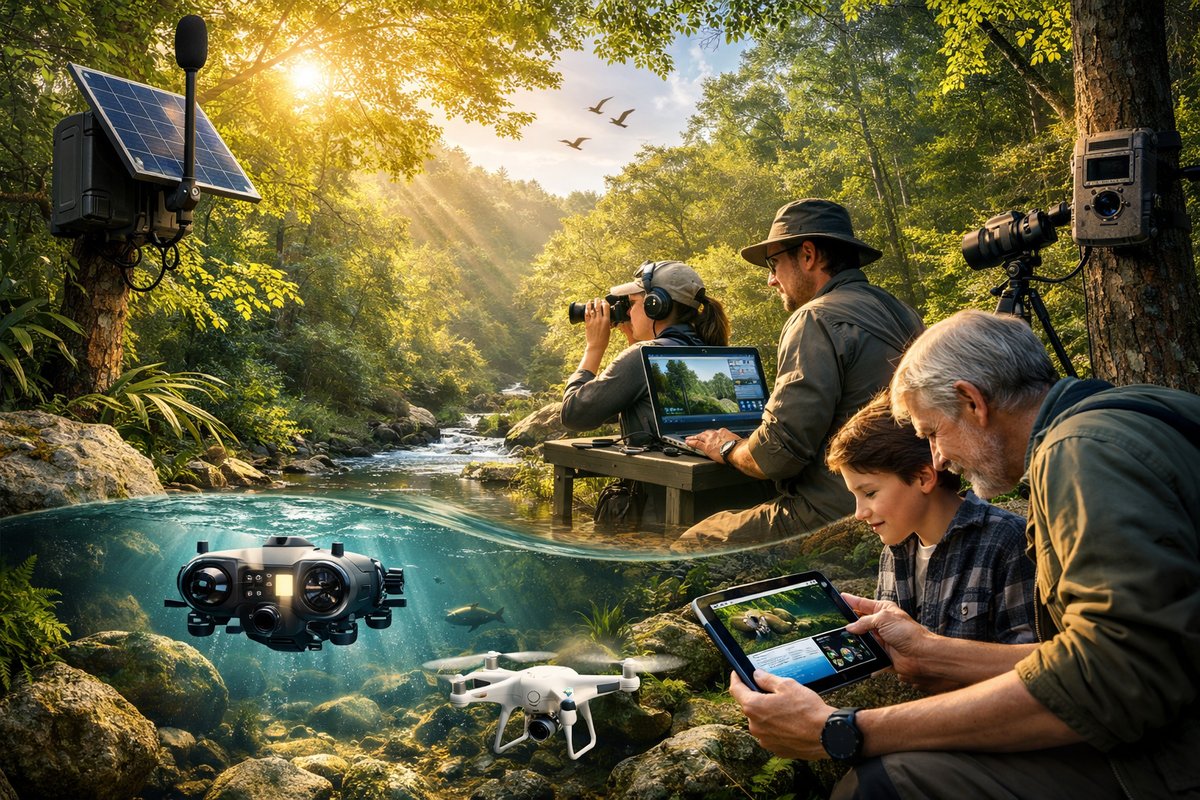
From sunlit canopies to hidden streams, a convergence of acoustic sensors, aquatic drones, and community-driven observation is reshaping how we witness nature's unfolding rhythms. An emerging tapestry of technology and curiosity is guiding researchers and everyday explorers alike toward deeper insight into biodiversity, climate resilience, and the poetry of place.
In the misty hours before dawn, a network of acoustic sensors stirred to life beneath an ancient forest canopy. Each digital ear awaited the first trumpet of a woodpecker or the subtle rustle of leaf litter as a field mouse emerged. Elsewhere, over coral-fringed shallows, an aquatic drone glided through turquoise currents, measuring salinity and humming with low-frequency sonar to map hidden reef architecture. These threads of data-sound, light, chemistry, movement-are beginning to weave together a richer story of our living planet.
For decades, environmental science relied on seasonal expeditions, laborious manual sampling, and static cameras. Now, the blend of low-cost sensors, lightweight drones, and smartphone-powered citizen science is transforming how researchers observe patterns in forests, wetlands, rivers, and seas. In remote mountain ranges, portable water quality meters monitor nutrient spikes after spring snowmelt. In urban green spaces, handheld soil moisture probes reveal how city trees cope with heat stress. Along coastlines, volunteers upload audio recordings of migrating shorebirds to a crowdsourced platform, tracking shifts in arrival dates over years.
These efforts speak to a broader vision: a global “living observatory” that captures the full complexity of ecosystems in real time. Each new instrument becomes a pixel in a much larger image-one that fills in the seasonal transitions between the bare outlines of satellite maps. With machine learning algorithms, acoustic recordings translate into species inventories; drone imagery converts pixel clusters into estimates of canopy biomass. This fusion allows scientists to detect early warning signals: a sudden decline in frog calls during the rainy season, an unseasonal bloom of phytoplankton, or an unexplained drop in soil respiration as drought deepens.
Consider the case of temperate wetlands in the Pacific Northwest. In one research bay, teams outfitted buoys with pH and turbidity sensors. Beneath the surface, microRN A samplers collect genetic fragments shed by fish and amphibians. At the water’s edge, visitors armed with waterproof field notebooks sketch waterbird flocks and log arrival times. Over a year, these varied streams of information revealed that beaver dam construction during spring floods actually enriches downstream habitats by distributing nutrients. Surprising as it seems, this “nutrient sabbatical” supports amphibian tadpoles long after the rains have subsided.
Elsewhere, conservation groups deploy autonomous acoustic recorders in tropical forests threatened by illegal logging. Equipped with solar panels and long-life batteries, these devices can run for months, capturing faint chainsaw noises or the dawn chorus of endangered songbirds. When paired with automated call-recognition software, park rangers receive real-time alerts if human intrusions spike or if key species vanish from their known range. In a pilot project, this method led to the interception of illicit timber operations before they could strip a protected swath of old-growth canopy.
Not all innovations live in the sky or underwater. In urban neighborhoods, high school students lead sidewalk phenology walks armed with pocket-sized spectrometers. By measuring leaf reflectance at different stages of chlorophyll breakdown, they chart the arc of fall color as it moves northward. Local councils use these data to optimize planting schedules for street trees, ensuring urban forests maintain shade cover during heatwaves.
These layered approaches are teaching scientists and citizens alike to tune their senses to temporal patterns too subtle for the naked eye. A forest that once seemed constant now reveals its heartbeat: the swelling of sap in March, the unfolding of leaf clusters in April, the hush of midday cicada drumming in July, the whisper-soft fall of acorns in October. In coastal seagrass meadows, drone-derived maps show blades vibrating with tidal pulses as fish dart through underwater cathedrals.
Behind the scenes, software platforms stitch these datasets into interactive mosaics. Researchers click a map to see dynamic diurnal cycles of wildlife movement. Policy makers consult time-series charts that overlay deforestation hotspots with declining frog call frequencies. Educators share lesson plans that involve students logging moth trap catches alongside weather-station rainfall totals, drawing correlations between cloud cover and nocturnal insect diversity.
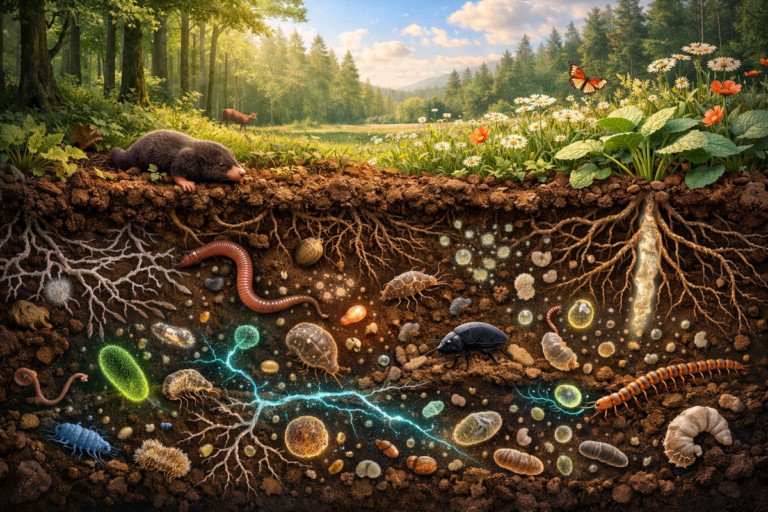
This convergence of method and meaning underscores a deeper shift in environmental science: from static inventories to fluid narratives. It invites participants to become co-authors in a grand tapestry of ecological memory. A backpack-mounted soil moisture sensor ceases to be a mere instrument; it becomes a bridge between arthropod communities underground and the canopy’s thirst for water. A waterproof field notebook transforms into a chronicle of local wisdom, where each entry seeds tomorrow’s hypothesis.
As the climate warms and seasons slip out of sync, these living observatories gain urgency. Phenological mismatches-the early arrival of flowers before pollinators emerge or the delayed migration of songbirds-threaten species survival. By capturing these mismatches in near real time, communities can test adaptive measures, such as installing supplemental pollinator gardens or adjusting forest-management schedules. In some areas, restoration teams use mobile apps to coordinate plantings of drought-tolerant native shrubs where soil-moisture data predict summer die-off.
Even so, technology is a means rather than an end. At its heart, this movement is powered by curiosity-by people who pause to listen to a dawn chorus or to feel the earth’s pulse in a handful of soil. A university lab in Scandinavia recently invited design students to create “listening benches” equipped with miniature microphones and bone-conduction speakers. Placed along migratory corridors, these benches allow passersby to hear low-frequency calls of elk or wolves otherwise inaudible. By kindling wonder rather than fear, the project forges new bonds between communities and the species that traverse their landscapes.
Across continents, researchers emphasize the importance of ethical data sharing. Local stewards retain ownership of recordings made on ancestral lands, choosing when and how to publish. Community-led protocols ensure that sensitive information-such as nesting sites of endangered turtles-remains protected from exploitation. In this way, the living observatory is also a field of trust, built upon respect for nature and for those who know it best.
The unfolding chapters of this narrative promise more than academic breakthroughs. They offer a new grammar for connection, reminding us that every seasonal shift, from the first ice-crackle of winter to the crimson flush of autumn maples, is part of a larger story. The pulse of a glacier retreating, the quiver of earthworms tunneling, the chorus of frogs serenading the night: each is a stanza in an epic poem written across time.
In the hush before dawn, when the first bird-song frays into daylight, we are invited to listen-to sensors humming, to water rippling, to leaves stirring-with intention and care. With each data stream logged, each observation shared, we become stewards not only of numbers but of belonging. We learn that resilience is not a distant policy goal but a living, breathing mosaic: fragile, interconnected, and wondrously alive.
As the sun climbs above the canopy, revealing dappled patterns on the forest floor, a sense of possibility dawns too. What if every hiker carried a small sensor pod in a pocket? What if civic groups curated localized phenology maps for every neighborhood? What if the next generation of explorers saw nature as both laboratory and cathedral-something to be studied, cherished, and honored?
In weaving seasons and sensors, we open a new chapter in environmental discovery-one where technology amplifies empathy, where data cultivates wonder, and where every measurement carries the pulse of the living world. It is an invitation to notice, remember, and belong, to co-author a narrative that reaches from tiny spores in the soil to the shimmering arc of the Milky Way overhead. And in doing so, we may come to see ourselves as integral threads in nature’s unfolding story, rather than distant observers of its exquisite patterns.