Location
Mount Vernon, WA 98274

Location
Mount Vernon, WA 98274
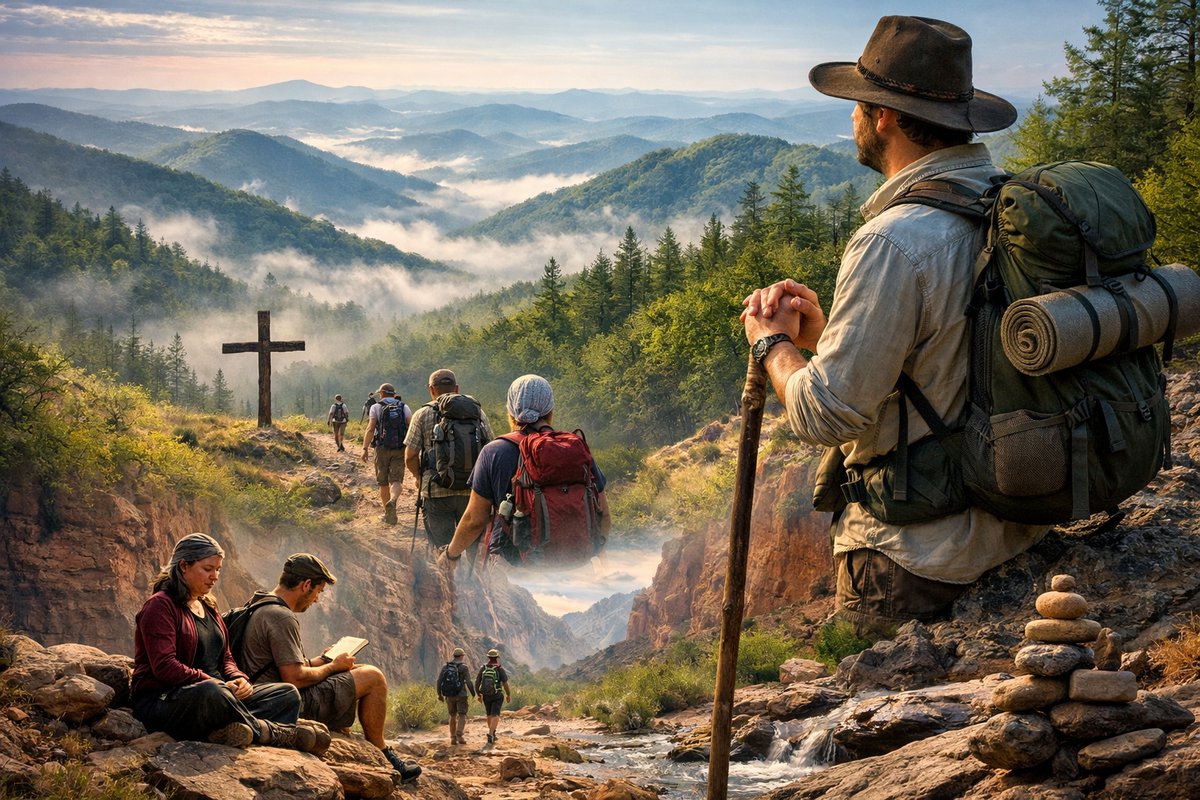
A growing movement of American Christians is trading pews for peaks, turning long-distance trails into paths of spiritual renewal. From the Appalachian Mountains to desert canyons, pilgrims are blending prayer, environmental stewardship, and community on journeys that echo ancient traditions.
Late last summer, a group of two dozen Christians gathered at the trailhead of Virginia’s Shenandoah section of the Appalachian Trail. They carried backpacks, prayer books, and a shared longing for a deeper encounter with God. Over the next week, their worship took the form of sunrise hikes, dusk reflections under ancient oaks, and spontaneous hymn sings by riverside camps. For many, these miles in the wilderness felt like a modern incarnation of medieval pilgrimage-an outdoor liturgy without walls.
This phenomenon is not confined to the Blue Ridge Mountains. Across the country, faith communities are launching Christian pilgrimage events on well-known long-distance trails, regional greenways, and even urban park loops. Unlike traditional tours to holy sites abroad, these pilgrimages marry physical exertion, environmental care, and spiritual practice in settings accessible to everyday believers. Church leaders, outdoor ministries, and small groups are collaborating to map routes, plan prayer stations, and host nightly campfire reflections.
“The appeal is twofold,” says a pastor who organizes a biannual 50-mile pilgrimage through the Hoh Rainforest in Washington state. “First, you unplug from screens and routines. Second, you walk alongside others in intentional spiritual conversation. It resets your soul.” Participants navigate by compass or GPS app, then pause at devotional markers planted along the trail-handcrafted wooden crosses, scriptures on laminated cards, or small cairns where one might leave a prayer stone. These simple installations invite hikers to pause, reflect, and pray.
Many of these pilgrimages emphasize ecological stewardship. Before departure, groups collect trash along the trailhead parking lot, pack out litter found on the route, and use biodegradable camp essentials. Some organizers partner with conservation nonprofits to restore footpaths or plant native trees at journey’s end. It’s a tangible response to a theological conviction: caring for Creation honors the Creator.
Participants describe how the rhythm of walking prompts deep reflection. One traveler shares in her journal: “With each footstep, I felt surrender knocking at my heart’s door. My worries dissolved against the backdrop of towering pines. In the silence between birdsong, I heard God whisper my name.” Moments like these echo the pilgrim stories of old, whether medieval Christians trekking to Santiago de Compostela or pilgrims crossing deserts to reach sacred shrines.
Organizers are keen to provide structure without rigidity. Daily schedules feature morning devotionals, midday silence walks, optional small-group discussions, and evening vow renewals around the campfire. Yet participants also have freedom to wander, meditate, or sketch the landscape. One hiking monk from a rural monastery provides a portable lectern and a simple liturgy for those who wish to celebrate communion in the open air. Another group offers a prayer labyrinth outline etched into a flat rock, so solitary pilgrims can trace its path with their fingers.
Inclusive storytelling has also become a hallmark. One Arizona desert pilgrimage honors First Nations land stewards by inviting tribal elders to share creation stories around a communal meal. In Colorado, a high-altitude trek weaves in reflections on the faith of pioneers who homesteaded mountain valleys. Even in urban settings, small pilgrimage loops around historic churches and civic landmarks bring faith into the rhythms of city life, pausing at sites of social justice and ongoing community outreach.
Many first-time pilgrims admit they were skeptical. One business executive signed up to challenge herself physically but emerged with a fresh vision of her role in a local food pantry. A retiree who struggled with chronic pain found relief in practices of breath prayer synchronized with steps uphill. A father-daughter duo made time for conversation that had been postponed for years, all while traversing redrock canyons under a harvest moon.
These journeys rely on key gear that merges practicality with spiritual symbolism. A sturdy walking staff, sometimes engraved with a favorite verse, represents both physical support and an emblem of faith’s journey. Water-resistant journals capture reflections, poems, and observations in inclement weather. Ultralight tents offer simple shelter, inviting a prayer of gratitude each time they’re pitched. Solar chargers keep phones and navigation devices powered for mapping quiet prayer stops and listening to worship playlists. In this way, even the most tech-savvy pilgrim learns to depend on creation’s resources and the generosity of the group.
Local churches are responding by hosting pre-pilgrimage workshops on trail safety, mindfulness prayer techniques, and Leave No Trace principles. They invite outdoor guides, mental health counselors, and theologians to lead sessions. One community center in upstate New York installed a miniature prayer path on its lawn, complete with barefoot-friendly gravel, grass, and smooth stones, so anyone can practice walking meditation within ten minutes of downtown.
Institutions of formal theological education have taken note. A seminary in Oregon has launched a credit-bearing course on pilgrimage theology, which includes weekly hikes culminating in a multi-day staff-led journey along the Oregon Coast Trail. Students submit reflective essays that connect ancient Christian texts to the rhythms of outdoor pilgrimage. Professors anticipate expanding the curriculum to include virtual reality simulations of historic holy routes, allowing those who cannot travel to enter into the spirit of pilgrimage.
Economic impact has followed. Small towns along these routes report increased attendance at local farmers’ markets, bed-and-breakfast inns hosting faith groups, and sales of handcrafted walking staffs by regional folk artisans. Some nonprofits have created scholarship funds so low-income participants can cover gear rentals and registration fees. This ensures that the spiritual practice remains open to all, not just those with hiking experience or disposable income.
Looking ahead, the momentum shows no sign of slowing. Organizers plan new routes in coastal wetlands, Appalachian hollows, and prairie land trusts. They’re developing guided apps that synchronize Scripture readings with geographic coordinates-imagine pausing at a mountain overlook to hear a Psalm tailored to that panorama. Others are crafting pilgrimage-themed podcasts that weave interviews, music, and trail sounds into immersive spiritual exercises for listeners at home.
In a culture that prizes constant innovation and instant delivery, these pilgrims remind us that the slow work of walking, listening, and relating to one another remains deeply transformative. As one participant put it on social media: “The best Wi-Fi is this Wi-Trail-walking, insight, God’s presence in every pine needle.” Whether through pen and notebook or tempered leather and lichen, Americans of all ages are rediscovering the ancient art of pilgrimage in the sacred cathedral of Creation.
For anyone contemplating their first pilgrimage, organizers offer this simple advice: start small, pack light, join a group, and leave room for surprise encounters with the Divine. Often, it’s in the least expected moment-crossing a wooden bridge, blessing a sunrise-that the ancient path finds its way to the modern heart.
In a world spinning ever faster, these Christian pilgrims are stepping off the treadmill and into open sky. Their footprints may fade, but the stories they share, the prayers they lift, and the communities they strengthen could last for generations.