Location
Mount Vernon, WA 98274

Location
Mount Vernon, WA 98274
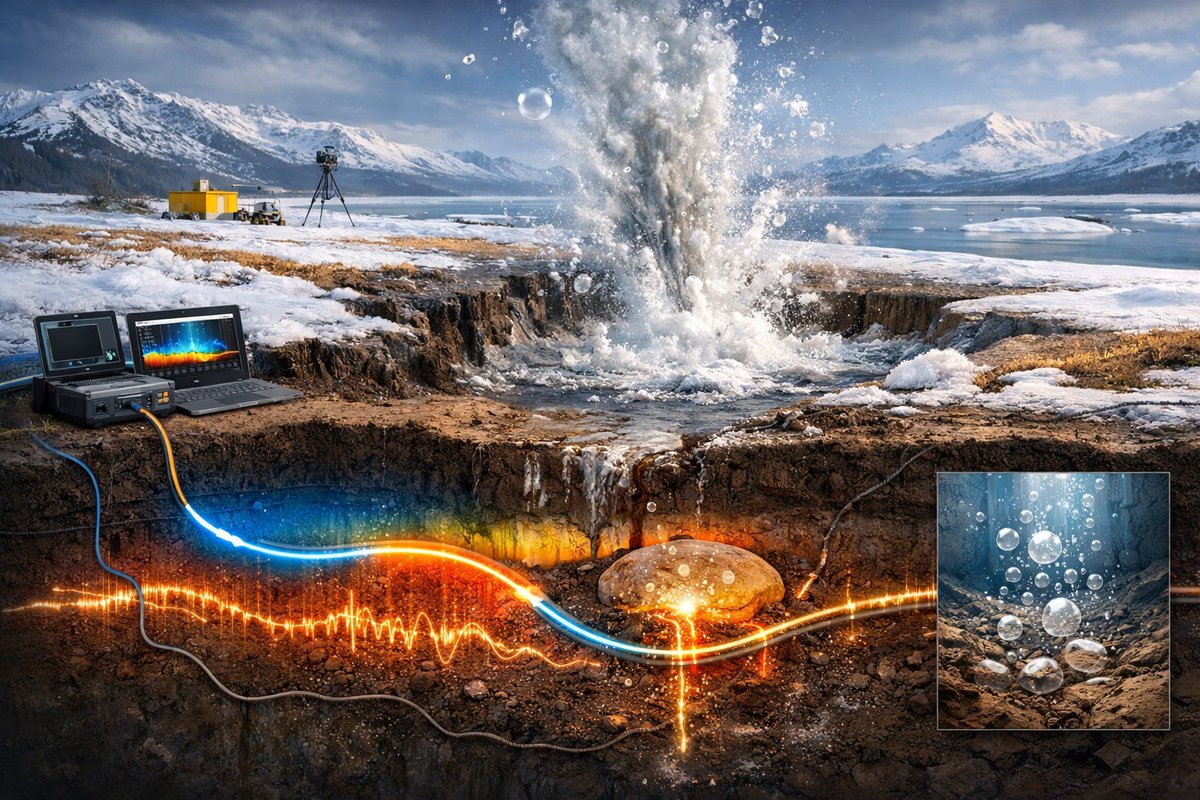
Scientists have deployed distributed fiber-optic sensing cables beneath Arctic soils to capture thermal and acoustic signatures of sudden methane releases. This novel approach reveals ephemeral gas pulses tied to permafrost collapse, offering fresh insights for climate models and feedback forecasts.
In the remote expanse of Siberia’s Yamal Peninsula, a small research base hums with activity under autumn’s fading daylight. Around midnight, a pale glow stretches across boreal bogs, reflecting on steel reels of fiber-optic cable wound like coils of nerve. Over the past year, climate scientists and engineers have buried kilometers of this cable at depths ranging from ten centimeters to two meters, transforming the tundra into a vast sensory web. By recording minute changes in temperature and acoustic vibrations, the network tracks the thaw front, cryostratigraphy shifts, and sudden expulsion of greenhouse gases in exquisite detail.
At the heart of this operation lies two complementary techniques: distributed temperature sensing (DTS) and distributed acoustic sensing (DAS). In DTS mode, laser pulses sent through the glass fiber scatter in response to local temperature variations, allowing researchers to map a continuous thermal profile along the entire cable. DAS, in turn, exploits tiny changes in the backscatter signature caused by ground vibrations, registering sub-millimeter movements in soil and ice structures. Combined, these methods offer a dynamic portrait of permafrost integrity and gas fluxes that was previously impossible with point sensors alone.
The deployment was no simple feat. Field teams threaded specialized armored fiber-optic cable through frost-resistant conduits, avoiding areas of high root density and crossing dozens of thermokarst features where ground ice might heave the lines. Each sensor line connects to an edge computer housed in an insulated enclosure, powered by a hybrid solar-wind station and a battery bank designed to endure subzero darkness. Satellite uplinks beam summary metrics back to labs in Europe and North America, while terabytes of raw data await closer analysis during the summer thaw.
Initial results stunned the scientific community. What scientists expected to be gradual degassing turned out to be a series of short, intense methane pulses synchronized with cryptic acoustic signals-microquakes-originating tens of meters below the surface. When the cryotexture collapsed, trapped gas pockets instantaneously vented, producing a rapid temperature spike of up to 4 °C in the surrounding soil. These events, lasting mere seconds, had gone undetected by conventional monitoring arrays, yet they may account for as much as 15 percent of permafrost-related methane emissions in hotspot regions.
Such revelations carry profound implications for climate models. Until now, most Earth system models have treated permafrost thaw as a slow, steady release of carbon dioxide and methane. The new fiber-optic data suggest that abrupt, episodic emissions could create feedback loops stronger than anticipated. A single pulse can warm the local atmosphere enough to accelerate further thawing, while the methane’s potent greenhouse effect amplifies regional temperature rises. Scientists argue that incorporating these pulsed fluxes into global projections might raise mid-century warming estimates by half a degree or more.
Yet challenges remain. Data volume is staggering: one kilometer of cable sampled every meter at a kilohertz rate produces over 100 gigabytes of raw data per day. Remote sites complicate maintenance and power management, and ice-bound conduits occasionally suffer micro-abrasions that degrade signal quality. Harsh weather can delay repairs for weeks, and logistical bottlenecks-from shipping spare parts to recruiting technicians familiar with optical instrumentation-threaten continuous coverage.
To meet these obstacles, teams are piloting edge-AI algorithms that compress and pre-analyze data on site, flagging only anomalous events for satellite transmission. Smart filters distinguish genuine acoustic signatures of gas release from environmental noise like wind, falling branches, or snow compaction. Researchers are also experimenting with modular power pods that integrate micro wind turbines and foldable solar panels-optimized for low light-into a single deployable unit almost as compact as a duffel bag.
This effort bridges disciplines and cultures. Cryosphere experts, optical engineers, data scientists, and local Indigenous communities collaborate on site design and data interpretation. Traditional ecological knowledge helps prioritize cable routes and interpret anomalies-such as events coinciding with observed terrain subsidence near reindeer grazing zones. Tribal land stewards gain access to near-real-time heat maps, guiding safe travel routes in spring when hidden ice melt creates treacherous conditions.
Looking ahead, the research consortium plans to expand the network across key permafrost regions in Alaska, northern Canada, and Greenland. Integrating satellite thermal imagery, airborne lidar, and fiber-optic measurements promises a multi-scale perspective on cryosphere dynamics. A global permafrost observatory, anchored by these “neural” cables, could transform forecasts of Arctic feedbacks and inform mitigation strategies from engineering solutions to land-use planning.
In broad strokes, the project illustrates a new paradigm for environmental sensing. By turning inert glass fibers into living sensors, scientists have gained eyes and ears in places previously beyond reach. Each flash of a methane pulse now appears as a heartbeat in the cryosphere, reminding us that Earth’s frozen regions are not static backdrops but active players in the planetary system. As the cables whisper data back to researchers, they offer a clearer window into the processes that drive our changing climate-and the urgency needed to respond.